Medical surveillance at work is a planned process, not a one-off check. The occupational health medical surveillance regulations in South Africa sit within the framework of the Occupational Health and Safety Act of 1993, which the South African Government identifies as the statute governing workplace health and safety compliance. The programme may include periodic clinical examinations, biological monitoring or medical tests.
It can be difficult to know which workplace hazards make surveillance necessary and what the rules mean in practice. This article explains the requirements for noise-induced hearing loss, hazardous chemical substances, hazardous biological agents, asbestos, lead and ergonomics, and outlines what employers and workers should understand about the process. You’ll gain a clearer picture of how medical surveillance fits into workplace health and safety.
Key Takeaways
- Understand how South Africa’s workplace health and safety framework shapes medical surveillance.
- Learn what a planned surveillance programme may involve, from clinical examinations to medical tests.
- See which workplace hazards are covered and why identifying exposure matters.
- Find out when Hatmed Medical Centre’s Mental Health Management may support you or a worker.
Occupational health medical surveillance regulations South Africa
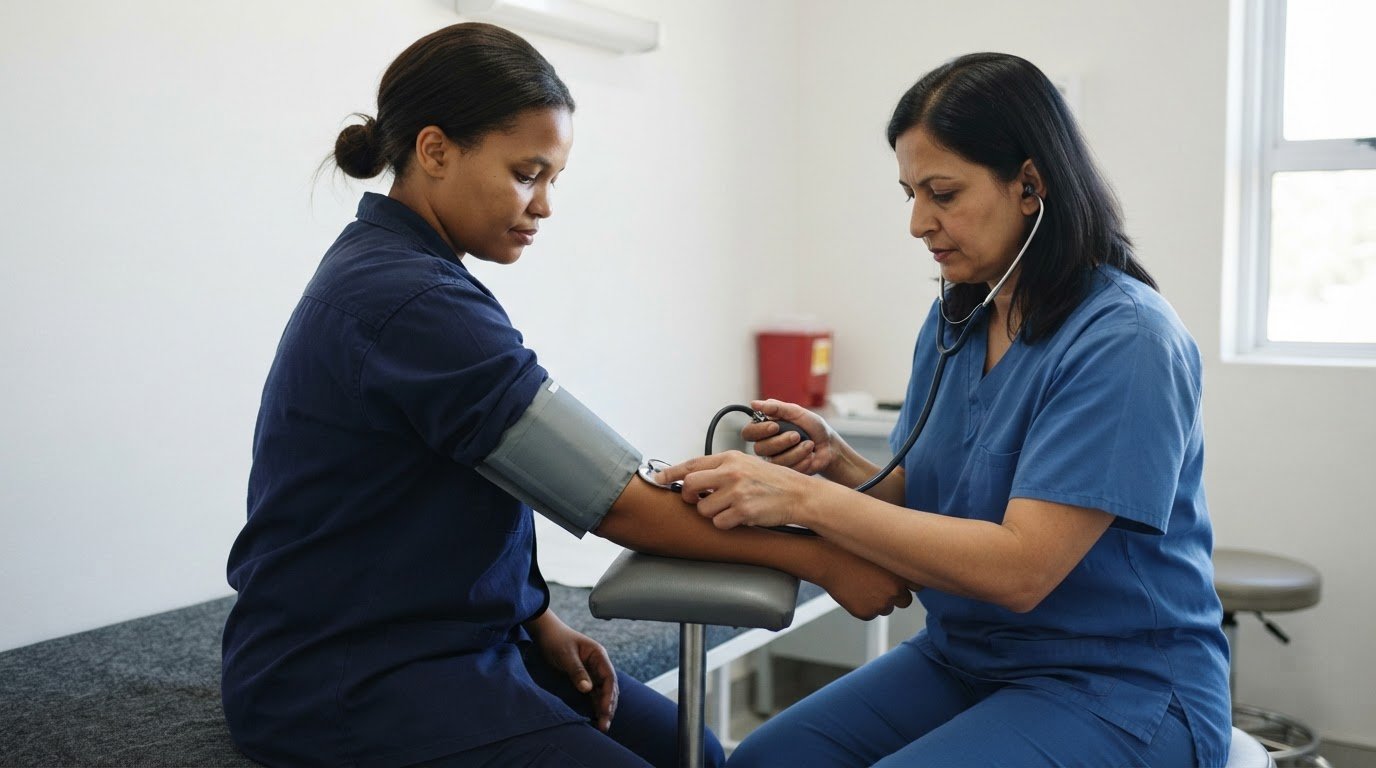
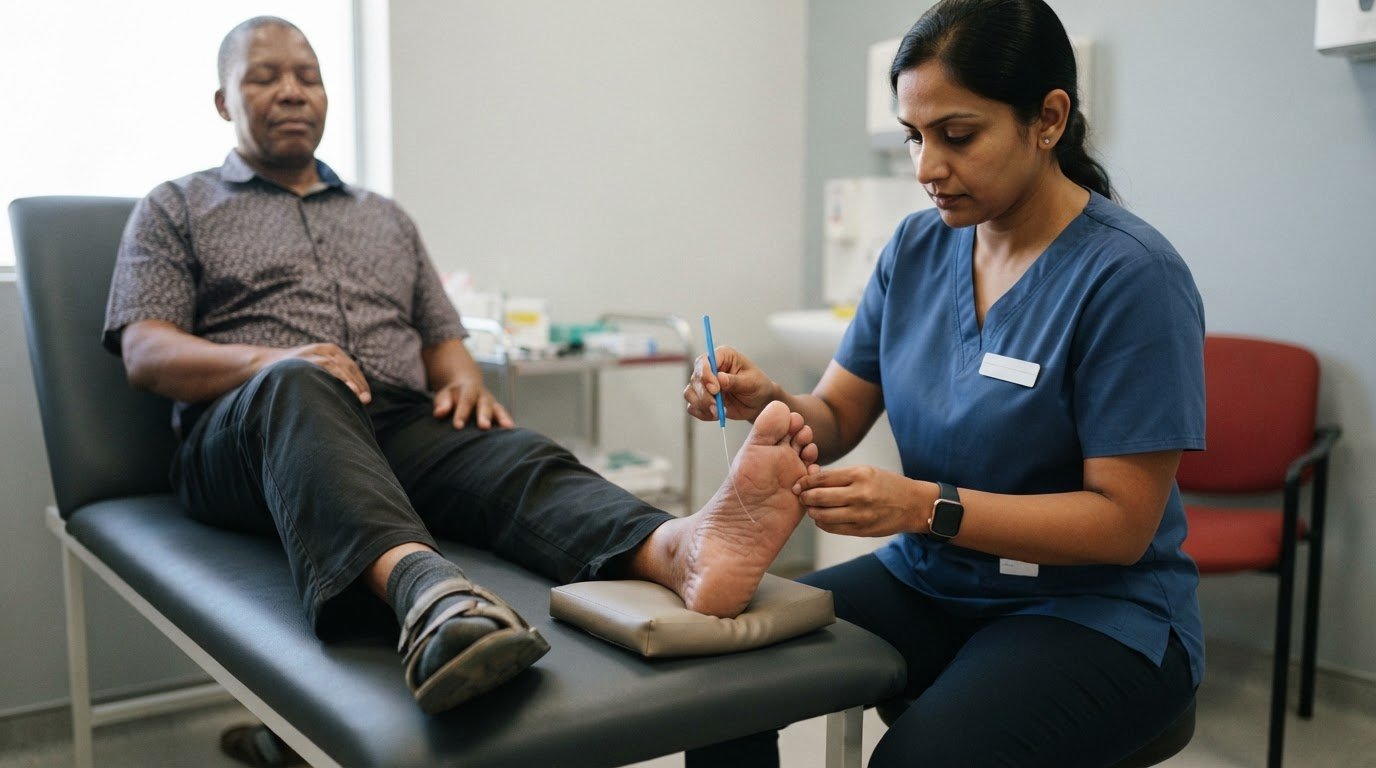
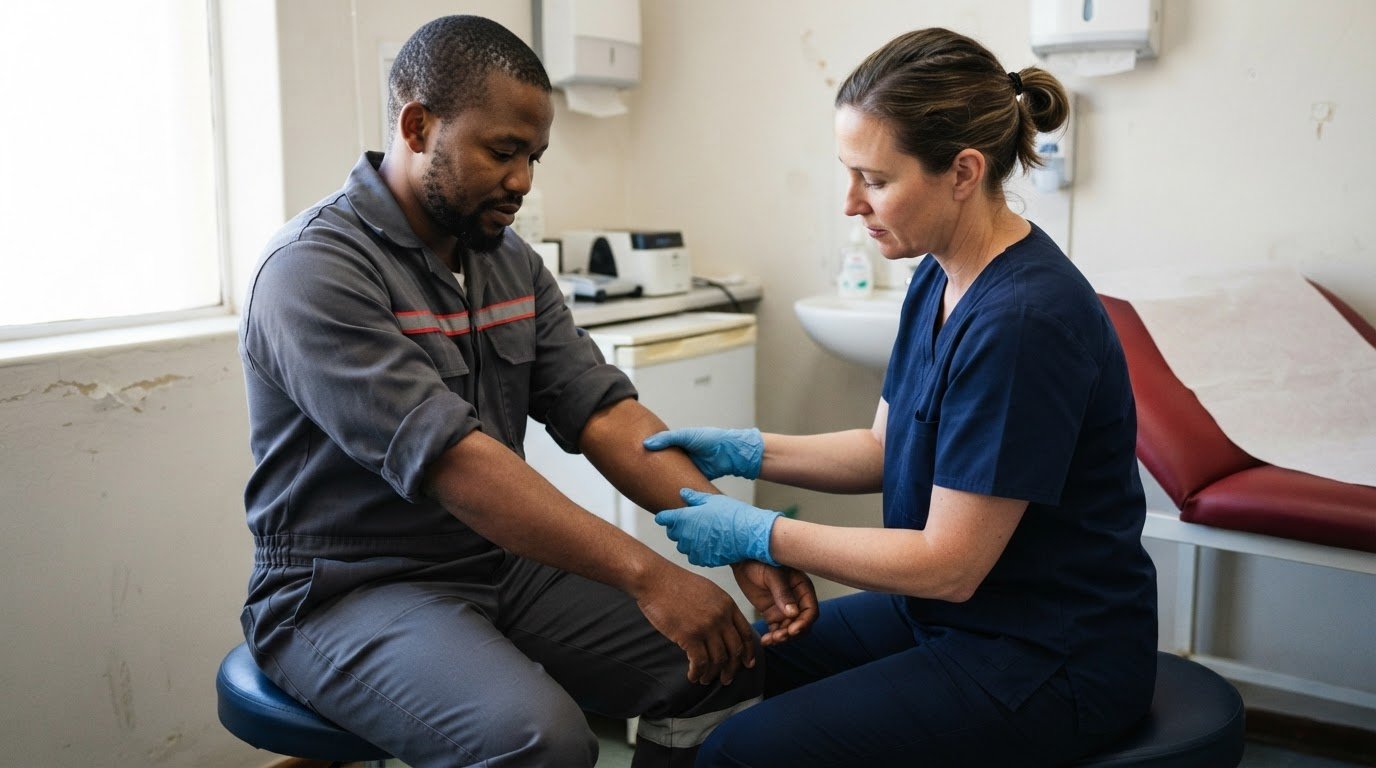
South Africa’s workplace health and safety framework centres on the Occupational Health and Safety Act of 1993, which the South African Government identifies as the statute governing workplace health and safety compliance. Medical surveillance is a planned programme of periodic employee examinations. It may include clinical examinations, biological monitoring or medical tests, depending on the workplace hazard and the health effects being considered.
Medical surveillance is not simply a general health check for every worker. Its purpose is to connect possible workplace exposure with appropriate health monitoring. A worker’s tasks, the hazards present and the possible effects of exposure help shape the programme. For example, noise exposure raises different health questions from contact with hazardous chemical substances.
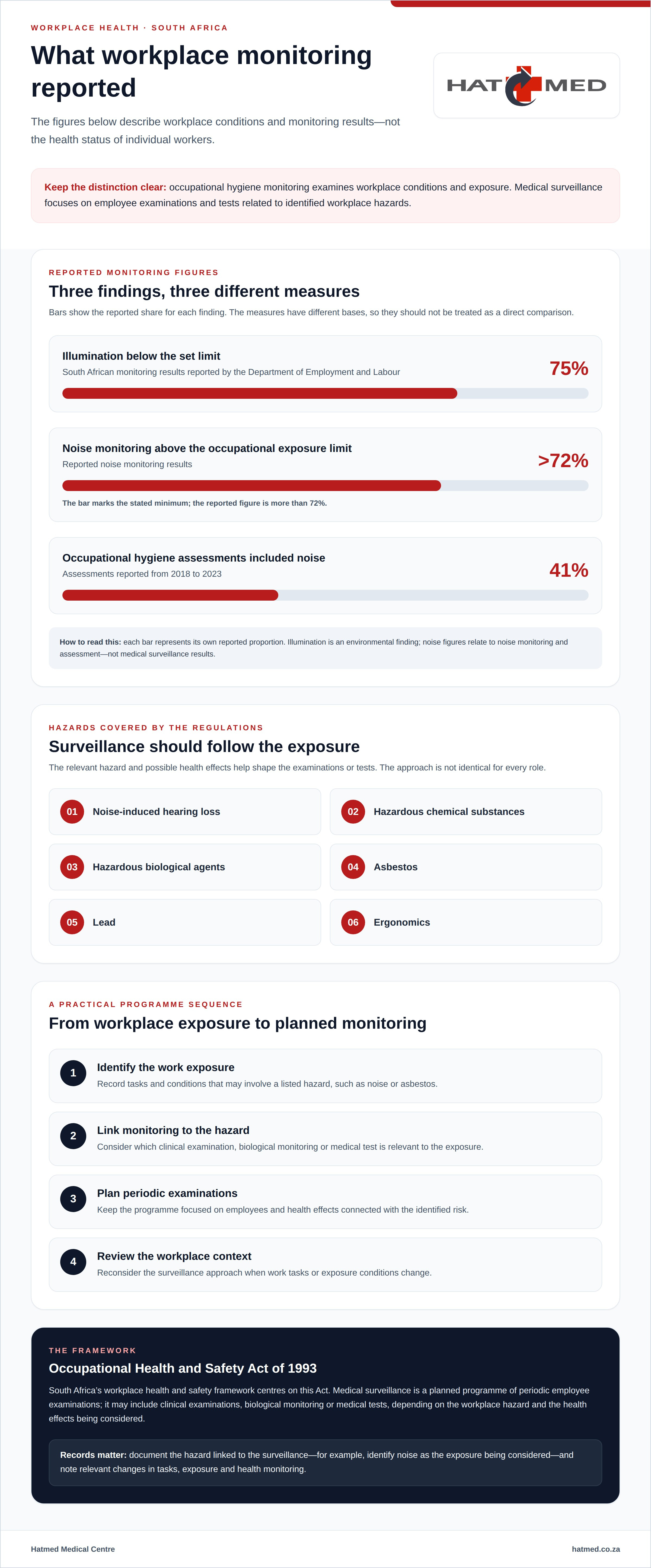
Regulations under the Act require medical surveillance for specific workplace hazards, including noise-induced hearing loss, hazardous chemical substances, hazardous biological agents, asbestos, lead and ergonomics. The relevant hazard matters: examinations and tests should relate to the exposure being considered, rather than follow one identical approach for every role.
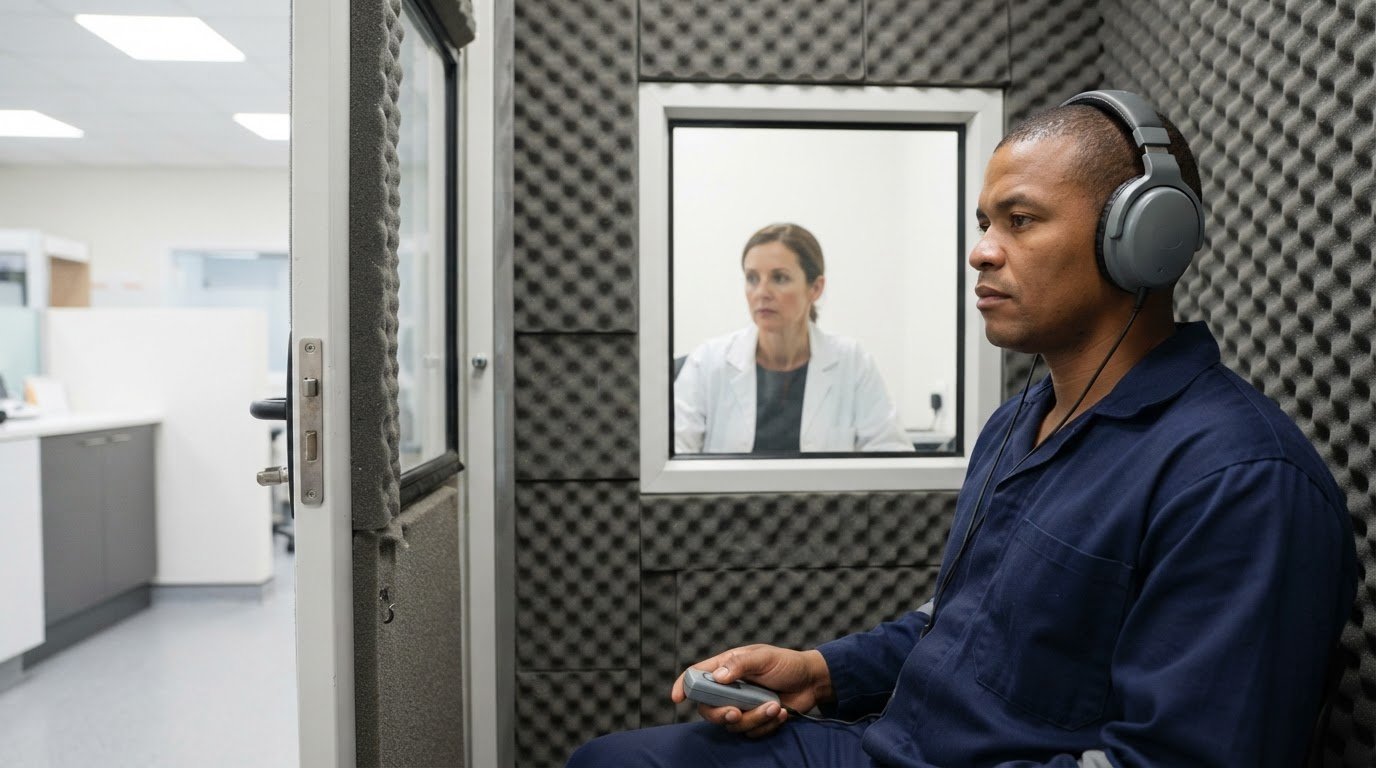
- Noise-induced hearing loss: monitoring is relevant where workplace noise may affect hearing.
- Chemical substances and lead: surveillance considers exposure to these named hazards.
- Biological agents: workplace contact with hazardous biological agents is included.
- Asbestos: asbestos exposure is one of the hazards covered.
- Ergonomics: the way work is designed or performed can also be relevant.
Medical surveillance should be considered alongside occupational hygiene monitoring, but the two are different activities. Hygiene assessments examine workplace conditions and exposure; medical surveillance focuses on employee examinations and tests. Together, they can help connect a workplace hazard with its possible effects on workers.
South African monitoring figures show why workplace conditions deserve attention. Noise was included in 41% of occupational hygiene assessments reported from 2018 to 2023. More than 72% of reported noise monitoring results were above the occupational exposure limit. These figures describe monitoring results, not the health status of every worker.
Illumination also appears in reported monitoring. According to the Department of Employment and Labour, illumination was below the set limit in 75% of South African monitoring results reported. This is an environmental finding, not a medical surveillance result. It illustrates why employers need to distinguish workplace measurements from employee health examinations.
A practical way to organise the process is to link each step to the relevant hazard:
- Identify the work exposure. Record the tasks and conditions that may involve a listed hazard, such as noise or asbestos.
- Link monitoring to the hazard. Consider which clinical examination, biological monitoring or medical test is relevant to the exposure.
- Plan periodic examinations. Keep the programme focused on the employees and health effects connected with the identified risk.
- Review the workplace context. Reconsider the surveillance approach when work tasks or exposure conditions change.
These steps explain the programme’s logic; they do not replace the applicable regulations or a workplace-specific assessment. For workers, the key point is that medical surveillance relates to identified workplace risks. For employers, the listed hazards provide a starting point for determining whether surveillance may apply to particular work.
Records should clearly link the hazard to the chosen surveillance. For example, a record concerning noise should identify noise as the exposure being considered, rather than describe the examination as an unrelated routine check. Clear documentation also helps track relevant changes in tasks, exposure and health monitoring.
The rules combine a defined legal framework, named hazards and planned health monitoring. Understanding these elements helps employers and workers discuss the purpose of surveillance, the exposure it addresses and how it fits alongside workplace monitoring. The central practical question is whether the programme reflects the actual hazards associated with the work.
The definition describes an organised, recurring process rather than a single examination. Its planned nature means examinations form part of a programme, while periodicity indicates that they take place at intervals. A programme may include clinical examinations, biological monitoring or medical tests; the definition does not require every method in every case. These are the stated forms medical surveillance may take. Focusing on examinations and tests also distinguishes surveillance from monitoring workplace conditions, which concerns exposure rather than employee examinations.
Hatmed Medical Centre: Mental Health Management
Hatmed Medical Centre offers Mental Health Management for people seeking support with their mental wellbeing. If workplace demands or health concerns are affecting how you feel, this service may be a helpful next step alongside a discussion about your needs.
A General Practitioner Consultation can also provide an opportunity to raise health concerns and discuss suitable care. Mental health support is distinct from occupational medical surveillance, which monitors health in relation to identified workplace hazards. If you’re unsure which kind of support suits your situation, describe your concern when arranging care so the conversation can focus on your needs.
For support with mental wellbeing or a general health concern, contact Hatmed Medical Centre.
Take the next step with confidence
Understanding the occupational health medical surveillance regulations in South Africa can help you have more informed conversations about workplace health. Keep health support connected to the need: workplace hazard monitoring and personal medical care serve different purposes, even when both matter to a worker’s wellbeing.
For personal health concerns, Hatmed Medical Centre offers General Practitioner Consultations. It also provides Immigration Medical Examinations and Seafarers / SAMSA Medical Examinations for people who need those assessments. These services address individual medical needs; they do not replace an employer’s workplace surveillance programme.
If you’re ready to discuss the care that fits your needs, contact Hatmed Medical Centre. Taking a considered next step can make it easier to find the right kind of support.