A machine operator’s health check is about matching health needs to the realities of the role, not judging a person’s worth. A manufacturing machine operator pre-placement health check helps an employer assess whether a prospective employee can manage the assigned work and identify existing health conditions that may affect it. Screening is tailored to the job, so checks can differ between roles.
It’s understandable to want clarity about what a manufacturing machine operator pre-placement health check involves and how personal health information relates to a job offer. The assessment considers relevant work demands and risks, while giving the prospective employee an opportunity to disclose health information that may matter to the role.
This article explains why employers offer these checks, what screening may cover, and how factors such as noise, dust, vision demands and physical tasks can shape an assessment. It also outlines how a manufacturing machine operator pre-placement health check relates to health disclosures and any follow-up that may be useful.
Key Takeaways
- Understand why employers assess job-related fitness before work begins, and how the role shapes the scope of screening.
- Learn how medical and work history can guide whether further assessments are appropriate.
- See why sharing relevant health conditions helps inform a discussion about how they may relate to the role.
- Find out when Hatmed Medical Centre’s Mental Health Management may be a helpful next step for ongoing mental health support.
Why offer pre-employment medicals?
A pre-employment assessment considers a prospective operator’s health in relation to the duties they’ll perform. Operating machinery may involve sustained concentration, specific vision demands, noise or physical tasks. The aim is to identify health factors that could affect safe, effective work before the role begins, not to give every candidate the same tests.
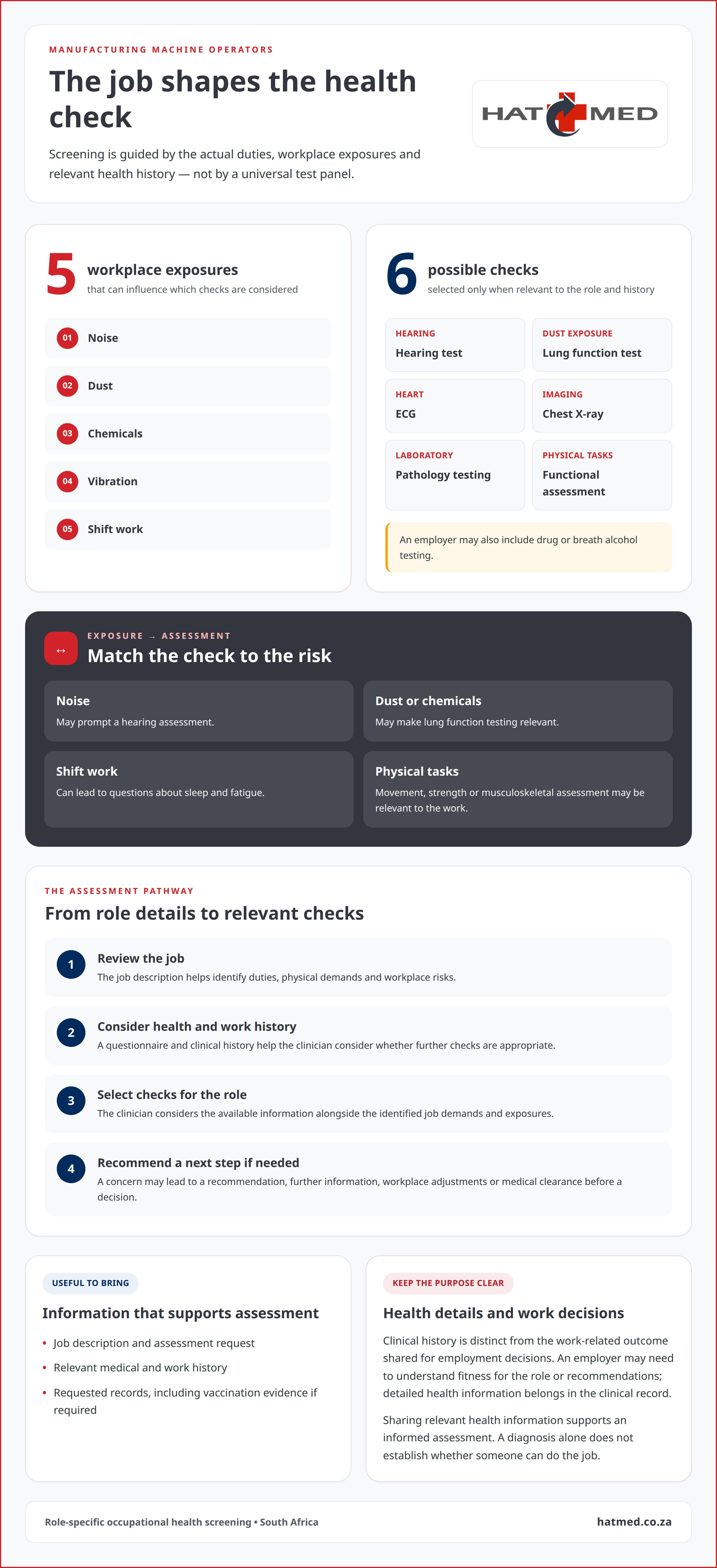
The assessment may begin with a health questionnaire and a review of medical and work history. A clinician can consider that information alongside the job description to decide whether additional checks are relevant. Depending on the role and history, these may include a hearing test, lung function test, electrocardiogram (ECG), chest X-ray, pathology testing or a functional assessment led by a physiotherapist. An employer may also include drug or breath alcohol testing.
How long does it take, and when are results provided? There is no single timeframe. The assessment length depends on the checks required for the role. Results timing depends on whether further testing, such as pathology or imaging, or a clinical review is needed.
Medical details need careful handling. Distinguish between the clinical history gathered during an assessment and the work-related outcome shared for employment decisions. An employer may need to understand fitness for the role or recommendations, while detailed health information belongs in the clinical record. Clear communication about the assessment helps candidates understand how their information will inform the process.
If an assessment identifies a concern, the next step may be a recommendation, not an immediate conclusion about suitability. For example, further information about vision or an existing injury could clarify how it relates to the operator’s tasks. The assessment may also identify a need to consider workplace adjustments, such as changes to particular duties, or recommend medical clearance before a decision.
Assessments can also be relevant when an employee moves into a different role. A transfer or promotion may bring new machinery, physical demands or working conditions. Reviewing health in relation to those changed duties can help identify relevant support or concerns before the employee starts the new position.
What’s Included in a Pre-Employment Health Check?
The assessment should reflect the machine operator’s actual duties and workplace exposures. The employer’s job description helps identify which checks are relevant.
Screening matched to tasks and physical demands
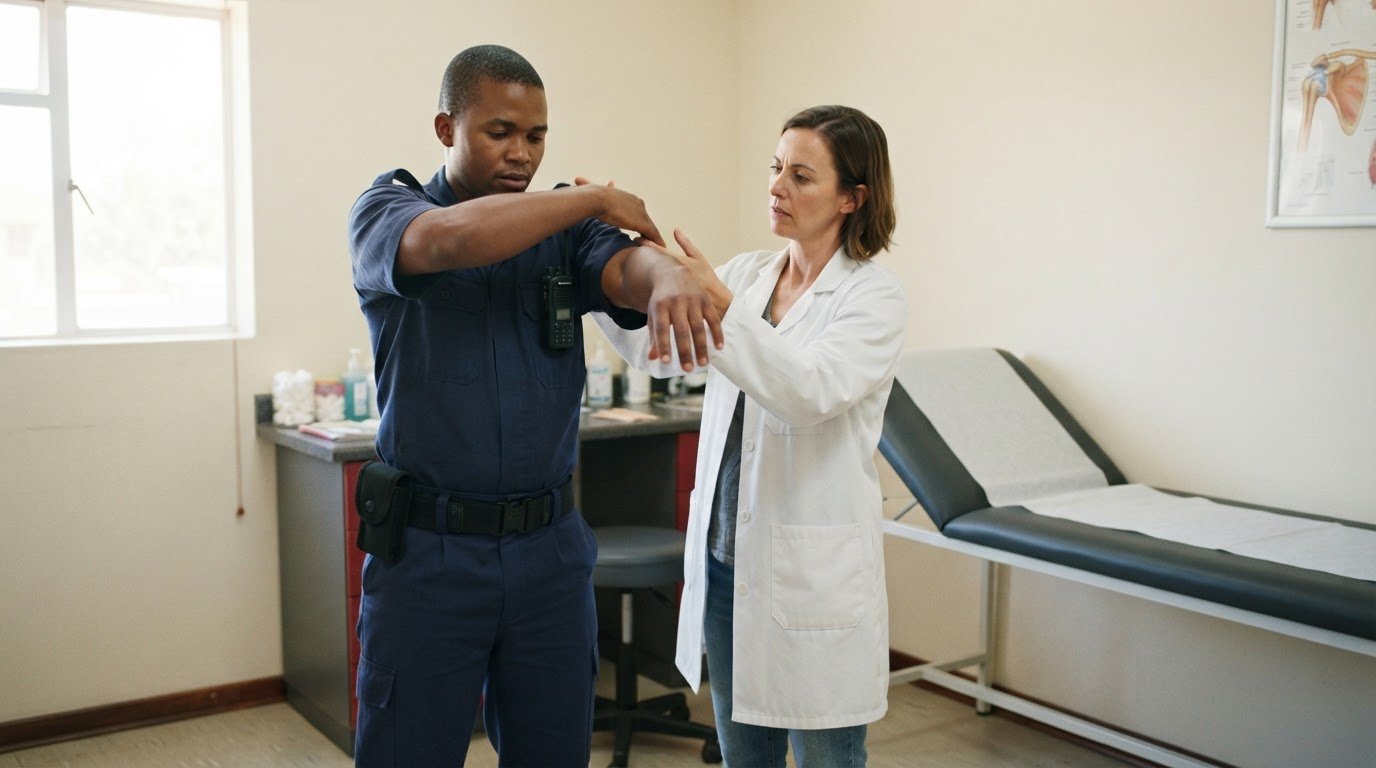
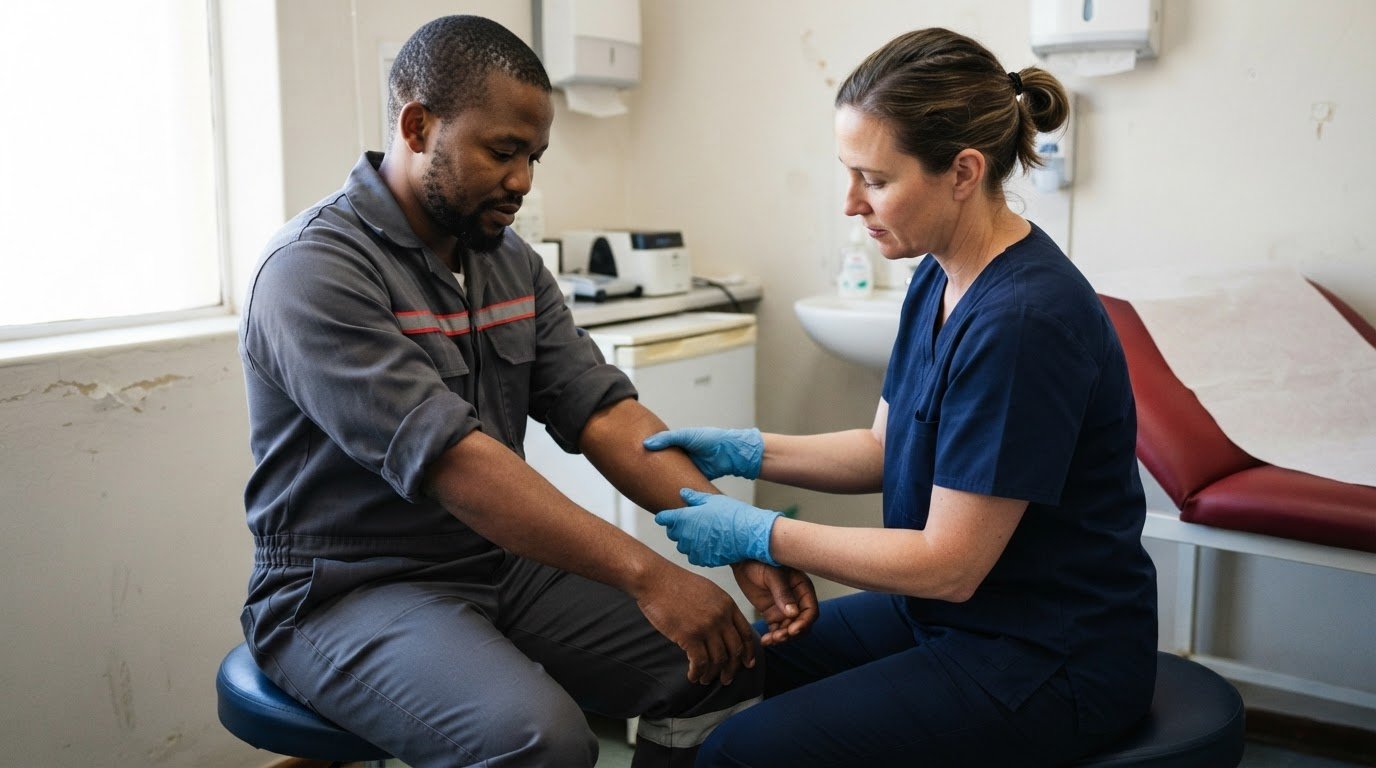
This screening compares a candidate’s physical abilities with the tasks required in the role. For machine operation, that may mean assessing movement, strength, vision or hearing, depending on the equipment and work environment. A musculoskeletal assessment can help identify limitations relevant to manual handling or operating machinery. Matching checks to tasks makes the findings more useful than giving every candidate the same test panel.
Role-specific occupational health screening
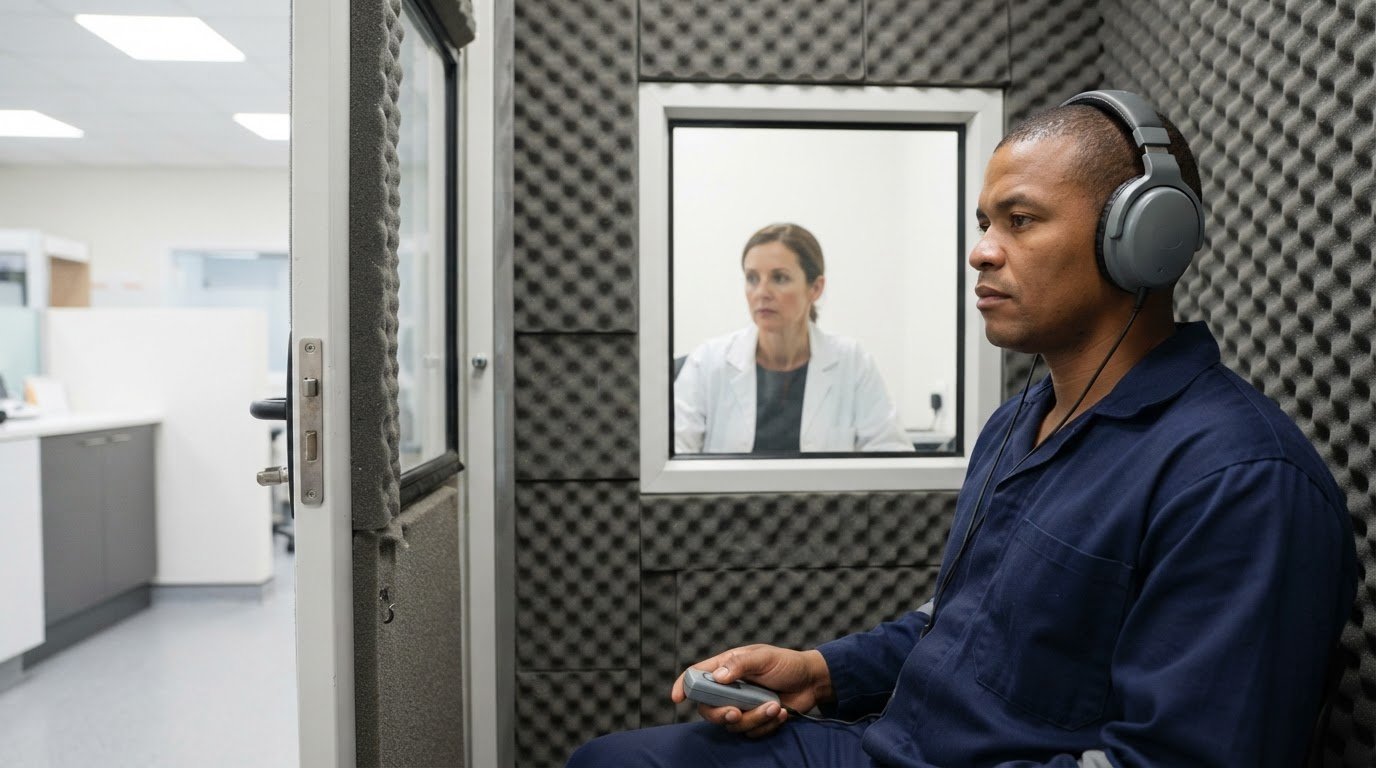
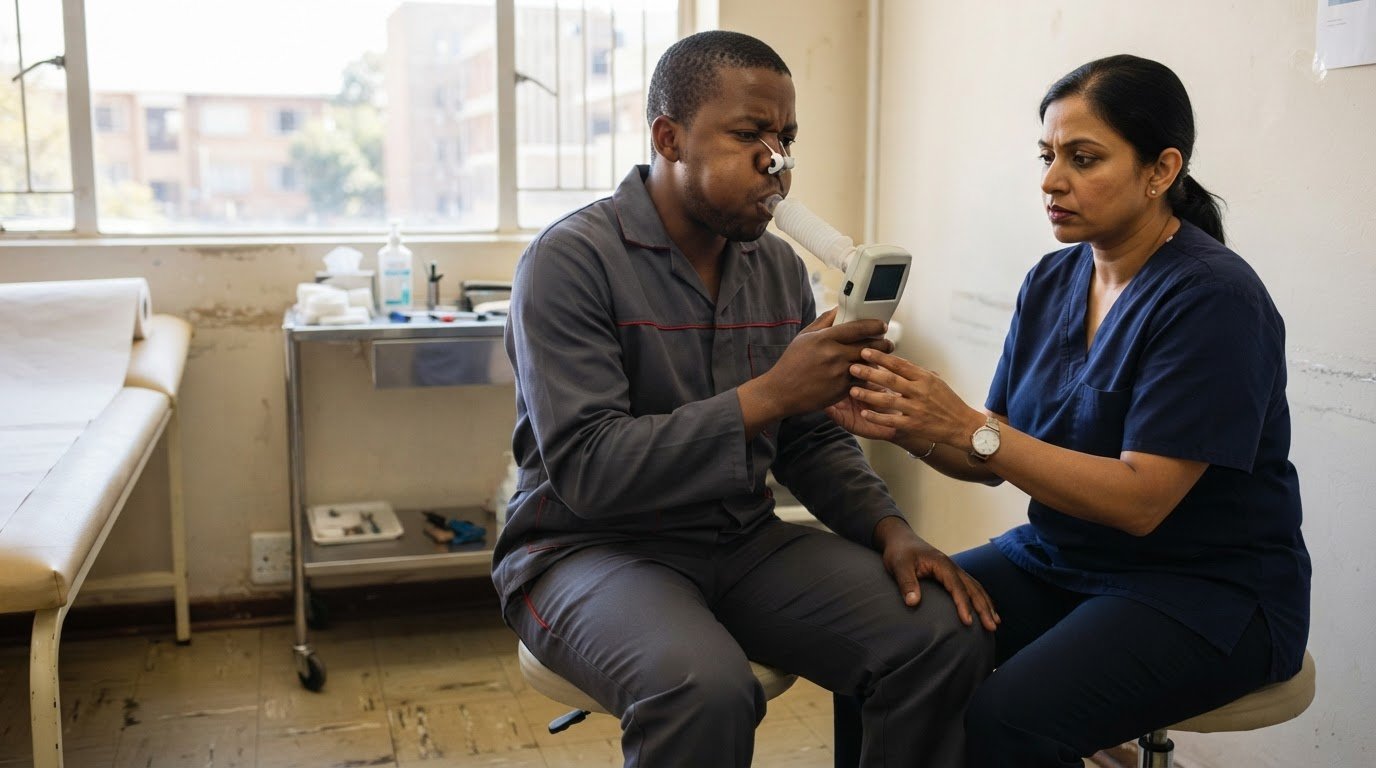
Role-specific screening selects assessments according to the job’s duties and identified risks. A health questionnaire and medical history can help determine whether further checks are relevant, such as spirometry for possible dust exposure or audiometry in a noisy area. Employers can provide the job description and assessment request. Candidates can bring relevant medical and work history, plus vaccination evidence if the requested screening requires it.
Workplace exposures and assessment
Noise, dust, chemicals, vibration and shift work can each affect which health checks are considered. Noise may prompt a hearing assessment; dust or chemical exposure may make lung function testing relevant. Shift work can lead to questions about sleep and fatigue. Screening may also consider exposure-related risks, such as lead or hepatitis, and vaccination status where relevant. The workplace tasks and exposure profile guide the assessment.
Standards and laws for pre-placement examinations
In South Africa, an assessment should reflect occupational health requirements relevant to the workplace and the operator’s identified risks. There is no universal test panel for every manufacturing role; screening should relate to the duties and exposures being assessed. Employers can arrange assessments through an occupational health service or onsite, provided a private, quiet space is available. Candidates can bring the job description, relevant health history and any requested records to support an informed assessment.
Disclosure of underlying health conditions
Sharing relevant health information helps connect an assessment with the demands of machine operation. A previous injury, for example, could affect lifting, reaching, standing or repetitive movements. A condition affecting vision or hearing could also matter when tasks depend on accurate observation or workplace signals. Explain how a condition affects daily activities and work tasks, rather than providing only a diagnosis.
A health questionnaire gives candidates a structured way to describe medical history, treatment and current symptoms. Include relevant information about ongoing care, prescribed medication, past injuries and changes in physical ability. If a question is unclear, explain the issue during the medical consultation. Specific examples, such as discomfort when standing for long periods, can help the clinician understand the functional effect.
Disclosure supports an informed assessment; it does not, by itself, establish whether someone can do a job. The clinician considers the reported condition alongside the operator’s duties and any relevant examination findings. For instance, an old shoulder injury matters differently if the role involves repeated reaching than if it does not. A finding such as high blood pressure can also prompt a recommendation to follow up with a GP.
Be accurate: don’t leave out a relevant condition or describe it more dramatically than it affects you. Clear details can help determine whether further assessment, medical advice or workplace adjustments should be considered. If symptoms have changed since an earlier diagnosis, describe what changed and when. For a candidate managing a long-term condition, explaining current treatment and practical limitations gives the assessment useful context without assuming the condition rules out manufacturing work.
Keep the discussion focused on health information relevant to the assessment and the role. A useful account covers the condition, its current effects, relevant treatment and any work tasks that cause difficulty. This gives the clinician a clearer basis for considering how health relates to job demands, without drawing conclusions based only on a diagnosis or past injury.
Manufacturing-role pre-employment health screening
In South Africa, a pre-placement health check assesses a prospective machine operator’s health against the demands of the work. It can help identify existing conditions that may affect assigned tasks and health concerns that need follow-up. The job description, machinery and workplace exposures shape the assessment, so screening can differ between manufacturing roles. The findings should relate to the work being considered.
A useful assessment connects specific checks with actual duties. For example, operating controls that require accurate visual judgement may make a vision check relevant. Repeated handling or reaching can make movement and strength assessment useful. A musculoskeletal assessment considers the skeletal and muscular systems in relation to manual handling or machinery operation. This helps employers understand how the assessment relates to the role’s essential tasks.
Screening may include a health questionnaire, urinalysis, and height, weight and BMI measurements. A clinician may also assess cardiovascular and respiratory health, vision and skin. Spirometry measures lung function, while audiometry checks hearing. These checks provide information about health in relation to work; a single test result is not, by itself, a complete judgement of job suitability.
Exposure and task details matter. A noisy production area can make hearing assessment relevant; dust or chemical exposure can make lung function screening useful. Precision work may call for attention to vision, while physical tasks may warrant movement and strength assessment. Drug testing may also form part of an employer’s pre-employment screening. The stated duties and identified workplace risks guide which checks are included in a manufacturing machine operator pre-placement health check.
The employer can provide the job description and explain the operator’s main tasks, machinery and exposures. That context helps the health professional relate findings to actual work and identify where further review may help. Employers can arrange assessments onsite when a private, quiet space is available. For an assessment connected to employment duties, arrange a pre-employment medical examination.
Hatmed Medical Centre: Mental Health Management
Hatmed Medical Centre offers Mental Health Management for people seeking support with mental health concerns. If stress, anxiety or another concern is affecting your wellbeing, this service provides a healthcare setting to discuss your needs. It is separate from deciding whether someone can perform a machine operator role, and it doesn’t replace the employer’s job-related assessment.
A General Practitioner Consultation may also suit you if you want to discuss a health concern or its effect on daily life. Sharing relevant information during an employment assessment can help the clinician understand your circumstances; ongoing support is a separate step. Contact Hatmed Medical Centre to discuss Mental Health Management or a GP consultation.
Take your next step with confidence
A manufacturing machine operator pre-placement health check can be one part of a wider approach to wellbeing, not the end of the conversation. If a health concern needs attention beyond an employment assessment, consider the support that fits your situation and keep your personal healthcare needs in view as work plans develop.
Hatmed Medical Centre offers General Practitioner Consultations for general health concerns, as well as Immigration Medical Examinations and Seafarers / SAMSA Medical Examinations for people with those specific requirements. Choosing the relevant service helps you take a practical next step without confusing a job-related assessment with other medical needs.
For guidance on the appropriate healthcare service, contact Hatmed Medical Centre. A calm, informed conversation can help you move forward with clarity and care.
Frequently Asked Questions
What does the process look like for employers?
Employers typically begin by providing the role’s duties and workplace risk information, then arrange an assessment suited to those requirements. The candidate completes the relevant health history and attends the appointment. If findings need clarification, additional tests or a medical review may follow. The employer can then consider the work-related outcome and any recommendations alongside the position’s actual tasks.
Which medical tests are included in a machine operator pre-placement assessment?
Tests depend on the operator’s duties and workplace risks. An assessment may include vision, hearing, cardiovascular and respiratory checks, alongside spirometry or audiometry where exposure makes them relevant. Urinalysis, movement assessment or drug screening may also form part of the requested assessment. For example, a role involving dusty conditions may call for lung function screening, while machinery noise may make hearing assessment relevant.
What fitness requirements apply to manufacturing machine operators in South Africa?
There is no universal fitness standard for every manufacturing machine operator. Requirements depend on the job’s essential duties, machinery and identified workplace risks. An assessment considers whether health factors affect those tasks and whether recommendations or further information are needed. For example, a role requiring repeated physical handling may involve different considerations from one focused mainly on monitoring a production line.
What happens if an applicant is found medically unfit or has a work restriction?
A finding or restriction should be considered in relation to the specific job, not treated as an automatic answer about every role. The assessment may recommend further medical information, clearance or workplace adjustments. The employer can consider whether the restriction affects essential tasks and whether duties can be adapted. For instance, a limitation affecting one task may not prevent work if that task can be changed.
What are the employer’s and applicant’s rights regarding medical records and confidentiality?
Medical records contain personal health details, so the assessment process should clarify how clinical information and work-related findings are handled. Before information is shared, ask what report the employer will receive, who will see it and how it relates to the job decision. Candidates can raise these questions and explain relevant health concerns directly during the assessment, rather than sharing unnecessary details widely.