

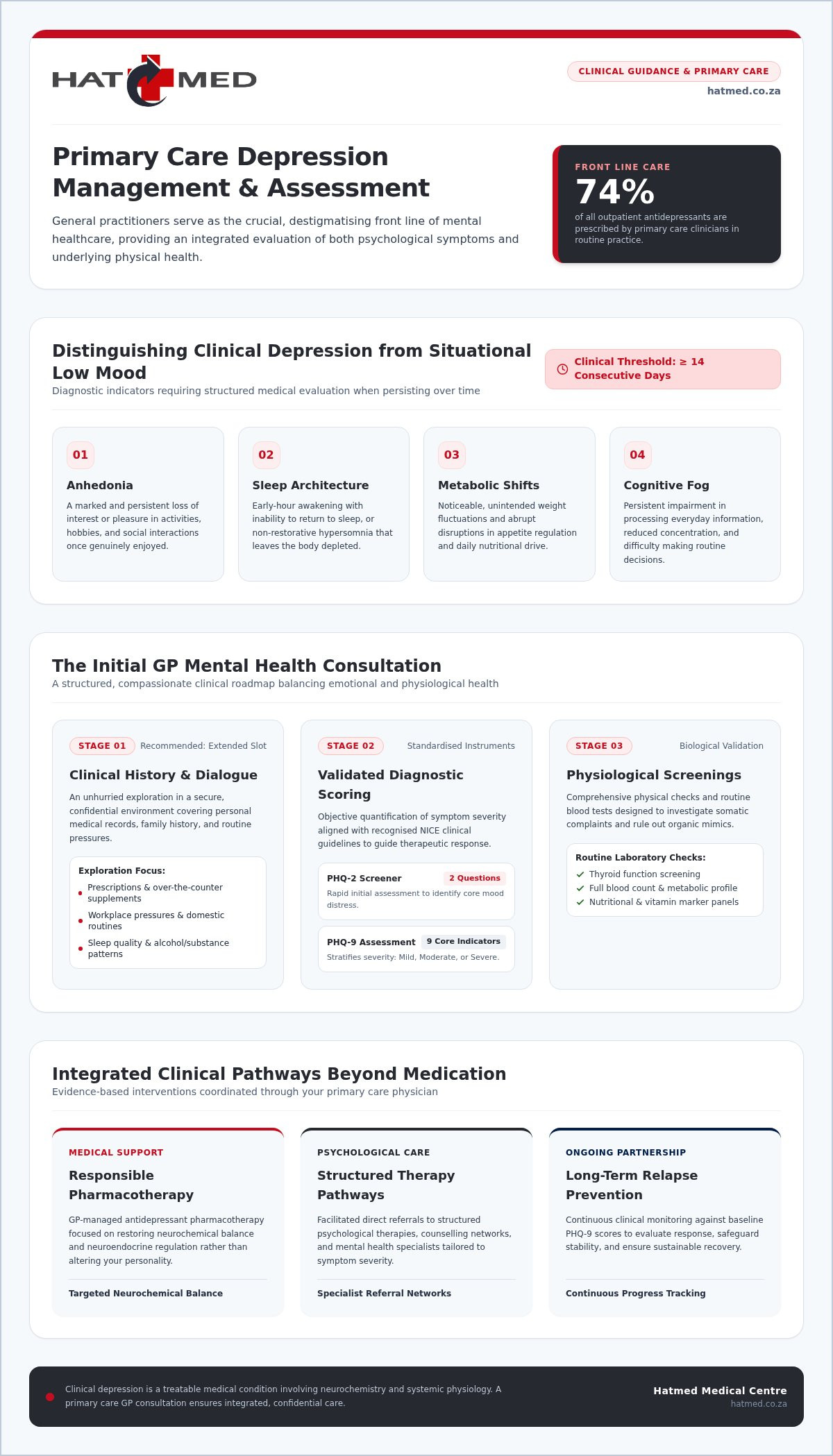
Primary care clinicians prescribe approximately 74% of all outpatient antidepressants, establishing the routine medical surgery as the true front line of modern mental healthcare. Yet when you are feeling emotionally overwhelmed, arranging an initial depression treatment GP consultation can feel profoundly daunting. It is entirely natural to struggle with articulating how you feel, or to fear being rushed, dismissed with superficial advice, or handed a prescription before anyone has genuinely listened to your concerns.
In reality, consulting your doctor offers a confidential, compassionate space where mental and physical health are treated as an integrated whole. You don’t have to face this alone or guess whether you need a counsellor, psychologist, or medical specialist first. In this guide, you will discover how a general practitioner thoroughly assesses, treats, and supports depression through clinical evaluation, routine physical screenings, and tailored medication management. We will outline the consultation process and explore evidence-based pathways, from lifestyle adjustments to structured psychological therapy, that help you regain your footing with steady confidence.
Key Takeaways
- Explore how an initial depression treatment GP consultation serves as an accessible, confidential first step to thoroughly evaluate emotional and physical well-being.
- Understand the clinical assessment process, including routine blood tests and evidence-based questionnaires that rule out underlying physical mimics.
- Learn how general practitioners responsibly manage antidepressant pharmacotherapy, focusing on neurochemical balance rather than altering your personality.
- Discover collaborative care pathways beyond medication, connecting you with psychological therapies, lifestyle interventions, and specialist networks.
- See why structured, long-term clinical partnerships with your doctor help safeguard stability, monitor recovery progress, and prevent symptom relapse.
The Essential Role of a General Practitioner in Treating Depression
Clinical depression is a complex, treatable medical condition that alters neurochemistry, neuroendocrine regulation, and systemic physiology. It isn’t a personal flaw, nor is it a temporary lapse in willpower. Because emotional health is deeply intertwined with physical vitality, seeking a depression treatment GP consultation offers an accessible, confidential, and destigmatising entry point into care. General practitioners view your health holistically, establishing a collaborative partnership that addresses psychological symptoms alongside routine physiological checks.
Rather than treating symptoms in isolation, primary care physicians examine how systemic factors like sleep disruption, metabolic markers, and chronic illness interact with mental well-being. This broad clinical perspective forms the foundation of modern clinical management of depression, ensuring your treatment plan accounts for your body as thoroughly as your mind.
Why Your GP Is the Ideal First Point of Contact
Consulting your family doctor takes place in an ordinary medical surgery, completely free from the perceived stigma often linked to dedicated psychiatric facilities. General practitioners possess broad diagnostic training that allows them to investigate somatic complaints alongside low mood. You can discuss exhaustion, chronic pain, or low mood in a secure setting, knowing your medical confidentiality is rigorously safeguarded.
Distinguishing Clinical Depression from Situational Low Mood
Everyone encounters transient grief, work-related stress, or temporary fatigue. These normal emotional reactions usually ease as situations evolve. Clinical depression, by contrast, takes a more pervasive hold across daily life. Primary doctors look for a distinct constellation of biological and cognitive markers that persist for at least two consecutive weeks:
- Anhedonia: A marked loss of interest or pleasure in activities you once genuinely enjoyed.
- Sleep architecture changes: Waking in the early hours unable to return to sleep, or hypersomnia where sleep brings no restoration.
- Appetite and metabolic shifts: Noticeable weight fluctuations and sudden changes in nutritional drive.
- Cognitive fog: Persistent difficulty focusing, making basic decisions, or processing everyday information.
When these symptoms endure beyond fourteen days and interfere with your daily routine, a structured depression treatment GP assessment provides the clarity and medical validation needed to begin recovery.
What to Expect During an Initial GP Mental Health Consultation
Walking into a surgery to discuss your mental health can feel intimidating, but the reality is reassuringly grounded. An initial appointment functions as an unhurried, structured clinical dialogue rather than an interrogation. Your doctor aims to build an accurate picture of your lived experience within a completely confidential space, ensuring your psychological and physiological health receive equal attention. Booking an extended or double slot is often the best approach, giving you ample time to speak comfortably.
Comprehensive Medical History and Symptom Review
The conversation begins with an open exploration of what prompted your visit. Your GP will ask about personal health records, family histories of mood conditions, and any prescription drugs or over-the-counter supplements you take. They will gently ask about daily sleep patterns, workplace pressures, and domestic routines. Being candid about social stressors or alcohol consumption helps your clinician tailor a realistic recovery roadmap.
Standardised Assessment Tools and Diagnostic Scoring
To measure the severity of your distress objectively, primary practitioners rely on validated clinical instruments. You will likely complete the Patient Health Questionnaire-9 (PHQ-9), sometimes preceded by the briefer two-question PHQ-2 screen. This standardised scoring system assesses nine core diagnostic indicators, categorising symptoms as mild, moderate, or severe. Following established frameworks like the NICE clinical guidelines for depression, these objective metrics establish a baseline score. Your doctor uses this baseline to assess treatment response over subsequent months rather than relying on guesswork.
Physical Checks and Laboratory Tests to Exclude Organic Causes
A crucial advantage of seeing a family practitioner is their ability to investigate physical mimics of low mood. Many systemic medical conditions present with symptoms identical to psychological illness. Before confirming a psychiatric diagnosis, your doctor will typically arrange targeted laboratory evaluations:
- Full blood count and serum ferritin: Identifies underlying anaemia or iron deficiency that drives profound physical lethargy.
- Thyroid stimulating hormone (TSH): Evaluates thyroid function, ruling out hypothyroidism, which frequently triggers cognitive slowing and fatigue.
- Serum vitamin B12 and folate: Detects nutritional deficiencies vital for proper neurological function and neurotransmitter synthesis.
- Vitamin D levels: Assesses metabolic and immune markers closely tied to energy balance and seasonal vitality.
Ruling out these organic culprits ensures that subsequent care targets the genuine source of your distress. If you feel ready to take this step, booking comprehensive mental health management with an attentive primary doctor provides the clinical clarity you deserve.
Medical Treatment Options: How GPs Manage Antidepressant Pharmacotherapy
Pharmacotherapy is often misunderstood, leading to unnecessary apprehension. Antidepressant medications do not alter your core personality, dull your authentic emotions, or create physical addiction. Instead, they function by rectifying neurochemical dysregulation, supporting synaptic plasticity and neurotransmitter balance across specific brain pathways. When navigating depression treatment GP care ensures any pharmacological decision is tailored specifically to your symptom presentation, lifestyle, and medical background.
According to comprehensive National Institute of Mental Health depression resources, medication plays a vital role for moderate to severe episodes. Primary care doctors weigh existing sleep disruptions, co-occurring anxiety, and physical health markers before recommending any specific compound.
Understanding First-Line Medications: SSRIs and SNRIs Explained
Selective serotonin reuptake inhibitors (SSRIs) such as sertraline or escitalopram represent the most common first-line agents in primary care. They enhance serotonin signalling between neurons, promoting emotional regulation and reducing somatic anxiety. Serotonin-noradrenaline reuptake inhibitors (SNRIs), including venlafaxine and duloxetine, provide dual-action support by elevating both serotonin and noradrenaline. Doctors frequently consider SNRIs when profound fatigue, chronic neuropathic discomfort, or severe motivational deficits dominate your daily presentation.
Managing Potential Side Effects and Therapeutic Timelines
Antidepressants require steady biological accumulation. Noticeable therapeutic improvements rarely appear overnight; benefits typically take between two and six weeks to fully manifest. During the initial seven to ten days, you might experience mild, transient side effects:
- Digestive changes: Mild nausea, appetite fluctuations, or slight bowel irregularities as gut serotonin receptors adapt.
- Neurological adjustments: Transient daytime drowsiness, vivid dreams, or mild tension headaches.
- Temporary restlessness: A brief uptick in physical jitteriness that settles as systemic levels stabilise.
Because side effects usually resolve quickly while therapeutic relief builds gradually, maintaining consistent communication with your family doctor prevents premature discontinuation.
Safe Medication Monitoring, Titration, and Discontinuation Protocols
Modern primary care follows rigorous safety guidelines when initiating and adjusting medications. Your doctor will typically start you on a conservative dosage, scheduling an early review within two to four weeks to assess tolerability. Only after establishing that the medication is well-tolerated will your clinician consider gradual upward titration.
Discontinuation is handled with identical care. To avoid antidepressant discontinuation syndrome, primary clinicians use structured hyperbolic tapering protocols. Dose reductions occur gradually and proportionally over several months, ensuring receptor occupancy declines smoothly and keeping your recovery stable.
Holistic Care and Collaborative Pathways Beyond Medication
Pharmacotherapy is often only one pillar of an effective recovery plan. A compassionate depression treatment GP looks well beyond prescriptions, designing a multimodal management plan that combines talk therapies, structured lifestyle shifts, and collaborative clinical oversight. By viewing your emotional vitality through this comprehensive lens, primary doctors help you build long-term psychological resilience rather than temporary symptom suppression.
Integrating Psychological Support and Professional Referral Networks
General practitioners serve as the central coordinating hub for allied mental healthcare. Your doctor can direct you towards evidence-based psychological modalities such as Cognitive Behavioural Therapy (CBT), acceptance and commitment therapy, or psychodynamic counselling. When managing complex or treatment-resistant presentations, your family doctor collaborates with consultant psychiatrists, ensuring diagnostic evaluations, medical records, and therapeutic goals remain completely synchronised across your clinical team.
Evidence-Based Lifestyle Interventions and Sleep Architecture
Everyday habits directly shape neurotransmitter pathways and neuroplasticity. During your consultations, your GP will partner with you to establish targeted, realistic adjustments that rebuild physical stamina and cognitive clarity:
- Targeted physical movement: Moderate cardiovascular exercise stimulates brain-derived neurotrophic factor (BDNF) release, directly encouraging synaptic repair.
- Circadian rhythm stabilisation: Clinical sleep hygiene protocols help regulate melatonin production and restore restorative rapid eye movement (REM) sleep architecture.
- Nutritional optimisation: Anti-inflammatory dietary patterns support gut microbiome health, an essential pathway for peripheral serotonin generation and steady metabolic energy.
Aligning Mental Wellness with Chronic Disease Management
Physical ailments and psychological health share a deep biological connection. Long-term medical challenges such as type 2 diabetes, autoimmune conditions, and cardiovascular disease generate systemic inflammation that substantially elevates vulnerability to depressive episodes. Conversely, coping with persistent low mood can make sticking to treatment regimens, dietary guidelines, and physical activity far more difficult.
Integrating your psychological care within ongoing chronic disease management creates a balanced, whole-body approach. Routine clinical check-ups provide dedicated space to review your emotional vitality right alongside blood glucose levels, cardiovascular markers, and prescription tolerance. If you are managing physical conditions alongside emotional distress, you can easily book a general practitioner consultation to coordinate every dimension of your health under one roof.
Partnering with Your Doctor for Long-Term Recovery and Stability
Recovery from depressive illness is rarely an instantaneous event; it is an evolving clinical journey that thrives on proactive collaboration. Viewing your general practitioner as a dependable partner transforms mental healthcare into a sustainable routine. Through consistent depression treatment GP reviews, you gain continuous oversight that safeguards your emotional progress, detects subtle warning signs of relapse early, and provides steady encouragement through every phase of healing.
Establishing Structured Follow-Up Schedules and Progress Monitoring
Continuity of care forms the bedrock of clinical success. Following an initial appointment or medication adjustment, your doctor will schedule a review consultation within two to four weeks. This visit evaluates tolerability, monitors initial symptom shifts, and addresses questions. Once stability is achieved, routine consultations every three to six months maintain optimal therapeutic momentum. These appointments offer dedicated opportunities to recalibrate dosages, discuss life transitions, and celebrate clinical milestones collaboratively.
Navigating Medical Schemes and Chronic Disease Coverage
Administrative and financial hurdles often create unnecessary barriers to consistent care. Primary care clinicians play a key role in demystifying these pathways:
- Chronic illness registration: Many private medical schemes recognise major depressive illness under Prescribed Minimum Benefits (PMB) frameworks or dedicated mental health programmes.
- Clinical documentation: Your doctor submits the required clinical motivation forms, diagnostic coding, and management plans directly to your scheme.
- Financial relief: Securing chronic disease benefit approval covers designated consultations and formulary medications, ensuring long-term continuity without unexpected out-of-pocket strain.
Taking the First Step Toward Compassionate Care
Acknowledging deep emotional fatigue and booking an appointment requires genuine courage. It is an active step toward self-preservation rather than a clinical failing. Reaching out gives you access to objective diagnostic clarity, medical validation, and an evidence-based roadmap tailored directly to your life.
You don’t have to carry this weight in isolation. Take that proactive first step and schedule an unhurried, confidential consultation with Hatmed Medical Centre to establish a supportive clinical partnership and begin your journey toward lasting stability.
Reclaim Your Vitality with Dedicated Primary Care Support
Navigating emotional exhaustion is never a challenge you need to face alone. Engaging in a thoughtful depression treatment GP consultation grounds your recovery in compassionate clinical expertise, combining objective physical assessments with supportive, unhurried dialogue. From identifying hidden hormonal or metabolic contributors to establishing safe pharmacotherapy protocols and coordinating allied psychological therapy, modern primary care provides an accessible, non-judgemental pathway forward.
True emotional stability isn’t about rapid fixes; it is an ongoing journey that benefits immensely from continuous partnership and dedicated clinical reviews. Hatmed Medical Centre is committed to walking this road alongside you, ensuring your physical vitality and mental health receive integrated, whole-person attention. When you are ready to take control of your well-being, book a confidential consultation with our compassionate team. Taking that initial step opens the door to lasting clarity, renewed strength, and dependable care.
Frequently Asked Questions
Can a GP prescribe antidepressants, or do I have to see a psychiatrist?
General practitioners can independently prescribe and manage antidepressant medications without requiring a psychiatric referral. In fact, primary care doctors initiate and oversee the vast majority of outpatient antidepressant therapies. A GP assesses your symptom severity, reviews physical health markers, and selects an appropriate pharmacological compound. Specialist psychiatric referrals are typically reserved for highly complex cases, unclear diagnoses, or treatment-resistant presentations.
What will happen during my very first GP appointment for depression?
Your initial appointment is a supportive, unhurried medical evaluation focused entirely on understanding your personal experience. Your doctor will discuss current emotional challenges, review your medical background, and explore daily routines like sleep patterns and workplace demands. You will usually complete an objective screening questionnaire, such as the PHQ-9. Your clinician may also arrange routine blood panels to rule out potential physical imitators.
Will my doctor immediately put me on medication for mild depression?
No, clinical guidelines instruct general practitioners not to prescribe antidepressants as the default first-line option for mild or subthreshold depression. For less severe symptoms, primary care doctors typically prioritise low-intensity psychological interventions, lifestyle adjustments, and structured active surveillance. Pharmacotherapy is generally reserved for moderate to severe depressive episodes, or situations where psychological therapies alone haven’t provided sufficient therapeutic relief.
How do I explain to my doctor that I think I have depression?
You can be direct and candid from the moment you sit down. Tell your doctor that you have been feeling persistently overwhelmed, exhausted, or emotionally disconnected. If finding the right words feels difficult, jot down specific changes you have noticed over the past fortnight, such as poor concentration, insomnia, or losing interest in favourite hobbies. Your GP will guide the conversation with compassionate, structured questions.
Can physical health conditions cause symptoms that feel like depression?
Yes, numerous systemic medical imbalances directly mirror the core symptoms of depressive illness. Conditions like hypothyroidism, severe iron deficiency anaemia, vitamin B12 shortages, and systemic autoimmune diseases frequently trigger profound physical fatigue, mental fog, and low mood. Seeking depression treatment GP care ensures these biological factors are thoroughly checked via blood panels, guaranteeing that any treatment addresses the true underlying physiological cause.
How long will I need to remain on antidepressant medication once started?
Clinical standards recommend continuing antidepressant treatment for at least six months after achieving complete symptom remission. For individuals who have experienced recurrent depressive episodes, doctors often recommend longer maintenance therapy of up to two years. When you and your GP decide it is appropriate to cease medication, discontinuation occurs through a gradual, proportional tapering schedule over several months to prevent unpleasant discontinuation effects.
Does medical aid in South Africa cover GP visits for depression treatment?
Most private medical aid schemes in South Africa cover major depressive disorder under Prescribed Minimum Benefits (PMB) frameworks or dedicated mental health programmes. Once your primary care doctor completes the formal chronic disease diagnosis and clinical motivation forms, your medical scheme funds designated consultations and approved formulary medicines. This chronic registration relieves financial stress and ensures uninterrupted, affordable long-term clinical management.