

A temporary unfitness finding doesn’t automatically settle whether a seafarer can return to duty. In South Africa, the seafarer or their employer may apply, at their own expense, for a further examination by an independent medical panel. This is a key step in resolving temporary unfitness on a merchant shipping medical certificate, and the panel must include an occupational physician and a specialist physician or surgeon in the appropriate speciality.
It’s understandable to want a clear explanation of what the finding means and what can happen next. Some cases are classified as Category C for 12 months, after which fitness is reassessed according to the individual case. This article explains how temporary unfitness and reassessment are addressed, who may seek an independent examination, and what the panel’s role is, so you can better understand the process and the decisions involved.
Key Takeaways
- Understand how a temporary unfitness finding differs from holding a valid certificate for your duties, and why a change in medical condition matters.
- Learn what an independent medical panel considers when reassessing fitness for service at sea.
- See how certificate validity can vary by duty, including the separate period described for chemical tanker service.
- Find out how Hatmed Medical Centre’s Seafarers / SAMSA Medical Examinations and GP consultations can support your medical assessment needs.
Merchant shipping medical certificate temporary unfitness resolution
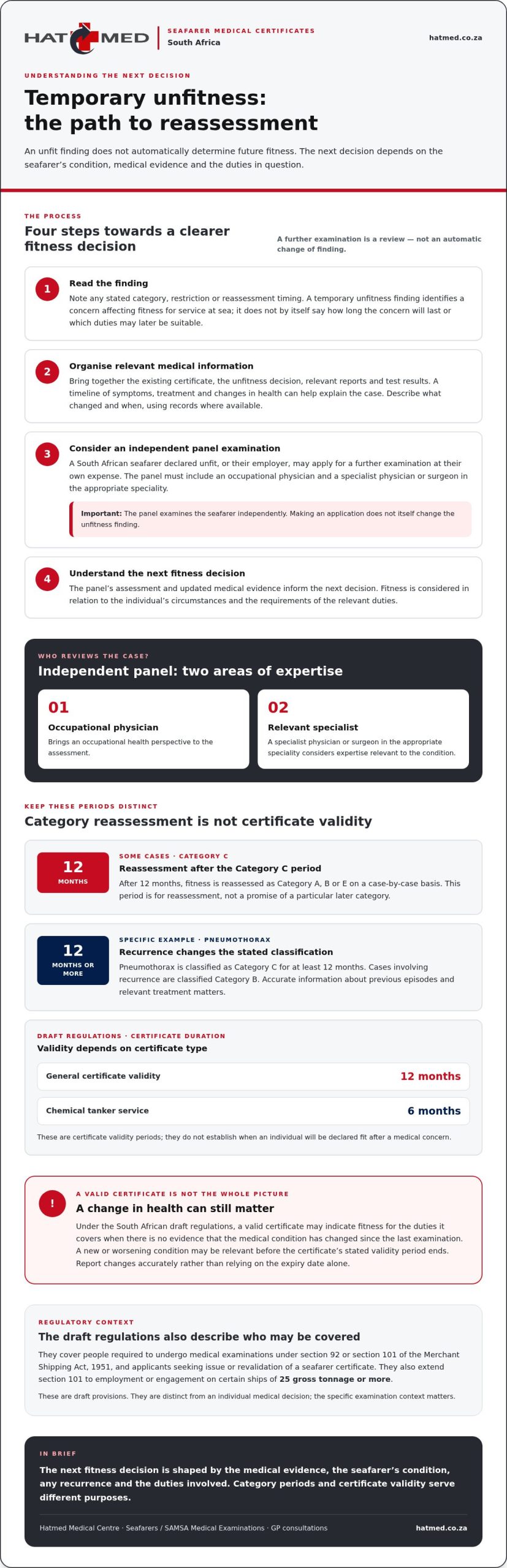
A temporary unfitness finding means the medical assessment has identified a concern that affects fitness for service at sea. It does not, by itself, say how long the concern will last or which duties may be suitable later. The next decision depends on the seafarer’s condition, the medical evidence and the requirements of the relevant duties. South African seafarers declared unfit, or their employers, may apply at their own expense for a further examination by an independent panel of medical practitioners.
The independent panel must include an occupational physician and a specialist physician or surgeon in the appropriate speciality. This brings occupational health assessment together with expertise relevant to the condition. For example, a case involving a particular specialist area should be considered by a specialist in that field. The panel examines the seafarer independently; applying does not itself change the unfitness finding.
Preparing records can help make the medical review more focused. Gather the existing certificate, the unfitness decision and relevant medical reports or test results. A clear timeline of symptoms, treatment and changes in health can help the panel understand the case. If your condition has changed since the original examination, describe what changed and when, using records where available. This information gives the panel a fuller basis for considering fitness for the duties in question.
Category C is used for some cases for 12 months, after which fitness is reassessed as Category A, B or E on a case-by-case basis. This is a period for reassessment, not a promise that a particular category will follow. The relevant medical evidence and the individual’s circumstances shape the later decision. The category assigned should therefore be read alongside its conditions and any instructions about reassessment.
Pneumothorax provides a specific example in the South African seafarer medical guidelines. It is classified as Category C for at least 12 months, while cases involving recurrence are classified Category B. This distinction shows why the medical history matters: a recurrence changes the stated classification. A seafarer with this diagnosis should ensure the examining practitioners have accurate information about previous episodes and relevant treatment.
Certificate validity is a separate issue from resolving a temporary unfitness finding. The South African draft regulations generally set validity at 12 months from the date of issue. A certificate for service on a chemical tanker has a six-month validity period. These periods describe certificate duration; they do not establish when an individual will be declared fit after a medical concern. The duties and certificate type matter when interpreting the applicable period.
The same draft regulations cover people required to undergo medical examinations under section 92 or section 101 of the Merchant Shipping Act, 1951, and applicants seeking issue or revalidation of a seafarer certificate. They also extend section 101 to employment or engagement on certain ships of 25 gross tonnage or more. As these are draft regulations, distinguish their provisions from an individual medical decision and consider the specific examination context.
For practical purposes, keep these steps in sequence:
- Read the finding and note any stated category, restriction or reassessment timing.
- Organise medical records that relate directly to the condition and relevant duties.
- Apply for further examination through the independent panel process if appropriate.
- Use the panel’s assessment and updated medical evidence to understand the next fitness decision.
A valid certificate may indicate fitness for the duties it covers when there is no evidence that the medical condition has changed since the last examination. This principle appears in the South African draft regulations. A new or worsening condition may therefore be relevant even before the certificate’s stated validity period ends. During an assessment, report changes accurately rather than relying on the certificate’s expiry date alone.
In short, resolving temporary unfitness involves a further medical assessment, relevant specialist input and consideration of the seafarer’s condition in relation to the duties involved. The seafarer or employer may use the independent panel route at their own expense. Category C periods and certificate validity periods serve different purposes, so consider each in context. The medical evidence, any recurrence and the relevant certificate or shipboard duties all help define the next step.
Hatmed Medical Centre: General Practitioner Consultations
Hatmed Medical Centre offers General Practitioner Consultations for seafarers who need to discuss a health concern alongside their medical assessment. A GP consultation can help you discuss a condition, symptoms or treatment and understand what medical information may be relevant to your care. Hatmed also provides Seafarers / SAMSA Medical Examinations. These are separate from an independent panel review, which is the route described above for a further examination after an unfit finding. If you manage a long-term condition, Chronic Disease Management can support ongoing care. Contact Hatmed Medical Centre to discuss your healthcare needs or visit hatmed.co.za.
Prepare for your next medical decision
Use the next stage to build a clear, consistent picture of your health and work-related needs. Keep relevant records together, note changes in your condition and share information that reflects your current circumstances. Understanding how temporary unfitness on a merchant shipping medical certificate is resolved can help you prepare for future discussions about your health and work. It also gives you a practical way to organise your questions before seeking care.
Medical questions can feel difficult to manage alongside work and personal responsibilities. A general practitioner consultation can provide space to discuss your health concerns and care needs. If you’re considering the resolution process for temporary unfitness on a merchant shipping medical certificate, Hatmed Medical Centre offers General Practitioner Consultations, as well as Seafarers / SAMSA Medical Examinations and Immigration Medical Examinations for people who need those assessments. For support with your next step, contact Hatmed Medical Centre. Taking time to understand your health needs is a practical step towards moving forward with greater clarity.