

A convenient location alone does not make a doctor the right fit. To choose a doctor, consider recommendations, how respectfully they listen and explain, whether their experience suits your needs, and how practical it is to attend appointments. Asking focused questions can help you make an informed decision.
It’s natural to want care that feels both capable and comfortable. A good first impression matters, but so do clear communication, respectful treatment and an approach that lets you take part in decisions about your health.
This guide explains how to gather recommendations, assess a doctor’s communication and ask about relevant experience and care. You’ll also find practical questions about appointments, accessibility and communication, helping you compare options with greater confidence.
Key Takeaways
- Gather recommendations from people who understand your needs, and ask a current doctor who is moving or retiring for guidance.
- Look for someone who listens, treats you with respect and explains things clearly, while considering how easy appointments are to reach.
- Ask about experience with your health concerns, whether the doctor is accepting patients and how they involve you in care.
- Speak with the office about practical details such as appointment arrangements, accessibility, communication and insurance.
1. Getting recommendations
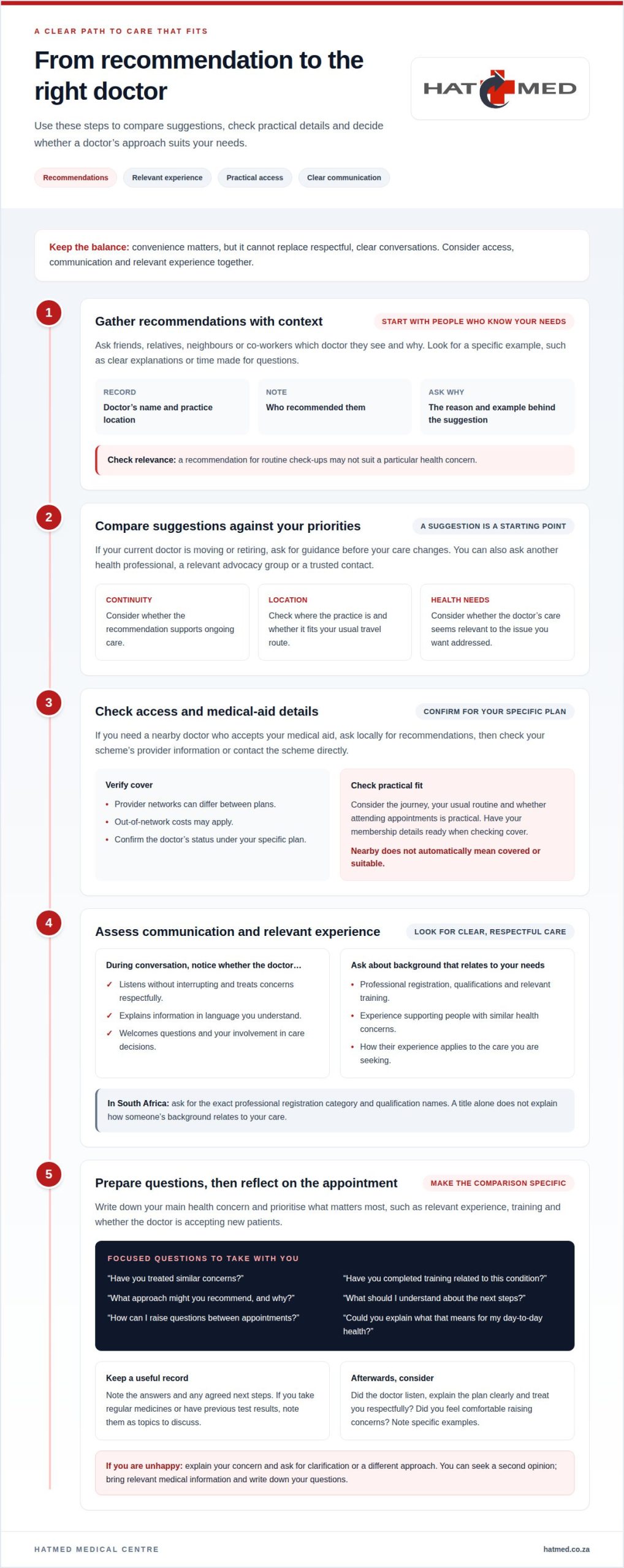
Start with people who understand your circumstances. Ask friends, relatives, neighbours or co-workers which doctor they see and why they recommend them. Look for a specific example, such as a doctor explaining a treatment clearly or making time for questions. Ask whether their experience relates to the care you need: a recommendation for routine check-ups may not suit a particular health concern. Note the doctor’s name, practice location and reason for the recommendation.
If your current doctor is retiring or moving, ask for a recommendation before your care changes. They may suggest someone whose approach or experience suits your needs. You can also ask another health professional for a referral, or speak with a relevant advocacy group or trusted contact. Treat each suggestion as a starting point, not a final decision. Compare it with your priorities, such as continuity of care, location and the health issue you want addressed.
To find a nearby doctor who accepts your medical aid, ask people in your area for recommendations, then check your scheme’s provider information or contact the scheme directly. Plans can have different provider networks and out-of-network costs, so confirm the doctor’s status for your specific plan. Have your membership details ready when you ask. Proximity is useful, but it does not establish whether a doctor is covered or suitable.
Make a shortlist that records each recommendation, its source and the reason given. Compare practical details: where the practice is, whether it fits your usual travel route, and whether the doctor’s care seems relevant to your needs. For example, if you need ongoing support for a health condition, ask a health professional for a suitable referral and consider recommendations from relatives familiar with regular appointments. A GP can provide preventive care, address health concerns and refer you when needed. These steps turn informal suggestions into a focused list.
2. Qualities to look for in a doctor
Notice how a doctor communicates during an appointment. A good fit listens without interrupting, treats your concerns respectfully and explains information in language you understand. If you mention a new symptom, for example, consider whether the doctor asks relevant follow-up questions before discussing possible next steps. You should feel able to raise concerns, ask questions and take part in decisions about your care. The same standard applies across other healthcare fields; for instance, patient-focused dental practices like Crystal Bright Smile emphasise open dialogue and clear explanations when discussing treatment plans.
In South Africa, ask about the doctor’s professional registration, qualifications and training relevant to your needs. Request the exact registration category and qualification names, then ask how they apply to the care you’re seeking. If you’re managing a long-term condition, for instance, ask about the doctor’s experience supporting patients with similar needs. Clear answers help you understand their background without relying on a title alone.
To choose the right doctor, weigh communication and relevant experience alongside practical access. Consider the journey to appointments, whether the location works with your routine, and whether you understand the doctor’s explanations. A convenient practice can be helpful if you expect regular visits. These factors matter together: convenience cannot replace respectful, clear conversations, and a strong rapport cannot make an impractical journey easier.
After your first appointment, reflect on what happened. Did the doctor listen carefully, explain the plan clearly and treat you with respect? Did the office staff communicate helpfully, and did you feel comfortable discussing your concerns? Note specific examples, such as whether you understood the proposed next steps. This gives you a clearer basis for deciding whether the relationship suits you.
If you’re unhappy with your doctor, explain your concern directly and ask for clarification or a different approach. You can seek a second opinion from another doctor, particularly if you want another perspective on a diagnosis or care plan. Bring relevant medical information and write down your questions. A clear conversation can help you compare explanations and decide what feels right for your needs.
3. Questions to ask a doctor
Prepare a short list before your appointment, starting with your main health concern. Ask whether the doctor is accepting new patients, especially if you need ongoing care. Then describe your condition or symptoms clearly and ask about the doctor’s experience treating similar concerns. For example, if you need support with a chronic condition, ask what experience they have helping patients manage it over time.
Ask about relevant training and qualifications, too. You might say, “Have you completed special training related to this condition?” or “Which qualifications are most relevant to my care?” The answers can help you understand the doctor’s background and how it relates to your needs. Look for a clear explanation, rather than assuming any qualification guarantees a specific outcome.
Use questions that help you understand how care will work in practice:
- “What would you like to know about my symptoms or medical history?”
- “What approach might you recommend, and why?”
- “What should I understand about the next steps?”
- “How can I raise questions between appointments?”
These prompts can show whether the doctor welcomes discussion and explains their thinking in accessible language. If an answer is unclear, ask for a simpler explanation or an example. You could say, “Could you explain what that means for my day-to-day health?” Notice whether the doctor addresses your concern directly and gives you space to consider the information.
Bring a written list and prioritise what matters most, such as experience with your condition, training and whether the doctor is accepting new patients. If you take regular medicines or have previous test results, note them as topics to discuss. Write down the answers afterwards, including any agreed next steps. This gives you a practical record to consider when deciding whether the doctor’s approach suits your needs.
4. Questions to ask a doctor’s office
A call to the practice can clarify practical details before you book. Ask whether the entrance and rooms are accessible for your needs, and explain any mobility or communication requirements. You can also ask how staff handle appointment requests and share information, including whether they communicate reminders or results by phone. Their answers help you understand how the office works day to day.
Medical aid coverage for GP and specialist consultations depends on your scheme and plan. Ask your scheme about benefits, network rules, referral requirements and possible out-of-pocket costs. Confirm whether the practice accepts your specific plan, and have your membership card or details ready when you call so staff can discuss the right option.
Ask how appointments are arranged and what to expect if plans change. Useful questions include:
- “What is the usual wait for an appointment?”
- “Do you offer evening, weekend or virtual appointments?”
- “What is your cancellation policy?”
- “What should I do if I need urgent care?”
- “Can I receive help in my preferred language?”
These questions help you compare practical arrangements without assuming every practice works alike. If you need appointments around work or family responsibilities, ask about the options that matter most to your routine. If you have a language preference, ask what support the office can provide during booking and consultations.
You can also ask whether the practice offers an appointment to meet a prospective doctor before becoming a patient. Ask what the meeting involves and whether a fee applies. This may help you decide if the communication style and approach to involving you in care feel suitable. If you’re ready to discuss a primary care appointment, take the next step towards a consultation.
Weigh accessibility, communication style, treatment approach and how actively the doctor involves you in your care. These practical and personal considerations can help guide your choice.
Hatmed Medical Centre: General Practitioner Consultations
Hatmed Medical Centre offers General Practitioner Consultations for people seeking primary healthcare and a doctor to discuss their health concerns. A consultation can be a practical next step when you need to talk through a health issue, ask questions or consider ongoing care. For continued support with a long-term condition, Chronic Disease Management may also be relevant.
Hatmed Medical Centre also provides Immigration Medical Examinations and Seafarers / SAMSA Medical Examinations for people who need these specific assessments. Consider which type of care matches your reason for seeking medical attention, then get in touch to take the next step.
Contact Hatmed Medical Centre or visit hatmed.co.za to enquire about an appointment.
Make your next step a considered one
Choosing a doctor is not a decision you need to make from a directory entry alone. Think about what you need from the relationship now and what may matter if your care continues over time. A first appointment can help you assess whether you can speak openly, understand the discussion and take part in decisions. Your priorities may change, so it’s reasonable to reassess the fit as your circumstances or health needs evolve.
Before booking, write down the main concern you want to discuss and any practical details that will help the appointment go smoothly. If you’re ready to speak with a GP, contact Hatmed Medical Centre about a General Practitioner Consultation. Taking this step can help you move from weighing possibilities to having a focused conversation about your health. You deserve care where your questions have room, and a clear next step can make that conversation easier to begin.
Frequently Asked Questions
What should I compare when choosing a GP or specialist?
Compare the type of care each doctor provides with the health issue you want addressed. A GP can be a useful starting point for general concerns and coordinating care, while a specialist focuses on a particular area. For instance, dedicated surgical practices like Brisbane Hernia Clinic outline what to expect during assessment and treatment to help patients navigate specialist care. Consider whether ongoing communication between them matters for your situation. If you have medical aid, check how your plan covers each provider and whether referrals are required.
What questions should I ask a doctor before choosing them?
Ask how the doctor involves patients in decisions and what they would do if your first care plan doesn’t help. You could also ask what information to bring, such as a list of medicines or previous test results, and how it may shape the discussion. These questions can reveal whether the doctor’s approach suits your preferences for understanding options and planning follow-up care.
How do I check a doctor’s reviews and reputation in South Africa?
Read reviews on more than one platform, looking for detailed comments about communication, organisation and follow-up rather than relying on a single rating. Treat personal accounts as context, not proof of clinical quality, since experiences and needs differ. Look for specific situations and consider whether they relate to what matters to you. Avoid sharing private health information in public review discussions.