
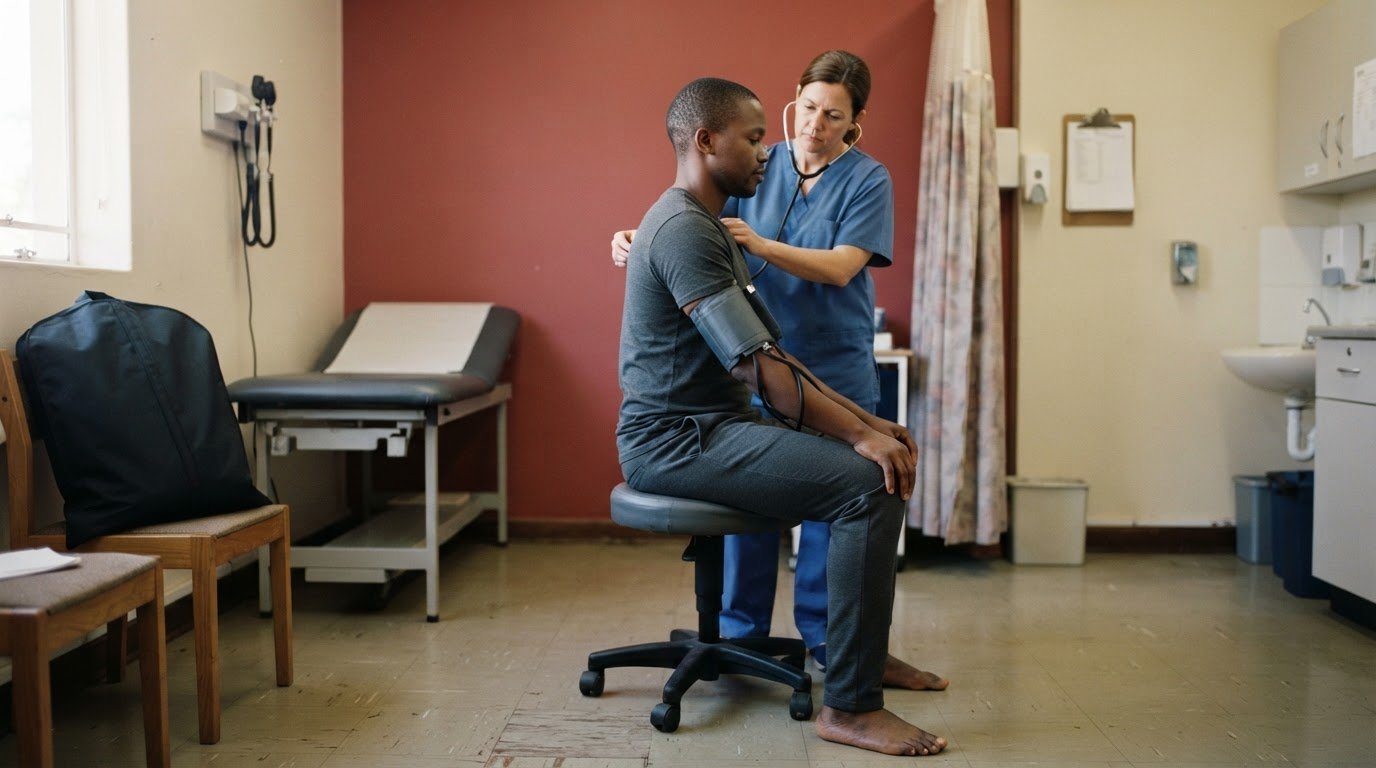
A clearance is more than a form to sign. An actor’s medical clearance is an assessment of health factors relevant to a specific activity or requirement, based on a discussion and, where appropriate, a physical examination. If the practitioner considers you healthy enough for the activity, they may provide written permission to proceed.
It’s understandable to want to know what the appointment involves and whether clearance is the same as a medical certificate. This guide explains the checks that may be included, how a practitioner considers your health in context, and how the purpose of each document differs. You’ll also see why the right assessment depends on what the clearance is for.
Key Takeaways
- Know which physical checks may be included, and why the examination is shaped by the activity or requirement.
- Understand how a practitioner weighs your health history and examination findings when assessing fitness to proceed.
- Identify whether you need an assessment of fitness or a medical certificate documenting a different health-related purpose.
- Clarify what the requesting organisation needs the document to say before arranging an appropriate assessment in South Africa.
Common physical examination checks
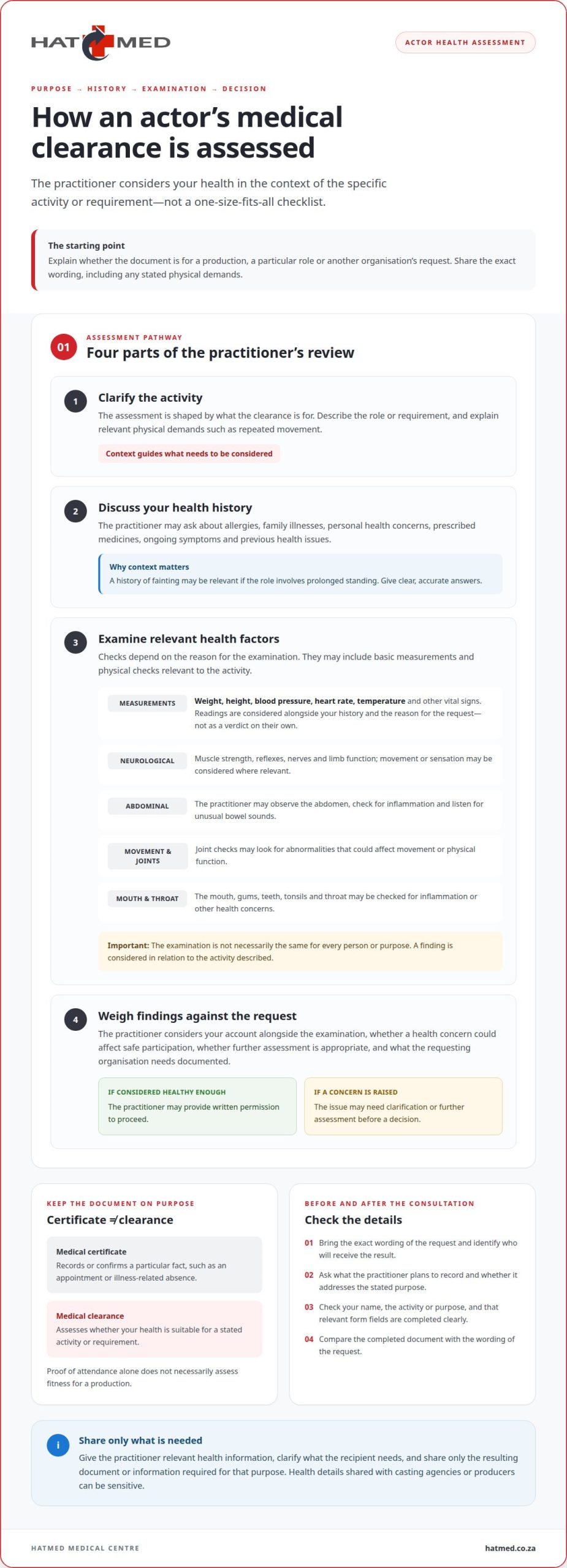
A medical clearance examination usually starts with basic measurements. The practitioner may record your weight, height, blood pressure, heart rate, temperature and other vital signs. These readings provide an initial picture of your physical state. For example, your blood pressure and pulse can be considered alongside your health history and the reason for the clearance request. They are part of the assessment, not a verdict on their own.
Physical checks may go beyond measurements. A neurological examination may assess muscle strength, reflexes, nerves and limb function. The practitioner may check whether movement or sensation raises a concern relevant to the activity. An abdominal examination can involve observing the abdomen, checking for inflammation and listening for unusual bowel sounds. Joint checks may look for abnormalities that could affect movement. The focus depends on the reason for the examination.
The practitioner may also examine your mouth, gums, teeth, tonsils and throat for signs of inflammation or other health concerns. These checks help build a broader picture rather than focusing only on visible fitness or appearance. If an activity places demands on movement or physical function, the assessment can consider relevant findings in that context. The examination is not necessarily the same for every person or purpose.
Check the document details before your appointment and again when you receive the completed form. Confirm that your name is spelt correctly and that the document identifies the activity or purpose, such as an acting role or work requirement. Compare its wording with the request you received. If the form has fields for examination findings or the practitioner’s decision, make sure they are completed clearly. A document for a different purpose may not meet the request.
In South Africa, the cost depends on the case and is provided after a quote request. Factors include the examination required, any additional tests and the documentation requested.
Assessment by a medical practitioner
An actor’s medical clearance assessment starts with its purpose. The practitioner tailors the examination to the activity or requirement instead of applying the same checklist to everyone. Explain whether the document is for a production, a particular role or another organisation’s request. If the role involves physical demands, such as repeated movement, describe them clearly so the practitioner can consider relevant health factors.
The discussion puts examination findings into context. A doctor may ask about allergies, family illnesses and personal health concerns. Mention prescribed medicines, ongoing symptoms and previous health issues that could affect the activity. For example, a history of fainting is relevant if the role involves prolonged standing. Give clear, accurate answers; the practitioner considers your account alongside the examination, not as a substitute for it.
The practitioner weighs the information against the stated purpose. They consider whether a health concern could affect safe participation, whether further assessment is appropriate and what the requesting organisation needs documented. If the doctor considers you healthy enough for the activity, they may provide written permission to proceed. If the findings raise a concern, the next step may be to clarify the issue or assess it further before making a decision.
Sharing medical information with casting agencies or producers can expose sensitive details they may not need to know about your fitness for a role. Give the practitioner your relevant health history, clarify what the recipient needs and share only the resulting document or information required for that purpose.
Before the appointment, bring the exact wording of the request and identify who will receive the result. During the consultation, ask what the practitioner plans to record and whether the document addresses the stated purpose. A discussion with a medical practitioner can help you understand how your health history relates to the assessment. The final written decision should reflect the practitioner’s review and the activity described, not assumptions about an actor’s general fitness.
Differences between medical certificates and medical clearances
A medical certificate and a medical clearance answer different questions. A certificate records or confirms a particular medical fact, such as an appointment or an illness-related absence. A clearance addresses whether your health is suitable for a stated activity or requirement. For an actor, this could be a role involving physical demands. The document’s title alone does not explain its purpose; its wording and the request behind it matter.
For example, a certificate confirming that you attended a consultation does not necessarily assess your fitness for a production. A clearance, by contrast, considers the activity described and records a practitioner’s assessment or decision. Neither document should be treated as a substitute for the other. If a production requests clearance, proof of attendance alone may not answer its question.
- Purpose: A certificate records a specific fact; a clearance assesses fitness in relation to an activity.
- Context: A certificate might relate to an absence; clearance might relate to a role’s stated physical requirements.
- Wording: Check whether the document states the practitioner’s assessment, rather than only confirming a visit.
If a doctor refuses clearance, ask which health concern informed the decision and what the written assessment means. Follow the practitioner’s advice about further evaluation or steps before seeking another assessment. For instance, if a finding relates to a movement demand, clarify whether the concern is specific to that activity. Do not present a certificate confirming attendance as proof of fitness.
Before arranging an examination, identify the document’s exact purpose and the recipient’s wording. Give the practitioner the relevant request, such as a form describing a role’s physical demands. Then check that the completed document addresses that purpose and clearly states the decision. This helps actors avoid submitting a document that confirms one fact when the production needs an assessment of another.
How do actors get medical clearance in South Africa?
In South Africa, start by identifying why you need clearance and who will receive it. An actor’s medical clearance should relate to the activity or requirement named in the request. A production may need an assessment of fitness for a particular role, rather than proof of attendance at a consultation. Ask the production for its document requirements and a description of the role’s physical demands.
Take the request and relevant health information to a medical practitioner. This gives the practitioner context for the assessment and helps clarify what the final document needs to address. For instance, a role requiring repeated movement raises different considerations from a request for general medical confirmation. Explain relevant health concerns accurately and describe the activity in practical terms.
The process usually involves a consultation, an appropriate examination and a decision based on the information gathered. The practitioner may ask about allergies, family illnesses and personal health concerns, then consider those details alongside examination findings. If the practitioner considers you healthy enough for the activity, the result may be written permission to proceed. The wording should reflect the purpose of the request, not make a broad statement unrelated to it.
- Clarify the purpose: Identify the role, activity or requirement the document must address.
- Bring the request: Share the production’s form or written description with the practitioner.
- Explain the activity: Describe relevant physical demands, such as sustained movement or lifting.
- Review the document: Check that your details and the stated purpose are clear and accurate.
If the production’s form asks for information beyond the practitioner’s assessment, clarify which sections need to be completed. A certificate confirming attendance does not necessarily provide a fitness decision. Similarly, clearance for one activity may not meet a different request. Matching the assessment to the recipient’s actual requirement can prevent confusion and help you avoid relying on the wrong document.
For a medical assessment based on your specific requirement, discuss your assessment needs with a practitioner.
Hatmed Medical Centre: General Practitioner Consultations
Hatmed Medical Centre provides General Practitioner Consultations for people seeking guidance about a health concern or medical assessment. If a production has requested documentation, bring its instructions to your consultation so the practitioner can understand the purpose and discuss your health in that context.
A GP consultation can also help if you have ongoing health needs to discuss alongside a role’s demands. Share relevant symptoms, treatment details and information about the activity. Hatmed Medical Centre also provides Chronic Disease Management to support care discussions when an existing condition is part of your health picture. Immigration Medical Examinations and Seafarers / SAMSA Medical Examinations address their specific assessment requirements, rather than serving as general substitutes for an actor’s requested document.
For a considered discussion of your health and the document you need, contact Hatmed Medical Centre or visit hatmed.co.za.
Make your next step clear and considered
Use the clearance process to have a clear conversation about your health needs and the work ahead. Before sharing documentation, consider what the production needs to know and keep a copy of the completed paperwork. This gives you a record of the practitioner’s assessment if the role or its requirements change.
An actor’s medical clearance should support a specific decision, not make a broad statement about your ability or career. Make time to discuss concerns openly with a practitioner and understand the outcome before sharing documents. If you need a medical discussion in South Africa, Hatmed Medical Centre can help through a General Practitioner Consultation.
Contact Hatmed Medical Centre to discuss your next step. With a clear request and an open conversation, you can move forward with greater confidence.
Frequently Asked Questions
What is a medical clearance exam, and why do you need one?
A medical clearance examination assesses health in relation to a specific activity or requirement. A school, employer or sports programme may request one before participation, while an organisation may need a practitioner’s view of a particular health concern. For an acting job, the production’s request defines the purpose. Clearance is not simply a general check-up or proof of attendance at an appointment.
What does medical clearance mean for an actor?
For an actor, medical clearance means a practitioner has assessed health in relation to the activity or role described. It is not a general judgement about talent, employability or suitability for every production. For example, an assessment of a role’s physical demands may not meet a separate request about another activity. The document’s intended use should be clear to both the actor and the recipient.
When do actors need medical clearance for a role or production?
Arrange an assessment when a production requests one, especially if it describes a health-related requirement for a role. A request might come before rehearsals or filming, but each production sets its own process. If you receive a form late in casting, ask the production what decision the document needs to support. This helps you avoid arranging an unrelated appointment.
Who can provide medical clearance for an actor in South Africa?
A medical practitioner, such as a doctor, can assess an actor’s health and provide written permission to proceed when appropriate. Bring the production’s request so the doctor understands the intended activity and the document’s purpose. A casting director or producer may explain what paperwork is required, but a medical practitioner conducts the health assessment.
What medical tests or assessments are required for actor medical clearance?
There is no single set of tests for every acting role. The practitioner chooses an assessment based on the stated purpose, your health information and relevant demands. A role involving strenuous movement may prompt discussion of physical function, while a less physically demanding role may require a different focus. Any additional tests depend on clinical findings and the question the assessment needs to answer.
What medical forms or documents do South African film productions require?
Productions may provide their own form or request a written practitioner’s assessment. Requirements can differ by production and role. Ask for the exact document and instructions before booking, then bring them to the appointment. Check that the completed paperwork identifies you and addresses the requested purpose. A note confirming attendance may not meet a request for an assessment of fitness.