
The medical assessment is more than a paperwork exercise. An STCW seafarer medical examination checklist for new recruits may include identification, forms supplied for the appointment and relevant health information, such as existing reports or details of medicines you take. The examining practitioner assesses your health as part of the seafarer medical examination.
It’s understandable to want to arrive prepared, especially when arranging an examination for a new role at sea. The documents needed depend on the examination and the requirements for your role, so gather relevant information before your appointment.
This guide explains what happens during the examination and which documents you may need to provide. It also outlines how a Seafarers / SAMSA medical examination in South Africa can help you prepare for the next step in recruitment.
Key Takeaways
- Learn what a provider assesses during an STCW seafarer medical examination and how the examination supports a recruit’s medical assessment.
- Get a clearer idea of which identification, forms and health information may be useful to bring to your appointment.
- Understand how existing medical conditions and relevant health records can inform the assessment.
- Find out when Hatmed Medical Centre’s Seafarers / SAMSA Medical Examinations may be the appropriate next step for a new recruit.
What a provider checks during an STCW seafarer medical examination for new recruits
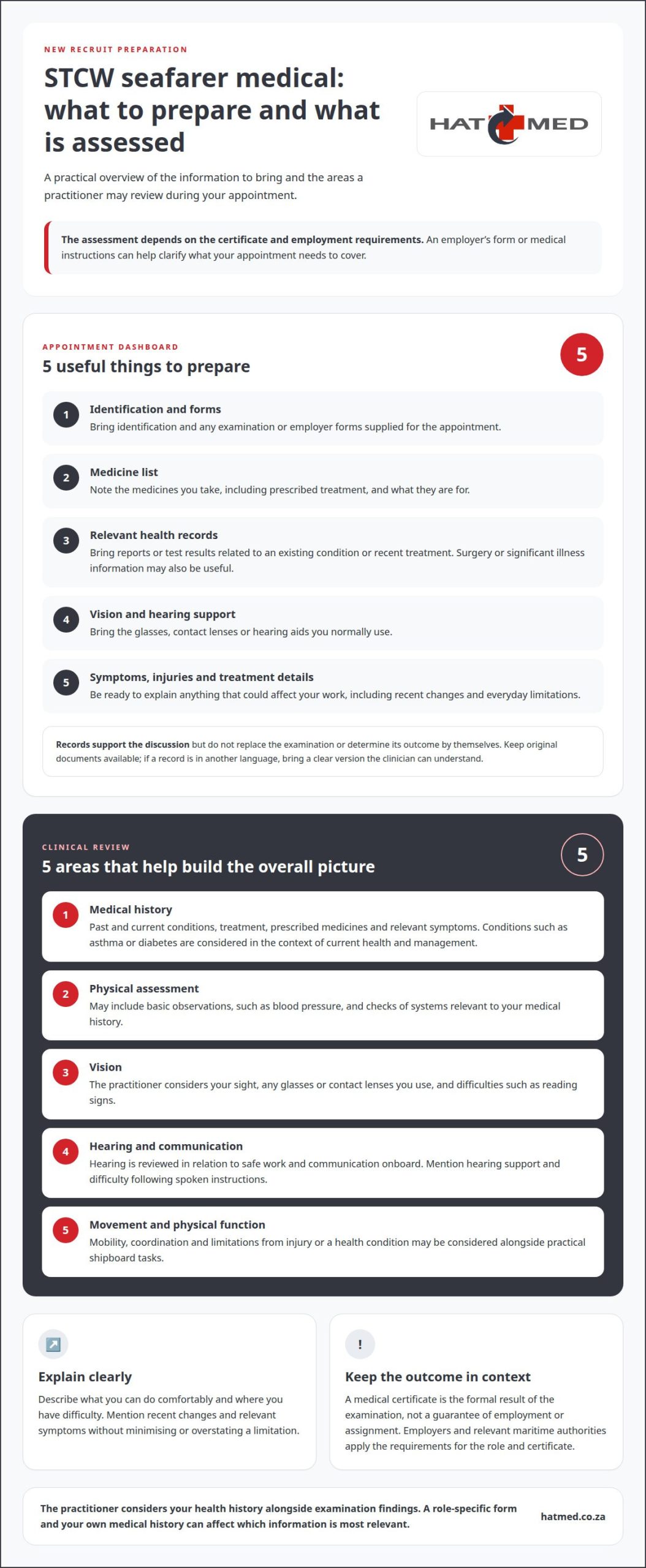
An STCW seafarer medical examination brings together your health history and a clinical assessment. The practitioner considers how your health relates to the duties you may perform at sea. The assessment depends on the certificate and requirements for your employment. An employer’s form or medical instructions can help clarify what the appointment needs to cover.
The first step is usually a discussion about your medical history. The clinician asks about past and current conditions, treatment, prescribed medicines and relevant symptoms. For example, a history of asthma or diabetes helps put your current health information in context. Answer clearly and mention any recent changes. This allows the clinician to consider how a condition is managed, rather than relying on its name alone.
Bring relevant records if you have them, such as a specialist report, recent test result or details of ongoing treatment. A medicine list can clarify what you take and why. If you’ve had surgery or a significant illness, discharge or follow-up information may also be useful. These documents support the discussion but do not replace the examination or determine its outcome by themselves.
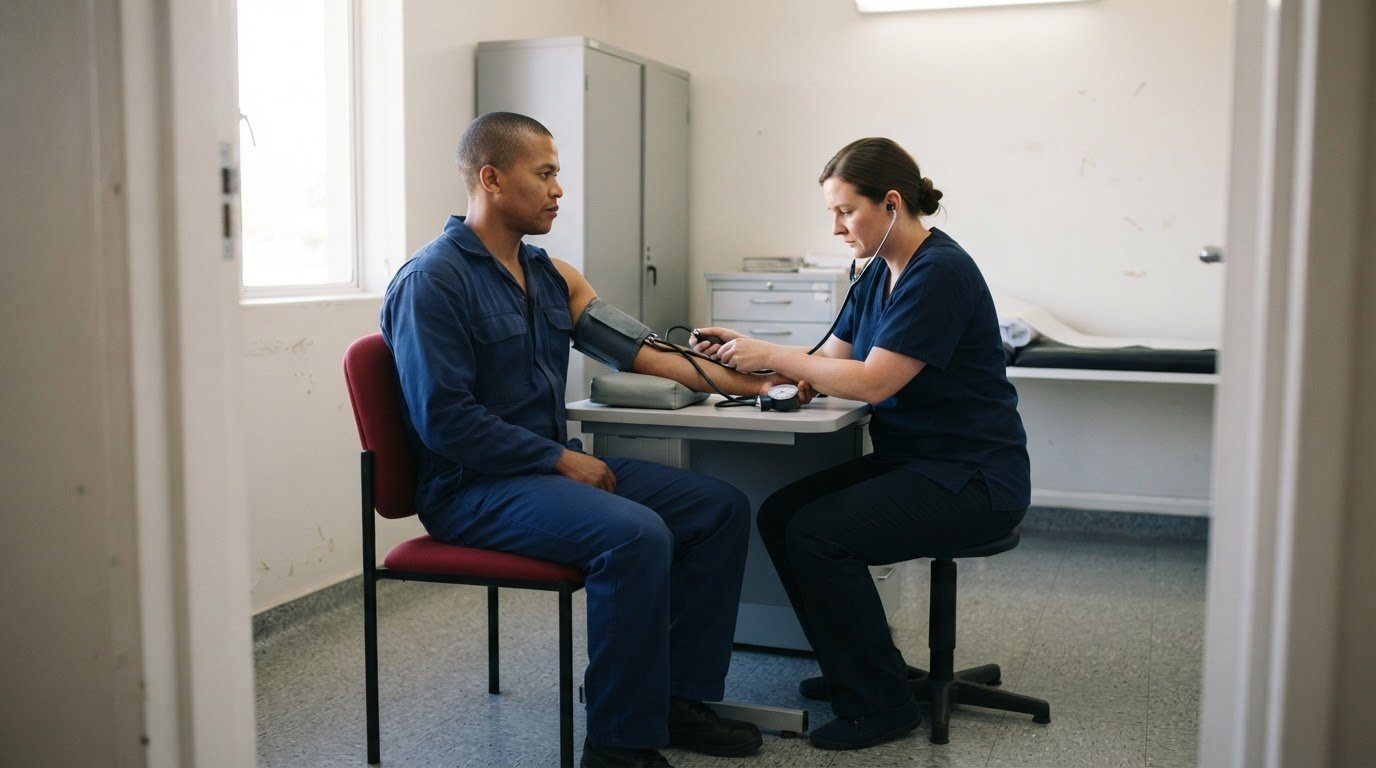
A physical assessment gives the clinician information about your general health. It may include checking basic observations, such as blood pressure, and assessing systems relevant to your medical history. If you report chest symptoms, for instance, the clinician can consider that history alongside examination findings. The aim is to build an overall medical picture, not to judge fitness based on one observation.
Vision and hearing are relevant to safe work and communication onboard. The practitioner assesses these senses as part of the medical review and considers any glasses, contact lenses or hearing support you use. Mention difficulties in everyday settings, such as reading signs or following spoken instructions. Clear information helps the assessment reflect your needs and supports appropriate medical documentation.
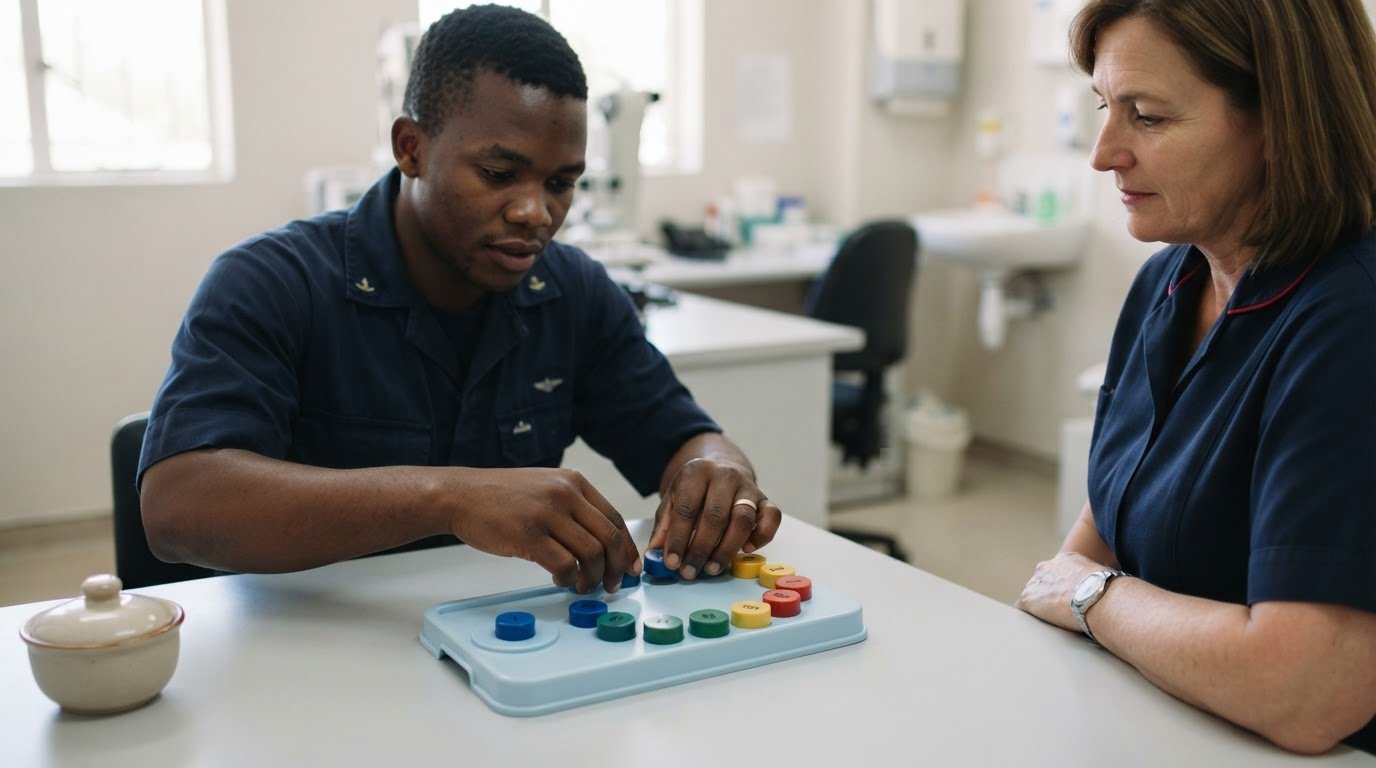
Movement and physical function matter because shipboard work can involve practical tasks. The clinician considers mobility, coordination and limitations caused by injury or a health condition. For example, discomfort when bending or difficulty using one hand may be relevant to duties involving movement or equipment handling. Describe what you can do comfortably and where you have difficulty, without minimising or overstating a limitation.
For a new recruit, an STCW seafarer medical examination checklist should cover both paperwork and health information. Useful items to prepare include:
- Identification and any examination or employer forms provided for the appointment.
- A current list of medicines, including prescribed treatment.
- Relevant reports or test results for an existing condition or recent treatment.
- Glasses, contact lenses or hearing aids you normally use.
- Details of symptoms, injuries or treatment that could affect your work.
There isn’t one document bundle that suits every recruit. A role-specific form may request particular information, while your medical history can make some records more relevant than others. Keep original documents available and provide accurate details at the appointment. If records are in another language, bring a clear version the clinician can understand. The practitioner uses the information available and examination findings to complete the assessment and record the medical outcome.
A medical certificate is the formal result of the examination, not a guarantee of employment or assignment. Employers and relevant maritime authorities apply the requirements for the role and certificate. If the clinician needs more information, this may affect completion of the assessment. Sharing relevant records and explaining your health clearly helps the practitioner assess your circumstances carefully and document the findings accurately.
Hatmed Medical Centre: Seafarers / SAMSA Medical Examinations
Hatmed Medical Centre provides Seafarers / SAMSA Medical Examinations for recruits who need a professional seafarer medical assessment. This is a practical next step when an employer requires medical documentation for a role at sea or you’re preparing for an examination as part of recruitment.
Bring any forms supplied for the appointment, identification and relevant health records, such as reports about ongoing treatment. This information helps the practitioner consider your medical history alongside the examination. If you also need support with a health concern, General Practitioner Consultations offer a separate way to discuss it.
Take the next step towards your seafarer medical
As you move from recruitment planning to arranging an examination, keep its purpose clear. An STCW seafarer medical examination checklist for new recruits can help you organise information relevant to your appointment, while your employer’s instructions can clarify which assessment you need. Preparing clearly gives you a practical starting point for discussing your health and the examination process with a medical professional.
Hatmed Medical Centre provides Seafarers / SAMSA Medical Examinations, alongside General Practitioner Consultations and Immigration Medical Examinations. Choose the service that matches your immediate need, whether you’re preparing for seafaring work or arranging a different medical assessment.
Contact Hatmed Medical Centre to discuss arranging your seafarer medical examination. Taking this step can help you approach the process with greater clarity and confidence.