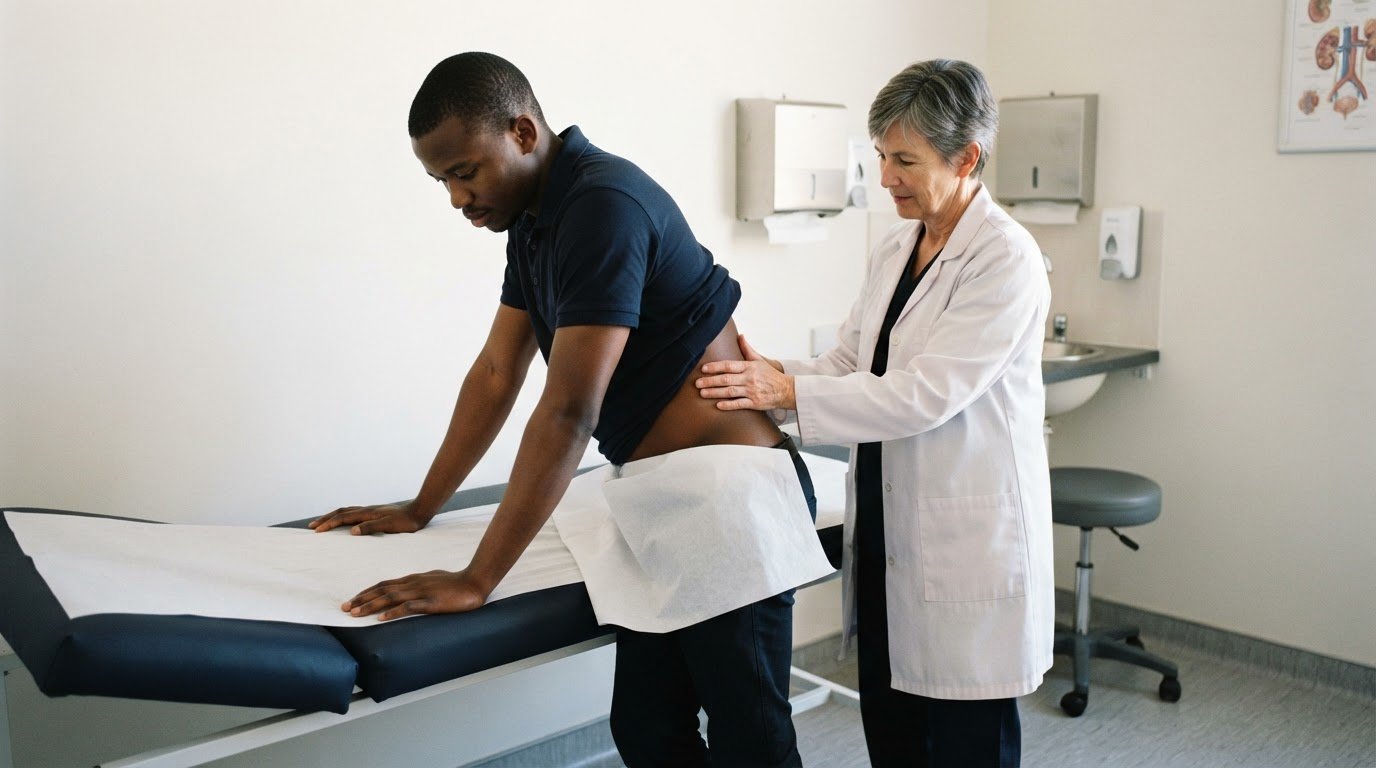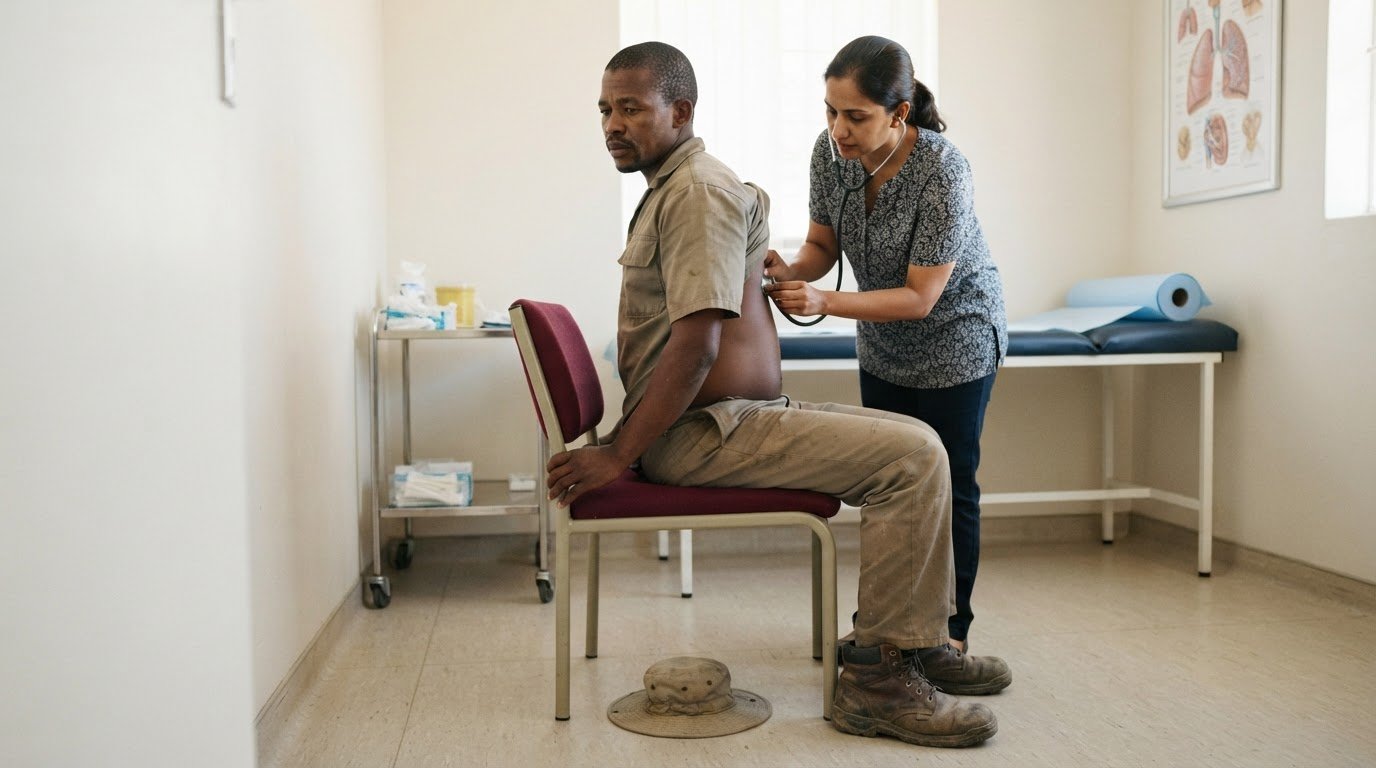

A psychometric score cannot, by itself, determine whether a seafarer is mentally fit for sea duty. Commercial seafarer psychological fitness evaluation criteria should not treat psychometric assessments as medical or psychiatric diagnostic tools. Instead, an assessment considers whether a person’s health-related capabilities support safe and effective performance of routine work and emergency duties at sea.
It’s understandable to want a clear answer before joining a vessel or taking on emergency responsibilities. Psychological tests can provide useful information, but their results need to be considered alongside a broader medical fitness examination, not mistaken for a diagnosis or a complete judgement of readiness.
This article explains what psychological assessments can indicate, where their limits lie and how medical fitness examinations relate to the demands of seafaring. You’ll also learn which areas may be considered when assessing readiness for duty, and how psychological wellbeing fits into the wider picture of fitness for work at sea.
Key Takeaways
- Use psychological assessment results as one part of a wider fitness picture, not as a standalone diagnosis of mental fitness for sea duty.
- Notice changes in behaviour, concentration or ability to manage work, as these can affect reliability alongside technical competence.
- Consider whether a seafarer’s health-related capabilities support both routine tasks and emergency responsibilities at sea.
- A medical fitness examination can help serving seafarers and candidates understand how their health relates to the demands of duty.
Behavioural reliability versus technical competence
Technical competence shows whether a seafarer can carry out trained tasks, such as operating equipment or following a maintenance procedure. Behavioural reliability concerns how consistently they communicate, concentrate and work with others under pressure. The two are related, but not interchangeable. A crew member may know the correct response to an alarm yet struggle to share information clearly during a tense incident.
For example, imagine a technically skilled crew member who becomes unusually withdrawn, forgets agreed tasks or reacts irritably to routine instructions. Those changes may affect coordination and deserve attention alongside practical performance. One behaviour does not establish a psychological condition. The useful step is to consider whether it is a change for that person and whether it affects safe work or cooperation.
An assessment should connect observations to the actual demands of maritime work. Relevant examples include receiving instructions, passing on important information, managing disagreements and maintaining concentration during assigned duties. The question is not whether a seafarer appears cheerful or sociable, but whether their behaviour supports reliable work and communication in the role, including in demanding circumstances.
The International Labour Organization’s Maritime Labour Convention 2006 establishes minimum standards for seafarers’ working and living conditions, including health and medical care. That wider context matters because fitness is not simply a test of technical knowledge. A balanced evaluation considers health-related capabilities alongside the practical and interpersonal demands of duty. For a fair judgement, observations should be specific: what happened, during which task, and how it affected work. This helps distinguish a temporary difficulty from a pattern that may need further medical consideration, without treating normal differences in personality as evidence of unfitness.
Pre-joining psychological assessments
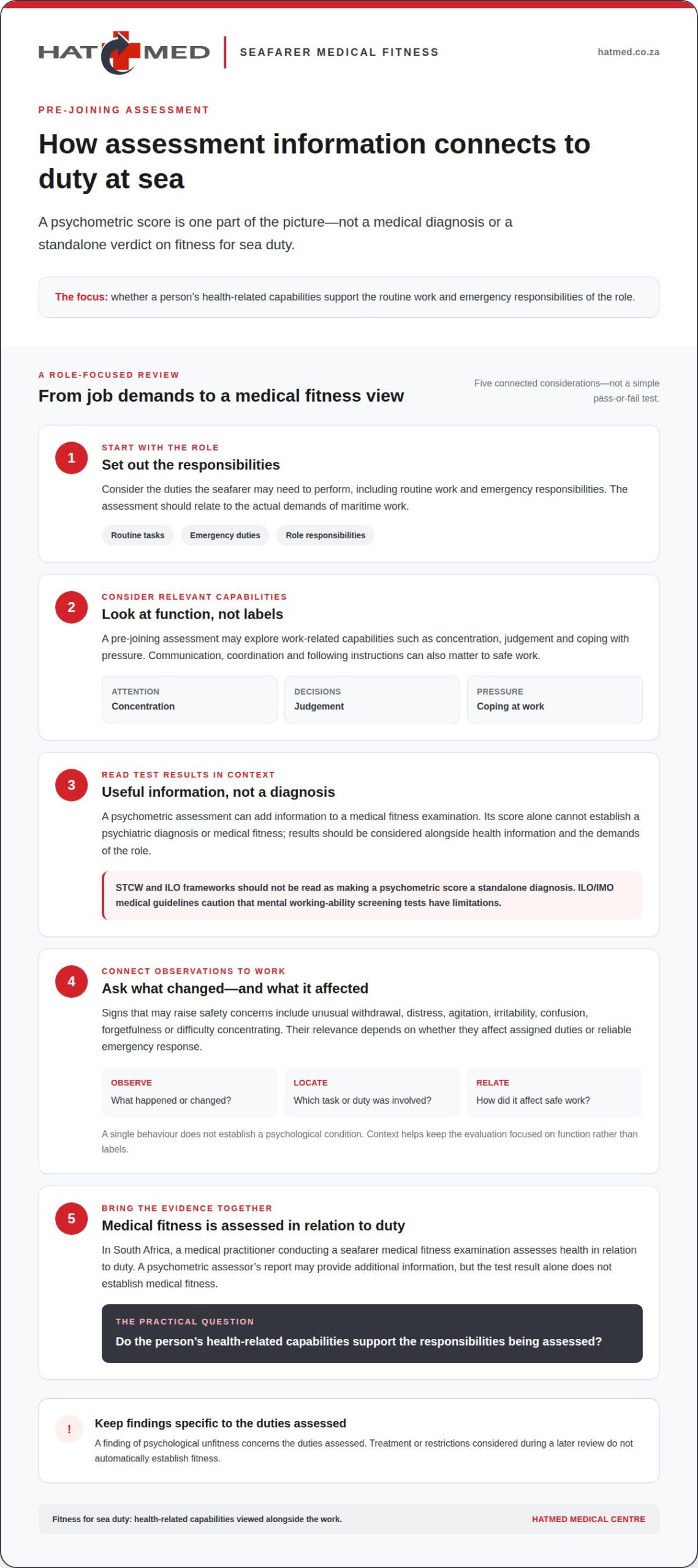
Before joining a vessel, a psychological assessment may explore work-related capabilities such as concentration, judgement and coping with pressure. It adds context to a medical fitness examination rather than replacing one. For example, a questionnaire about attention may prompt discussion of daily functioning, but its score cannot establish a psychiatric diagnosis. Commercial seafarer psychological fitness evaluation criteria should focus on how relevant health information relates to the intended duties.
STCW and ILO frameworks should not be interpreted as treating a psychometric score as a standalone diagnosis of fitness for sea duty. The ILO/IMO medical guidelines caution that mental working-ability screening tests have limitations in seafarer medical examinations. Results can inform an evaluation, but must be considered alongside health information and the demands of the role.
In South Africa, a medical practitioner conducting a seafarer medical fitness examination assesses health in relation to duty. A psychometric assessor’s report may provide additional information, but a test result alone does not establish medical fitness. The practical question is how the person’s capabilities relate to the work they may need to perform.
If a seafarer is found psychologically unfit, the finding concerns fitness for the duties assessed. Treatment or restrictions may be considered during a later review, but neither automatically establishes fitness. Understanding commercial seafarer psychological fitness evaluation criteria means considering whether health-related capabilities support the relevant responsibilities. For example, a restriction on a particular task matters in relation to the role’s duties.
A pre-joining review connects information to the job: the role’s demands, the capabilities relevant to safe performance, and whether further medical assessment is needed. This keeps a test from becoming a simple pass-or-fail verdict. For a South African medical fitness examination related to seafaring, Seafarers / SAMSA Medical Examinations provide a route to assess health in relation to duty.
Criteria for safe and effective emergency duties at sea
Signs that may raise safety concerns include unusual withdrawal, isolation, distress, agitation, irritability, confusion, forgetfulness or difficulty concentrating. Their relevance depends on whether they affect a seafarer’s ability to carry out assigned duties or respond reliably in an emergency.
Emergency fitness involves more than knowing a procedure. A crew member may need to understand an instruction, communicate important information, make a decision and coordinate with others. For example, confusion during an alarm response could delay a handover or leave another crew member without essential information.
Guidelines for medical fitness examinations help maritime administrations establish equitable criteria for deciding whether seafarers can safely and effectively perform routine and emergency duties, in line with their health-related capabilities. In practice, an assessment relates a person’s capabilities to the role’s responsibilities. A concern about concentration, for instance, matters in relation to tasks requiring sustained attention.
Context matters. A single episode of irritability after a stressful event does not, by itself, describe someone’s overall ability to work. More useful information includes what changed, which duty was affected, and whether the person could follow instructions and communicate clearly. This keeps the evaluation focused on function rather than labels.
Practical examples can clarify the demands being considered:
- Following instructions: Can the seafarer understand and act on information during an emergency drill?
- Communication: Can they relay a change in conditions clearly to the relevant crew?
- Judgement and attention: Can they remain focused on the assigned task and respond appropriately to new information?
- Team coordination: Can they work with others when an emergency response depends on shared actions?
These examples distinguish technical knowledge from the health-related capabilities needed to apply it. A fair decision connects observed difficulties to actual routine or emergency duties, then considers how they affect safe and effective performance at sea.
Medical fitness examinations for serving seafarers and candidates
A medical fitness examination considers whether a serving seafarer or candidate can perform duties relevant to their role. It connects health-related capabilities with routine work and emergency responsibilities. For example, a health concern affecting concentration is considered in relation to tasks that require sustained attention, rather than as an isolated test result. Commercial seafarer psychological fitness evaluation criteria should be understood within this wider medical context.
International medical guidelines are intended to assist medical practitioners, shipowners, seafarers’ representatives, seafarers and other relevant people with examinations of serving seafarers and candidates. Consistent guidance supports structured fitness decisions. It also helps relate a person’s capabilities to the actual demands of work at sea, rather than treating every role as having identical responsibilities.
A useful examination builds a picture from relevant health information and the duties being assessed. The practitioner considers how a health concern may affect the ability to perform those duties. For instance, reported sleep difficulties may need to be considered alongside tasks requiring sustained attention. If a serving crew member’s health changes, their current responsibilities should be considered in that new context. This is how commercial seafarer psychological fitness evaluation criteria can inform a role-related assessment without making one test decisive.
Mental working-ability screening tests have limitations in seafarer medical examinations. A test can provide information, but cannot by itself establish medical fitness or diagnose a psychiatric condition. The central issue is how available clinical information relates to safe, effective work. A single score should not be treated as a complete account of someone’s health.
If deemed unfit, a seafarer can seek a second medical opinion or further examination. Sharing the original decision and relevant medical information can help a reviewing practitioner understand what was assessed and consider any changes in health or duties. The review still needs to relate to the responsibilities the seafarer may perform.
For an assessment focused on seafaring duties, book a Seafarers / SAMSA Medical Examination to consider medical fitness in relation to work at sea.
Hatmed Medical Centre: Seafarers / SAMSA Medical Examinations
Hatmed Medical Centre provides Seafarers / SAMSA Medical Examinations for seafarers and candidates seeking a medical fitness assessment. This is a relevant next step when you need your health considered in relation to seafaring duties, including responsibilities at sea.
A psychological test alone cannot establish medical fitness. A seafarer medical examination considers health in the context of the work, linking the assessment to the demands of duty. If you have a health concern that may affect your ability to perform your role, a General Practitioner Consultation can also support a discussion of your health needs.
For an assessment related to seafaring work, contact Hatmed Medical Centre to arrange a Seafarers / SAMSA Medical Examination.
Take a considered next step
Commercial seafarer psychological fitness evaluation criteria are most useful when they support a clear, individual medical assessment. If you’re preparing to join a vessel or have concerns about your current fitness for duty, a medical conversation can help relate your health to the responsibilities you may need to perform. Bring relevant health information and explain any changes that affect your work or wellbeing.
Hatmed Medical Centre offers Seafarers / SAMSA Medical Examinations for seafarers and candidates, alongside General Practitioner Consultations and Immigration Medical Examinations. These services address different medical needs, so choose the one that fits your next step. An examination provides a structured opportunity to discuss your fitness in the context of seafaring duties.
Contact Hatmed Medical Centre today to take the next step towards an informed assessment. Approaching the conversation openly can help you move forward with greater clarity and confidence.
Frequently Asked Questions
Can psychometric assessments determine whether a seafarer is mentally fit for sea duty?
No. A psychometric assessment can provide information, but it cannot diagnose a mental health condition or decide fitness by itself. For example, a result suggesting difficulty with attention needs interpretation alongside clinical information and the tasks involved. Mental working-ability screening tests have limitations in seafarer examinations, so a score should not be treated as a complete medical judgement.
Does this mean only highly resilient people should become seafarers?
No. Seafarers don’t need to demonstrate an exceptional level of resilience to be considered for work. Fitness relates to whether a person’s health and capabilities support the duties of their role. For example, needing support after a difficult event does not, by itself, establish inability to work. The relevant assessment considers how health affects responsibilities and safe performance.
Why are behavioural factors relevant in maritime hiring?
Behaviour affects how a crew member applies training and works with others. For example, failing to communicate a change in a task could disrupt coordination, even when the person understands the technical procedure. Hiring assessments may therefore consider work-related behaviour alongside qualifications and experience. This is not a judgement of personality; it helps relate a candidate’s capabilities to the practical responsibilities of the position.
What psychological fitness criteria apply to commercial seafarers under international maritime standards?
International maritime guidance centres on whether seafarers can perform routine and emergency duties safely and effectively, in line with their health-related capabilities. It does not reduce psychological fitness to one universal test score. For example, concentration may matter differently across roles, depending on assigned tasks. The assessment connects relevant health information with the responsibilities the seafarer may need to carry out.
What mental health conditions can affect a seafarer’s medical fitness certificate?
No diagnosis automatically determines fitness in every case. The relevant consideration is whether a health condition or its effects impair the capabilities needed for the seafarer’s duties. For example, symptoms that interfere with concentration may matter for a role requiring sustained attention. Assessment relates the person’s current health and functioning to the work, rather than relying on a condition’s name alone.
What does a South African seafarer medical examination include for psychological fitness?
A South African seafarer medical examination considers health in relation to the demands of seafaring work. Psychological fitness is not established by a psychometric score alone, and the examination should relate relevant health information to the person’s duties. Hatmed Medical Centre offers Seafarers / SAMSA Medical Examinations. If a health concern affects your work, raise it during the medical assessment so it can be considered in context.