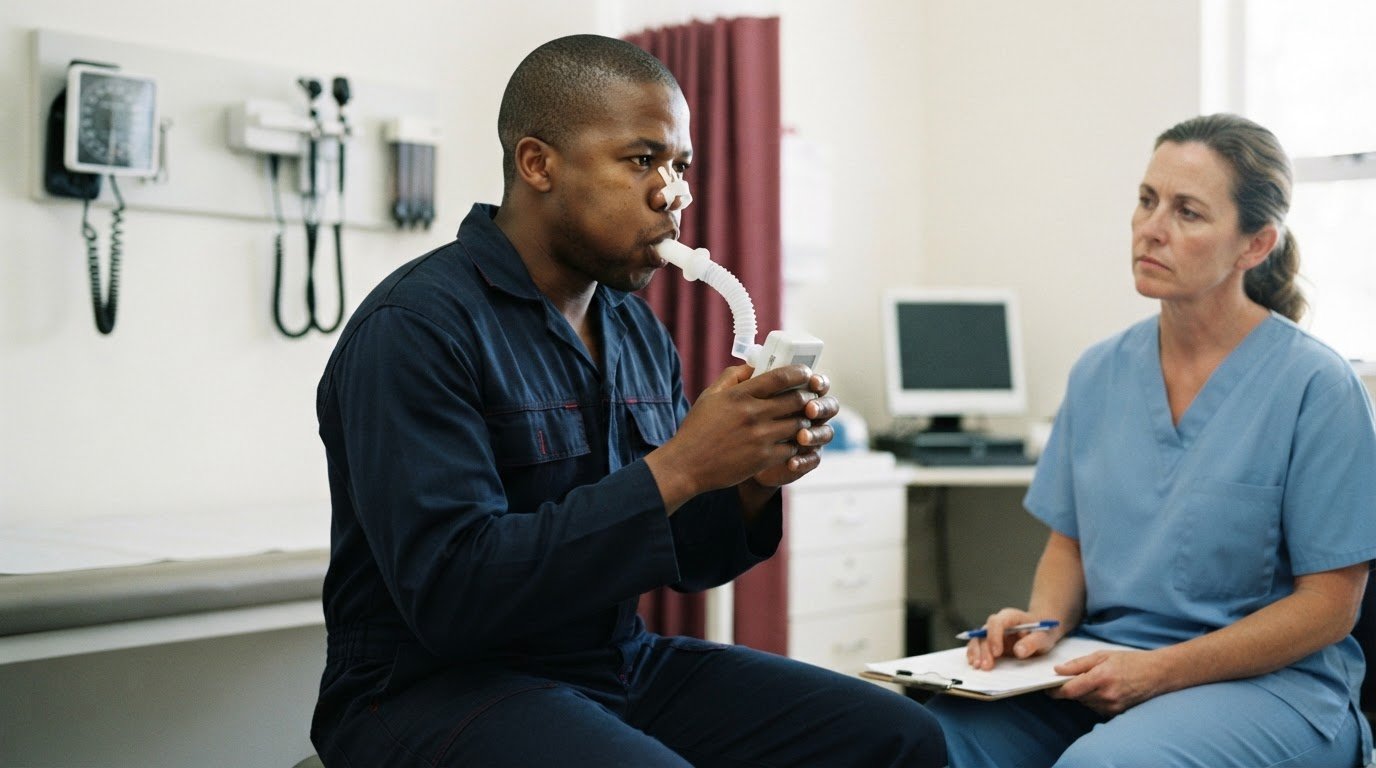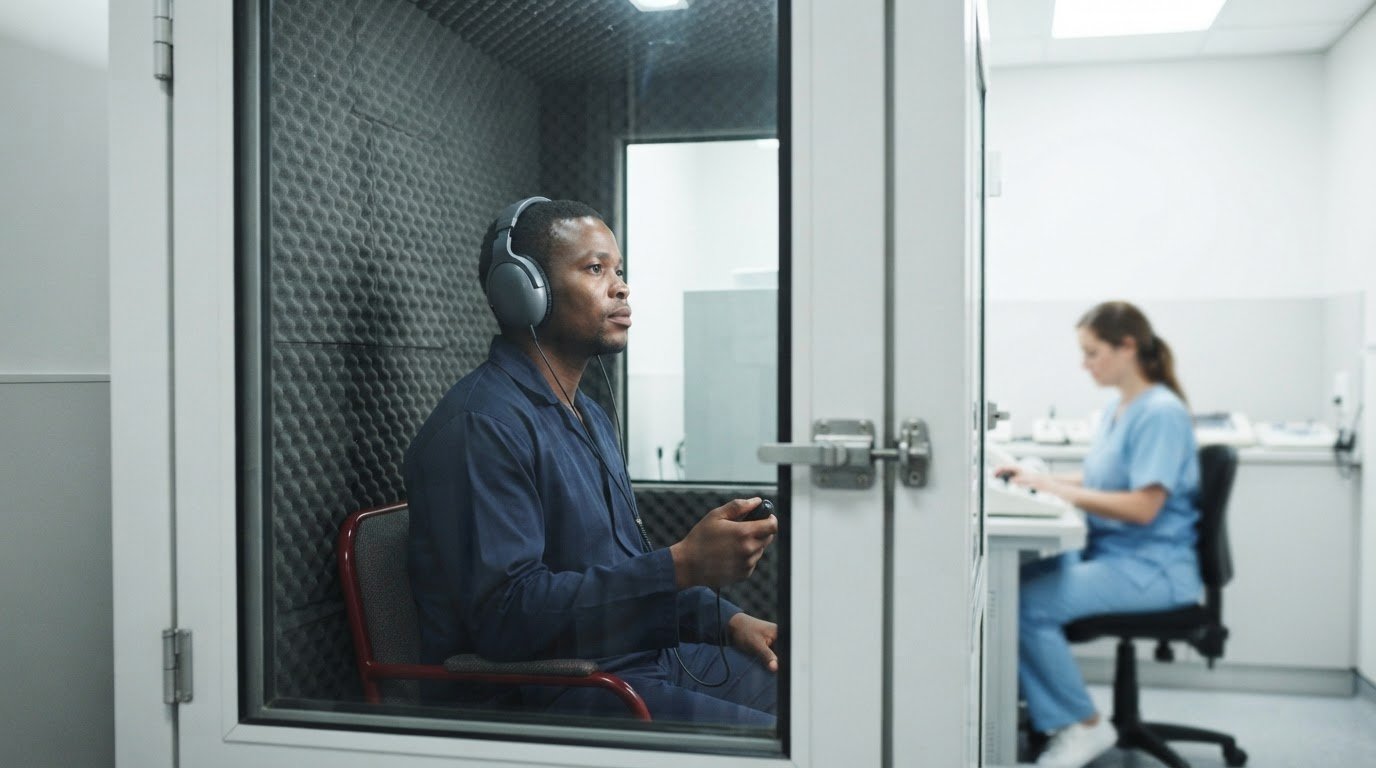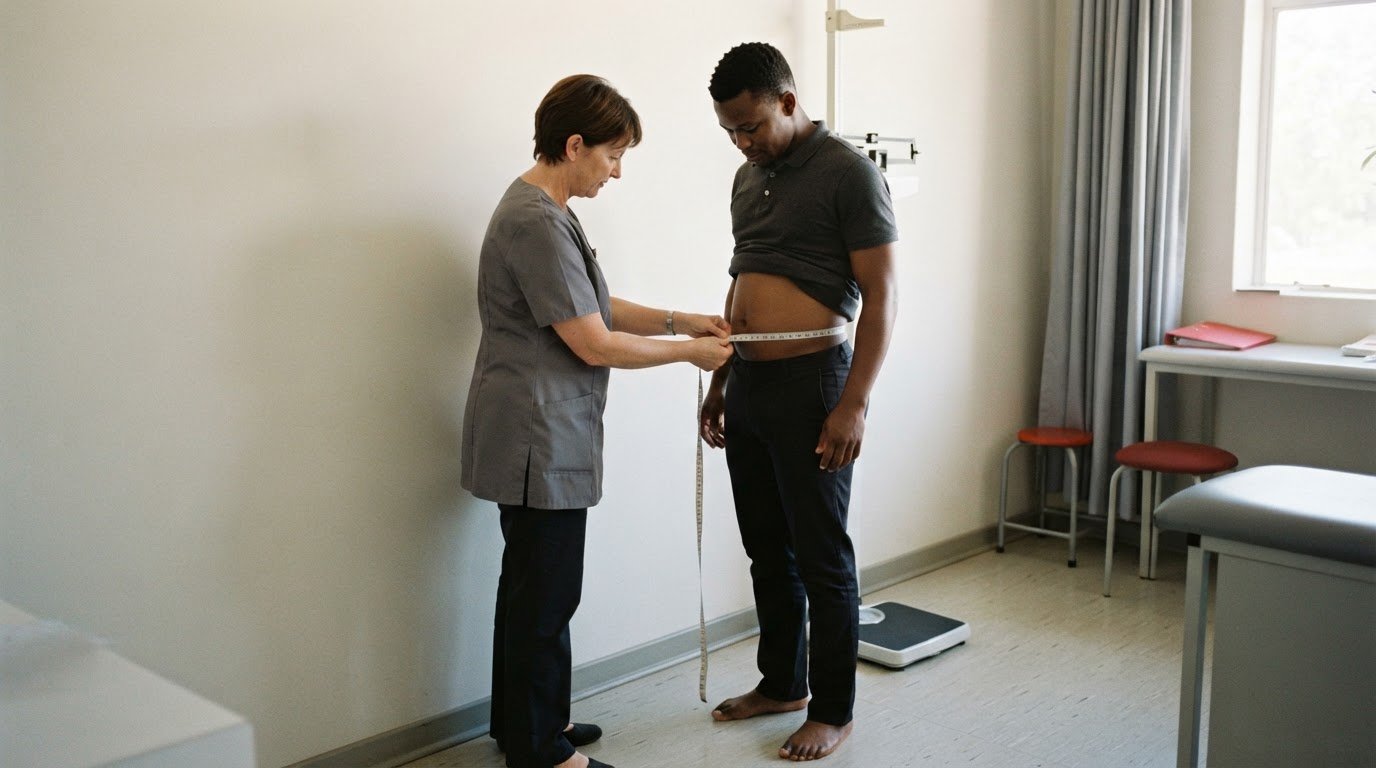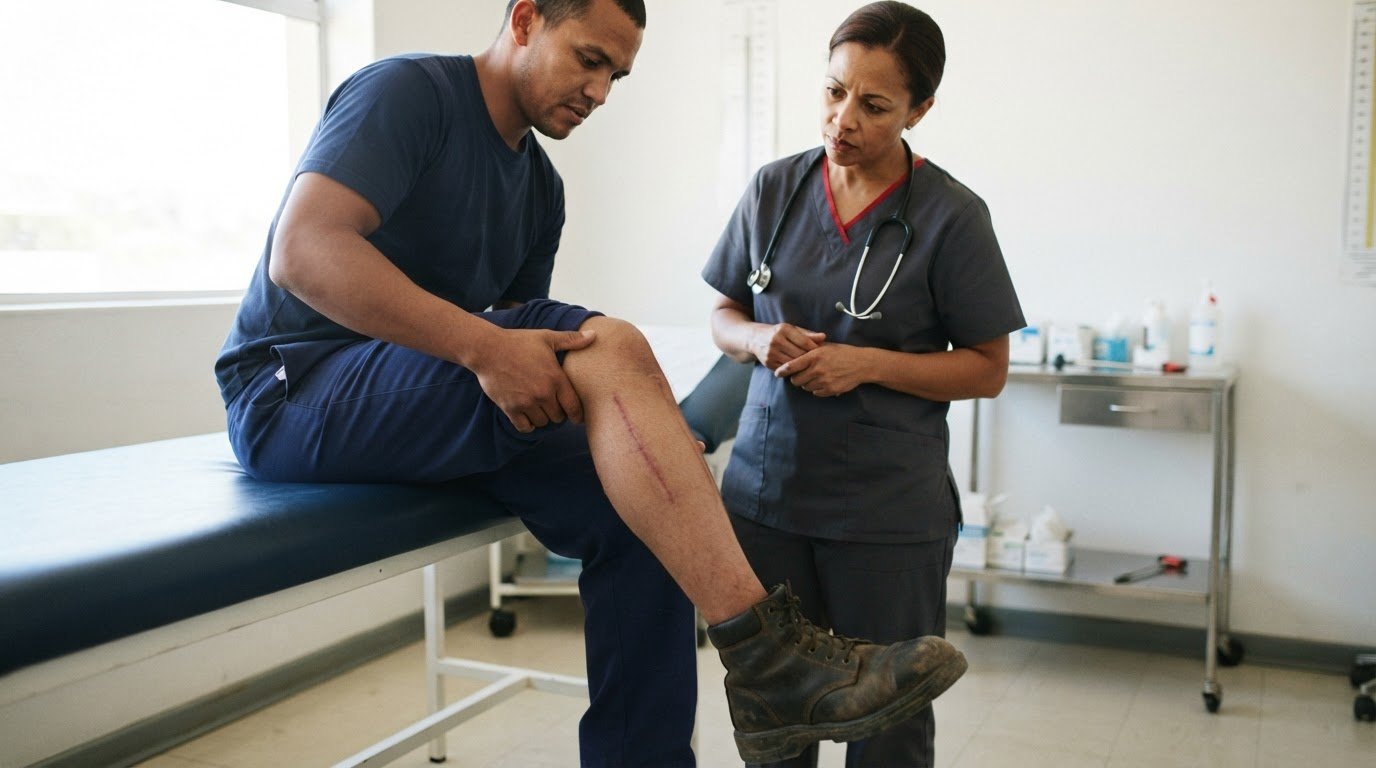

A seafarer medical certificate is valid for two years from its date of issue. Cruise ship hospitality crew medical fitness screening assesses whether a worker is fit for their duties before boarding. Pre-boarding health checks can also identify crew members who may be ill.
Preparing for a cruise ship role can involve more than a medical examination. Checks may depend on your duties, particularly in food, beverage or accommodation. It’s understandable to want clear information about what to expect and what happens if someone becomes unwell.
This guide explains how medical fitness assessments and role-specific tests fit into the process, why certificate acceptance can vary by cruise line, and how potentially ill passengers or crew may be assessed on board before interacting with other guests. It also explains how Seafarers / SAMSA Medical Examinations in South Africa relate to these requirements, so you can understand the next steps for your application.
Key Takeaways
- Plan certificate renewal around its two-year validity period and the date it was issued.
- Learn why cruise-line requirements matter when deciding whether an ENG1, ML5 or another seafarer certificate is suitable.
- Understand how health conditions and medication may be considered in relation to the duties of a hospitality role.
- Explore how a Seafarers / SAMSA Medical Examination at Hatmed Medical Centre can support South African crew applicants.
How often must cruise ship crew renew their medical fitness certificate?
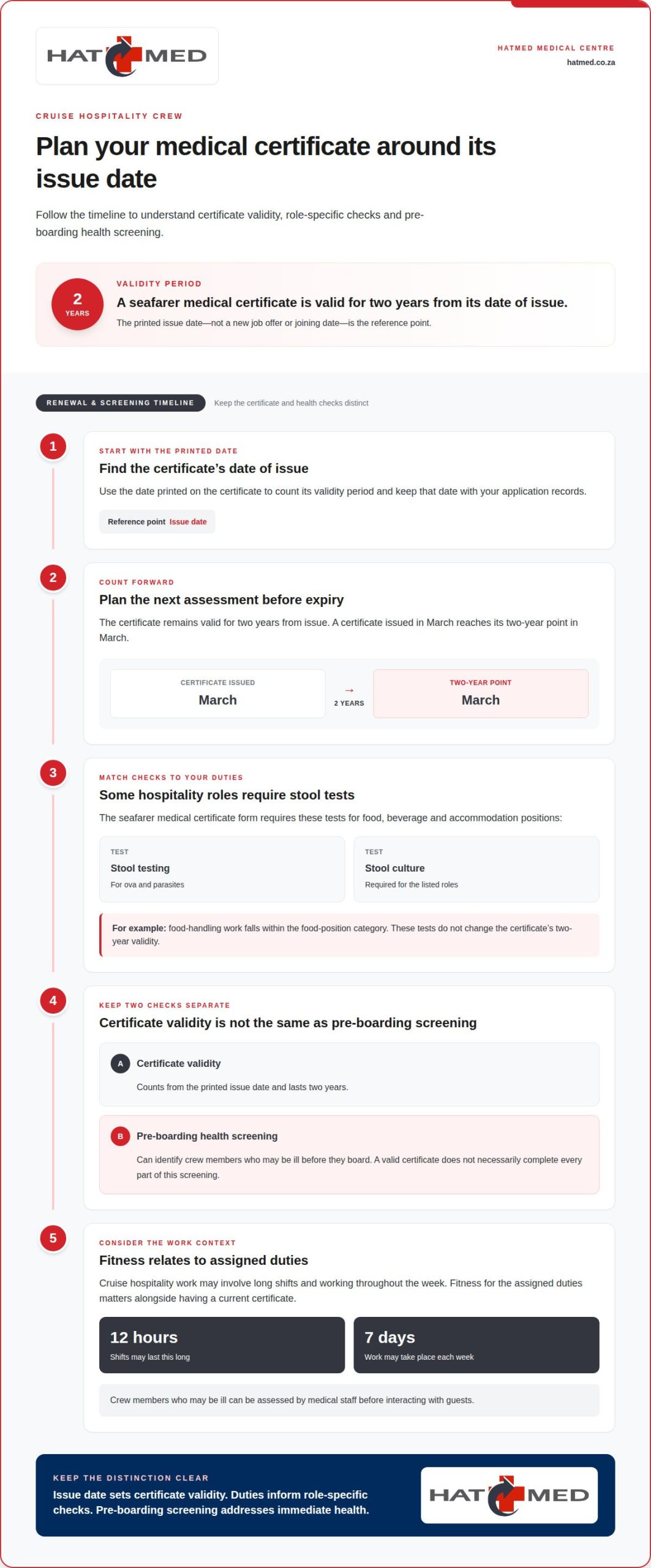
A seafarer medical certificate is valid for two years from its date of issue. Count the validity period from the printed issue date. A certificate issued in March reaches its two-year point in March. Use the issue date to plan your next assessment before the certificate expires.
Certificate validity and recruitment timing are separate considerations. A cruise line may recruit before the planned embarkation date, and a valid certificate does not necessarily complete every part of pre-boarding health screening. That screening can help identify crew members who may be ill before they board.
The examination can also depend on your job category. The seafarer medical certificate form requires stool testing for ova and parasites, and stool culture, for food, beverage and accommodation positions. These requirements are relevant to hospitality applicants in those roles. For example, a food-handling role falls within the food-position category. These tests do not change the certificate’s two-year validity period.
When planning a renewal, consider both the certificate date and your duties. Keep the issue date with your application records and use it to plan the next assessment. If stool tests apply to your role, include them in your preparation. The printed issue date remains the reference point for validity, not a new job offer or joining date.
Cruise hospitality work may involve shifts lasting 12 hours and working seven days a week. Those conditions help explain why fitness for assigned duties matters alongside a current certificate. Crew members who may be ill can be assessed by medical staff before interacting with guests. Keep renewal and pre-boarding checks distinct: one concerns certificate validity, the other immediate health screening.
Which medical certificates are accepted by cruise lines, such as ENG1 or ML5?
There isn’t one certificate name that can be assumed to suit every cruise line. The seafarer medical certificate form describes compliance with STCW 1/9 or ILO-73 Panama and Maltese medical standards. It also refers to standards approved by countries with a reciprocal recognition agreement. These details help distinguish a certificate’s stated standard from its title alone.
ENG1 has a specific description: a maritime operations officer said it has no fitness test and requires reasonable health, eyesight and hearing. That description matters when comparing it with a certificate based on other standards. It doesn’t establish that every cruise line accepts ENG1 for every hospitality position, so treat the certificate name and the stated medical standard as separate details.
ML5 is another certificate name applicants may encounter, but a name by itself doesn’t show which medical standard it follows. The relevant comparison is the standard stated on the certificate and the requirement named for the job. For example, the listed seafarer certificate refers to STCW 1/9, ILO-73 Panama, Maltese standards or a qualifying reciprocal recognition agreement.
Use the job’s medical-document requirement as the matching point. If it names a standard, compare that wording with the standard printed on the certificate. If it names ENG1 or ML5, don’t assume a different certificate is interchangeable simply because both concern seafarer health. The distinction is useful for hospitality applicants, whose position may also involve role-specific checks, such as stool testing for food, beverage and accommodation work.
Keep the certificate and the job requirements together as you prepare your application. This makes it easier to compare the certificate’s stated standard with the requirements for the position, rather than relying only on terms such as “seafarer medical” or “fitness certificate”. For applicants in South Africa, the standards shown on the certificate provide a concrete basis for comparison.
What medical conditions or medications can disqualify hospitality crew from working on a cruise ship?
A diagnosis or prescription alone does not show whether someone can safely perform a particular cruise ship role. The relevant question is how the condition, symptoms or treatment affect the duties involved. A medical assessment considers the individual and their work, rather than treating a diagnosis as an automatic answer.
Be ready to describe any ongoing condition and how it is currently managed. For example, an applicant with asthma can explain their symptoms, treatment and how well these are controlled. Someone managing diabetes can describe their prescribed treatment and any recent changes. These examples do not mean either condition automatically prevents cruise work. They show why clear, accurate information matters.
Medication is also relevant to the assessment. Tell the clinician the name of each medicine, its dose and how often you take it. Include prescribed and non-prescribed products, and describe any side effects. For example, drowsiness caused by a medicine is relevant to duties that require alertness. Do not stop or change treatment to influence an examination.
Your duties also shape the discussion. Hospitality work can involve serving food, working in accommodation or supporting beverage service. Tell the clinician which position you are applying for and describe any tasks that become difficult when symptoms arise. This gives the assessment practical context instead of treating every job aboard as identical.
Before your appointment, prepare a current medication list and a concise account of your health history. Include relevant treatment changes, recent symptoms and follow-up care. If a condition is stable, explain how you manage it. If symptoms have changed, describe what changed and when. Accurate details help the clinician assess your current health in relation to the role’s duties.
Fitness depends on the overall picture: the condition, how it is managed, medication effects and job tasks. A cruise line may also set its own certificate requirements, so the assessment outcome and the cruise line’s acceptance of the certificate are related but distinct matters. Clear disclosure helps the assessment reflect your circumstances and the hospitality position you hope to take.
Where can South African applicants get an approved cruise crew medical examination
Applicants in South Africa can arrange a seafarer medical examination with a provider that conducts these assessments. Completing an examination and having a cruise line accept the certificate are separate matters. The cruise line’s stated requirements determine whether the certificate is suitable for the role.
Start with the medical instructions for your position. For example, the seafarer certificate form refers to recognised maritime medical standards, while cruise-line requirements may differ. Use the stated requirement to guide the examination you need, rather than choosing solely by a certificate name such as ENG1 or ML5.
Applicants across South Africa can access Seafarers / SAMSA Medical Examinations through Hatmed Medical Centre. The assessment should reflect the required certificate and the hospitality duties involved. For food, beverage or accommodation roles, the seafarer form requires stool testing for ova and parasites, and stool culture. This can affect which tests are included in the examination.
Prepare for your appointment by bringing the cruise line’s medical instructions and relevant health information, including details of current medicines, ongoing conditions and previous treatment. This information helps the examining clinician consider your health in relation to the role. If your position involves food handling, mention it so the relevant testing can be considered.
After the examination, the certificate’s stated standard remains important to the cruise line’s assessment. Keep the completed medical documents with your application paperwork and refer to the position’s requirements. This helps distinguish the medical fitness assessment from the cruise line’s decision about accepting the certificate.
For your seafarer medical examination, arrange your cruise crew medical examination as part of your application planning.
Hatmed Medical Centre
Hatmed Medical Centre supports applicants in South Africa who need a medical assessment for cruise work. Its Seafarers / SAMSA Medical Examinations are a starting point for discussing seafarer medical fitness and the documentation required for an application.
If you have an ongoing health concern or take regular medication, a General Practitioner Consultation can help you discuss your health in relation to your work duties. Bring the cruise line’s medical instructions and relevant health information so the appointment can address your circumstances and the role you are applying for.
Contact Hatmed Medical Centre to discuss your seafarer medical examination and the next step in your application.
Take a considered next step towards your cruise role
Treat cruise ship hospitality crew medical fitness screening as part of preparing for the work, not simply paperwork to complete. An open discussion about your health can help you understand what the assessment covers and how it relates to the position. Address questions before application deadlines or travel arrangements add pressure. Being prepared gives you a clearer understanding of what comes next.
For South African applicants, Hatmed Medical Centre offers medical support including Seafarers / SAMSA Medical Examinations, General Practitioner Consultations and Immigration Medical Examinations. If you’re ready to discuss your requirements, contact Hatmed Medical Centre. A thoughtful conversation can help you move forward with greater confidence and a practical plan for your next step.
Frequently Asked Questions
What medical fitness exams are required for cruise ship hospitality crew?
The cruise ship hospitality crew medical fitness screening process depends on the certificate standard and the duties involved. Food, beverage and accommodation roles may require additional stool testing, while the cruise line’s instructions set its certificate expectations. Refer to the medical requirements for your specific position to understand which assessment applies, rather than assuming every cruise employer follows the same process.
What medical standards must cruise ship hospitality staff meet?
The applicable standard is the one specified for the position and shown on the certificate submitted. Listed seafarer certificate standards include STCW 1/9, ILO-73 Panama, Maltese medical standards, or standards approved by countries with a reciprocal recognition agreement. If a job names a particular standard, compare the certificate against that wording, rather than relying only on a general seafarer medical label.
Which medical tests are included in a cruise crew pre-employment exam?
Tests can vary by job category. For food, beverage and accommodation roles, the seafarer medical certificate form requires stool testing for ova and parasites, and stool culture. Applicants whose duties include food handling should take this role-specific requirement into account. The examination and tests relate to the position and certificate requested, so do not assume every crew member receives the same test panel.
Are vaccinations, drug screening, or mental health assessments required for cruise ship hospitality crew?
Requirements depend on the cruise line’s instructions and the position. Cruise ship hospitality crew medical fitness screening may involve separate requests, such as vaccination records or drug screening, if specified for the role. Mental health is also relevant information to discuss during an assessment, particularly if a condition or its treatment affects work duties. These requirements should not be assumed to apply to everyone.