Completing STCW training doesn’t replace the medical certificate required for yacht work. The superyacht crew medical examination requirements under STCW include a current ENG1 or an equivalent certificate accepted by the yacht’s flag state; the ENG1 is issued by a doctor approved under the UK Maritime and Coastguard Agency scheme. These are separate requirements, so crew need to prepare for both.
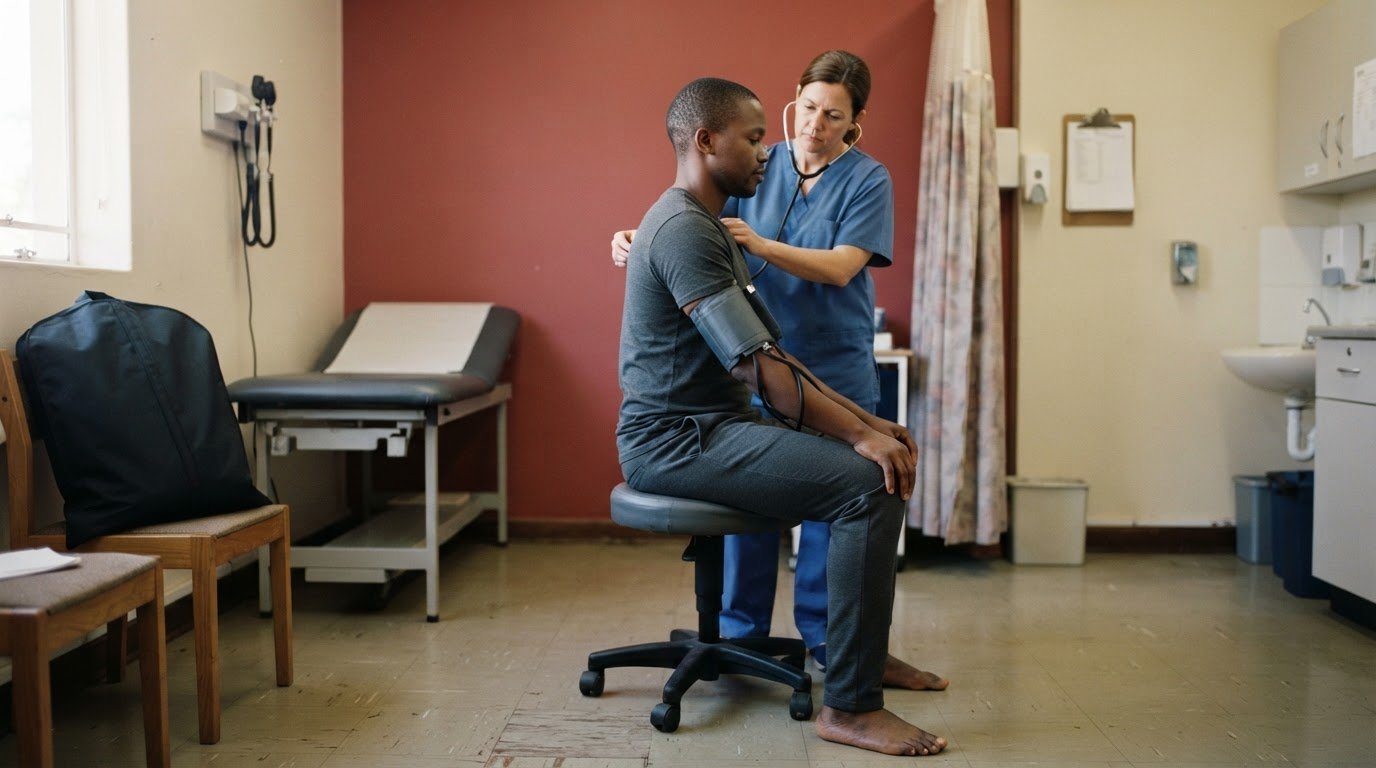
It’s understandable to want to know what the examination involves before applying. An ENG1 assessment includes a general health check, blood pressure measurement and a urine test that screens for conditions such as diabetes and kidney problems. Colour vision may also be assessed, and can affect eligibility or lead to restrictions for navigational and deck officer roles.
This guide explains what the medical examination covers, why colour vision can matter, and which medical and STCW documents are commonly expected before you apply for yacht jobs. You’ll also learn how a South African seafarers medical examination fits into your preparation and what steps to take next.
Key Takeaways
- Understand why the ENG1 and STCW training are separate requirements, and what that means when preparing for yacht work.
- Learn how colour vision assessment can affect eligibility for certain deck and navigational roles.
- Identify the medical certificate and safety qualifications commonly expected before applying for superyacht jobs.
- Find out how a Seafarers / SAMSA Medical Examination at Hatmed Medical Centre can support your medical preparation in South Africa.
What is the ENG1 Medical certificate?
An ENG1 is a seafarer medical fitness certificate commonly expected for superyacht work. Understanding the superyacht crew medical examination requirements STCW candidates face starts with separating medical fitness from safety training.
ENG1 and Equivalent Medical Certificates
The ENG1 is issued by a doctor approved under the UK Maritime and Coastguard Agency scheme. A yacht’s flag state may also accept an equivalent seafarer medical certificate, so the required document depends on the vessel’s flag. For UK acceptance, MSN 1815 (M+F) Amendment 2 lists equivalent certificates. A Croatian medical certificate is not automatically accepted for every flag state; Croatian origin alone does not establish equivalence.
In South Africa, seafarers can undergo a medical examination with an appropriately qualified and experienced practitioner recognised by the relevant Party. A Seafarers / SAMSA medical document should not be described as an ENG1 unless it meets the relevant recognition requirements. The superyacht crew medical examination requirements STCW applicants need to meet therefore involve both the certificate itself and its acceptance for the intended yacht.
Medical Fitness and Examination Outcomes
STCW medical fitness standards assess whether a seafarer can perform assigned duties and meet the physical requirements of Basic Safety Training under section A-VI/1, paragraph 2. An examination includes a general health check, blood pressure measurement and a urine test screening for conditions such as diabetes and kidney problems.
If a crew member does not pass, the examination does not provide a valid certificate for supporting a yacht job application. A noted health concern may result in a shorter certificate, such as one year instead of the full term. For most working seafarers, an ENG1 is typically valid for up to five years; for crew under 18, it is typically valid for up to two years. STCW certification is valid for 5 years from completion of the course, so keep its expiry in view when planning applications and refresher training.
Colour vision and medical examinations for deck roles
Colour vision can affect medical certification for navigational and deck officer positions. These roles involve recognising visual information during safety-related duties, making the assessment relevant to your ability to perform them.
Colour Vision for Deck Roles
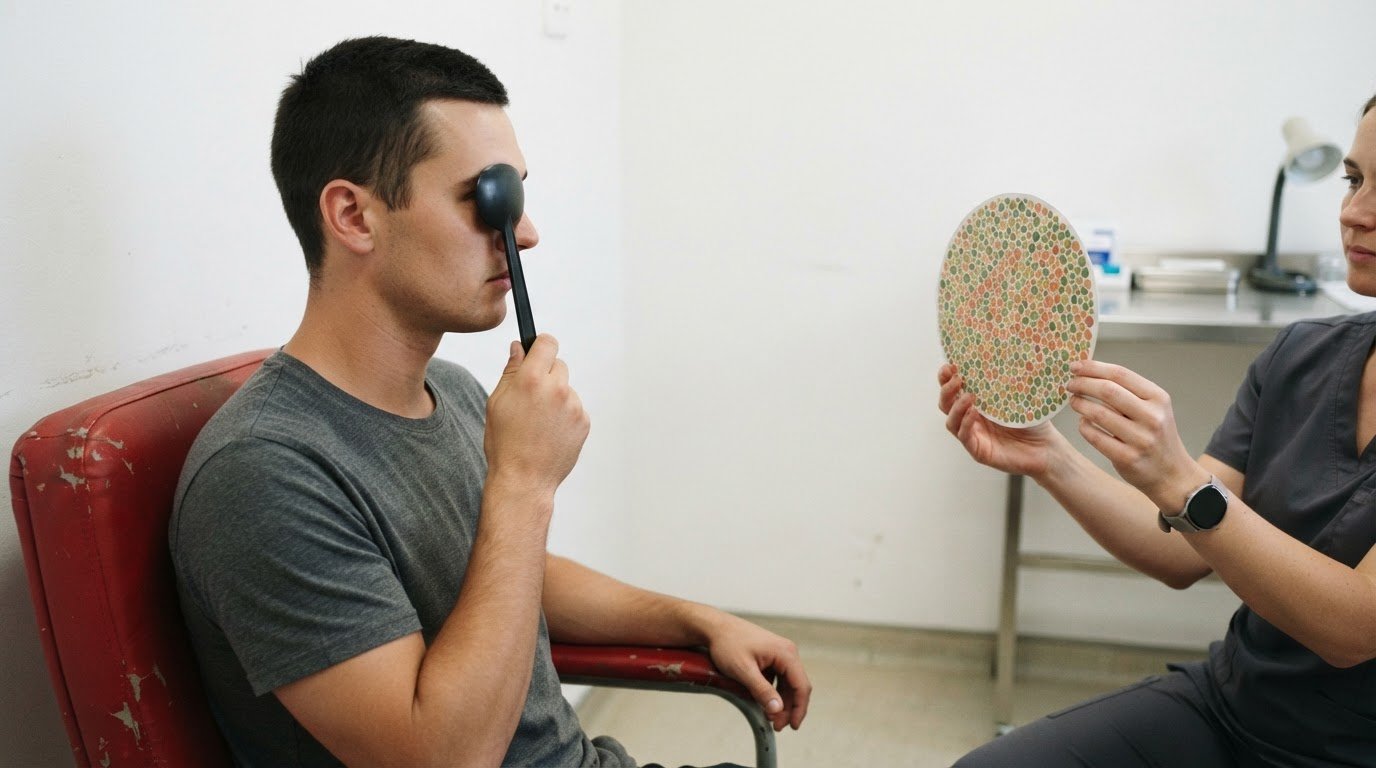
A colour vision assessment checks whether you can distinguish colours relevant to your intended seafaring duties. For yacht crew seeking deck or navigational work, the result may affect certification or lead to restrictions on particular positions.
Requirements differ by crew role. The significance of the result depends on the position’s duties and the applicable medical standards. Tell the practitioner what role you intend to pursue so they can assess the result in context. Colour-vision certification may be valid for up to six years, so check its validity alongside your medical certificate when preparing job documents.
A captain or employer may consider the medical outcome when matching a candidate to onboard responsibilities. If colour vision is a concern, clarify how it affects the specific deck duties before relying on the certificate in an application. Restrictions can apply even when you are otherwise medically fit.
Seafarer Medical Tests
A seafarer medical examination assesses your general health and includes a blood pressure measurement and urine test. The urine test screens for conditions such as diabetes and kidney problems, while the wider assessment considers your fitness for seafaring work.
For yacht crew, a medical examination is separate from a safety course. STCW Basic Safety Training covers practical areas such as firefighting and sea survival, as well as personal safety and social responsibilities. Participants must be in good physical health and capable of moderate exertion. Medical fitness and course participation therefore address related but distinct aspects of working safely at sea.
Before applying, keep the medical certificate and training records together, and note any restrictions that could affect your intended role. A Seafarers / SAMSA Medical Examination can form part of your South African seafarer medical preparation. Bring your role requirements into the appointment discussion so the assessment can address the work you plan to undertake.
Documents and qualifications needed before yacht job applications
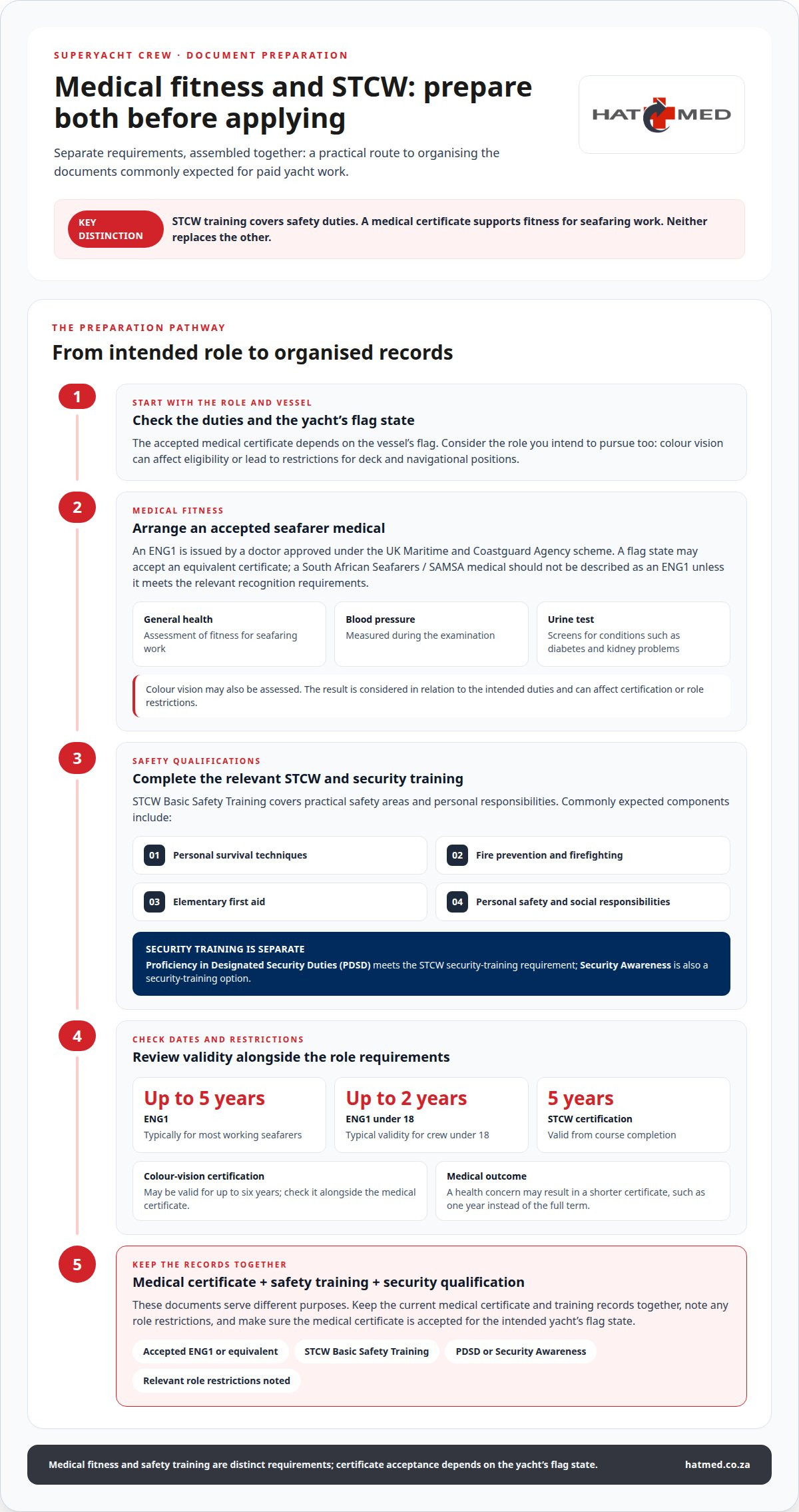
Before applying for paid yacht work, prepare your medical and training documents together. They show that you have completed relevant safety qualifications and hold a seafarer medical certificate suitable for the vessel’s flag state. The documents serve different purposes: medical fitness supports your ability to work at sea, while STCW training covers safety duties.
For most entry-level commercial yacht roles, the commonly expected documents include:
- STCW Basic Safety Training: training in personal survival techniques, fire prevention and firefighting, elementary first aid, personal safety and social responsibilities.
- An ENG1 medical or equivalent: a current seafarer medical certificate accepted for the yacht’s flag state.
- Proficiency in Designated Security Duties: PDSD meets the STCW security-training requirement; Security Awareness is also a security-training option.
These qualifications are separate. An approved medical certificate does not replace a safety course, and completing a course does not establish medical fitness. Most yacht captains expect inexperienced candidates to complete STCW training before applying. Having your records ready helps employers assess your qualifications against the role you are seeking.
For an ENG1 appointment, bring a valid passport. If you’re arranging STCW courses in Cape Town, the examination can be scheduled during the same trip. Keeping your passport, medical certificate and course records in one organised file makes it easier to provide the relevant documents when an application asks for them.
Basic Safety Training combines classroom learning with practical elements, including firefighting and sea survival. It usually cannot be completed fully online because candidates need practical safety training. Participants must be in good physical health and capable of moderate exertion. Online materials alone do not replace these practical components.
For South African applicants, distinguish a local seafarer medical document from an ENG1 medical certificate. A certificate’s usefulness for a particular yacht depends on recognition by its flag state. Prepare the medical and training records as separate items, then provide those relevant to the position and employer’s application process.
STCW requirements for paid superyacht crew
For paid superyacht work, STCW Basic Safety Training is a core safety qualification, separate from medical certification. STCW stands for Standards of Training, Certification, and Watchkeeping for Seafarers. The training prepares crew for safety duties at sea.
Basic Safety Training typically takes one week and combines instruction with practical exercises. The course covers several core safety subjects:
- Personal survival techniques, including sea survival.
- Fire prevention and firefighting.
- Elementary first aid.
- Personal safety and social responsibilities.
- Security awareness or Proficiency in Designated Security Duties (PDSD).
The subjects address different situations onboard. For example, survival training prepares candidates for emergencies at sea, while firefighting develops practical responses to fire. The course usually cannot be completed fully online because firefighting and sea survival require practical training. Participants must be in good physical health and capable of moderate exertion.
STCW Basic Safety Training, current medical certification, and security training are commonly expected for yacht work. Most captains expect inexperienced crew to complete the training before applying. A strong application therefore includes current medical documentation and evidence of completed safety and security qualifications, rather than treating one certificate as a substitute for another.
STCW certification is valid for 5 years from completion of the course. Keep the completion date with your records, since it indicates when refresher training becomes relevant. This matters for an ongoing career: a certificate that has expired may not meet an employer’s expectations for current qualifications. Security Awareness and PDSD both satisfy STCW security training requirements.
In South Africa, plan the medical and course requirements as separate parts of your preparation. A Seafarers / SAMSA Medical Examination addresses the seafarer medical component, while STCW training covers safety skills. Arrange a Seafarers / SAMSA Medical Examination as part of preparing your medical documents for yacht applications.
Hatmed Medical Centre: Immigration Medical Examinations
Hatmed Medical Centre offers Seafarers / SAMSA Medical Examinations for people preparing for seafaring work in South Africa. This can help with the local medical assessment side of your preparation, alongside the separate STCW training documents required for yacht applications.
A SAMSA medical examination is not the same certificate as an ENG1. If a yacht or flag state requires an ENG1 or an accepted equivalent, the relevant certificate must meet that requirement. Hatmed also provides Immigration Medical Examinations for people who need a medical assessment for immigration purposes; this service serves a different requirement from yacht crew certification.
If you’re preparing for yacht work, Hatmed’s Seafarers / SAMSA Medical Examination is the relevant service. For an immigration-related medical requirement, Hatmed also provides Immigration Medical Examinations. Contact Hatmed Medical Centre to discuss your examination needs.
Prepare your next step with confidence
Before submitting a yacht application, make sure your medical paperwork and training records match the role you want. Superyacht crew medical examination requirements under STCW are one part of your preparation; the vessel’s flag and the position’s duties also determine which documents matter. Organising these details can make your conversation with an employer more focused.
Hatmed Medical Centre provides Seafarers / SAMSA Medical Examinations, General Practitioner Consultations and Immigration Medical Examinations. Choose the service that fits your needs, whether you’re preparing for seafaring work, seeking general medical care or completing an immigration assessment.
For help with your medical examination needs, contact Hatmed Medical Centre. A clear plan can help you approach your next career step with confidence.
Frequently Asked Questions
What is the STCW and why do I need it?
STCW means Standards of Training, Certification, and Watchkeeping for Seafarers. It sets international training and certification standards for people working at sea. For yacht crew, the relevant safety training prepares you for duties such as responding to fire, emergencies and risks to personal safety. Employers commonly expect new crew to hold the required training before applying, because medical fitness alone does not demonstrate practical safety training.
What qualifications are required to work on a Superyacht?
For many entry-level commercial yacht roles, prepare STCW Basic Safety Training, a current ENG1 or accepted equivalent medical certificate, and security training such as Proficiency in Designated Security Duties. The exact qualifications can depend on the position and the yacht’s flag. For example, a deck role may have medical requirements linked to colour vision, while other duties may have different role-specific expectations.
Can I work on a Cayman- or Malta-flagged yacht with a Croatian STCW and medical?
A Croatian-issued STCW certificate or medical document is not automatically accepted for every Cayman- or Malta-flagged yacht. Acceptance depends on the relevant flag state’s recognition requirements and the vessel’s employment criteria. Check training and medical-certificate recognition separately: acceptance of an STCW qualification does not establish that the medical document is accepted for that vessel.
Do I need a UK-issued ENG1 specifically to work on yachts?
Not in every case. The ENG1 is the most commonly used seafarer medical certificate for yacht crew, but a certificate recognised as equivalent by the yacht’s flag state may also be accepted. An ENG1 must be issued by a doctor approved under the UK Maritime and Coastguard Agency scheme. The flag state’s recognition rules determine whether another medical certificate can serve instead.
Is a Croatian ENG1 equivalent accepted on UK-flagged yachts?
“Croatian ENG1” can be misleading: an ENG1 is issued through the UK Maritime and Coastguard Agency’s approved-doctor scheme. A Croatian seafarer medical certificate is a separate document, and UK acceptance depends on whether it is recognised as an equivalent. The UK notice MSN 1815 (M+F) Amendment 2 lists accepted equivalent certificates, so Croatian origin alone does not establish acceptance.
What medical certificate is required for superyacht crew under STCW?
Superyacht crew generally need a current ENG1 or another seafarer medical certificate accepted by the vessel’s flag state. STCW medical fitness requirements relate to a seafarer’s ability to perform duties safely and participate in the required basic safety training. In South Africa, a Seafarers / SAMSA Medical Examination is a local seafarer assessment, but it is not automatically an ENG1 or a recognised equivalent.