

A chronic diagnosis is a starting point for a care plan, not the whole picture of your health. A chronic illness is a long-term health condition that may not have a cure; chronic illnesses typically last a year or longer, according to the Centers for Disease Control and Prevention. Chronic conditions treatment can bring regular reviews, prescribed medicines and practical daily steps together in a plan suited to your health needs.
Living with an ongoing condition can raise questions about what to do between appointments, how to take medicines consistently and when to seek another assessment. These concerns are understandable. Regular care and clear guidance can help you track changes and make informed decisions with your healthcare team.
Learn how care plans, medicines, daily management and medical assessments can support ongoing care. These practical steps can help you follow a treatment plan, manage symptoms and understand when primary care or a specialist assessment may be the next step.
Key Takeaways
- Regular reviews and appropriate monitoring can help track changes in your condition and support timely adjustments to your care plan.
- Take medicines as prescribed, and keep track of any symptoms or changes that may be useful to discuss at an appointment.
- Build daily habits around your abilities and treatment needs, including activity and other practical steps that support self-management.
- Primary care assessment can consider your symptoms, health and lifestyle, and help coordinate specialist referrals when needed.
1. Benefits of regular chronic disease management
Chronic illnesses typically last a year or longer, according to the Centers for Disease Control and Prevention. Regular management can help reduce symptoms, prevent complications and support quality of life. Scheduled reviews also give you a chance to discuss changes before they disrupt everyday routines.
For heart disease and hypertension, monitoring blood pressure and cholesterol helps track important health measures. Lifestyle support can address risks and inform prevention steps. If your care plan calls for home readings, bring them to appointments to discuss patterns with your healthcare professional.
Chronic kidney disease care may involve regular blood and urine tests, prescribed medication and dietary advice. These steps help assess changes over time and guide decisions about ongoing care. Keep appointment dates and test results together so you can refer to them during reviews.
Healthy eating can support chronic disease management. Build meals around vegetables, fruit, whole grains and varied protein sources. Where appropriate, limit highly processed foods, added sugars, sodium and saturated fats. A suitable eating plan should reflect your health needs and daily energy requirements.
Risk factors can overlap: high blood pressure, high cholesterol or diabetes can raise the risk of developing the other conditions. Regular assessments can identify changes in these measures. Discuss your personal risks and practical prevention steps as part of your care plan.
South African medical schemes must cover prescribed minimum benefits for qualifying conditions, including eligible chronic conditions, under applicable rules. Cover and access depend on scheme requirements, such as registration and following its treatment protocols.
South Africa’s Chronic Disease List identifies conditions that may qualify for chronic disease benefits under prescribed minimum benefit rules. A diagnosis alone does not complete the process: follow your scheme’s registration requirements and care protocols to access applicable benefits.
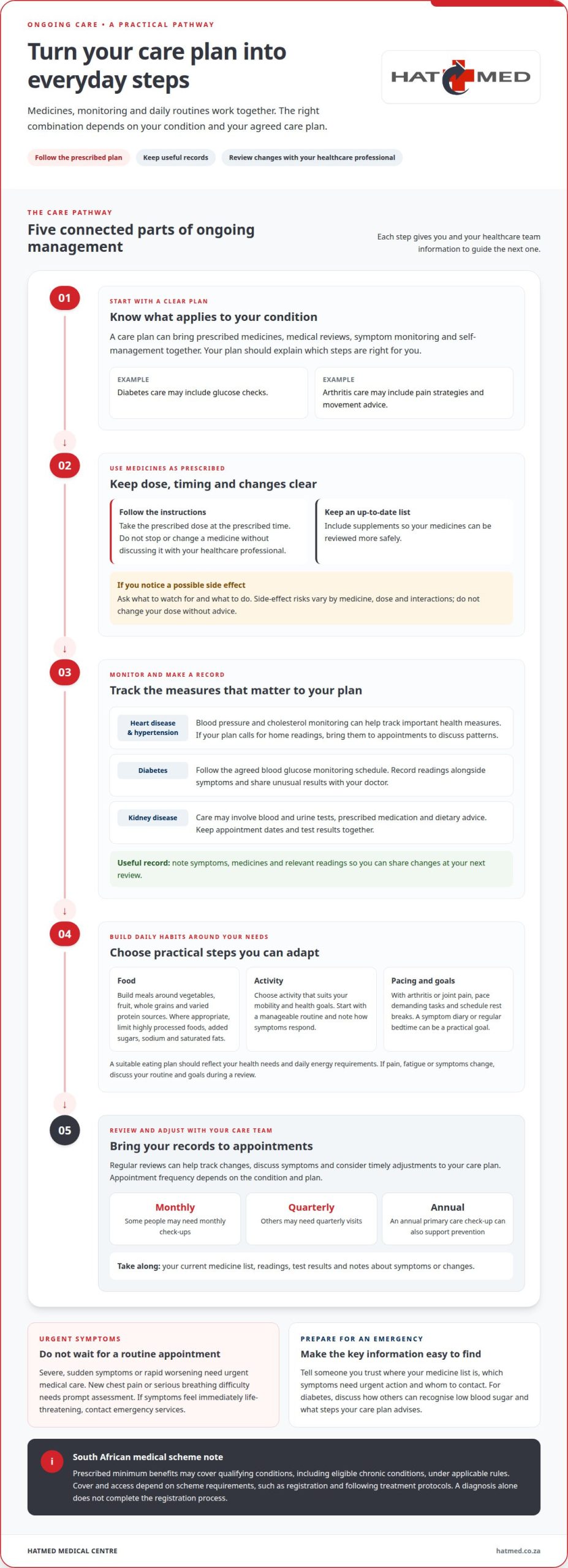
Regular reviews bring these measures, tests and daily choices together in a clearer plan. Keep a record of symptoms, medicines and relevant readings, then share any changes at your next appointment. These details help your healthcare team discuss the next steps.
Following a treatment plan and taking medicines as prescribed
A clear plan sets out which medicines to take, when to take them and what to monitor. Follow the prescribed dose and timing; do not stop or change a medicine without discussing it with your healthcare professional. Keep an up-to-date medicine list, including supplements, for safer reviews.
For diabetes, follow the agreed blood glucose monitoring schedule and record readings alongside symptoms. Share unusual results with your doctor. Dietary guidance and medication management can then be considered together, rather than treating a reading in isolation.
Appointments help assess progress and address changes in your health. Depending on the condition and care plan, some people may need monthly check-ups, while others may need quarterly visits. An annual check-up with a primary care provider can also support prevention.
In South Africa, treatment costs depend on prescribed medicines, tests and medical-scheme benefits. The relevant costs are provided after a quote request, with the case and care requirements shaping the amount.
Long-term medicines can cause side effects, and risks vary by medicine, dose and interactions with other treatments. Ask your healthcare professional what effects to watch for and what to do if they occur. Do not change your dose to manage a side effect without advice.
Seek urgent medical care for severe, sudden symptoms or a rapid worsening of your condition. For example, new chest pain or serious breathing difficulty needs prompt assessment. If symptoms feel immediately life-threatening, contact emergency services rather than waiting for a routine appointment.
Prepare someone you trust to help in an emergency. Explain where you keep your medicine list, which symptoms need urgent action and whom to contact. For diabetes, discuss how others can recognise low blood sugar and what steps your care plan advises.
If you need help reviewing medicines, symptoms or monitoring, arrange a chronic condition care review with a GP. Bring your readings and current medicine list so the discussion can focus on practical next steps.
3. What can I do to manage a chronic condition?
Effective chronic conditions treatment may combine prescribed medicines, medical reviews, symptom monitoring and self-management. The right mix depends on your condition. Diabetes care, for example, may include glucose checks, while arthritis care can include pain strategies and movement advice. Your care plan should explain which steps apply to you.
Regular physical activity can help manage chronic disease and prevent complications. Choose an activity that suits your mobility and health goals. Start with a manageable routine and note how your symptoms respond. If pain or fatigue changes, discuss your activity goals during a review.
With arthritis or joint pain, pace demanding tasks and schedule rest breaks. Notice which movements increase discomfort, such as climbing stairs or carrying shopping. Exercise advice can help maintain mobility, while pain-management strategies may support daily tasks. For individuals exploring targeted spinal alignment alongside conventional treatments, resources such as restorechiropracticcenter.com illustrate how specialised chiropractic care can support joint mobility and musculoskeletal comfort. Share these examples with your healthcare team.
Self-management education programmes can teach symptom recognition, healthy routines, stress management and goal-setting. Choose one practical goal, such as keeping a symptom diary or establishing a regular bedtime. Practise the steps, then discuss what works with your healthcare professional.
Older adults can adapt these steps to their health, routines and support needs. Bring a medicine list, symptom notes and questions to an appointment. If tracking readings or preparing meals feels difficult, ask your care team to break the task into manageable actions.
Lifestyle changes may include regular activity, consistent sleep routines and stress-management techniques. Follow dietary advice suited to your condition. Someone with arthritis, for instance, might plan movement around periods of discomfort. Someone with diabetes can follow their agreed monitoring and meal plan. Report new or worsening symptoms to your healthcare team.
A personalised chronic conditions treatment plan can connect these daily steps with your medical care. When ongoing issues include unexplained neck stiffness or swallowing discomfort, resources from Precision Spinal Care demonstrate how assessing upper cervical alignment can offer useful insights alongside routine medical management. Review what feels manageable and what may need adjusting as your health or routine changes.
4. Seeking primary care and specialist assessment
Primary care can be a useful starting point when symptoms change or a diagnosis needs review. During an initial assessment, the healthcare professional considers your health, current symptoms and lifestyle. These details help shape a care plan around your needs, rather than relying on one symptom alone.
Prepare for the appointment by noting what has changed and when. Bring your medicine list, previous test results and questions about daily activities. For example, explain whether breathlessness affects walking or pain interrupts sleep. Specific examples clarify how your condition affects everyday life.
A primary care professional can review your treatment and decide whether specialist input is appropriate. When needed, referrals can be coordinated as part of chronic disease care. Share relevant records and describe earlier treatments, including their effects. This gives the specialist useful context and supports continuity.
In South Africa, patients can seek public-sector chronic care by approaching a public clinic or health facility for assessment. Explain your condition, symptoms and current treatment, and take available medical records or medicine details. The facility can assess your needs and advise on the next step in its care pathway.
Assessment is useful when several health concerns overlap. Diabetes, high blood pressure and kidney problems, for example, may affect decisions about monitoring or medicines. Tell the healthcare professional about each diagnosis, current symptoms and recent changes so the care plan reflects the whole picture.
Before leaving, make sure you understand the next steps. Ask what to monitor, which changes to report and when follow-up is due. If a referral is arranged, clarify what information should accompany it and how your ongoing care will be coordinated.
For a primary care assessment and support with ongoing condition management, book a GP consultation. Bring your questions and relevant health information to help make the discussion focused and useful.
Hatmed Medical Centre: General Practitioner Consultations
Hatmed Medical Centre provides General Practitioner Consultations and Chronic Disease Management for people seeking support with an ongoing condition. A consultation gives you the opportunity to discuss symptoms, medicines, test results and changes in your health. Bring your medicine list and any readings you track to inform the conversation.
Arrange an appointment when you need a care plan reviewed, your symptoms have changed or you want guidance on managing your condition. The GP can assess your health and discuss suitable next steps, including a specialist referral where needed. This is a practical starting point for organising ongoing medical support.
For care tailored to your circumstances, contact Hatmed Medical Centre or visit hatmed.co.za.
Take your next step towards joined-up care
Make your next conversation focused on what matters most to you. Consider what you want help with, such as making daily routines easier, understanding your options or planning follow-up. Having a clear priority can help you use an appointment well and leave with practical questions answered.
Hatmed Medical Centre provides General Practitioner Consultations and Chronic Disease Management, as well as Immigration Medical Examinations and Seafarers / SAMSA Medical Examinations. For support with ongoing health needs, arrange a GP consultation and bring relevant medical information to guide the discussion.
Good chronic conditions treatment is built around care that makes sense for your circumstances and can be revisited as your needs change. You can take the first step by contacting Hatmed Medical Centre to discuss your healthcare needs. A thoughtful conversation can help you move forward with greater clarity and confidence.
Frequently Asked Questions
What Is A Chronic Illness?
A chronic illness is a long-term health condition that may not have a cure. Chronic illnesses typically last a year or longer, according to the Centers for Disease Control and Prevention. The course and effect can differ between people, even with the same diagnosis. If a health concern persists or changes, discuss it with a healthcare professional to understand what assessment or ongoing support may help.
What can I do to manage a chronic condition?
Work with your healthcare team to make your care plan practical for everyday life. Keep a brief record of symptoms and note what was happening when they appeared, such as after a meal or during activity. This can make appointment discussions more specific. Agree on achievable goals, review whether they fit your routine, and share new or worsening symptoms with your care team.
What are chronic conditions and common examples?
Chronic conditions are long-term health problems that may need ongoing care. Examples include diabetes, heart disease, hypertension, chronic kidney disease, asthma, COPD and arthritis. They affect different parts of the body and may require different forms of monitoring or support. If you have more than one condition, share your full health history when discussing care.
How are chronic conditions diagnosed and monitored?
Assessment usually considers your health history, symptoms and lifestyle, alongside examinations or tests relevant to the suspected condition. Monitoring then tracks changes over time. For example, diabetes care may use blood glucose readings; heart disease or hypertension care may include blood pressure and cholesterol checks; and kidney disease care may involve blood and urine tests. Keep your results together and bring them to appointments for discussion.