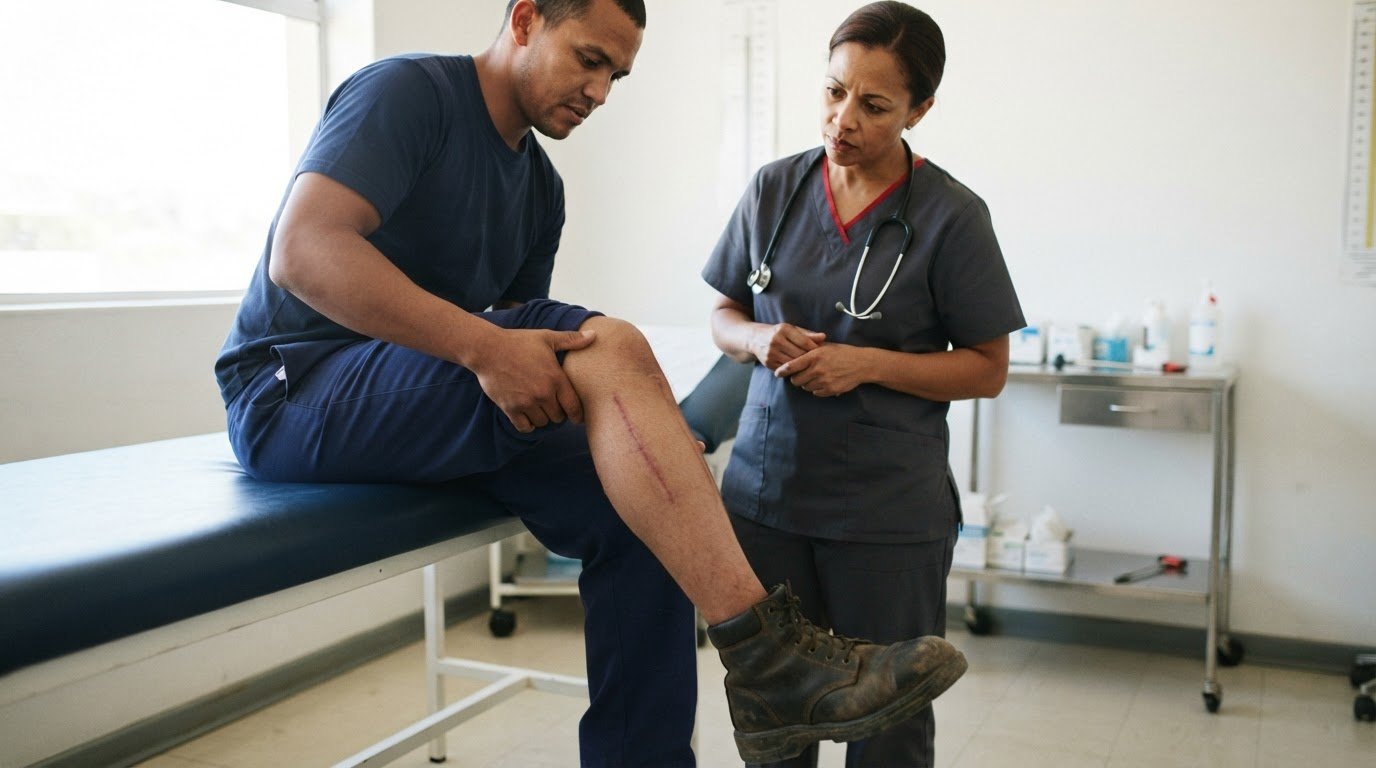
A major orthopaedic operation does not, by itself, determine whether you are fit to return to sea. Maritime medical clearance after major orthopaedic surgery depends on how your recovery affects your ability to perform your duties safely, alongside the clinical findings at assessment. There is no single answer that applies to every operation or seafarer.
It is understandable to want a clear timeframe after surgery, especially when your work depends on meeting maritime medical requirements. The practical question is how your recovery, mobility and day-to-day function relate to the demands of your role.
This clinical care reference explains how medical fitness assessment fits into the process, what professional competencies can contribute to orthopaedic care, and how different orthopaedic subspecialties relate to major surgery. It will help you understand the factors considered and how a seafarer medical examination can support an informed assessment of your health and work fitness.
Key Takeaways
- Understand how South African seafarer medical fitness requirements shape an assessment after major orthopaedic surgery.
- Learn who can issue a seafarer medical certificate and how that assessment relates to your clinical care.
- See which medical records and examination findings may help build a clear picture of your recovery and ability to work.
- Explore how mobility, pain relief and physical duties affect fitness, and where a Seafarers / SAMSA Medical Examination at Hatmed Medical Centre fits.
What medical fitness standards apply to seafarers in South Africa?
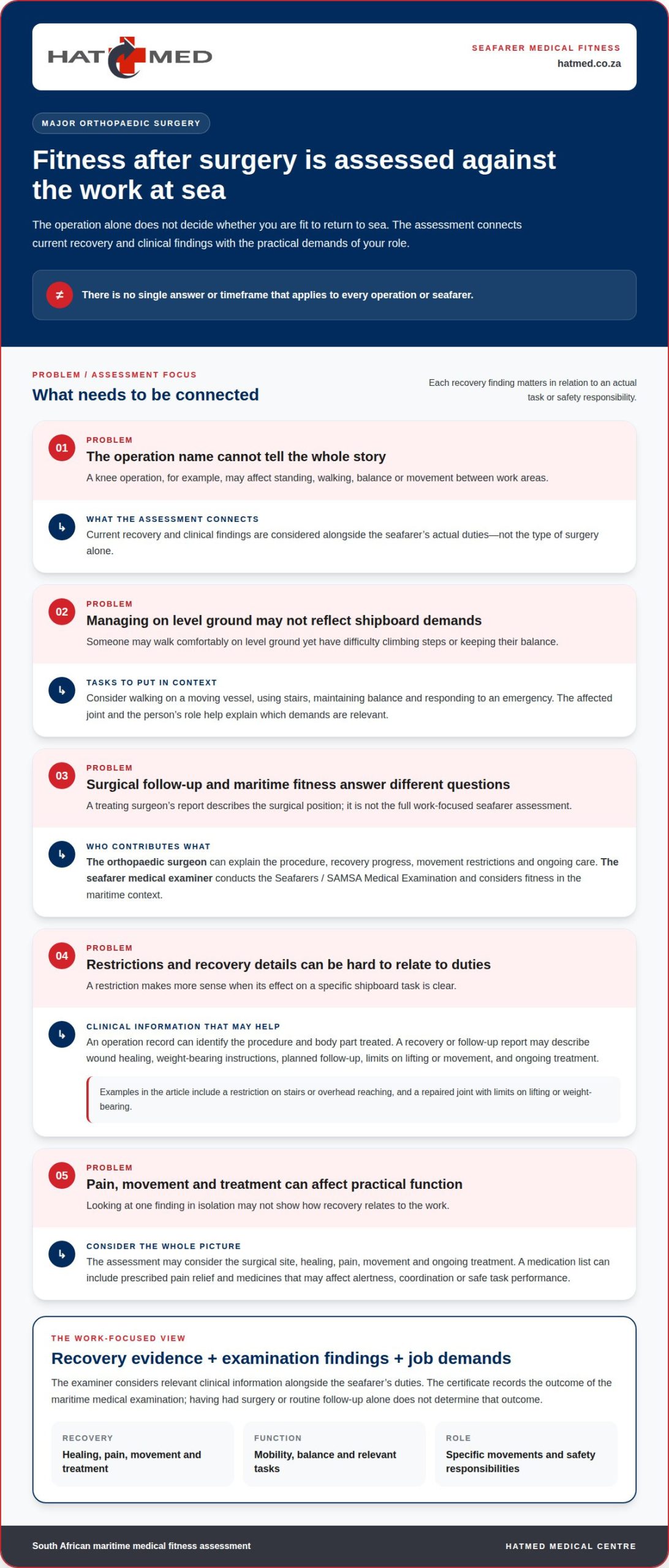
Medical fitness means a person’s health and abilities in relation to their work. After major orthopaedic surgery, an assessment considers current recovery and the practical demands of a seafarer’s duties. A knee operation, for example, may affect standing, walking, balance or movement between work areas.
Functional capacity is the ability to carry out relevant tasks safely and reliably. For a seafarer, the clinician needs to understand the duties involved, rather than assess the operation alone. Tasks may include walking on a moving vessel, using stairs, maintaining balance or responding to an emergency. The person’s actual role and the affected joint help put these examples in context.
Clinical stability describes whether recovery is progressing without a problem that could interfere with work. An assessment may consider the surgical site, healing, pain, movement and ongoing treatment. For example, someone who can walk comfortably on level ground may still have difficulty climbing steps or keeping their balance. These differences matter when considering duties aboard a vessel.
Work-related fitness connects clinical findings with the seafarer’s specific role. A deck role and a role involving mostly seated duties may place different demands on mobility. The clinician should consider which movements, physical tasks and safety responsibilities are part of the job. This helps distinguish a medical limitation from an assumption based only on the type of surgery.
In practice, maritime medical clearance after major orthopaedic surgery requires a clear account of recovery and job demands. The assessment should connect each relevant finding to an actual task. Consider walking, steps, balance, joint movement, pain and treatment together, rather than treating one result as the whole picture. Describe any duties that feel difficult, such as climbing a ladder or standing for a task. Specific, work-related examples help the clinical discussion reflect your role.
Orthopaedic MMed training involves specialist training at an accredited institution. Candidates must hold an MBChB or equivalent qualification and have current registration with the HPCSA as an independent practitioner.
Who can issue a seafarer medical certificate in South Africa?
A seafarer medical examiner is the practitioner who conducts the maritime medical assessment and records its outcome. In South Africa, the relevant examination is a Seafarers / SAMSA Medical Examination. It assesses medical fitness for seafaring, not recovery alone. This distinction matters after major orthopaedic surgery: a surgeon’s clinical report and a maritime fitness assessment serve different purposes.
A treating orthopaedic surgeon is the specialist responsible for your operation and surgical follow-up. Their report can describe the procedure, recovery progress, movement restrictions and ongoing care. For example, it can clarify whether a repaired joint still has limits on lifting or weight-bearing. That information supports the medical assessment, but addresses surgical care rather than the full demands of seafaring work.
A seafarer medical certificate records the outcome of the relevant maritime medical examination. A routine post-operative note does not provide the same work-focused assessment. The examiner considers clinical information alongside the seafarer’s duties and relevant examination findings. This connects recovery to tasks such as climbing, balancing or responding to a situation aboard a vessel.
Clinical evidence is information that helps explain a person’s current health and function. The examiner may consider details of the operation, follow-up findings and treatment information available at the assessment. If the surgeon has set specific restrictions, such as avoiding a particular movement, those details help explain how recovery affects duties. Clear information supports a focused assessment rather than a decision based only on the operation’s name.
For maritime medical clearance after major orthopaedic surgery, the key distinction is who assesses fitness for seafaring. The orthopaedic surgeon explains the surgical position; the practitioner conducting the seafarer medical examination considers fitness in the maritime context. Both perspectives may inform the process, but they answer different questions. The certificate outcome depends on the assessment and relevant clinical information, not simply on having had surgery or received routine follow-up.
What documents and tests are needed for maritime medical clearance after surgery?
An operation record describes the procedure performed and the body part treated. It helps the examiner understand whether surgery involved a joint, bone, tendon or implant. For example, a knee replacement and a repaired shoulder involve different movement considerations. The operation date and treating surgeon’s details also help put later findings in context.
A recovery or follow-up report summarises progress after surgery and any current restrictions. Useful details include wound healing, weight-bearing instructions, planned follow-up and limits on lifting or movement. If a surgeon has advised avoiding stairs or overhead reaching, that restriction shows how recovery may affect particular shipboard tasks. Current treatment details can also clarify whether care is ongoing.
A medication list records the medicines you take and their purpose. Include prescribed pain relief and any medicine that may affect alertness, coordination or safe task performance. The examiner can consider medication alongside its effects on you and the duties involved. A prescription alone does not show how well you can move, concentrate or perform work.
A clinical examination assesses relevant health and physical function. After orthopaedic surgery, findings may relate to the operated area, movement, strength, walking or balance. The appropriate checks depend on the surgery and concerns raised during the assessment. For instance, a lower-limb procedure may make walking and joint movement relevant, while a shoulder procedure may make arm movement more pertinent.
Additional tests are investigations used to answer a specific clinical question. They are guided by the history and examination, not by the operation’s name alone. If symptoms or findings raise a concern, further investigation may help clarify it. There is no single test list for every procedure and recovery. The assessment connects each result to the person’s health and seafaring duties.
For maritime medical clearance after major orthopaedic surgery, organise the operation details, recent follow-up information and current medication record for your assessment. These documents help explain your recovery; examination findings show how it relates to your current function and work.
How do surgical recovery, mobility, pain medication, and physical duties affect seafarer fitness
Surgical recovery is the healing and functional progress after an operation. For maritime medical clearance after major orthopaedic surgery, the assessment considers how recovery affects your current abilities, not just the procedure’s name. Someone recovering from a hip operation may manage ordinary indoor walking but struggle with repeated steps. Current movement restrictions, ongoing treatment and symptoms help show what remains difficult. The same operation can affect people differently, so the relevant details are your current function and duties.
Mobility is the ability to move safely and effectively at work. Relevant examples include walking, climbing steps, standing, balancing and moving between work areas. A seafarer who can walk on level ground may still find ladders or uneven surfaces challenging. The assessment relates these movements to the role’s actual demands. A shoulder operation may affect reaching or handling objects, while a lower-limb operation may affect walking or balance.
Pain medication is treatment used to manage pain after surgery. Its relevance depends on its effects alongside the person’s health and work tasks. The assessment may consider whether pain affects concentration, movement or the ability to complete duties. For example, discomfort when bending may affect a task requiring repeated movement. Medication information helps explain current treatment, but does not describe function on its own.
Physical duties are the tasks a seafarer must perform in their particular role. These can include standing for a task, climbing, lifting or responding promptly to a work situation. A seated role and a role requiring frequent movement place different demands on the body. Naming the difficult task helps connect clinical findings with work, rather than relying on a general job description.
Recovery, mobility, pain treatment and duties all inform maritime medical clearance after major orthopaedic surgery. For instance, someone may have improving movement but still experience pain during repeated stair climbing. The examiner can relate these examples to the person’s work and current clinical picture. This supports a practical assessment of which tasks are manageable and where limitations remain. The decision considers these factors together, rather than relying on one finding alone.
Returning to work before recovery supports your duties may leave you struggling with tasks such as climbing, balancing, lifting or moving promptly. Pain or medication effects may also affect movement or concentration during work.
Hatmed Medical Centre
Hatmed Medical Centre provides Seafarers / SAMSA Medical Examinations and General Practitioner Consultations. After major orthopaedic surgery, these services offer a practical route to a seafarer medical assessment and general clinical care. The examination considers your current health alongside information relevant to your work, helping you understand how recovery relates to maritime medical fitness.
A General Practitioner Consultation can also help you discuss ongoing health concerns or treatment as part of your care. Bring relevant information about your operation and recovery so it can inform the clinical discussion. Contact Hatmed Medical Centre to arrange a consultation or seafarer medical examination.
Plan your next step with confidence
Returning to sea after surgery calls for a practical discussion about readiness for your duties. For maritime medical clearance after major orthopaedic surgery, describe any work tasks that remain difficult and how recovery affects everyday activities. This gives your clinical conversation a clear starting point.
Hatmed Medical Centre provides General Practitioner Consultations, Immigration Medical Examinations and Seafarers / SAMSA Medical Examinations. Discussing maritime medical clearance after major orthopaedic surgery with a practitioner can help you identify a suitable next step.
Contact Hatmed Medical Centre today to discuss your next step. A clear conversation can help you approach the process with confidence.
Frequently Asked Questions
What does maritime clearance involve after major orthopaedic surgery?
Maritime medical clearance after major orthopaedic surgery assesses whether your health and functional ability support working at sea. It considers your capacity in relation to your maritime role, rather than treating surgery itself as an automatic pass or bar. For example, a return-to-work discussion can consider whether you can manage essential duties alongside continuing treatment or restrictions.
How long after major orthopaedic surgery can a seafarer return to work?
There is no single return-to-work interval for every operation and maritime role. For maritime medical clearance after major orthopaedic surgery, timing depends on healing progress, restrictions, mobility, symptoms and job demands. A seafarer returning to mostly seated duties may face different functional demands from someone who must climb or move equipment. The assessment relates your recovery to those actual duties.