A high BMI doesn’t automatically disqualify a seafarer. The seafarer body mass index waiver application guidelines focus on what the measurement may signal: a BMI of 30 or 35 can prompt further assessment, while a BMI over 40 can lead to disqualification under the cited IMO/ILO standards, though it isn’t an absolute criterion. A seafarer with a BMI of 42 may still be found fit after demonstrating adequate mobility and physical resilience without accompanying conditions.
It’s understandable to worry that a BMI figure alone could decide the outcome. In practice, an assessment may also consider physical ability, related health concerns and whether you can carry out normal and emergency duties safely.
This article explains how BMI thresholds are used, why BMI has limitations, and what exercise tests or specialist reports may be considered. It also explains how fitness assessments can affect a medical certificate and what “waiver” means in this context.
Key Takeaways
- Learn why body shape and waist measurement can add important context to a BMI result.
- Understand how the assessment considers safe performance of normal and emergency duties, not just a number.
- See what further checks, such as an exercise test or specialist report, may help clarify fitness.
- Find out how South African seafarer medical examinations relate to decisions about fitness and certification.
BMI limitations
Body mass index (BMI) is a screening calculation that compares weight with height. Calculate it by dividing weight in kilogrammes by height in metres squared. The result is a single figure, not a direct measurement of body fat. People with different body shapes, fitness levels and health profiles can have the same BMI.
Body frame and muscle mass can affect BMI, so the result may not accurately reflect a seafarer’s body composition. A muscular person may have a higher BMI without having as much body fat as someone with less muscle. Conversely, a BMI within a familiar range does not show where fat is carried. The figure needs to be considered in context.
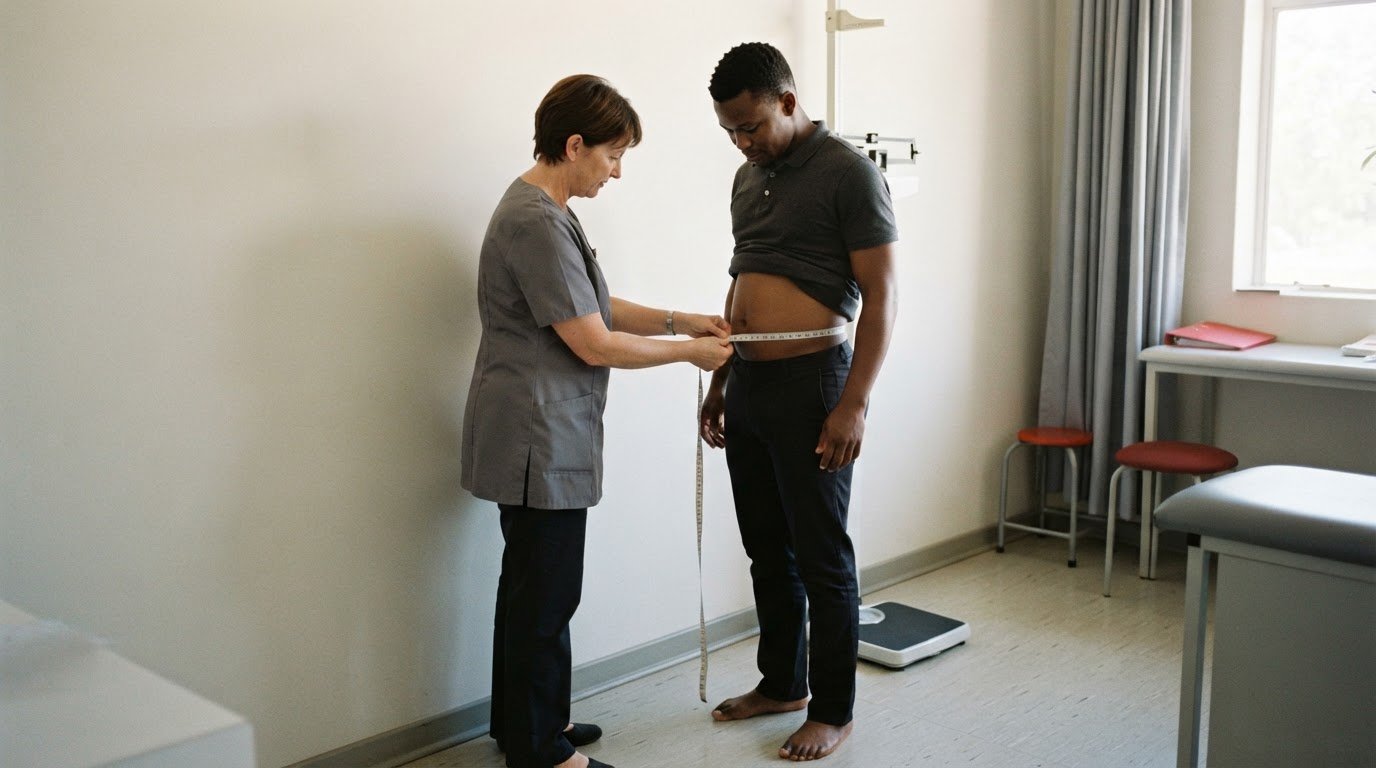
Waist girth is measured around the abdomen and can help assess abdominal fat. Unlike BMI, it gives an indication of how much fat is carried around the waist. Abdominal fat assessed through waist girth is a better predictor of future risk from obesity-associated conditions than BMI. It adds useful context but does not replace a complete medical assessment.
The calculation also cannot establish whether a person can perform their duties safely. In seafaring, the ILO/IMO Guidelines Appendix E, sections E65-68, discusses obesity in relation to seafarers. The assessment needs to consider relevant health concerns and physical capability, not just a height-and-weight result. BMI is therefore best understood as a prompt for closer assessment, rather than a complete measure of fitness.
A BMI example illustrates why figures need interpretation: an example associates BMI 24 with an optimal medical weight of 75 kilograms. That pairing is an illustration, not a universal target for every seafarer. Height, body frame and muscle mass can all change how a weight relates to BMI. A useful assessment considers these factors alongside waist girth and the demands of the role.
Because body frame and muscle mass can affect BMI, it is not the best predictor of long-term risk from obesity-associated conditions.
Obesity may be grounds for finding a seafarer unfit or restricting their duties if it prevents safe performance of normal or emergency duties, or creates an unacceptable risk of incapacitation at sea before the next medical examination. Functional safety is central to the assessment.
BMI thresholds and potential disqualification
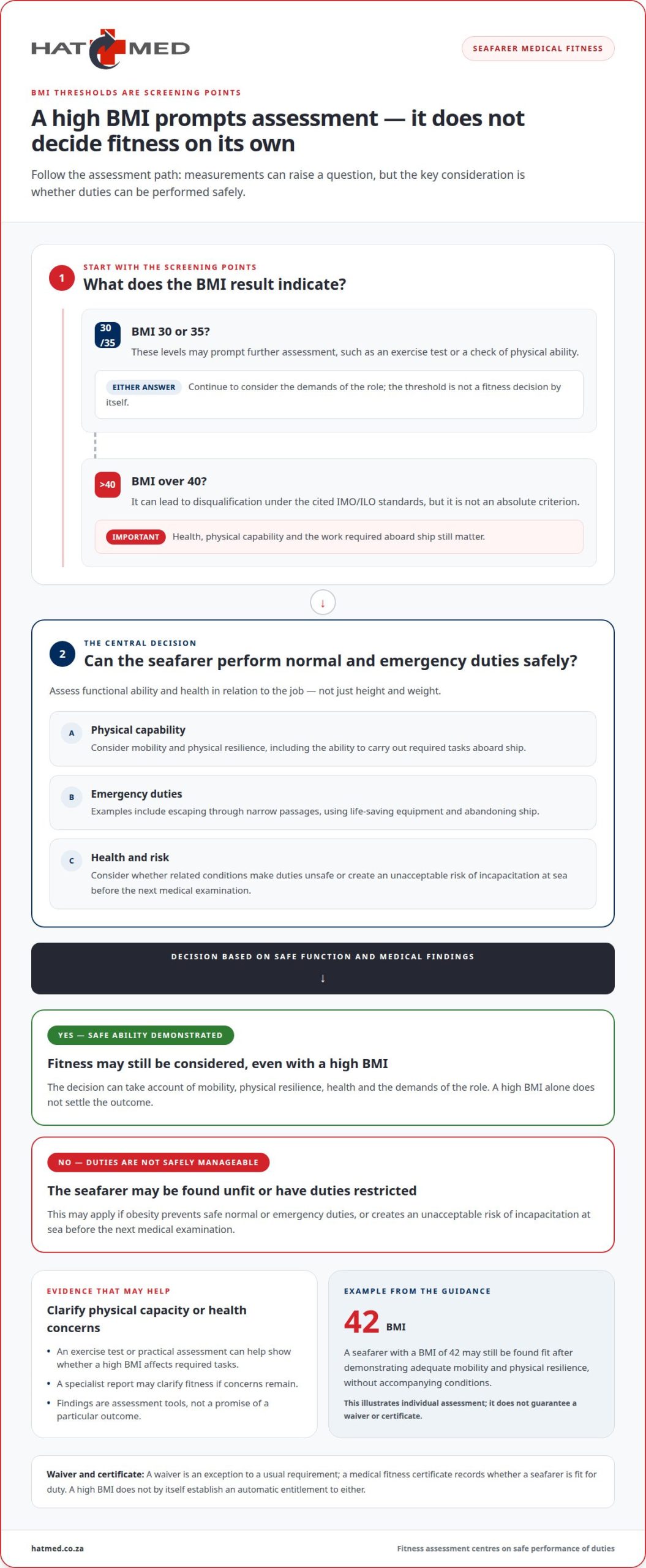
A BMI threshold is a screening point that may prompt closer assessment, not an automatic fitness decision. In seafarer medical examinations, BMI 30 or 35 may lead to an exercise test or a check of physical ability. The seafarer body mass index waiver application guidelines help explain why crossing a screening point can prompt further assessment rather than decide fitness alone.
A BMI over 40 can lead to disqualification under the cited IMO/ILO standards, but it is not an absolute criterion. The result is considered alongside health and the demands of the role. For example, a person weighing 130 kilograms is given a BMI of 41 in the cited example. That figure may raise concern, but it doesn’t describe the person’s ability to work safely.
Disqualification means finding that a seafarer cannot perform their duties safely or faces an unacceptable risk at sea. Obesity-associated conditions can prevent certification if they make normal or emergency duties unsafe, or create an unacceptable risk of incapacitation before the next medical examination. Their effect on safe work matters, not simply their presence.
Physical capability means being able to carry out tasks required aboard ship. The ILO/IMO Guidelines Appendix C is relevant to assessing this capability. Emergency duties may include escaping through narrow passages, using life-saving equipment and abandoning ship. An exercise test or practical assessment can help show whether a high BMI affects these tasks. A specialist report may clarify fitness if concerns remain. The seafarer body mass index waiver application guidelines provide context for considering this evidence alongside medical findings.
For a seafarer with a high BMI, a medical assessment can connect measurements and health concerns with actual job demands. It may consider mobility, physical resilience and relevant test or specialist findings. A seafarer medical examination provides a setting to discuss these factors and their implications for fitness certification.
Can a seafarer get a medical certificate waiver for high BMI in South Africa?
A waiver is an exception to a usual requirement, while a medical fitness certificate records whether a seafarer is fit for duty. In South Africa, a high BMI does not by itself settle the fitness decision. The assessment considers whether you can work safely and whether related health concerns create a risk at sea.
A BMI of 42 can still be consistent with fitness for duty when the candidate demonstrates adequate mobility and physical resilience, without accompanying conditions. This example shows why a single measurement is not the whole assessment. It does not establish an automatic entitlement to a waiver or certificate; the relevant evidence is the person’s ability and health in relation to their duties.
If you are a seafarer concerned about a high BMI, focus on the medical examination rather than assuming you qualify for an exemption. The examiner may consider how you move and perform, whether obesity-associated conditions affect safe work, and whether there is an unacceptable risk of incapacitation before the next examination. Both normal duties and emergency tasks matter.
Further evidence can help explain a result. An exercise test may assess physical capacity, while a specialist report may clarify a health concern if fitness is uncertain. These are assessment tools, not a promise of a particular outcome. Their findings should relate directly to your ability to carry out required duties safely.
In practical terms, treat “waiver” as a question about how fitness is assessed, rather than assuming a separate BMI exemption is available. A candidate with a high result can discuss relevant health conditions, mobility and physical performance during the examination. The BMI 42 example demonstrates that adequate mobility and resilience, without accompanying conditions, can support a fit-for-duty finding. It does not mean that every seafarer with that BMI will receive the same decision.
Under Ireland’s Merchant Shipping (Medical Examinations) Regulations, the seafarer certificate requirement took effect in July 2014; the fisher requirement under the Work in Fishing Convention medical examination regulations took effect in July 2020. UK grandfather rights let fishermen with medical conditions below MSN 1886 standards continue working if there is no immediate safety risk and they applied before 30 April 2024.
Which South African authority issues seafarer medical fitness certificates and waivers?
SAMSA is the South African maritime authority associated with seafarer medical examinations. A medical fitness certificate records the outcome of an assessment, while a waiver is an exception to a requirement. They are related, but they are not the same decision or document.
A seafarer medical examiner assesses your health and ability to perform duties safely. The assessment may consider BMI alongside mobility, relevant health conditions and physical capacity. If more evidence is needed, an exercise test or specialist report may help clarify your fitness. The examiner’s clinical findings inform the certification process. A high BMI figure alone does not show whether you can work safely.
For South African seafarers, the practical starting point is a SAMSA medical examination. It establishes the candidate’s medical findings and whether further assessment is relevant. A certificate decision should reflect the person’s ability to perform normal and emergency duties, including tasks that require mobility. This is more useful than treating a BMI figure as a stand-alone verdict.
Do not assume that a high BMI automatically calls for a separate waiver application. The relevant question is whether the examination identifies a fitness concern and what evidence may address it. If a medical concern affects safe work, its impact matters. An exercise test or specialist report can provide further information where needed. The assessment focuses on your health and functional ability, not just the title of a form.
When arranging a seafarer assessment in South Africa, make its purpose clear: you need your medical fitness for seafaring duties assessed. The examination can document relevant findings and identify whether additional clinical evidence is needed. This gives the certification process a clear medical basis and helps distinguish clinical assessment from an authority’s certification decision.
For an assessment focused on seafarer fitness, arrange a SAMSA medical examination and discuss how your health relates to your duties.
Hatmed Medical Centre: Seafarers / SAMSA Medical Examinations
Hatmed Medical Centre provides Seafarers / SAMSA Medical Examinations for people who need an assessment for seafaring duties. If a high BMI has raised questions about your fitness, the examination is an appropriate setting to discuss your health and medical concerns. Your individual circumstances are considered rather than treating one measurement as the whole picture.
Bring up any known health conditions and explain how they affect your daily activities or work. If you also need support with a related ongoing condition, Chronic Disease Management or a General Practitioner Consultation may be relevant to your care.
Contact Hatmed Medical Centre to arrange a seafarer medical examination.
Take the next step with confidence
Use the seafarer body mass index waiver application guidelines as a starting point for a focused conversation about your medical fitness. Consider which health questions you want addressed and how they relate to your work at sea. A clear discussion can help you understand the assessment process and what information may be relevant to your situation.
Hatmed Medical Centre offers Seafarers / SAMSA Medical Examinations, General Practitioner Consultations and Immigration Medical Examinations. A seafarer examination is the relevant next step for an assessment related to your duties at sea; a GP consultation can address broader health concerns.
Contact Hatmed Medical Centre for advice about your seafarer medical examination. Taking that step can help you approach your assessment with a clearer plan and greater confidence.
Frequently Asked Questions
When is BMI in a seafarer medical examination a problem?
BMI becomes a concern when it points to health or mobility issues that could affect safe work at sea. The assessment focuses on practical effects, such as difficulty moving through confined spaces or a condition that could cause incapacitation before the next examination. Be ready to discuss relevant diagnoses, treatment and any limits on your daily activities so these can be considered alongside your BMI.
What medical conditions associated with obesity can prevent seafarer certification?
Obesity-associated conditions can prevent certification if they make normal or emergency duties unsafe or create an unacceptable risk of incapacitation at sea before the next medical examination.