

What if the answer to “Do I need a chest X-ray?” depends less on where you’re applying from than on where you’re going? The immigration x-ray and medical process isn’t one universal checklist, so it’s understandable to feel unsure about which tests, documents and next steps apply to you.
For temporary and permanent residence applications to South Africa, Ministerial Immigration Directive No. 10 of 2026, signed on 8 July 2026, waived the requirement for medical and radiological reports, including for pending applications. If you’re applying to another country, its own immigration authority may still require a medical examination or chest X-ray. Always follow the current instructions for your destination.
This guide explains how requirements can differ, what a chest X-ray may assess, and how to prepare your documents and respond calmly if further assessment is requested. Hatmed Medical Centre provides immigration medical examinations, and our aim is to help you approach the process with clear information and confidence.
Key Takeaways
- The immigration x-ray and medical requirements depend on your destination, visa pathway and official instructions, so follow the guidance for your application.
- An examination may involve a medical history, clinical assessment, imaging or laboratory tests, but these aren’t a universal package.
- Use your written instructions to establish whether a chest X-ray is requested; there’s no single rule for every visa applicant.
- Before your appointment, review the requirements and gather the identification, application documents and medical records they specify.
- If further assessment is requested, follow the result guidance and next steps provided for your application. Hatmed Medical Centre offers immigration medical examinations to help you through the process.
What Does an Immigration X-Ray and Medical Examination Involve?
It’s understandable to wonder whether a visa application means a medical check-up, a chest X-ray, or both. There isn’t one checklist for every applicant: the requirements depend on the destination country, visa category and current written instructions. An X-ray is one possible investigation, not an automatic part of every immigration medical.
In brief: A general medical examination is a clinician’s assessment of your health; destination-specific visa screening is the health information or tests requested for a particular immigration application. The two can overlap, but the application instructions determine what is needed.
There’s also an important South African distinction. As of 8 July 2026, Ministerial Immigration Directive No. 10 of 2026 waived medical and radiological reports for temporary and permanent residence visa applications to South Africa, including pending applications. That does not set the requirements for another country’s visa process. Always use the latest instructions from the relevant destination-country immigration authority.
Why immigration authorities may request health information
Where an application requires health information, the authority uses it to assess health-related requirements for that specific pathway. The requested information may help the authority consider matters relevant to its immigration process; it isn’t a general judgement of a person’s fitness or worthiness to travel.
A clinician conducts the examination and records or submits the requested medical information. The immigration authority, not the examining clinician, makes the visa decision. A medical finding alone shouldn’t be treated as a promise of approval or refusal. If the authority needs clarification or more information, it will provide guidance about the next step.
What a chest X-ray can contribute
A chest X-ray, also called chest radiography, creates an image of the chest for clinical review. Some immigration screening instructions may request one as part of assessing for tuberculosis (TB). Whether it applies depends on the destination authority’s rules and the instructions issued for your application.
The request itself isn’t a diagnosis. An image is interpreted in its clinical context, and this article can’t assess an individual result. If you receive a request for further assessment, follow the instructions provided by the relevant authority and the clinician involved. A request for additional information or review doesn’t, by itself, establish what the final immigration decision will be.
Before arranging an examination, identify the exact visa pathway and read the health instructions issued for it. Look for whether a medical assessment or chest imaging is specifically requested, and note any forms or submission directions. If the wording is unclear, use the authority’s application guidance to establish what it requires. This small step can prevent you from assuming that another applicant’s checklist applies to you.
Hatmed Medical Centre provides immigration medical examinations in a professional, patient-centred setting. Having your destination authority’s instructions available helps keep the examination focused on the requirements for your application, rather than on a generic list of tests.
Which Tests Can an Immigration Medical Include?
The word “medical” can sound like a standard package of tests, but immigration screening doesn’t work that way. The requesting authority determines which tests are required for your application. Your instructions may ask for a medical history, a clinical assessment, imaging, laboratory tests, or a combination of these. They may also specify forms and how results must be submitted.
Think of the immigration x-ray and medical process as an instruction-led assessment, not a set of investigations every applicant automatically completes. For example, one person may be asked to attend a medical assessment, while another may also receive instructions for imaging or laboratory investigations. These are examples only, not predictions of what a particular visa requires.
Medical history and clinical assessment
A clinician may ask about your health history, current concerns and any relevant past conditions. A clinical assessment then follows the purpose and directions of your application; there isn’t one fixed examination checklist that applies to every destination. Answer questions accurately and mention medicines you take, previous diagnoses and relevant treatment or medical records. This helps the clinician understand the information in context and complete the requested assessment as clearly as possible.
If you’re unsure of a medicine’s name or the date of a previous diagnosis, bring the packaging, prescription or available records rather than guessing. If you have a current health concern, explain it during the appointment. Sharing relevant information is a practical part of an assessment, not a reason to assume what the immigration authority will decide.
When chest imaging or other investigations may be requested
Chest imaging and laboratory investigations are only included when the instructions for your destination and application call for them. A chest X-ray may be requested as part of screening, including where tuberculosis (TB) is a consideration. Other instructions might specify laboratory tests. Don’t assume that a test requested for a different visa pathway, destination or applicant also applies to you.
Before your appointment, read the full instructions and note every requested form, investigation and submission step. If the authority names a particular form or directs you to an approved process, follow that wording. General information online can help you understand common terms, but it can’t replace the current directions for your own application.
- Medical history: Be ready to discuss relevant conditions, treatment and medicines.
- Clinical assessment: Follow the clinician’s directions for the assessment requested.
- Imaging: Arrange chest imaging only if your application instructions require it.
- Laboratory tests: Complete only the tests specified for your application.
- Forms and results: Use the forms and submission instructions issued by the authority.
Hatmed Medical Centre provides immigration medical examinations to support applicants through this process. Bringing the destination authority’s instructions to your examination gives the clinician a clear reference for the assessment requested and helps you prepare with confidence.
Does Every Visa Applicant Need an Immigration X-Ray?
No. There’s no single X-ray rule for every destination, visa pathway or applicant. An immigration x-ray and medical request depends on the instructions issued by the authority handling your application. Even two people applying to the same country may receive different directions if their visa pathways or individual circumstances differ.
A request for a chest X-ray is an instruction to complete a particular part of screening. It doesn’t, on its own, predict whether a visa will be approved or refused. The clinician carries out or records the requested medical assessment; the immigration authority considers the application and makes the visa decision.
Why requirements differ by destination and visa pathway
Each immigration authority sets the health instructions for its own application processes. Immigration New Zealand and Australia’s Department of Home Affairs are separate authorities, so their guidance must be read independently. A test mentioned in one country’s instructions shouldn’t be assumed to apply to a different destination or visa pathway.
Use this comparison as a guide to what to check, not as a list of tests that apply to every applicant:
| Destination authority | Visa pathway | Written instruction to use | Examination to follow |
|---|---|---|---|
| Immigration New Zealand | The pathway named in your application | Current health guidance and any application correspondence | The medical assessment or tests specifically requested |
| Australia’s Department of Home Affairs | The visa pathway stated in your application | Current instructions and any request issued for your case | The examination and investigations listed in that request |
| Another destination authority | Your exact visa category or route | The authority’s current instructions for that application | Only the components required by those instructions |
The examples show where to find the relevant direction; they don’t confirm that a particular applicant needs an X-ray, blood test or other investigation. The written request for your own application is the practical reference point.
What to do when instructions are unclear or change
Check the official immigration authority’s current guidance and review the correspondence attached to your application. An old checklist, a friend’s experience or a page describing a different visa route may not reflect the requirements in force for your case. Pay attention to the exact form, examination or next step named in your instructions.
If two official messages appear to differ, use the latest application-specific direction or seek clarification through the authority’s published application channels before arranging tests. Keep a copy of the instructions you relied on. That gives you and the clinician a clear reference and helps prevent unnecessary assumptions or investigations.
How to Prepare for an Immigration Medical and X-Ray
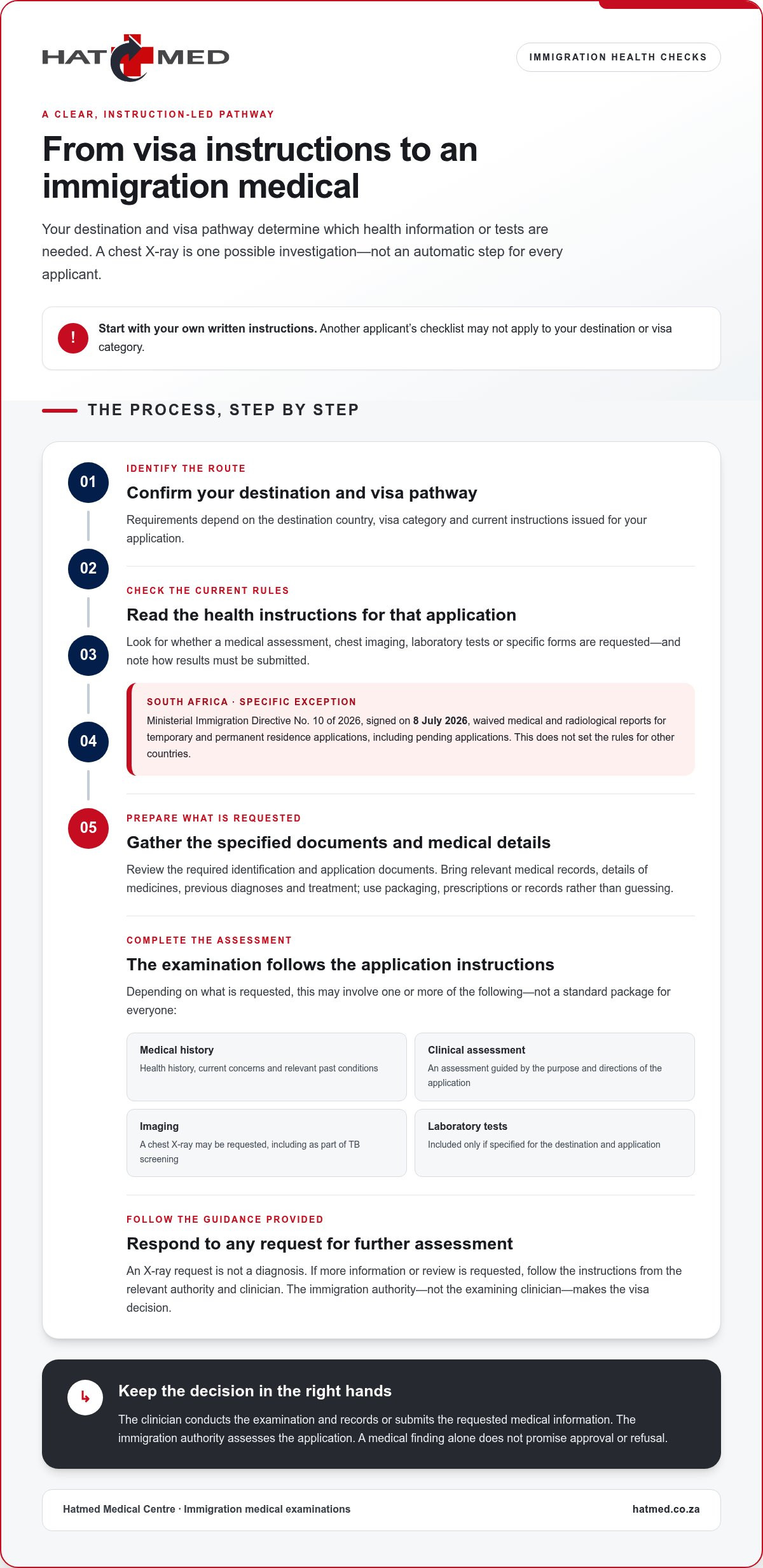
A little preparation can make an immigration medical feel more manageable. Start with the instructions for your own application, as these determine which forms, documents and examinations apply. Don’t rely on another applicant’s checklist: their destination, visa pathway or instructions may differ from yours.
Documents and information to organise beforehand
Gather only the items requested for your application. This may include the appointment request, immigration forms, identification and relevant medical records. Make a current list of your medicines and note health history that may be relevant, such as previous conditions or treatment. If a document isn’t mentioned in your instructions, don’t assume it’s required.
Use this sequence to prepare and follow through:
- Review your instructions. Read the latest authority guidance and application correspondence. Note the examination requested, any forms to complete and how results must be handled.
- Gather the specified documents. Organise the appointment request, identification, application documents and medical records named in your instructions. Keep them together so they’re easy to find.
- Attend and share relevant information. Answer the clinician’s questions honestly, including details about medicines, previous conditions and current concerns. If an X-ray is requested and you’re pregnant or could be pregnant, tell the clinical team before imaging so they can guide you appropriately.
- Follow the result guidance. Use the instructions provided after the examination to understand whether further assessment or another step is needed. Follow the process set out for your application.
What to expect during and after the appointment
The clinician follows the examination process requested for your application and takes your individual clinical circumstances into account. The appointment may involve questions about your health and the assessment or investigations specified in your instructions. Cooperating with the process and providing accurate information helps the clinician complete the requested assessment.
Sometimes, further tests or follow-up may be requested. That doesn’t automatically determine the outcome of your visa application. The relevant authority makes the immigration decision, and the next steps depend on the applicable process and instructions. Follow the guidance you receive rather than trying to interpret an individual result from general information online.
Before you leave, make sure you understand any follow-up directions and what you’re expected to do with forms or results. If you receive new correspondence from the authority later, read it carefully, as it may provide additional instructions for your application.
If you’re ready to arrange an immigration medical examination, book your examination with Hatmed Medical Centre and have your destination authority’s instructions available.
Arrange an Immigration Medical Examination with Hatmed
Once you’ve reviewed the instructions for your visa application, the next step is arranging the medical examination they request. Hatmed Medical Centre provides immigration medical examinations, with professional assessment and patient-centred support to help make an unfamiliar process feel more manageable. Your destination authority’s instructions are an important reference: they explain the purpose of the examination and any application-specific forms or directions the clinician needs to consider.
Requirements can differ between destinations and visa pathways, so share the purpose of your examination clearly when arranging your visit. If your instructions name a particular form or investigation, have that information ready. This helps keep the appointment focused on the medical step relevant to your application, rather than assumptions based on a general checklist or someone else’s experience.
What to have ready when arranging your examination
Before starting the appointment process, gather the documents and health information specified by the relevant authority. Keeping them together makes it easier to explain what your application requires and to bring the right material to the examination. Your instructions may identify items such as forms, appointment correspondence, identification or relevant medical records. Use that list as your guide rather than preparing documents that aren’t requested.
It can also help to have a current list of medicines and a brief account of relevant health history ready. Include information about previous conditions or treatment that may be useful to the clinician. You don’t need to interpret your own medical records; sharing relevant details accurately gives the clinician context for the assessment.
- Application instructions: Keep the latest authority guidance and any examination request together.
- Forms and identification: Bring the items specified for your application.
- Health information: Prepare details of medicines, relevant conditions and available records.
- Examination purpose: State which destination and visa application the medical is for, and show the written instructions.
How Hatmed Medical Centre supports applicants through the medical step
An immigration medical can feel less daunting when you know what the appointment relates to and can discuss your instructions with the clinician. Hatmed Medical Centre’s professional, patient-centred approach gives you a supportive setting to complete the medical assessment requested for your application. Bring your destination authority’s directions so the examination can be guided by the information provided for your case.
The medical examination is one part of the application process. Hatmed Medical Centre does not decide immigration eligibility, and an examination cannot guarantee a visa outcome. If you’re unsure about a medical instruction, refer to the relevant authority’s latest guidance and application correspondence. Clear information helps you understand what has been requested and what steps to follow after the appointment.
For a more organised appointment, keep your instructions and relevant documents close at hand, and share any questions or health information openly with the clinician. If you’re ready to take the next step, arrange your immigration medical examination with Hatmed Medical Centre.
Take the Next Step with Confidence
You don’t need to predict every part of the immigration x-ray and medical process before you begin. Focus on the next practical step: keep your destination authority’s instructions close, note any questions they raise, and use those details to guide your appointment. If further information is requested later, take it one step at a time and follow the directions provided for your application.
A clear starting point can make an unfamiliar process feel more manageable. Arrange your immigration medical examination with Hatmed Medical Centre and bring the relevant application instructions with you, so the medical step can be approached with care and clarity.
Arrange an immigration medical examination with Hatmed. You can move forward calmly, with the right information in hand.
Frequently Asked Questions
Does every immigration medical require a chest X-ray?
No. A chest X-ray isn’t a standard requirement for every immigration medical. The immigration x-ray and medical steps depend on the destination, visa pathway and instructions attached to your application. Don’t arrange imaging simply because another applicant needed it. Check the current official request for your case, including any amendments or follow-up messages, and arrange an X-ray only if those directions call for one.
Why is a chest X-ray requested for an immigration medical?
A chest X-ray may be requested as part of health screening, including where an authority’s process calls for tuberculosis assessment. It provides an image for clinical review, but the request itself doesn’t mean you have tuberculosis or predict a visa decision. Screening procedures differ between authorities, so use the explanation and directions supplied for your application rather than assuming another country’s process applies.
Can I complete an immigration medical before receiving my visa instructions?
Check the destination authority’s process before arranging an examination, as it may provide an application-specific request or forms the clinician needs. A general check-up completed beforehand may not meet the immigration requirement or match the required documentation. Find the official instructions first, then arrange the examination they specify. Don’t add tests simply to be safe unless the relevant process or a clinician directs you to do so.
What should I bring to an immigration medical appointment?
Use the authority’s checklist to decide what to bring. This may include your appointment request, relevant application forms, identification and health information requested for the examination. Check that you have the correct versions of any forms and can access relevant records or medicine details if asked. If the authority’s instructions differ from a general checklist, follow the instructions for your application.
Should I tell the clinician if I may be pregnant before an immigration X-ray?
Yes. Tell the clinical team before any imaging if you’re pregnant or think you could be. They can discuss your circumstances and appropriate next steps in line with the examination process. Share this information promptly, even if you’re unsure or the possibility is recent. Don’t decide on your own whether to proceed or cancel; let the team know so they can guide you and address your questions.
What happens if an immigration medical identifies a health concern?
A health concern may lead the clinician to document findings, explain what can be concluded from the assessment or recommend further assessment. The next step depends on the clinical situation and the immigration authority’s requirements. A finding alone doesn’t establish whether an application will succeed or fail; the authority makes that decision. Follow any written follow-up instructions and submit information through the route specified for your application.
How long does an immigration medical examination take?
Appointment length varies because the requested components and individual circumstances differ. An assessment involving a health history and clinical examination may take a different amount of time from one that also includes imaging, laboratory work or a review of records. Allow flexibility in your plans rather than relying on another applicant’s schedule. The appointment duration is also separate from the time an authority may take to process application information.