

An abnormal ECG is a reason to look closer, not a verdict on your fitness to work at sea. If your report contains unfamiliar terms, it’s understandable to worry that they point to a serious heart problem or could affect your certification. During a seafarer resting ECG abnormal findings medical review, a clinician considers the tracing alongside your health, medical history and assessment, rather than treating a computer-generated phrase as a diagnosis.
An unusual result doesn’t automatically mean you’re unfit for duty. Its significance depends on what the ECG shows and your individual circumstances, so a professional review can put the finding in context. Hatmed Medical Centre provides Seafarers / SAMSA Medical Examinations, where you can discuss your result as part of a broader medical assessment.
This article explains common ECG terms, how a clinician may review an abnormal tracing and what further checks or practical steps could follow. You’ll also learn what to bring to your assessment and why it’s best not to diagnose yourself from the report alone.
Key Takeaways
- An ECG records the heart’s electrical activity at rest; an “abnormal” label describes a pattern, not a diagnosis.
- Rate, rhythm, conduction and waveform changes are broad categories a clinician may consider, not a checklist for self-diagnosis.
- A seafarer resting ECG abnormal findings medical review may consider the tracing alongside your symptoms, medical history and examination findings.
- An abnormal result alone doesn’t determine medical fitness; decisions depend on the full assessment and applicable maritime medical standards.
- Keep your ECG report handy and share relevant symptoms, medicines and previous test results during your professional review.
What do abnormal resting ECG findings mean for a seafarer?
Seeing the word “abnormal” on an ECG report can be unsettling, particularly when it forms part of a seafarer medical assessment. The word describes how the recorded tracing differs from a pattern the reporting system or reviewer expects. On its own, it doesn’t identify the cause or confirm a heart condition. The finding needs to be considered alongside your symptoms, medical history, examination and the tracing itself.
That context matters because an ECG is only one part of a broader assessment of your health. The same phrase may need different consideration depending on the person and circumstances. A clinician can review the tracing and decide whether the finding needs clarification or further assessment. The wording alone cannot determine medical fitness.
What does a resting ECG record?
During a resting electrocardiogram, electrodes placed on the skin detect electrical signals from the heart. A machine displays these signals as waveforms and records information about heart rate and rhythm. The main waveforms are called P waves, QRS complexes and T waves. For a general overview of how the test works, see Electrocardiography (ECG).
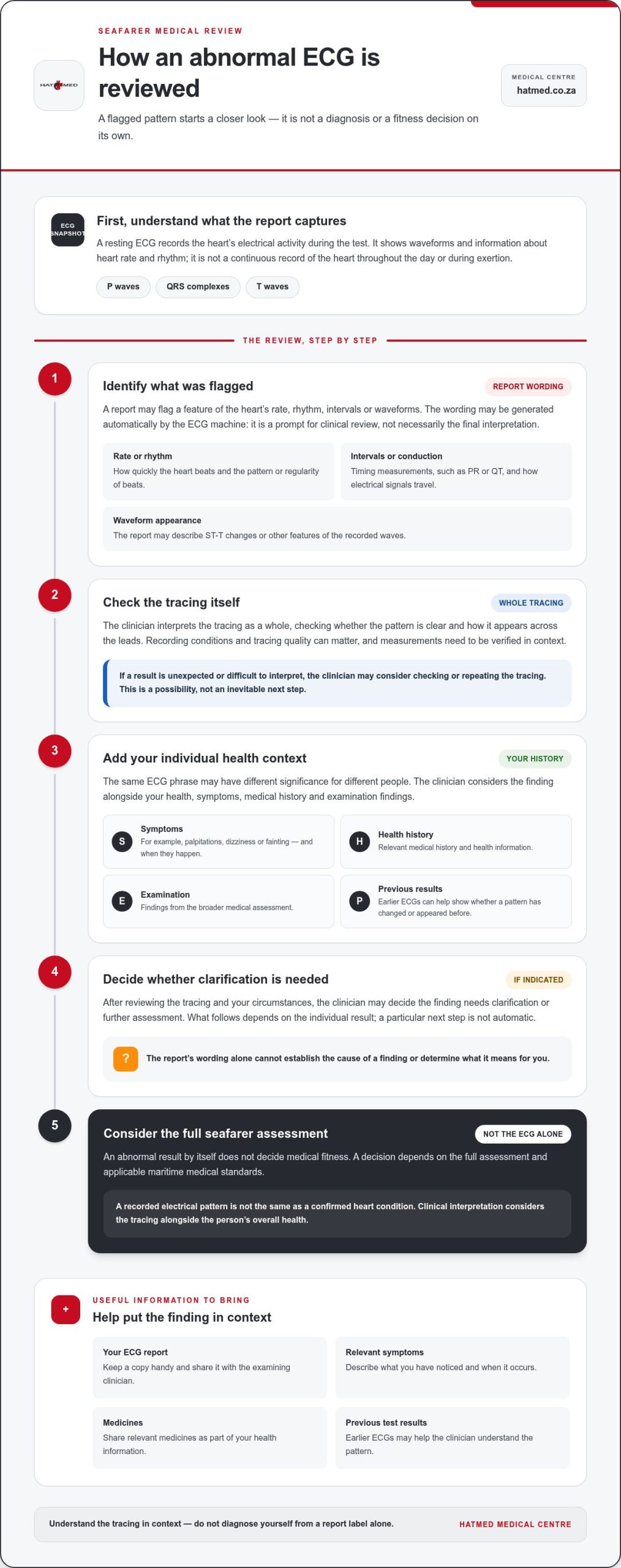
A resting ECG is a snapshot of the heart’s electrical activity during the test, not a continuous record of how it behaves throughout the day or during exertion. A clinician interprets the tracing as a whole, rather than treating one word or waveform as a diagnosis.
Why can an ECG report use the word “abnormal”?
A report may flag a feature of the rate, rhythm, intervals or waveforms for review. Sometimes the ECG machine generates the wording automatically. This is a prompt for review, not necessarily the final clinical interpretation. The clinician considers whether the pattern is clear on the tracing and how it fits with your health information and examination.
Recording conditions and tracing quality can also matter. If a result is unexpected or difficult to interpret, the clinician may consider whether the tracing needs checking or repeating. That doesn’t mean a particular next step is inevitable. It means the finding should be understood in context before conclusions are drawn.
An ECG finding is a recorded electrical pattern; a confirmed heart condition is a clinical diagnosis made after considering that pattern alongside the person’s overall health.
For a seafarer, a seafarer resting ECG abnormal findings medical review means understanding what the tracing shows in the context of the individual assessment, rather than self-diagnosing from a machine-generated label. Keep a copy of the report and share relevant health details with the examining clinician. This helps put the finding in context during your Seafarers / SAMSA Medical Examination.
Which resting ECG patterns may need closer review in seafarers?
ECG reports use short terms to describe different parts of a tracing. A clinician may group them by rate or rhythm, conduction or intervals, and waveform appearance. These categories can help you understand what a report describes, but they aren’t a checklist for deciding whether you have a condition or are fit for duty. Their meaning depends on the full tracing and your individual clinical picture.
The same ECG phrase can have different significance in different contexts. Symptoms, medical history, examination findings and earlier ECGs may all help the clinician interpret a pattern. International guidance, including the ILO/IMO Guidelines for Seafarer Medical Examinations, provides broader context for seafarer medical assessments. A particular phrase still needs individual clinical review.
Rate and rhythm descriptions
Rate refers to how quickly the heart is beating during the recording. Rhythm describes the pattern and regularity of the heartbeats. A report might describe a rate as faster or slower than expected, or note an irregular rhythm. These descriptions alone don’t establish why the pattern occurred or what it means for you.
Tell the examining clinician about symptoms such as palpitations, dizziness or fainting, and when they happen. Previous ECGs may help show whether a pattern has changed or was seen before. A brief resting recording may not capture every symptom or rhythm variation, so the clinician interprets it alongside your history rather than relying on a label in isolation.
Intervals, conduction and waveform changes
Intervals are measured sections of the tracing. For example, the PR interval and QT interval describe the timing between electrical events shown on the ECG. Conduction wording refers to how electrical signals travel through the heart. A report may also mention ST-T changes, which describe the appearance of particular waveforms.
These terms identify features for clinical consideration, not a standalone diagnosis. Their interpretation can depend on how clearly the tracing was recorded, the pattern across the leads and the person’s medical circumstances. A clinician needs to verify the measurements and their significance. It isn’t safe to judge a result from a number or phrase read online.
- Rate or rhythm wording: share relevant symptoms and previous ECG results.
- Interval or conduction wording: let the clinician assess the measurement in the full tracing.
- ST-T or other waveform wording: discuss the report rather than drawing conclusions from the term alone.
A seafarer resting ECG abnormal findings medical review considers what was recorded in the context of your overall assessment. For a Seafarers / SAMSA Medical Examination, bring the report and any earlier ECGs so you can discuss the finding with the examining clinician.
How does a clinician assess an abnormal seafarer ECG?
A clinician-led review helps establish what the tracing shows and whether it needs further consideration. There isn’t one fixed set of steps or tests that applies to every seafarer. The review is guided by the ECG, your health information and the requirements relevant to your assessment. It may include:
- Checking the tracing. The clinician considers whether the ECG is readable and complete, and whether the recorded pattern is clear enough to interpret. If a technical issue or unclear result may have affected the recording, repeating it could be considered.
- Reviewing your health history. You may be asked about known medical conditions, medicines, previous heart-related investigations and relevant family history. These details can help explain why a particular pattern needs attention.
- Discussing symptoms. Share any symptoms you’ve experienced, such as palpitations, dizziness, fainting or chest discomfort, including when they occur. Their presence, absence and timing can help put the ECG finding in context.
- Considering examination findings. The clinician may take relevant findings from your examination into account alongside the tracing and your history. The aim is to consider the information together, not to make a decision from one report phrase alone.
- Deciding what happens next. Depending on the review, the clinician may explain the finding, seek clarification or consider whether further assessment is appropriate. Any next step depends on individual clinical judgement and applicable medical standards.
What information helps put the tracing in context?
Bring the ECG report and, if available, earlier ECGs. Comparing tracings may help the clinician consider whether a pattern appears new or was recorded previously, although the comparison doesn’t establish a diagnosis by itself. Make a note of symptoms and when they occur, and bring an up-to-date list of medicines. Mention known conditions and relevant family or medical history too. These details help make the conversation more complete and focused.
During a seafarer resting ECG abnormal findings medical review, describe your health accurately, even if a symptom seems unrelated or has since passed. If you’re unsure of a medicine’s name, bring its packaging or a written list rather than trying to interpret its effect on the ECG yourself.
When might a repeat ECG or additional assessment be considered?
A repeat recording may be considered if the original tracing is unclear or a technical issue could have affected it. Other investigations may be considered when the clinician believes they would help assess the particular finding or your symptoms. There is no universal test package: the choice depends on the tracing and your circumstances. Don’t assume a particular test, referral, timeframe or outcome before the clinician has reviewed your case.
Ask the examining clinician to explain the proposed next step and what information it is intended to clarify. This helps you understand how the ECG fits into your wider Seafarers / SAMSA Medical Examination.
Does an abnormal resting ECG automatically affect seafarer medical fitness?
No. An abnormal ECG finding on its own shouldn’t be treated as an automatic fitness decision. It describes something seen on the tracing. Whether it matters for a seafarer’s medical assessment depends on the clinician’s overall findings and the maritime medical standards that apply. The report’s wording alone can’t tell you whether you’ll be cleared, whether further review is needed or what the final outcome will be.
The difference between a health finding and a fitness decision
An ECG description is not the same as a confirmed clinical diagnosis, and neither automatically determines fitness for work. A clinician considers the finding alongside your health, symptoms and examination, then assesses it in relation to the relevant duties and applicable standards. Different patterns can have different meanings, so one person’s result shouldn’t be used to predict another seafarer’s outcome.
In South Africa, the assessment must be considered against current applicable maritime medical requirements, including relevant SAMSA requirements. Criteria and processes can depend on the rules in force and the circumstances of the assessment, so general online explanations are no substitute for a clinician’s interpretation. The examining clinician can explain how the finding is being considered in your individual case.
A seafarer resting ECG abnormal findings medical review is part of an individual assessment, not a pass-or-fail conclusion based solely on a machine-generated phrase. If further information is needed, the reviewer can explain what is being requested and why. Until the review is complete, don’t assume either that your certification will be affected or that a finding can be disregarded.
How to respond while the review is ongoing
Follow the clinician’s assessment plan and provide the information requested, such as earlier test results or details of relevant medicines. If you’re unsure what a particular phrase in the report means, ask the examining clinician to explain it in plain language. Keep copies of documents you provide so you can refer to them during the assessment.
Routine certificate questions are different from urgent symptoms. If you develop severe or sudden chest pain, faint, or experience another acute and concerning symptom, seek urgent medical attention rather than waiting for a planned ECG review or certificate discussion. If you feel unwell, prioritise immediate care and explain your symptoms clearly.
Hatmed Medical Centre provides Seafarers / SAMSA Medical Examinations as part of a broader seafarer assessment.
What should you do next after an abnormal seafarer ECG finding?
After receiving an unexpected ECG report, focus on getting it reviewed rather than trying to interpret it alone. A clear record of your results and health information can help the examining clinician understand the finding and decide what, if anything, should happen next. An abnormal phrase doesn’t tell you the outcome of your seafarer medical assessment.
- Keep the report. Save the ECG report and any previous tracings you have, including copies provided during earlier medical assessments.
- Arrange a professional review. Discuss the result with the clinician responsible for your seafarer medical assessment, rather than relying on automated wording or online comparisons.
- Follow the agreed assessment. Provide any requested information and attend any further assessment the clinician considers appropriate. The next step depends on your individual circumstances.
Prepare for your medical review
Bring the ECG report, earlier test results and relevant medical information if available. Write down any questions you want to ask, and describe symptoms accurately, including what you felt, when it happened and whether it has happened more than once. Tell the clinician about known conditions and medicines you take, including non-prescription medicines.
Don’t stop or change prescribed medicines because of an ECG result unless a clinician advises you to. Avoid trying to diagnose yourself from a report phrase; the examining clinician can explain what it means in the context of your health and assessment. If you don’t have previous tracings, bring the report you received and explain what information you do have.
Arrange a seafarer medical examination
A seafarer resting ECG abnormal findings medical review considers the tracing as part of a broader health assessment. Hatmed Medical Centre provides Seafarers / SAMSA Medical Examinations, where you can discuss the report with the examining clinician and follow the assessment plan appropriate to your circumstances.
The review may clarify the finding or identify a need for further assessment. It can’t guarantee a particular certification or fitness outcome, which depends on the full assessment and applicable requirements. Bring your documents and be open about your health history to support a clear, considered discussion.
For information about Hatmed Medical Centre’s seafarer medical examinations, visit the clinic website.
Take the next step with confidence
You don’t have to work out what an ECG report means on your own. A considered conversation can help you understand what needs attention now and what can wait for the planned assessment. Give yourself space to ask questions and understand the reasoning behind the next steps.
A seafarer resting ECG abnormal findings medical review is an opportunity to discuss the result in relation to your individual health and seafarer assessment. The aim is not to guess at an outcome, but to make sure the finding is considered carefully and that you understand how to proceed.
Hatmed Medical Centre provides Seafarers / SAMSA Medical Examinations and general practitioner consultations, supporting patients through a broader, patient-centred approach to care. To discuss your assessment, arrange a seafarer medical examination with Hatmed Medical Centre.
Frequently Asked Questions
Can an abnormal resting ECG mean something other than heart disease?
Yes. An unusual tracing doesn’t always mean there’s an underlying heart condition. The result may need to be checked in light of how the ECG was recorded, your health history and other findings. For example, a machine-generated comment may need a clinician’s interpretation before its significance is clear. In a seafarer resting ECG abnormal findings medical review, share the report and relevant health information rather than drawing conclusions from the wording alone.
Can a resting ECG detect every heart problem?
No. A resting ECG records the heart’s electrical activity during the test, so it may not show every condition or capture an intermittent symptom that isn’t happening at that moment. Some heart problems affect other aspects of heart function that a resting tracing doesn’t assess. If your symptoms continue despite a report that seems reassuring, tell your clinician. They can decide whether the result answers the clinical question or whether another assessment is appropriate.
Does a resting ECG use radiation?
No. A standard resting ECG doesn’t use X-rays or expose you to ionising radiation. Small electrodes placed on your skin detect electrical signals produced by your heart; they don’t send radiation into your body. The test is non-invasive, although the electrodes may need to be removed afterwards. If you have a skin sensitivity or adhesive allergy, mention it before the recording so the team can take this into account.
Can an automated ECG interpretation differ from a clinician’s review?
Yes. An ECG machine can generate suggested wording based on measurements and patterns, but this is not the same as a clinician’s considered interpretation. For instance, a report may flag a feature that needs to be checked against the actual tracing and your health information. Treat automated text as preliminary information, not a final diagnosis. If the report’s wording worries you, ask the examining clinician to explain what it means for your assessment.
Should I be worried about an abnormal ECG if I have no symptoms?
Not necessarily, but being symptom-free doesn’t establish what the tracing means. Some findings are discovered during routine screening, before a person notices symptoms, while other report comments may need clarification. Keep the report and discuss it with the clinician responsible for your assessment. If you develop new symptoms, let them know rather than waiting for a routine follow-up. The report should be considered in context, not used alone to reassure or alarm you.
Can a previous normal ECG rule out a new problem?
No. An earlier normal tracing records what was seen at that time; it can’t rule out a change that has happened since. Keeping previous ECGs is still useful, as a clinician can compare the recordings and consider whether a pattern differs. If you’ve developed new symptoms or your health has changed since the earlier test, mention this clearly. A past result shouldn’t replace a review of your current concerns.
What should I do if I develop chest pain while waiting for ECG review?
Seek urgent medical attention for severe, sudden or persistent chest pain, especially if it comes with breathlessness, sweating, nausea, faintness or pain spreading to your arm, back, neck or jaw. Don’t wait for a planned ECG review or seafarer medical appointment to discuss acute symptoms. Contact emergency medical services or go to an emergency department. If you feel faint or seriously unwell, don’t drive yourself; ask someone nearby to help you get urgent care.