

Could speaking to a GP be a sensible first step, even if you’re not sure your mental health concerns are “serious enough”? If you’ve searched for “mental health support GP”, you may be wondering what a doctor can help with, what you’ll need to share and whether you’ll be judged. You don’t need the right words before making an appointment. You can ask how your information is handled and explain what you feel ready to discuss.
A GP can talk with you about concerns such as low mood, anxiety, stress or changes in sleep, and help you consider what support may suit your needs. This article explains what to expect, how GP support differs from seeing a psychologist or psychiatrist, and what possible next steps, including follow-up or referral, might involve.
Hatmed Medical Centre offers GP consultations that include mental health management. Read on to learn how a GP can be a practical starting point for a calm, straightforward conversation about your wellbeing.
Key Takeaways
- You don’t need a diagnosis to raise a mental health concern with a GP. Start with what you’ve noticed and how it affects you.
- A mental health support GP appointment can help you discuss your concerns, consider suitable options and agree possible next steps.
- GPs, psychologists and psychiatrists have different roles. Knowing the differences can help you discuss what kind of support may suit your needs.
- Prepare by noting changes in daily life, listing relevant medicines and writing down questions you’d like to ask.
- Follow-up may give you a chance to review how you’re feeling and whether the next steps still seem suitable.
How can a GP provide mental health support?
You don’t need a diagnosis or a precise name for what you’re experiencing before asking a GP for help. You could start with, “I haven’t been feeling like myself” or “I’m finding it hard to cope”.
GP mental health support starts with a discussion and assessment of your concerns, followed by a conversation about care that may suit your needs. What happens next depends on what you share, the GP’s clinical assessment and the services available. A GP can discuss general health and wellbeing, while a psychologist or psychiatrist may provide more specialised care. These roles can complement one another; one isn’t automatically a substitute for the others.
Which mental health concerns can you raise with a GP?
You can raise persistent stress, anxiety, low mood, changes in sleep or difficulty coping with work, study, relationships or everyday responsibilities. These experiences don’t prove that you have a particular condition, but they’re worth discussing if they affect your life or aren’t easing.
Mental wellbeing can also be connected with physical symptoms or wider circumstances. You might mention ongoing tiredness, changes in appetite, discomfort, a health condition, grief, financial pressure or a challenging change at home or work. You don’t have to decide which details are relevant beforehand. Sharing what you’ve noticed gives the GP context for the conversation.
Why can a GP be a useful first point of contact?
A GP can listen to your concerns, consider relevant aspects of your physical health and discuss possible next steps. A General practitioner (GP) provides broad medical care, which can include considering mental health alongside other health concerns. You can start with uncertainty: “Something feels wrong, but I can’t explain it clearly” is enough to open the conversation.
A mental health support GP consultation may help clarify whether general guidance, ongoing discussion or additional professional input could be appropriate. A psychologist commonly focuses on psychological assessment and talking-based support, while a psychiatrist is a medical doctor who specialises in mental health. The right option depends on individual circumstances. A GP can discuss whether another type of support may be suitable. Specific services and referral arrangements vary, so ask what options are available to you.
If you’re at immediate risk of harming yourself or someone else, or feel unable to stay safe, seek urgent professional help rather than waiting for a routine appointment. Complex or urgent needs may call for additional support. Asking a GP is a reasonable first step, but it doesn’t mean every concern will be managed by the GP alone.
What happens when you discuss mental health with a GP?
A mental health support GP appointment isn’t a test you need to pass. It’s a conversation to help the GP understand what’s troubling you and consider appropriate next steps. There’s no single script: questions and any assessment will depend on your concerns and circumstances. You may not receive a diagnosis, medication or a specialist referral during the appointment, and none of these is an automatic outcome.
How to explain what you have been experiencing
You don’t need to prepare a perfect explanation. If it helps, note when things began, how often they happen and what has become harder in everyday life. Include relevant changes in sleep or physical health, medicines you take and support you’ve tried before. You could begin with, “I haven’t felt like myself, and I’d like to talk about it.”
The Talking to your doctor about mental health guide also suggests preparing for the conversation. Use your notes as prompts, not a checklist you must complete. It’s fine to pause, ask for a question to be repeated or say that you’re finding a topic difficult to discuss.
Questions a GP may ask and what to ask in return
Depending on what you share, a GP may ask about your general wellbeing, how you’re managing day to day, relevant health history and whether you feel safe. Answer as honestly as you can. If you’re unsure how to respond, say so. You can ask why a question is relevant or explain that you feel uncomfortable.
The conversation may cover these areas, though not necessarily in this order:
- Your concerns: what prompted you to seek support and what you’ve noticed.
- Your health context: relevant medical history, medicines and changes in daily functioning.
- Possible options: types of support that may be appropriate based on the discussion and assessment.
- Next steps: what you and the GP agree to do, and whether another discussion or additional support should be considered.
Before the appointment ends, consider asking, “What are the possible next steps?” and “What should I do if things get worse?” Ask the GP to explain anything that isn’t clear. If you’re at immediate risk or unable to stay safe, seek urgent professional help rather than waiting for a routine appointment.
For information about Hatmed Medical Centre’s GP consultations and mental health management, visit its website.
GP, psychologist or psychiatrist: which mental health support may fit?
It’s common to wonder whether to start with a GP, see a psychologist or seek a psychiatrist. These professionals have different roles, and the right starting point depends on your concerns, health needs and the support available to you. Speaking with a GP doesn’t automatically mean you’ll be prescribed medicine or referred to a specialist.
| Professional | General role | When their input may be considered |
|---|---|---|
| GP | Considers mental wellbeing alongside general health and discusses possible care. | As a starting point for concerns, health context and suitable next steps. |
| Psychologist | Provides psychological assessment or therapy within their professional scope. | When psychological support or a more focused assessment may be helpful. |
| Psychiatrist | A medical specialist in mental health. | When specialist medical assessment or care may be appropriate. |
What support can a GP offer, and when might referral be discussed?
A GP can talk through what you’re experiencing, consider relevant physical health factors and help you explore options. This may be useful if you’re uncertain which type of care to seek or whether a physical health concern could be affecting how you feel. A guide to how a GP can help with your mental health also describes the GP’s role in discussing support and possible next steps.
Referral is one possible option, not an automatic result of raising a mental health concern. A GP may discuss further assessment or specialist care if it seems relevant to your needs. The decision depends on your circumstances and the clinical assessment, and referral arrangements can vary. Ask what a suggested referral would involve and whether there are other options to consider.
How psychologists and psychiatrists differ from a GP
Psychologists generally focus on psychological assessment and therapy within their training and scope of practice. Psychiatrists are medical doctors who specialise in mental health and can assess concerns from a medical perspective. The details of care depend on the individual professional and your situation. If you require focused care for specific needs or identities, you can check out Gender Identity Center to explore dedicated counselling and therapy options.
A GP consultation for mental health support can be a practical way to discuss your concerns before deciding whether further care may fit. You don’t have to choose the “right” professional alone. Ask the GP to explain the options, what each may help with and how the next step relates to your needs.
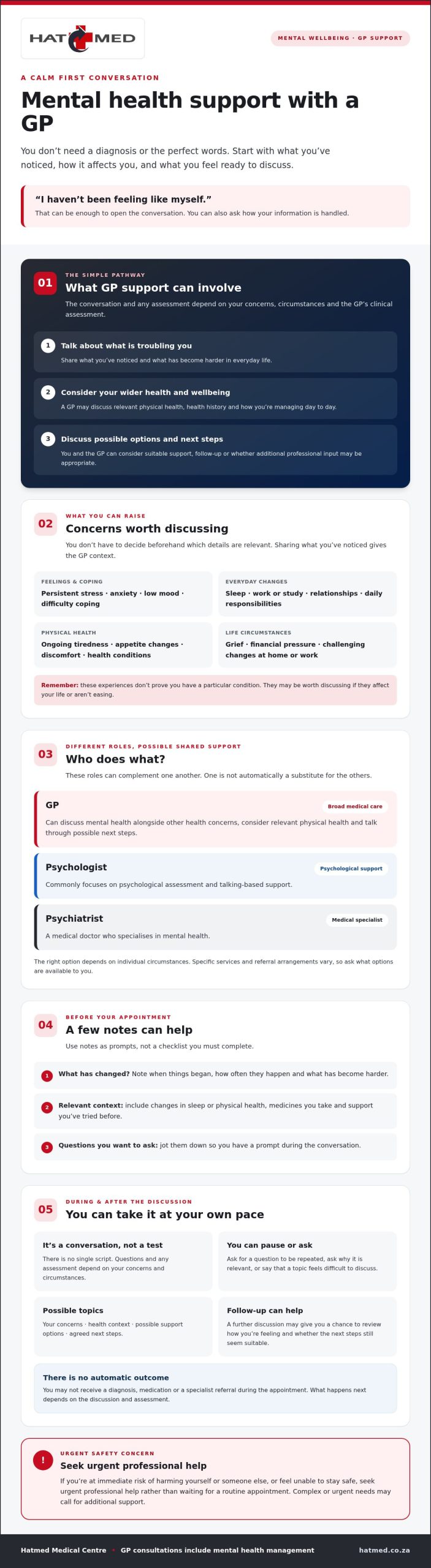
How to prepare for a mental health support appointment with a GP
Getting ready doesn’t mean you need a polished explanation. A few notes can help you remember what matters, especially if you feel anxious or find it difficult to talk during the appointment. Use this checklist as a prompt, not a requirement.
What to write down before your appointment
- Your main concerns: note what has been troubling you and when you first noticed it.
- Patterns and daily impact: consider how often it happens and whether it affects sleep, work, study, relationships or everyday tasks.
- Relevant health details: list medicines you take, health conditions you think may be relevant and any previous support you’ve received.
- Questions you want answered: for example, ask what support options may suit you or what the next step could be.
- Immediate safety concerns: write these clearly at the top of your notes and raise them promptly. If you’re at immediate risk or can’t stay safe, seek urgent professional help rather than waiting for a routine appointment.
You can bring your notes on paper or on your phone. They don’t need to be complete. Even a few words, such as “sleep”, “work stress” or “feeling overwhelmed”, can help you begin. If you take several medicines, a current list or the relevant packaging may help you discuss them accurately.
How to make the conversation feel more manageable
Try opening with a simple sentence: “I’ve been finding things difficult and I’d like some help.” Tell the GP if you feel nervous, overwhelmed or unsure where to start. You can ask for unfamiliar terms to be explained or say if a question feels hard to answer.
If you’d feel more comfortable with someone beside you, ask the practice beforehand whether you can bring a trusted support person and what arrangements may apply. You can also contact the practice before booking to raise privacy, communication or accessibility needs and ask how these can be discussed. Check directly rather than assuming a particular arrangement is available.
Before you leave, consider asking what you’ve agreed to do next and when you should seek further help. A clear summary can make the plan easier to remember.
If a GP consultation feels like a helpful starting point, you can find information about Hatmed GP consultations, which include mental health management.
Ongoing GP mental health support: follow-up and next steps
Mental health support can involve more than one conversation. Follow-up gives you and the GP a chance to review how things are going, revisit concerns and consider whether the next steps still feel suitable. The process is individual, so there’s no guaranteed outcome or fixed plan that applies to everyone.
What follow-up with a GP may involve
You might discuss what has changed since your last conversation, what has been difficult and whether you were able to try any agreed actions. If something hasn’t helped, or you found it hard to follow the plan, say so. That information can help the GP understand what may need reconsideration. You don’t need to feel you’ve failed.
Follow-up timing and care options depend on your circumstances and clinical needs. Ask when it would be sensible to check in again, what to do if your concerns worsen and whether other support may be appropriate. A mental health support GP conversation is collaborative: share what matters to you and ask questions if a suggested next step isn’t clear or manageable.
When to seek urgent mental health help in South Africa
If you may harm yourself or another person, or you can’t keep yourself safe, seek urgent help now. Don’t wait for a routine GP appointment. Contact local emergency services or go to the nearest hospital emergency department. If possible, tell someone you trust what’s happening and ask them to stay with you or help you reach care safely.
Emergency contact details and crisis services can vary, and current South African numbers should be confirmed before relying on them. If you’re unsure which service to contact, seek immediate assistance from an emergency department or local emergency service rather than delaying while trying to manage the situation alone. For concerns that are worsening but aren’t an immediate safety emergency, contact a health professional promptly to discuss appropriate support.
For ongoing concerns, keep a brief note of changes in your mood, sleep, daily routine or ability to cope. Bring it to a follow-up discussion and explain what feels different, including any new difficulties or questions. If you need support sooner than an agreed review, contact the practice to ask what options are appropriate.
Hatmed Medical Centre offers GP consultations that include mental health management. If you’d like to discuss your wellbeing with a GP, you’re welcome to contact Hatmed to ask about a consultation.
Take the first step towards support
You don’t need a diagnosis or a perfectly prepared explanation to start a conversation about your wellbeing. A GP can listen, consider relevant aspects of your health and discuss possible next steps. A mental health support GP appointment may be a starting point, with further support considered if it suits your needs.
Knowing the different roles of GPs, psychologists and psychiatrists can help you ask questions and make informed decisions. Notes about what you’re experiencing, any medicines you take and what you’d like help with can make the conversation more manageable. Follow-up, when appropriate, gives you and your GP a chance to review how things are going.
Hatmed Medical Centre lists mental health management among its GP services and also provides general practitioner consultations and ongoing chronic disease management. If you’d like to talk through your concerns with a GP, contact Hatmed Medical Centre.
Starting the conversation is a positive step. You deserve to have your concerns heard, and support can be explored one step at a time.
Frequently Asked Questions
Can a GP help with mental health concerns?
Yes. A GP can listen to what you’re experiencing, consider relevant aspects of your general health and discuss possible next steps. A mental health support GP consultation may help you work out what kind of care could suit your needs, though it doesn’t guarantee a diagnosis, prescription or referral. Hatmed Medical Centre lists mental health management among its GP services, alongside general practitioner consultations.
What should I tell my GP about my mental health?
Tell your GP what you’ve noticed and how it affects daily life. You could mention when it began, how often it happens, changes in sleep or appetite, relevant physical symptoms, medicines you take and any previous support. You don’t need clinical terms or to explain everything at once. If you’re worried about your safety, say so clearly at the start of the conversation.
Can a GP prescribe medication for mental health?
A GP may discuss or prescribe medication if their assessment indicates it could be appropriate and it falls within their professional scope. Medication isn’t an automatic outcome of discussing mental health. You can ask what a medicine is intended to help with, its possible effects and what other options may be suitable. Don’t start, stop or change prescribed medication without discussing it with a healthcare professional.
Should I see a GP, psychologist or psychiatrist first?
There’s no single right starting point for everyone. A GP can consider mental health concerns alongside general health and discuss possible care or referral. Psychologists provide psychological assessment or therapy within their scope, while psychiatrists are medical specialists in mental health. Your needs and circumstances can guide which support may fit. If you’re unsure, a GP can be a practical person to discuss options with.
Is what I tell my GP about my mental health confidential?
Ask the practice how information you share is recorded, who may access it and whether there are circumstances in which it may need to be shared. You can raise this before discussing sensitive details or ask the GP to explain any limits that apply. If you’re concerned about privacy, say so directly. Understanding how your information is handled may help you feel more prepared to talk openly.
When should I seek urgent mental health help in South Africa?
Seek urgent help now if you may harm yourself or someone else, or can’t keep yourself safe. Don’t wait for a routine GP appointment. Contact local emergency services or go to the nearest hospital emergency department. If possible, tell someone you trust and ask them to stay with you or help you reach care. Confirm current South African emergency contact details through an authoritative source before relying on a number.
Can I ask a GP for mental health support even without a diagnosis?
Yes. You don’t need a diagnosis before asking for help. Describe what has changed, what feels difficult or how your wellbeing is affecting everyday life, even if you’re not sure what to call it. The GP can discuss your concerns and consider possible next steps based on your circumstances. Starting the conversation is enough; you don’t need to arrive with a clear explanation or treatment plan.