

Could managed high blood pressure automatically rule you out of working at sea? Not necessarily. A seafarer medical examination with managed hypertension is an individual assessment. A diagnosis or prescribed medication alone doesn’t determine the outcome, so it’s understandable to have questions about your readings, treatment and fitness for duty.
Knowing what the examiner may need can help you prepare. This guide explains how your blood pressure history, current readings and treatment information may be considered during a South African seafarer or SAMSA medical examination. The decision depends on the individual assessment and applicable requirements.
You’ll also find practical guidance on records to bring, including a current medication list and relevant information from your treating clinician, and on discussing your treatment openly. Hatmed Medical Centre provides seafarer and SAMSA medical examinations, GP consultations and chronic disease management. You can ask what information to prepare for your assessment.
Key Takeaways
- A diagnosis of hypertension alone doesn’t decide the outcome of a seafarer medical examination; fitness is assessed against your health evidence and applicable requirements.
- For a seafarer medical examination with managed hypertension, be ready to explain your treatment and provide relevant recent readings or information from your treating clinician.
- Your case may need a routine review, supporting records or further assessment. These are possible scenarios, not guaranteed SAMSA outcomes.
- Before your appointment, confirm the examination requirements and ask which documents, test results and medication details to bring.
- Check that the examiner’s current SAMSA authorisation and the certificate required for your circumstances are appropriate. Ask how you’ll receive the results and any next steps.
Can you pass a seafarer medical examination with managed hypertension?
Yes, it may be possible, but a hypertension diagnosis alone doesn’t determine whether you’ll be considered fit. During a seafarer medical examination with managed hypertension, the examiner considers your current health, treatment, supporting clinical information and the fitness requirements that apply to your circumstances. The assessment is individual, so no general statement can guarantee a certificate.
A diagnosis describes a health condition; medical fitness is an individual decision based on the evidence and requirements for the examination. The certificate you need, your duties and the applicable SAMSA process may all be relevant. Requirements can change, so confirm which criteria and examination apply to your role. Don’t rely on a threshold intended for another maritime authority or certificate.
International guidance can provide context, but it isn’t a substitute for current South African requirements. For example, this collaborative academic article discusses revisions to ILO medical examination guidelines, including blood pressure measurement and hypertension self-management onboard. It describes proposed revisions, not a decision on an individual’s fitness or confirmation of current SAMSA criteria.
What does managed hypertension mean for an assessment?
Control is considered as a clinical picture over time, not just one blood pressure reading. The examiner may ask about your health history, prescribed treatment, symptoms and any changes you’ve noticed. Explain how you take your medication and mention concerns that may be relevant to your duties. Records from your treating clinician can help put the current reading in context.
Does controlled blood pressure guarantee a fit certificate?
No. Neither a hypertension diagnosis nor one reassuring result guarantees certification. The examiner applies the relevant criteria to your individual assessment and may need more information about your health or treatment. A request for records, clarification or further evaluation is not, by itself, a final fitness decision. Ask what information is needed, why it’s being requested and how you’ll hear about the next step.
How hypertension, treatment and sea-going duties may be assessed
For a seafarer medical examination with managed hypertension, the examiner may consider more than the blood pressure reading taken at the appointment. Your medical history, pattern of readings, prescribed treatment and relevant clinical records can help explain how your health is being managed. Be ready to describe when you were diagnosed, how your treatment has changed and whether you’ve noticed symptoms or side effects.
One reading is a snapshot, not the whole clinical picture. A higher or lower result on the day may need to be considered alongside your history and clinical evidence. The examiner may ask for more information if they need context. Gard’s practical overview, Controlling hypertension at sea, also discusses recognising and managing high blood pressure in a maritime setting.
Which health details may be relevant to the examiner?
Explain how your blood pressure has been monitored over time and mention any recent changes to your health or treatment. Tell the examiner about symptoms you’ve experienced and share relevant information from your treating clinician, if available. Other health conditions may also be considered if relevant to your assessment. The examiner can advise whether specific records or test results are needed.
How can treatment and safety at sea be considered?
Discuss your medication openly, including how you take it, any side effects and recent changes made with your treating clinician. Don’t stop, skip or alter prescribed treatment to try to affect an examination result. If you’re concerned about how a medicine makes you feel, raise it with your clinician and the examiner.
Your role and work setting may also inform the discussion. The examiner may ask about your duties and whether your health or treatment could affect your ability to carry them out safely. The practical context differs between roles, so don’t assume a general rule applies to your case. Ask: “How do my specific duties and treatment affect the assessment, and what current requirements apply?”
Hatmed Medical Centre provides seafarer and SAMSA medical examinations, GP consultations and chronic disease management. You can ask Hatmed about seafarer medical examinations and what information to prepare for your appointment.
Seafarer medical examination: routine review or further assessment?
A seafarer medical assessment doesn’t follow one fixed path for everyone with treated hypertension. The examiner may be able to assess the information available at your appointment, ask for supporting records or consider whether further evaluation is needed. The examples below are illustrative scenarios, not formal SAMSA categories or guaranteed outcomes.
| Possible scenario | What it may involve |
|---|---|
| Routine assessment | The examiner reviews your health history, treatment and available clinical information as part of the examination. |
| Request for supporting information | The examiner asks for relevant records, such as a treating clinician’s letter or additional context about your treatment history. |
| Possible further evaluation | If the available information leaves clinical questions unanswered, the examiner may explain what additional evaluation is being considered before reaching an assessment. |
Complete, consistent records can make it easier for the examiner to understand how your condition has been monitored and treated. A diagnosis or prescription doesn’t mean every candidate will receive the same result. For a seafarer medical examination with managed hypertension, the relevant evidence and requirements are considered in the context of your individual assessment.
When might the examiner ask for more information?
A follow-up request might be needed if records don’t explain your treatment history, medication has changed recently or readings need more clinical context. These are examples, not confirmed SAMSA triggers. If the examiner asks for information, check exactly what’s required, whether a particular format is preferred and when to provide it. Follow the instructions for your assessment.
What is the difference between fitness review and ongoing GP care?
A seafarer medical examination considers fitness for its stated purpose under the applicable requirements. It doesn’t replace ongoing hypertension care. Continue discussing monitoring, medication and treatment concerns with your treating clinician, who can support your longer-term health needs. For more on this distinction, read Hatmed’s guide to chronic disease management.
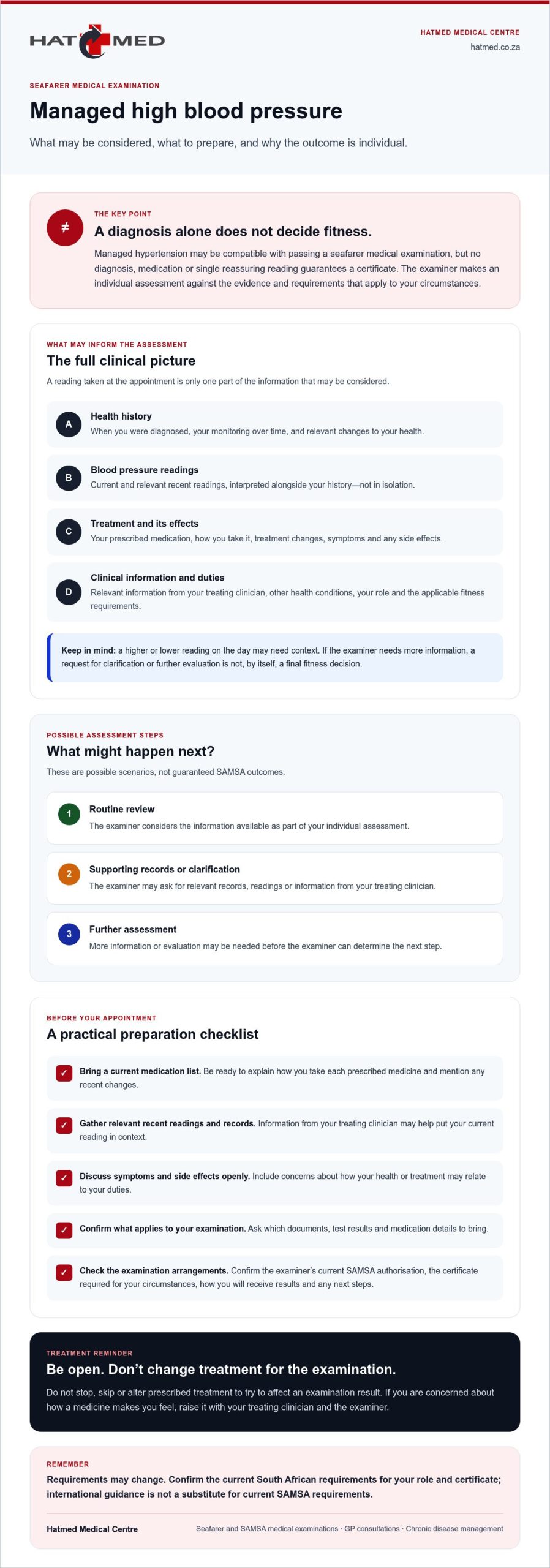
How to prepare for your seafarer medical examination with hypertension
Preparing in advance can help you give a clear account of your health and treatment history. Requirements and requested documents may vary, so confirm what applies to your appointment instead of assuming every examination follows the same process.
- Confirm the examination requirements. Check which seafarer medical examination and certificate you need, and ask the clinic what forms or supporting documents to bring. Have details of any vessel, role or employer requirements available.
- Gather relevant health records. Bring recent blood pressure readings, reports and letters from your treating clinician, if available. Specialist correspondence may also be useful if it relates to your hypertension or treatment. Ask the clinic which records are needed.
- Prepare a current medicine list. Note each medicine’s name and dose, and include the prescribing clinician where available. Record recent treatment changes and any side effects or symptoms you want to discuss.
- Be ready to explain your health history. Follow the appointment instructions and allow time to provide an accurate history. Answer questions openly, including those about symptoms, missed doses or treatment changes.
What records and medication details should you bring?
Bring information that helps explain your care over time, such as blood pressure readings you already have, recent clinical reports and relevant letters from your treating clinician. If you’re unsure whether a document is relevant, contact the clinic in advance to check whether it needs specific forms or additional information for your seafarer medical examination with managed hypertension.
What should you do before and during the appointment?
Take prescribed medicines as directed unless your treating clinician advises otherwise. Don’t stop or change treatment, skip a dose or try to manipulate your readings for the examination. If you’re worried about a medicine or recent reading, explain this to the examiner and discuss treatment concerns with your clinician. Candid information helps the examiner understand your circumstances and decide whether anything further is needed.
For practical guidance about preparing for a seafarer medical examination, ask Hatmed what to bring. Hatmed Medical Centre provides seafarer and SAMSA medical examinations, GP consultations and chronic disease management.
Choosing a seafarer medical examiner and understanding next steps
Before booking, check that the examination is appropriate for the certificate and purpose you need. Mention any particular vessel, role or employer requirement when you enquire. Confirm the examiner’s current SAMSA authorisation and the examination scope directly with the clinic. Authorisation and requirements can change, so check rather than assume.
Questions to ask before booking a SAMSA examination
These questions can help you arrive prepared and understand what the assessment covers:
- Does the service cover the seafarer examination and certificate I need?
- Can you confirm the examiner’s current SAMSA authorisation?
- Which forms, identification and medical records should I bring?
- How should I provide blood pressure records or correspondence from my treating clinician?
- If more information or an additional assessment is needed, how will I be told what to do next?
These checks are useful when arranging a seafarer medical examination with managed hypertension. The clinic can explain which documents it requests, while the examiner determines what information is relevant to your individual assessment. Hatmed Medical Centre provides seafarer and SAMSA medical examinations, GP consultations and chronic disease management. Read more about its SAMSA seafarer medical examinations.
What if the examiner needs further review?
If the examiner asks for additional information, ask what’s needed, how it relates to your assessment and when to provide it. Also check how you’ll receive the outcome and whether there are follow-up steps. A request for records or further review doesn’t, by itself, indicate the final fitness decision.
Continue managing your hypertension with your regular clinician. If the examination raises questions about your treatment, discuss them with the examiner and treating clinician. Don’t change prescribed medication independently. A seafarer medical assessment and ongoing care have different purposes, and both can be relevant to understanding your health.
If you’re unsure which examination to book or what to bring, contact Hatmed to discuss the appointment requirements. The clinic can clarify practical preparation; the outcome depends on the individual assessment and applicable requirements.
Prepare for your assessment with confidence
A managed hypertension diagnosis doesn’t decide the outcome of a seafarer medical on its own. A seafarer medical examination with managed hypertension considers your individual health information, treatment and the requirements that apply to your examination and duties.
Prepare by gathering relevant readings and clinician records, making a clear list of medicines and confirming which examination and documents you need. Be open about treatment changes, symptoms or concerns, and ask what to expect if further information is required. The examiner’s assessment determines the outcome, so no result can be guaranteed in advance.
Hatmed Medical Centre provides Seafarers / SAMSA Medical Examinations, GP consultations and chronic disease management. If you’re unsure what to bring or which examination to arrange, discuss your seafarer medical examination with Hatmed.
Clear information and the right questions can help you approach the process feeling prepared.
Frequently Asked Questions
Can I pass a seafarer medical examination with controlled hypertension?
Yes, it may be possible, but controlled hypertension doesn’t guarantee certification. A seafarer medical examination with managed hypertension considers your individual health information, treatment and the requirements for your examination. Bring relevant records, including available readings or clinician correspondence, and answer questions openly. Confirm current requirements with the examiner before your appointment, as criteria may depend on the examination and certificate involved.
Will blood pressure medication affect my seafarer medical certificate?
Your medication may be considered alongside your blood pressure history, treatment and any effects you experience. Taking prescribed medicine doesn’t, by itself, determine the outcome. Don’t stop or change treatment to prepare for an examination unless your treating clinician advises you to. Bring an up-to-date medicine list, including doses, and ask whether a letter or other supporting information from your clinician would help explain your treatment.
What blood pressure reading is acceptable for a seafarer medical examination?
Ask the relevant examiner which current criteria apply to your examination rather than relying on an unverified number online. Requirements may depend on the certificate and assessment process. A reading taken at the appointment may need to be considered alongside your health history and treatment. Bring any recent readings you already have, and check beforehand whether the examiner would like supporting records.
What should I bring to a seafarer medical examination if I have hypertension?
Bring identification and any forms requested when you book, along with a current medicine list and relevant blood pressure records. Recent clinician letters, reports or test results may help explain your treatment history, if available. Document requirements can vary, so ask the examination provider what to bring before your appointment. Continue taking prescribed treatment as directed unless your treating clinician advises otherwise.
Can one high blood pressure reading make me fail the examination?
One reading alone shouldn’t be treated as an automatic outcome without considering the full assessment and applicable requirements. If the examiner needs more context, they may explain whether additional records or review would help. Follow the instructions given during your appointment. If you’re concerned about readings outside the examination, discuss them with your treating clinician rather than changing your medication or trying to influence a result yourself.
What happens if the examiner needs more information about my hypertension?
Ask the examiner which records, clinician details or further assessment are needed, how to provide them and the relevant timeframe. A request for more information isn’t necessarily a final decision, but next steps depend on your individual case. Keep copies of any correspondence and continue your treatment as prescribed while you follow up with the examiner and, where appropriate, your treating clinician.
Should I take my usual hypertension medicine before the examination?
Follow your usual prescription unless your treating clinician has specifically advised otherwise. Don’t skip, delay or change a dose to influence a reading. If you’re unsure about medicine timing, possible side effects or the appointment instructions, contact your clinician or the examination provider before attending. Bring your medicine details so the examiner can understand your current treatment as part of the assessment.