

An annual primary-care check-up is a practical anchor for a routine annual health maintenance roadmap for middle-aged adults. Cancer screening belongs in that routine, with appropriate tests and timing shaped by age, family history and personal risk. Movement and strength, stress management, sleep and social connection also deserve a place in the plan.
It’s easy to focus on screening tests and overlook the everyday habits that support wellbeing between appointments. A steady, manageable routine can bring these elements together without assuming everyone has the same health needs.
Here are four ways to build a health routine through middle age: plan check-ups, discuss cancer screening, include strength-building movement and care for your emotional wellbeing. Use these ideas to start conversations about the care and habits that fit your life.
Key Takeaways
- Use a regular GP check-up to discuss which preventive tests and screenings suit your age, family history and risk factors.
- Make movement practical: build strength and balance into your routine alongside aerobic activity, at a pace that fits your abilities.
- Support wellbeing between appointments with stress-management habits, restorative sleep and regular contact with people who matter to you.
- Prepare for health conversations by noting your concerns, personal goals and any changes you’ve noticed.
1. Stress management and social connection
Protect sleep as part of managing stress: adults should aim for 7 to 9 hours each night. The CDC reports that difficulty staying asleep affects up to 22% of people in their 40s and 50s. If worry or poor sleep persists, note when it happens and discuss the pattern during a health check-up. Meditation, deep breathing, journalling and enjoyable hobbies offer practical ways to manage daily pressure.
Make connection a deliberate habit. Schedule a call, video chat or shared activity with someone you value, then add it to your calendar. The National Institute on Aging suggests daily, weekly or biweekly calls or video chats to support older adults’ social connection. For a family member, a weekly visit to prepare a healthy meal together can create regular time for conversation and care.
An annual lifestyle discussion can cover sleep, stress, mood, food, movement, weight and social contact. Bring a specific example, such as skipped walks during a demanding week, and agree on a manageable next step. Mention persistent sadness or loss of interest, too: depression is not a normal part of ageing, and concerning symptoms deserve attention. These conversations can connect everyday habits with risks such as heart disease, cancer and other chronic conditions.
Use a vaccination review to discuss which vaccines and boosters suit your age and health history in South Africa. The research guidance includes annual flu vaccination, a two-dose shingles series from age 50, and a Tdap booster every 10 years. Keep a record of previous doses so the discussion can identify what may be due.
For chronic disease management, bring a current medication list to each appointment. Include prescription medicines, over-the-counter products and supplements, and note how and when you take them. This can help identify changes or questions to discuss, especially when treatment affects energy, sleep or daily independence. A written list also makes it easier to track agreed adjustments and keep care consistent between visits.
2. Are cancer screenings part of a wellness schedule?
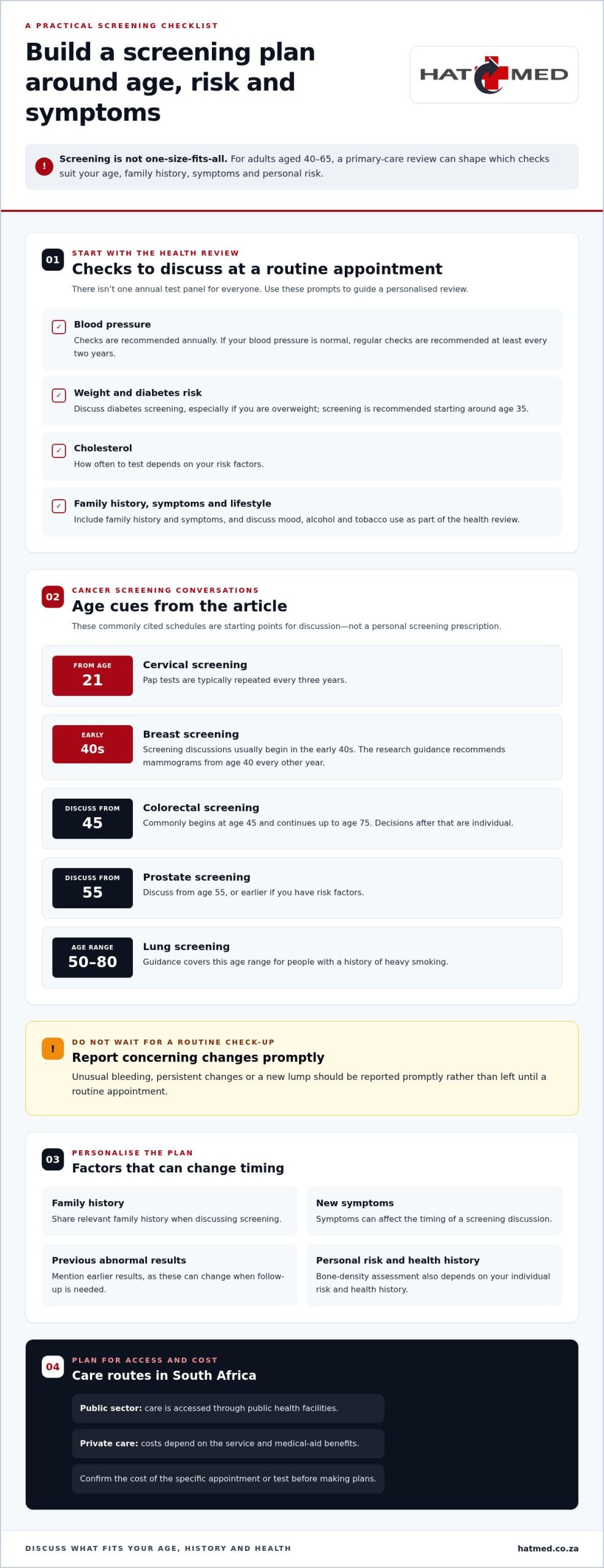
Yes. A wellness schedule can include screening discussions, regular examinations and tests selected according to personal risk. In South Africa, public and private routes differ in how care is accessed and funded. Public-sector care is accessed through public health facilities; private costs depend on the service and medical-aid benefits. Ask about the specific appointment or test cost before making plans.
For adults aged 40 to 65, there isn’t one annual test panel for everyone. A primary-care review can cover blood pressure, weight, diabetes risk, family history and symptoms. Blood pressure checks are recommended annually; for normal blood pressure, regular checks are recommended at least every two years. Cholesterol testing frequency depends on risk factors. Diabetes screening is recommended especially for adults who are overweight, starting around age 35. Discuss mood, alcohol and tobacco use as part of the health review, too.
Cancer screening timing varies by test and individual risk. Commonly cited schedules include cervical screening from age 21, with Pap tests typically repeated every three years. Breast screening discussions usually begin in the early 40s; the research guidance recommends mammograms from age 40 every other year. Discuss prostate screening from age 55, or earlier with risk factors. Colorectal screening commonly begins at age 45 and continues up to age 75; after that, decisions are individual. Lung screening guidance covers ages 50–80 with a history of heavy smoking.
Family history, new symptoms and previous abnormal results can change the timing of screening. Report unusual bleeding, persistent changes or a new lump promptly rather than waiting for a routine appointment. Bone-density assessment also depends on personal risk and health history. A health review can consider stress, activity and cognitive concerns alongside physical screening; 150 minutes of weekly activity is a useful movement goal, not a cancer test. For support discussing screening and wellbeing, a GP consultation can help organise the questions to raise.
Routine check-ups are available through public health facilities, while private-care costs vary with the service and medical-aid benefits. Confirm the cost of the particular appointment or test before booking.
3. Strength training, bone integrity, balance, coordination and mobility
Strength work supports everyday tasks, from carrying shopping to rising from a chair. Adults begin losing about 1% of their muscle mass each year around age 40, with the rate increasing in their 50s. Regular exercise helps build a foundation for mobility and independence. Aim to include muscle-strengthening activity at least twice a week, adjusting the movements and effort to your current fitness.
Plan sessions around major muscle groups, including the legs, hips, back, abdomen, chest, shoulders and arms. Body-weight movements, such as standing up from a chair, offer a practical starting point. Repeat a movement until you need a short rest, then try it again when you’re ready. Strength work can fit on the same days as aerobic activity or on separate days.
Balance and flexibility matter alongside strength. Walking heel-to-toe and standing from a sitting position are simple examples of balance practice. These movements develop control used in daily activities, while flexibility exercises help maintain comfortable movement through joints. Adults aged 65 and over should include activities to improve strength, balance and flexibility on at least 2 days a week. Choose exercises that match your abilities.
Older adults who have not exercised for some time, or have medical conditions or concerns, should speak to a GP before starting physical activity. If you’re in middle age, mention joint pain, a fall or concerns about balance during a health appointment. Start with manageable movements and build gradually as they become familiar. A varied routine can combine resistance exercises, balance practice and mobility work. These activities support bone integrity, coordination and confidence with everyday movement, while helping you prepare for changing physical demands over time.
4. Annual primary care check-ups
Build a routine annual health maintenance roadmap for middle-aged adults around a yearly health review. A yearly check-up can be useful even when you feel well. Use the appointment to discuss changes, priorities and goals, rather than simply requesting tests. The review can help organise preventive care around your current health and daily life.
Prepare a short summary before your visit. Note new symptoms, changes in physical activity, eating habits, sleep or flexibility, and relevant family history. Bring your medication list and previous test results, and write down your questions. For example, mention weight changes or a family history of diabetes, as these can affect which checks are appropriate.
A care provider can tailor examinations, laboratory tests and screenings to age, family history, symptoms and other risk factors. Annual blood pressure checks are recommended; for adults with normal readings, regular checks are recommended at least every two years. Diabetes screening is recommended especially for adults who are overweight, starting around age 35. Other tests depend on personal risk and clinical findings.
Plan how you’ll follow through, too. Ask what an abnormal result means, what action comes next and when follow-up should happen. Record the agreed plan and appointment details, then bring them to your next visit. If a result leads to further assessment or treatment, note questions and new symptoms as they arise. This makes results easier to discuss and act on.
Keep the routine annual health maintenance roadmap for middle-aged adults practical by reviewing activity, eating patterns, mood and barriers to care. Older adults are advised to have check-ups annually, or possibly more often depending on overall health. Before leaving, summarise the next steps in your own words. Take the next step in planning your check-up with a focused list of concerns and goals.
Hatmed Medical Centre: General Practitioner Consultations
Hatmed Medical Centre offers General Practitioner Consultations for adults who want to discuss screening priorities, ongoing symptoms or health changes. A consultation can bring questions about check-ups, activity and test results into one conversation, helping you consider practical next steps suited to your needs.
If you’re managing a long-term condition, Hatmed Medical Centre’s Chronic Disease Management service supports continuing care and ongoing treatment discussions. Bring your medication list, recent results and a brief note of concerns, such as changes in sleep, mood or mobility. This preparation can help keep the appointment focused on what matters most to you.
Make your next health step manageable
A routine annual health maintenance roadmap for middle-aged adults works best as a practical plan you can return to, rather than a list of tasks to tackle all at once. Choose one next step, such as arranging a check-up or noting a health concern to discuss. A clear conversation can help you decide what deserves attention now and what can be planned for later.
Hatmed Medical Centre offers General Practitioner Consultations, as well as Immigration Medical Examinations and Seafarers / SAMSA Medical Examinations. If you’re ready to discuss your health priorities, contact Hatmed Medical Centre to take the next step. Small, considered decisions can help you feel more prepared to care for your health through middle age.
Frequently Asked Questions
Are cancer screenings part of a wellness schedule?
Yes, screening discussions belong in preventive care, but not every test is needed every year. The appropriate schedule depends on the cancer type, age, family history and personal risk. Keep a note of previous tests and results, then ask what follow-up is needed after an abnormal finding. New symptoms should be raised promptly rather than saved for the next routine appointment.
How often should adults schedule an annual check-up?
Adults can plan to see a primary-care provider at least once a year, with more frequent visits if their health needs call for them. Older adults are also advised to have annual check-ups, or potentially more often depending on their overall health. Between appointments, record new symptoms, treatment changes or questions as they arise, so the next visit can address them clearly.
What age should routine health screenings start?
There isn’t one starting age for every screening. Cholesterol testing can begin in the early 20s, with frequency guided by risk factors; Cervical screening begins at 21 in the cited guidance, while colorectal screening commonly starts at 45. Family history and prior results can affect timing.
Which health checks are recommended for middle-aged adults in South Africa?
Useful checks include blood pressure, diabetes risk and cancer screening appropriate to age or personal risk, alongside a review of medicines and health changes. Annual blood pressure checks are recommended; for normal readings, checks at least every two years are advised. Discuss how often to check cholesterol in light of your personal risk factors.
Which preventive dental, eye, and hearing checks should be included in annual health maintenance?
Include dental, vision and hearing concerns in your health planning, and arrange an appropriate assessment if you notice a change. For example, mention persistent tooth discomfort, blurred vision or difficulty following conversation in noisy settings. The timing of checks depends on symptoms, previous findings and personal health history. Share relevant changes with your care provider so they can be considered alongside other preventive needs.
Which screenings are recommended for mental health, alcohol use, and tobacco use?
A health review can include discussion of mood, alcohol use and tobacco use. Raise persistent sadness or loss of interest with a care provider, too.