

What if a GP visit could do more than address the symptom that brought you in? It’s understandable to be unsure what a general practitioner can help with, how a private consultation works or what your medical aid may cover. Private medical practitioners can support everyday and ongoing health needs, from assessing a new concern to discussing preventative care and follow-up.
This guide explains the role of general practitioners in South Africa, what to expect before and during a consultation, and how medical aid and payment arrangements may differ. You’ll also learn how preventative care, chronic disease management, mental health support and vaccinations can fit into your healthcare. Hatmed Medical Centre brings general consultations together with ongoing care and specialised medical examinations, giving you a place to discuss your health needs and appropriate next steps.
Key Takeaways
- Learn which health concerns a general practitioner can assess and when specialist care may form part of your next steps.
- See how follow-up appointments can help you review changes, results and ongoing health needs.
- Understand key differences between public and private healthcare pathways and possible payment arrangements in South Africa.
- Use a simple preparation checklist to make your consultation more focused and useful.
- Discover how private medical practitioners can support preventative care, chronic conditions, mental health and vaccination needs.
What do private medical practitioners do for patients?
A private medical practitioner is a healthcare professional who provides care through the private healthcare system. Private medical practitioners can assess health concerns, discuss ways to protect your health and help coordinate ongoing care. The support available depends on the practitioner’s role and your needs.
For many people, a general practitioner (GP) is a first point of contact, whether they’re feeling unwell or looking for guidance on staying well. South Africa has both public and private healthcare systems, as outlined in this overview of Healthcare in South Africa. Knowing how these pathways differ can help you decide where to begin.
What is the difference between a private GP and a specialist?
A GP provides broad primary care. You might book a consultation for a persistent cough, a new skin concern, a routine check-up or advice about a long-term condition. A GP considers your symptoms and health history, discusses appropriate next steps and can support preventative care.
A specialist focuses on a particular area of medicine and may be involved when a concern needs more specialised assessment or treatment. Your GP may recommend specialist input based on your symptoms, examination or test results. Some concerns need further investigation or follow-up, so one appointment won’t always provide a complete answer.
What kinds of health needs can a private practitioner address?
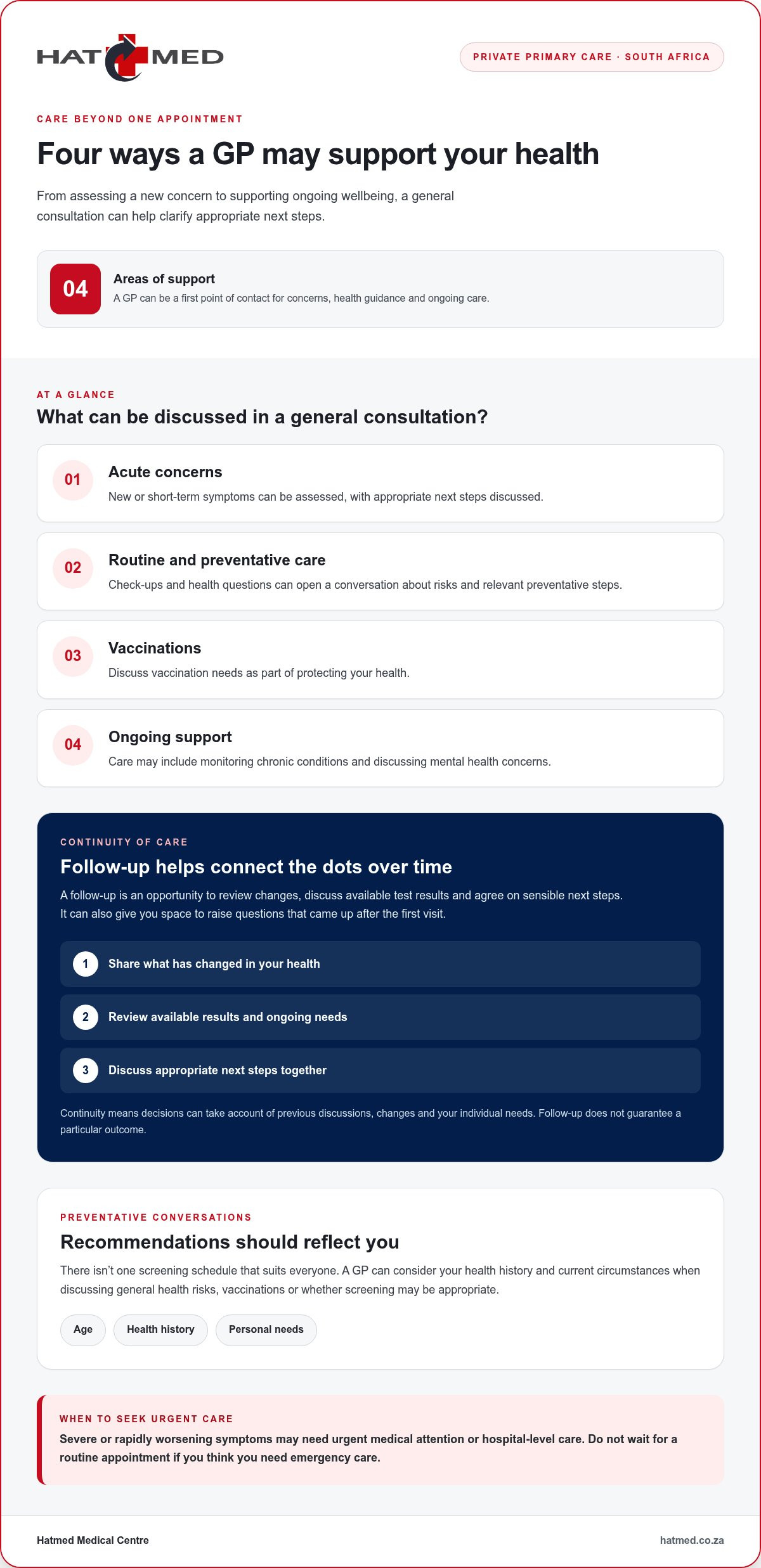
A general consultation can be a useful starting point for new symptoms and planned preventative care. Depending on your needs, a practitioner may discuss:
- Acute concerns: New or short-term symptoms that need assessment.
- Routine and preventative care: Check-ups, health questions and ways to reduce future risks.
- Vaccinations: Vaccination needs as part of protecting your health.
- Ongoing support: Monitoring chronic conditions and addressing mental health concerns.
Follow-up gives you an opportunity to explain what has changed and discuss what to do next. At Hatmed Medical Centre, general consultations sit alongside preventative care, chronic disease management, mental health support and vaccinations.
Private GP care has limits. If you have severe or rapidly worsening symptoms, or think you need emergency or hospital-level care, seek urgent medical attention rather than waiting for a routine appointment.
How private medical practitioners support health beyond one appointment
A consultation can be the start of a care plan, not simply a response to a symptom. At a follow-up, you and your practitioner can review how your health has changed, discuss available test results and agree on sensible next steps. It is also a chance to raise questions that came up after your first visit.
Continuity of care means your health is considered over time, so decisions can take account of changes, previous discussions and your individual needs. This can connect care for a new concern with preventative conversations and support for longer-term conditions. Follow-up does not guarantee a particular outcome, but it can help make the next steps clear.
How can a private GP help with preventative healthcare?
A routine health review gives you space to discuss questions even when you’re not feeling unwell. Your GP can consider your health history and current circumstances when discussing general health risks, vaccinations or whether screening may be appropriate. There isn’t one screening schedule that suits everyone, so recommendations should reflect factors such as your age, history and personal needs.
These conversations can complement appointments for new symptoms. A concern may prompt a wider discussion about health habits or other issues you’ve been meaning to raise. To make a review more useful, share changes in your health and ask which preventative steps are relevant to you.
What does ongoing support for chronic conditions involve?
Care for a chronic condition may involve monitoring changes, reviewing how you’re managing day to day, discussing treatment and arranging follow-up. The approach should reflect your health history, current concerns and what matters to you. If something changes, tell your practitioner so you can discuss whether the care plan needs review.
Ongoing care is collaborative. Ask what to keep track of between appointments and what signs should prompt you to seek advice. Hatmed Medical Centre provides chronic disease management as part of its primary-care support. For more detail, read this guide to chronic disease management.
If you’re looking for continuing support alongside general consultations, explore Hatmed’s primary healthcare services to see how preventative care and ongoing management can fit into your health needs.
Private medical practitioners and public healthcare: what patients should understand
South Africa’s public and private healthcare services have different access pathways and payment arrangements, and both play important roles. The right route depends on your health needs, circumstances and available cover. A private consultation doesn’t guarantee a particular waiting time, diagnosis or result; care and next steps depend on the clinical situation.
| What to consider | Public healthcare | Private healthcare |
|---|---|---|
| Access pathway | Patients generally access services through public clinics or hospitals, with the care pathway shaped by their needs and the services available. | Patients may arrange consultations directly with private practitioners, such as a GP, or follow a referral pathway for further care. |
| Payment | Services are provided through the public system, with payment arrangements differing from private care. | Costs may be paid by the patient, claimed from medical aid, or involve a combination, depending on the plan and service. |
| Care setting | Provides healthcare through public facilities and services. | Includes independent practices and other private facilities, with the type of care depending on the practitioner and setting. |
This comparison is a general guide, not a ranking. Public and private services each have distinct roles, and availability and access can vary. Private care should not be assumed to mean immediate access or a guaranteed outcome. A practitioner assesses your circumstances and advises on appropriate care.
How do private consultations and medical aid work together?
Your medical aid benefits depend on your specific plan and its rules. Cover, claim processes and any amount you may need to pay yourself can vary by benefit and service. Before a consultation, review your plan’s information to understand how it treats GP visits and what out-of-pocket contribution may apply. Don’t assume a claim will be reimbursed in full simply because you belong to a scheme.
When might a patient need care beyond a private GP consultation?
A GP can assess many concerns, but some need specialist input, emergency attention or hospital-based care. A referral or escalation is a clinical decision based on your symptoms, examination and overall needs. If a practitioner recommends another level of care, ask what it is intended to address and what the next step involves. For severe or rapidly worsening symptoms, seek urgent medical attention rather than waiting for a routine consultation.
How to prepare for an appointment with a private medical practitioner
A little preparation can help you explain what’s worrying you and make good use of your consultation. You don’t need to have all the answers. A few notes about your health, symptoms and questions can give private medical practitioners a clearer picture of what you’d like help with.
A simple checklist before your consultation
- Note the reason for your visit. Write down your main concern, when it started and what has changed. Include details such as how often a symptom occurs or what seems to affect it.
- List your questions. Put the most important ones first, such as what might be causing a concern or what you should do next.
- Gather relevant health information. Bring details of previous diagnoses, allergies, current medicines and any test results or reports you have available.
- Consider your medical aid arrangements. If relevant, have your membership details handy and review your plan’s information about consultations and claims.
Be open about what you’ve noticed, even if a detail feels small or difficult to discuss. Share what you know and say if you’re unsure. Clear communication helps the practitioner understand your concerns, although preparation can’t guarantee a diagnosis or a particular outcome.
What should you expect during and after the consultation?
The practitioner will discuss your concerns and relevant health history. Depending on the reason for your visit, they may carry out an examination and talk through possible next steps. Ask for an explanation if something isn’t clear, or raise any concerns about a suggested plan.
Not every consultation ends with a definitive answer. Further tests, a follow-up discussion or referral may be recommended if appropriate to your needs. Before you leave, make sure you understand the plan, including any next steps you’re expected to take.
If your appointment is for general wellbeing rather than a new symptom, Hatmed’s routine medical check-up guidance is a useful starting point for thinking about what you’d like to discuss. To arrange a GP consultation, explore Hatmed’s general medical care.
How Hatmed Medical Centre supports patients seeking private medical care
Private medical practitioners can support more than one-off consultations. At Hatmed Medical Centre, general practice brings everyday health concerns, preventative discussions and ongoing care together. Whether you need advice about a new concern or support managing a chronic condition, a consultation gives you an opportunity to discuss your needs and consider appropriate next steps.
Which Hatmed services may fit your healthcare needs?
General practitioner consultations provide a starting point for discussing symptoms, wellbeing and preventative care. Hatmed also offers chronic disease management, mental health support and vaccinations as part of its primary-care services. These services address a range of health needs through general practice, with care shaped around the individual.
For specific assessment purposes, Hatmed provides immigration, travel, seafarer/SAMSA, executive and pre-employment medical examinations. Each is a specialised medical assessment connected to its stated purpose. The outcome depends on the assessment and relevant requirements; no particular certification or decision can be guaranteed.
How can you take the next step with Hatmed?
Start by identifying what you need: a general consultation, ongoing support or a particular medical examination. Before your appointment, note your main concern and gather relevant health information, such as current medicines or available test results. This can help you explain your needs and take part in a clear discussion about care.
Hatmed is an independent general practice operated by a group of GPs, providing general consultations alongside specialised medical assessments. It offers a place to discuss your health needs and understand possible next steps. If you’re looking for guidance on GP care in South Africa, read Hatmed’s guide to finding a general practitioner in South Africa and explore the care that may suit you.
Take a confident next step with your healthcare
Understanding the role of private medical practitioners can make it easier to decide where to begin when a health concern arises. A GP can support everyday and preventative care, while follow-up may help you review changes and plan next steps. Public and private healthcare each have distinct roles, and the pathway that suits you depends on your needs and circumstances.
Preparing a few questions and bringing relevant health information can help you take an active part in your consultation. Ongoing support also matters: Hatmed Medical Centre is an independent general practice offering primary healthcare and specialised medical assessments, including chronic disease management, mental health support and vaccinations.
Your health needs don’t have to be sorted out all at once. Explore Hatmed’s care and find a suitable starting point by visiting Explore Hatmed’s medical services. Taking a first step towards a supportive healthcare relationship can help you feel more informed about your care.
Frequently Asked Questions
What is a private medical practitioner?
A private medical practitioner is a healthcare professional who provides care through the private healthcare system. The term can include general practitioners, who assess a broad range of health concerns, and specialists, who focus on particular areas of medicine. A GP can be a first point of contact for new symptoms, check-ups or ongoing health needs, and may recommend further assessment when appropriate.
What services can a private GP provide?
A private GP can assess common health concerns, provide general consultations and discuss preventative care. Depending on your needs, a visit may involve a routine check-up, discussion of symptoms, vaccination advice or support with a long-term condition. Hatmed Medical Centre also provides mental health support and chronic disease management. Some concerns need further tests, specialist input or a different level of care, so not every issue is resolved in one appointment.
Is private healthcare better than public healthcare?
Neither private nor public healthcare is universally better; each has a distinct role, and the most suitable pathway depends on your needs and circumstances. Access arrangements, available services and payment pathways differ between settings. Private care doesn’t automatically guarantee a particular waiting time or outcome. Consider the type of care you need and your circumstances when deciding how to seek support.
Can I claim a private GP consultation from medical aid?
You may be able to claim a consultation, but cover and claim arrangements depend on your medical aid plan and its rules. Benefits, limits and any amount you pay yourself can differ. Review your plan’s information about GP consultations and claims so you understand how your benefits apply. Don’t assume a consultation will be reimbursed in full simply because you belong to a medical scheme.
What should I bring to a private GP appointment?
Bring a list of your current medicines, known allergies and relevant previous diagnoses, along with any test results or reports you have. A short note explaining when your symptoms began and how they’ve changed can help you describe your concern. Write down questions you want answered, and have medical aid details available if they’re relevant to your payment or claim arrangements.
Can a private GP help manage a chronic condition?
Yes. A GP can provide ongoing support for a chronic condition through monitoring, treatment discussions and follow-up, depending on your health needs. Sharing changes in symptoms, medicines or day-to-day wellbeing can help inform those discussions. Care should take account of your history and circumstances, and the plan may be reviewed over time. Hatmed Medical Centre provides chronic disease management as part of its primary healthcare services.
Do private medical practitioners provide medical examinations for work or travel?
Yes. Hatmed Medical Centre provides pre-employment and executive medical examinations, immigration medical examinations, seafarer/SAMSA medical examinations and travel-related medical services. The purpose of each assessment differs, so the relevant examination depends on why you need it. If you’re preparing for one, bring any relevant information you have and be ready to discuss the assessment’s purpose with the practitioner. Outcomes depend on the assessment and applicable requirements.