

A routine medical checkup is not simply a fixed list of tests. It is a conversation shaped around your health, history and concerns. You may be wondering whether you’ll need blood tests or other procedures, but these are not automatic parts of every appointment. Your GP can discuss what may be useful based on your individual circumstances.
A check-up gives you time to talk about how you’ve been feeling, your health history, medicines and any changes you’ve noticed. Your GP may suggest relevant checks or tests after hearing about these details. You can ask why something is recommended and discuss any questions or concerns before deciding on next steps.
This guide explains what a routine medical checkup may involve, what information to bring and how to prepare questions. It also covers how to leave the appointment with a practical plan, whether that means follow-up, ongoing care or support with a specific concern. A little preparation can help you make the most of the conversation.
Key Takeaways
- A routine medical checkup can help build a useful picture of your health, even when you feel well.
- Your GP may ask about your health history, medicines and everyday habits.
- Your age, symptoms, family history and previous results can shape which checks or screenings are relevant to discuss.
- Prepare by noting your medicines, allergies, health concerns and questions. Put the most important topic first.
- Use the appointment to agree practical follow-up steps that support your ongoing care.
What is a routine medical checkup, and why have one?
A routine medical checkup is a planned review with a healthcare professional to discuss your general health, raise concerns and consider suitable preventive care. It gives you space to talk about what’s going well, what has changed and what you’d like help with. The appointment is guided by your circumstances, rather than a fixed set of tests that everyone must have.
A check-up can also help build a clearer picture of your health over time. Your GP can consider your health history alongside current concerns and previous results, then discuss whether follow-up may be useful. Even if you feel well, the conversation is an opportunity to put your health in context and ask questions. A physical examination may be part of an assessment. The Physical examination overview describes common techniques used by practitioners.
A check-up can support informed decisions, but it can’t guarantee that every condition will be prevented or detected. Some health problems cause no obvious signs at first, and not every test is suitable for every person. The aim is to discuss what is relevant to you and agree sensible next steps, not to promise certainty.
How a checkup differs from a visit for a specific illness
A routine checkup is a planned health review; an illness visit focuses on assessing a current symptom or acute concern. If you’ve noticed a new or worsening symptom, mention it rather than waiting for a routine appointment. The clinician can help determine what attention it needs. A scheduled check-up isn’t a substitute for urgent or emergency care when symptoms need prompt attention.
Who may benefit from a routine GP consultation?
Adults may find a GP consultation useful when they want preventive guidance, ongoing primary care or time to review an existing concern. It can help connect different parts of your health history, including medicines, previous results and changes in how you feel. You don’t need to wait until something feels seriously wrong to raise a question or seek guidance.
There’s no single check-up schedule that suits everyone. The right timing can depend on your health, personal and family history, current concerns and clinical advice. If you’re managing an ongoing condition, a consultation can support discussion about your care and follow-up. For more on ongoing primary care, read our guide to finding a general practitioner.
What happens during a routine medical checkup?
There isn’t one set sequence for every patient. A routine medical checkup may begin with a conversation about your health, followed by relevant measurements or an examination and, if clinically appropriate, a discussion about tests or follow-up. Some appointments focus mainly on talking through concerns; others may include additional checks. Your GP will tailor the consultation to your circumstances.
The conversation and health history
Your GP may ask what you’d like help with, whether you’ve noticed changes in your health and whether you have ongoing concerns. They may also discuss previous conditions, family history, medicines you take and relevant daily habits, such as activity, sleep or smoking. These details put your concerns in context and help guide what may be useful to address.
You can raise sensitive topics, ask for clarification or say if you’re unsure how to describe something. It’s fine to mention more than one concern, but sharing what matters most first can help you use the appointment well. For general patient guidance on what to bring and questions to consider, see WebMD’s Preparing for Your Annual Physical Exam.
Measurements, examination and possible tests
Depending on what you discuss, the GP may take measurements such as blood pressure or carry out other relevant checks. An examination may be considered if it helps assess a concern or adds useful information to your health review. You can ask what a check involves and discuss any questions or discomfort before proceeding.
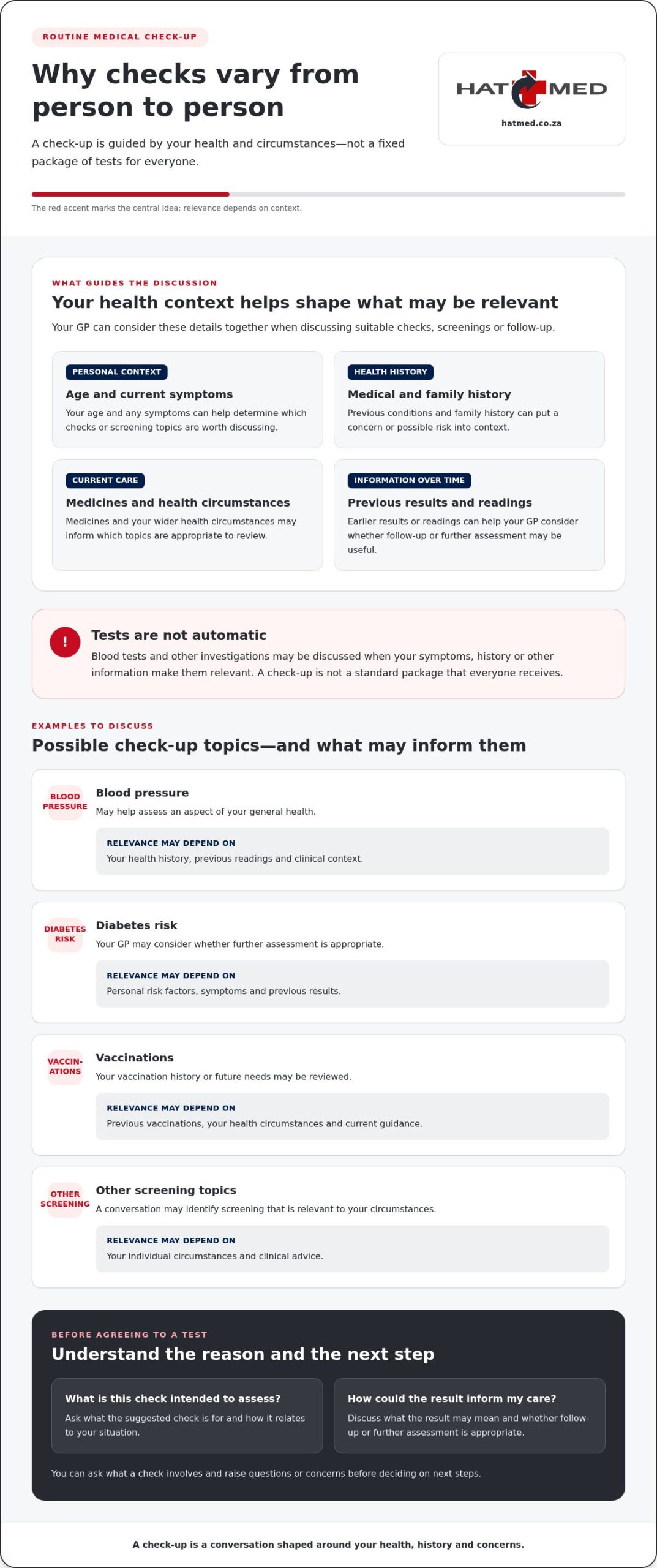
Tests are chosen according to your clinical context, not automatically given to everyone at a check-up. Blood tests or other investigations may be discussed if your symptoms, history or other information make them relevant. If a test is suggested, ask what it is intended to assess and how the result may inform your care. Your GP can explain the reasoning and discuss appropriate next steps with you.
The conversation should lead towards a clear plan, which may include advice, follow-up or further assessment where appropriate. Hatmed Medical Centre provides general practitioner consultations where you can discuss health concerns and preventive care with a GP.
Which checks or screenings might be discussed, and why do they vary?
A check-up isn’t a standard package of tests. What may be relevant depends on factors such as your age, symptoms, medical and family history, medicines and previous results. For example, a GP might discuss blood pressure, diabetes risk or vaccinations. These are possibilities to consider, not a universal checklist. MedlinePlus provides a general overview of a routine medical checkup and the role of preventive care.
| Health topic | Why it may be discussed | What determines relevance |
|---|---|---|
| Blood pressure | It may help assess an aspect of your general health. | Your health history, previous readings and clinical context. |
| Diabetes risk | A GP may consider whether further assessment is appropriate. | Personal risk factors, symptoms and previous results. |
| Vaccinations | Your vaccination history or future needs may be reviewed. | Previous vaccinations, health circumstances and current guidance. |
| Other screening topics | A discussion may identify screening relevant to your circumstances. | Age, family history, symptoms and prior screening results. |
Why there is no one-size-fits-all test list
A clinician-led recommendation is different from assuming the same test package suits everyone. Your GP can discuss the potential benefits and limitations of a check, as well as any follow-up that may be needed if a result requires attention. Screening can’t guarantee that a condition will be prevented or detected, so recommendations should be considered in the context of your health and preferences.
Screening guidance can change, and recommendations may differ according to the person and health topic. You can ask why a check is being considered and what the possible next steps could be. This helps you understand how a recommendation relates to your own circumstances.
When ongoing health conditions need extra discussion
If you’re managing an ongoing condition, your appointment may include discussion of how you’re feeling, your treatment and any monitoring or follow-up that may be relevant. Bring recent results or treatment details if they’re available; these can help your GP understand your care so far. For more context, read our chronic disease management guide.
How to prepare for a routine medical checkup and follow up
A little preparation can help you make the most of your appointment and give your GP a clearer picture of what matters to you. You don’t need to have every detail ready. A short list of concerns and relevant health information is a useful starting point.
What to bring and mention at the appointment
Before your routine medical checkup, write down your main concern and any questions you’d like answered. If you have several topics, put the one you’re most concerned about first. Describe symptoms in plain language, including when they began, how often they occur and whether anything seems to make them better or worse.
- Concerns and questions: List what you’d like to discuss and prioritise what feels most important.
- Symptoms: Note when they started, how they’ve changed and any patterns you’ve noticed.
- Medicines and allergies: Bring an up-to-date list, including medicines you take regularly and any known allergies.
- Health history: Mention relevant previous conditions and family history.
- Available records: Bring recent test results or other health records that may help explain your history.
It can also help to mention changes in sleep, emotional wellbeing or daily habits if they’re affecting your health. You can raise sensitive concerns; sharing them may help your GP understand the broader context of your wellbeing.
Understanding results and agreeing next steps
If a test is discussed, ask what it’s for, what its possible results may mean and what might happen afterwards. If testing is arranged, ask how and when you’ll receive the results, and whom to contact if you have questions. Ask for an explanation in clear terms if anything is unfamiliar.
Follow-up depends on the findings and your GP’s advice. It may involve monitoring a concern, further assessment or practical health guidance. Before you leave, make sure you understand any agreed next steps and whether you need to arrange another discussion. If emotional wellbeing is one of your concerns, Hatmed Medical Centre provides mental health management as part of its GP services.
Hatmed Medical Centre’s GP consultations provide support to discuss health concerns and plan practical follow-up.
Make your routine medical checkup a practical step towards ongoing care
A useful check-up doesn’t need to answer every health question in one appointment. It should focus on what’s relevant to you, make space for your concerns and leave you with a clear idea of what to do next. That plan may be simple, such as keeping track of a change or discussing a concern again, or it may involve further advice based on your GP’s assessment.
Turn the consultation into a shared health plan
Before you finish, check that you understand the next steps and why they’ve been recommended. You might agree to monitor something, review how an existing care plan is working or discuss a concern at a later appointment. Any monitoring or review plan depends on your health situation and your GP’s advice. Ask questions if something isn’t clear. A shared plan should be understandable and manageable, not a list of unexplained tasks.
At Hatmed Medical Centre, a GP consultation is an opportunity to discuss preventive care alongside individual health concerns. Depending on your needs, the conversation may connect with ongoing support for a chronic condition, mental health or vaccinations. Let your GP know which issues matter most to you so you can discuss suitable follow-up.
When to seek care between routine checkups
Don’t wait for your next routine medical checkup if a new or changing concern needs timely assessment. A routine appointment is intended for planned review, not as a replacement for urgent or emergency care. If symptoms feel severe or require immediate attention, seek appropriate urgent or emergency care. For other new concerns, timely clinical advice can help you decide what to do next.
Ongoing care is built through relevant conversations and follow-up that reflects your circumstances. You don’t need to arrive with every answer; sharing your priorities and asking questions is a useful place to start. A routine GP consultation can help you discuss those priorities and consider practical next steps. Arrange a routine GP consultation with Hatmed Medical Centre.
Take a confident next step with your health
A routine medical checkup is a chance to review your health with a GP, not a promise of a fixed set of tests. What’s discussed depends on your circumstances. Bringing your questions, health history and relevant records can help make the conversation more useful.
The most helpful outcome is a clear, manageable plan. Your GP can discuss preventive care and routine check-ups alongside individual concerns, then help you understand any recommended follow-up. If relevant to your needs, ongoing support may also include chronic disease management, mental health management or vaccinations.
You don’t need to have everything figured out before you book. Start with the health questions that matter most to you, and take them one step at a time. Arrange a routine GP consultation with Hatmed Medical Centre to discuss your health priorities and practical next steps.
Frequently Asked Questions
How often should I have a routine medical checkup?
There isn’t one interval that’s right for everyone. How often to arrange a check-up can depend on your health, medical history, current concerns and your GP’s advice. If you’re managing a long-term condition, you may need a follow-up plan suited to that condition. Discuss a sensible review schedule with your GP rather than assuming everyone needs routine appointments at the same frequency.
Do I need to have symptoms to book a medical checkup?
No, you don’t need to have symptoms to discuss your health with a GP. A planned consultation can be useful if you feel well but want preventive guidance, have questions about your health or would like to review an existing concern. If you have a new or worsening symptom, mention it when arranging care rather than waiting for a routine check-up, particularly if it needs timely attention.
Will a routine medical checkup include blood tests?
Not necessarily. Blood tests aren’t automatic parts of every check-up; a GP may discuss them if your health history, symptoms, previous results or other circumstances make them relevant. If a test is suggested, ask what it is intended to assess, what the possible results could mean and what follow-up may be needed. Your GP can explain how it relates to your care.
What should I bring to a routine medical checkup?
Bring a current list of medicines, details of known allergies and any relevant health records or recent test results you have. It can also help to note your symptoms, when they began and what changes them, alongside your family health history. Write down questions beforehand and put your main concern first. You don’t need to prepare a perfect account; share what you can and ask for clarification during the appointment.
Can a routine checkup detect every health problem?
No. A check-up can help you discuss your health and consider relevant assessment, but it can’t guarantee that every condition will be prevented or detected. Some problems may not cause obvious symptoms, and checks have limitations. Tell your GP about changes or concerns, even if they arise after the appointment. Seek appropriate urgent or emergency care for severe symptoms rather than relying on a future routine check-up.