

You have likely spent hours searching for a reliable general practitioner near me, only to find that your needs are far more complex than a standard consultation. Perhaps you are facing a strict deadline for a visa medical or require a certified SAMSA assessment for a maritime role, but you are met with long waiting lists and confusion over which clinics are actually authorised to help. It is exhausting to look for a doctor who can manage your chronic health and mental well-being while also handling the high-stakes paperwork required for your career.
We agree that finding the right medical partner shouldn’t feel like an uphill battle against a fragmented system. This guide will help you discover how to choose a primary healthcare provider who offers a supportive, one-stop solution for both family wellness and professional certifications. We will explore the benefits of long-term chronic disease management, the requirements for specialised medical exams, and the steps to building a relationship with a trusted professional who prioritises your health and your time.
Key Takeaways
- Understand how a dedicated GP acts as a central coordinator for your physical and mental health, ensuring a holistic and proactive approach to wellness.
- Learn how to identify a general practitioner near me who offers both routine family care and the specialised regulatory medicals required for your career or travel.
- Gain clarity on the specific documentation and processes needed for certified examinations, including those for SAMSA or the Department of Home Affairs.
- Explore how tailored management plans for chronic conditions can help you regain control over your daily health and improve your long-term quality of life.
- Discover the practical steps to prepare for your consultation, ensuring an efficient and supportive experience from the moment you enter the centre.
Understanding the Role of a General Practitioner in Modern Healthcare
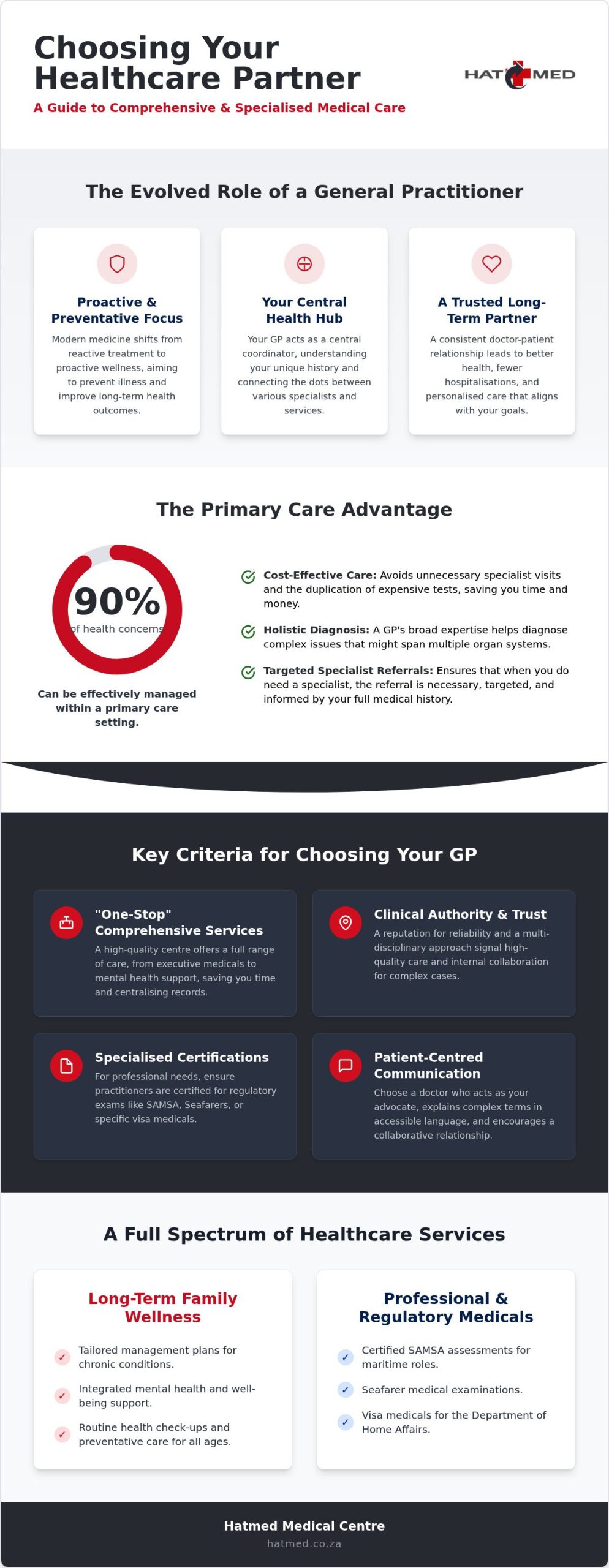
A General Practitioner is far more than someone you visit for a quick prescription or a medical certificate. In the South African healthcare context, your GP serves as the foundational pillar of your entire medical journey. This role has evolved significantly over the last decade. While many still view a doctor’s visit as a reactive response to illness, modern medicine focuses on proactive, preventative care. When you research What is a General Practitioner, you will find they’re essentially a health coordinator who understands your unique history, lifestyle, and family background.
Having a consistent medical partner reduces the risk of fragmented care. It’s well-documented that patients who maintain a long-term relationship with a single doctor experience better health outcomes and fewer emergency hospitalisations. This is because your GP acts as a central hub. They connect the dots between various medical specialists and diagnostic services while keeping your personal well-being at the forefront. If you’ve been searching for a general practitioner near me, you aren’t just looking for a clinic; you’re looking for a steady ally in a complex system. Understanding the full scope of primary healthcare in long-term wellness can help you appreciate why this relationship is so foundational to your lifelong health.
Primary Healthcare vs. Specialist Care
It’s often tempting to go straight to a specialist when a specific symptom arises. However, starting with a general practitioner near me is usually the more efficient and cost-effective route. GPs are trained to manage approximately 90% of health concerns within a primary care setting. They possess a broad clinical expertise that allows them to diagnose complex issues that might otherwise be misattributed to a single organ system. By visiting a GP first, you ensure your medical history remains centralised. This prevents the duplication of expensive tests and ensures that any specialist referrals are targeted and necessary.
The Benefits of Personalised Patient-Centred Care
The best healthcare happens within a relationship of mutual trust. A patient-centric approach means your doctor doesn’t just treat symptoms; they treat you as a whole person. This collaborative partnership encourages open disclosure. When you feel supported and heard, you’re more likely to share the subtle details that lead to an accurate diagnosis. A trusted GP also acts as your advocate. The medical system can be daunting, but having a professional who is genuinely invested in your welfare provides a sense of security. They help you make informed decisions, ensuring that your treatment plan aligns with your personal values and long-term health goals.
Criteria for Choosing the Right GP for Your Family
Selecting a medical partner is one of the most significant decisions you will make for your family’s long-term well-being. When searching for a general practitioner near me, it’s tempting to simply choose the closest option on a map. However, a truly effective primary healthcare provider should offer a balance of clinical expertise, administrative professionalism, and a supportive communication style. You need a doctor who doesn’t just treat an immediate ailment but also understands the broader context of your health, from routine vaccinations to complex chronic disease management.
Consider the range of services available at the practice. A high-quality centre acts as a one-stop-shop, providing everything from executive medical examinations to mental health support. This saves you time and ensures that your medical records remain in one secure, accessible place. Professionalism extends beyond the consulting room; the efficiency of the administrative staff is a clear indicator of how the practice values your time. You should look for a team that handles medical aid claims with precision and maintains an organised, welcoming environment.
Evaluating Clinical Authority and Trust
A medical centre’s reputation is built on its track record of reliability and the breadth of its certifications. If your career requires specific regulatory compliance, such as Seafarers or SAMSA medical examinations, ensure the practitioners are specifically certified for these assessments. A multi-disciplinary approach within a single practice is incredibly valuable. It allows for internal collaboration, meaning your GP can consult with colleagues to provide more nuanced care. Routine check-ups are the perfect opportunity to test a new doctor’s approach. Use these visits to see if they explain complex terms in accessible language and if they encourage a collaborative, patient-centred relationship.
Practical Considerations for Busy Professionals
For those balancing demanding careers, time is a precious commodity. An efficient appointment system that minimises waiting times is essential for reducing work disruption. When you visit a general practitioner near me, you should expect on-site access to essential services like screenings and vaccinations. This prevents the need for multiple trips to different facilities. Building a relationship with a professional medical centre ensures you have a reliable guide for every stage of your health journey, providing peace of mind that your physical and professional medical needs are in expert hands. A well-organised practice will also stay abreast of the latest South African healthcare regulations, ensuring your immigration or employment medicals meet all current Department of Home Affairs requirements.
Specialised Medical Examinations: Beyond Routine Consultations
While most people search for a general practitioner near me to treat a sudden illness or manage a prescription, many medical needs are driven by professional or legal requirements. Specialised medical examinations are rigorous assessments designed to ensure you meet specific regulatory standards. These consultations carry significant weight. The results often determine your ability to work at sea, relocate to a new country, or secure a high-level corporate position. Choosing a practice with the correct certifications is vital to ensure your results are accepted by the relevant authorities without delay.
These examinations differ from standard visits because they follow strict protocols set by external bodies like the Department of Home Affairs or the South African Maritime Safety Authority (SAMSA). A trusted medical centre acts as a bridge between your personal health and these professional requirements. They ensure that every test is performed to the required standard and that all paperwork is filed with the precision these high-stakes applications demand.
Maritime and SAMSA Approved Assessments
Working at sea requires a specific level of physical and mental resilience. In South Africa, anyone working on a vessel must possess a valid seafarer fitness certificate. You cannot obtain this from just any doctor; you must visit a SAMSA-approved practitioner. These assessments are comprehensive. They cover vision, colour perception, hearing, and physical endurance to ensure you can perform duties safely in an offshore environment. The goal is to identify any underlying conditions that could become life-threatening whilst at sea, far from a hospital. Having a reliable general practitioner near me who understands these maritime standards is essential for anyone in the shipping or offshore industries.
Navigating Immigration and Visa Medical Requirements
The South African Department of Home Affairs requires specific medical and radiological reports for most long-term visa applications. These are designed to protect public health and ensure applicants are in good standing. A typical visa medical certificate South Africa process includes a thorough physical examination and chest X-rays to screen for tuberculosis (TB). Experienced GPs ensure that these reports are completed on the correct official forms. This attention to detail prevents the frustration of having your application returned due to administrative errors.
Executive Health and Occupational Fitness
Corporate wellness has shifted towards proactive risk management. Executive health assessments are tailored for individuals in high-stress roles, focusing on early detection of cardiovascular issues and lifestyle-driven illnesses. Similarly, pre-employment screenings protect both the employer and the candidate by confirming the individual is “fit for work” for their specific role. These assessments are often customised to meet industry-specific safety standards, providing a clear picture of an employee’s health status before they begin a new professional chapter.
Managing Long-Term Wellness and Chronic Conditions
Long-term wellness is a collaborative journey rather than a series of isolated appointments. When you look for a general practitioner near me, you’re seeking a medical partner who can help you manage conditions like hypertension and diabetes over several decades. These chronic illnesses require more than just a prescription; they demand a tailored treatment plan that adapts as your life changes. Your GP ensures that your daily quality of life remains high by identifying risks early and adjusting interventions before they become complications. This steady oversight is particularly vital in South Africa, where medical inflation often outstrips the general cost of living, making efficient primary care a smart financial and health decision.
Preventative care also includes staying up to date with adult immunisations. Seasonal flu vaccinations and booster shots for tetanus or hepatitis are essential components of a robust health strategy. By maintaining a regular schedule of check-ups, you create a safety net that protects you against preventable illnesses. Understanding why booking a GP for routine checkups is your best health investment can help you commit to this proactive approach, ensuring you stay healthy enough to meet both your personal and professional obligations without the disruption of avoidable health crises.
Proactive Chronic Disease Monitoring
Regular monitoring is the most effective way to prevent the long-term complications associated with chronic diseases. This process involves tracking specific health markers, such as blood pressure or glucose levels, and integrating lifestyle advice into your daily routine. A supportive GP doesn’t just tell you what to do; they work with you to find sustainable changes in diet and exercise that complement your medication. This holistic approach turns a daunting diagnosis into a manageable part of your life. Your doctor acts as a steady guide, tracking your progress over time and making subtle adjustments to your treatment to ensure the best possible outcomes. For a structured overview of how this works in practice, our chronic disease management comprehensive guide outlines the essential components of an effective long-term treatment plan.
Mental Health Support and Wellness
Your mental well-being is inseparable from your physical health. Primary care centres are often the safest and most accessible entry points for mental health support. Whether you’re dealing with acute stress from a high-pressure job or chronic conditions like anxiety and depression, your GP can provide an initial assessment and a compassionate path forward. They help differentiate between temporary stress and conditions that require long-term management or specialist referral. By integrating mental wellness into general physical check-ups, your doctor ensures that no aspect of your health is overlooked. This supportive environment makes it easier to discuss sensitive topics, leading to a more comprehensive and effective care plan. If you’re ready to take control of your health, you can start your journey with professional chronic disease management today.
Accessing Quality Primary Healthcare: What to Expect During Your Visit
A medical consultation is a partnership that functions best when both parties are prepared. When you finally select a general practitioner near me, the first visit sets the tone for your long-term care. It’s not just about a physical exam; it’s about sharing a complete picture of your health so your doctor can make informed decisions. This process begins before you even step into the consultation room. By arriving with a clear history of previous illnesses, current medications, and a list of specific concerns, you ensure that every minute of your appointment is used effectively.
The consultation itself follows a logical, unhurried sequence. It typically starts with an initial screening of your vital signs, followed by a detailed discussion about your health goals or current symptoms. Your GP will then conduct a physical assessment and, if necessary, formulate a diagnostic plan. This might involve blood tests, X-rays, or specialised screenings for professional certifications. A professional practice ensures that you understand the rationale behind every recommendation, fostering a sense of security and trust. For a deeper understanding of how these visits fit into a broader strategy, exploring the role of primary healthcare in building a long-term wellness blueprint can provide valuable context for every stage of your care.
Your First Consultation Checklist
To make the most of your time, we recommend preparing a small health pack for your visit. Being organised helps the medical team focus on your care rather than administrative gaps. This is especially vital if you’re visiting for a high-stakes exam like an immigration or SAMSA medical, where specific documentation is mandatory.
- Medical Records: Bring summaries of previous surgeries, chronic diagnoses, and recent test results.
- Medication List: Include dosages for all prescriptions, vitamins, and over-the-counter supplements.
- Symptom Diary: Note when your symptoms started, what triggers them, and their severity.
- Administrative Essentials: Have your medical aid card and a valid identification document ready.
A Seamless Experience from Booking to Recovery
Modern healthcare centres use technology to remove the friction from the patient journey. From the moment you book your professional GP consultation or specialised medical exam with Hatmed today, the focus is on efficiency and clear communication. You shouldn’t have to wonder about your test results or the next steps in your treatment plan. A well-organised practice proactively manages follow-ups and referrals, ensuring that you’re never left without a clear path forward.
Hatmed Medical Centre has established itself as a preferred choice for comprehensive care across South Africa. By combining routine family wellness with the clinical precision required for professional regulatory medicals, the centre provides a reliable hub for all your healthcare needs. Whether you require a routine check-up, chronic disease management, or a certified maritime assessment, you can expect a supportive environment that values your time. Finding a general practitioner near me who understands the local regulatory landscape whilst offering warm, patient-centric care is the key to a healthier, more secure future.
Securing Your Health and Professional Future
Finding a reliable general practitioner near me is the first step toward a more organised and proactive health journey. Throughout this guide, we’ve explored how a dedicated primary healthcare provider acts as more than just a doctor; they’re a vital coordinator for your physical, mental, and professional well-being. By choosing a practice that features SAMSA-approved medical practitioners and specialists in immigration and executive medicals, you ensure that every aspect of your medical life is handled with clinical precision under one roof.
Hatmed Medical Centre provides this comprehensive support to all South Africans, offering a patient-centric approach that prioritises your time and peace of mind. We’ve built our reputation on clinical authority and a genuine commitment to the communities we serve, ensuring that chronic disease management and routine care are delivered in a warm, supportive environment. You don’t have to settle for fragmented care or long waiting times when expert help is accessible.
Take the next step toward a stable and trusting medical partnership today. Book your comprehensive medical assessment or GP consultation at Hatmed Medical Centre and experience the difference that expert, supportive care makes to your daily life. Your health is your most valuable asset, and we’re here to help you protect it.
Frequently Asked Questions
What should I bring to my first GP consultation?
Bring a valid South African ID or passport, your medical aid card, and a list of any chronic medications you currently take. It’s also helpful to have a summary of your surgical history and any known allergies. Arriving prepared helps your doctor spend more time on your health and less on paperwork. This ensures that your first visit to a general practitioner near me is as efficient and productive as possible.
How long does an immigration medical examination usually take?
A standard immigration medical examination typically takes between 60 and 90 minutes to complete. This timeframe includes the physical assessment by the GP and the necessary radiological reports, such as a chest X-ray for tuberculosis screening. Whilst the consultation itself is straightforward, ensure you have all the correct Department of Home Affairs forms ready to prevent any administrative delays in your visa application process.
Can any GP perform a SAMSA medical for seafarers?
No, only doctors who are specifically certified and registered with the South African Maritime Safety Authority can perform these assessments. A SAMSA medical for seafarers is a specialised regulatory requirement that ensures you are physically fit for the rigours of life at sea. Hatmed Medical Centre provides these certified examinations, ensuring your fitness certificate meets all national and international maritime standards for employment.
What is included in a comprehensive executive health assessment?
These assessments focus on early detection of lifestyle-related risks and include a thorough physical exam, cardiovascular screenings, and comprehensive blood tests. We also look at metabolic health, lung function, and stress levels. It’s designed for professionals in high-pressure roles who need a proactive strategy to maintain their long-term wellness. Each assessment is tailored to the individual’s age, family history, and specific occupational risks.
Does my medical aid cover preventative wellness check-ups?
Most South African medical schemes provide for an annual wellness screening through a dedicated preventative care benefit. This usually covers basic checks like blood pressure, glucose, and cholesterol without exhausting your day-to-day savings. It’s best to confirm with your specific provider, but utilising these benefits is an excellent way to maintain your health sovereignty and catch potential issues before they require expensive interventions or specialist care.
How often should I see a GP if I have a chronic condition like hypertension?
Patients with chronic conditions like hypertension or diabetes should generally schedule a monitoring consultation every three to six months. These regular visits allow your GP to track your progress, adjust medication dosages, and provide lifestyle guidance to prevent long-term complications. Consistent monitoring is the key to effective chronic disease management, ensuring that your condition remains stable whilst you continue with your daily personal and professional life.
Can a GP help with mental health concerns or do I need a psychiatrist?
A GP is often the safest and most accessible starting point for mental health support. They are trained to manage common conditions like anxiety, depression, and acute stress through both counselling and medication. While a psychiatrist or psychologist may be necessary for complex or specialised cases, your GP will conduct the initial assessment and coordinate your care plan, referring you to the right specialist only when it’s clinically appropriate.
What is the difference between a pre-employment medical and a routine check-up?
A routine check-up is a personal health review focused on your general well-being and preventative care. In contrast, a pre-employment medical is a targeted assessment requested by an employer to ensure a candidate is physically capable of performing specific job duties safely. These screenings often follow industry-specific safety standards and are essential for high-stakes roles in the corporate, maritime, or industrial sectors across South Africa.