

What if your next big career move on the open ocean depended less on your technical skills and more on the results of a single health check? For many maritime professionals, the prospect of a SAMSA medical examination feels like a significant hurdle rather than a routine procedure. It’s natural to feel anxious about how your health history might be viewed or to feel frustrated by the complex regulations that govern your fitness to serve. You want to ensure your certificate is valid and your career stays on course without unnecessary delays or confusion.
We’re here to help you master the requirements, process, and preparation for your SAMSA medical examination so you can secure your maritime career with confidence. By understanding exactly what the South African Maritime Safety Authority expects, you can turn a stressful appointment into a smooth, professional experience. This guide provides a clear look at current health standards, the documentation you must bring, and how to manage the assessment process effectively. From vision requirements to the latest validity rules, we’ve gathered everything you need to feel prepared and supported as you head back to sea.
Key Takeaways
- Understand the legal necessity of the SAMSA medical examination and how it aligns with international safety standards to protect your career.
- Learn exactly what to expect during your physical assessment, from cardiovascular checks to vision tests, so you can arrive at the centre with peace of mind.
- Identify the essential identification and medical documents you need to bring to ensure a smooth and efficient certification process.
- Gain clarity on the different fitness categories and how specific health outcomes might influence your duties whilst at sea.
- Discover how a supportive medical partnership can help you manage chronic conditions and maintain your long-term fitness for maritime duty.
What is a SAMSA Medical Examination and Why is it Essential?
A SAMSA medical examination is a specialised health assessment designed to ensure that every person working on a vessel is physically and mentally fit for duty. It isn’t just a standard check-up. Life at sea involves heavy lifting, irregular sleep, and the need for quick reactions during emergencies. The South African Maritime Safety Authority (SAMSA) mandates these assessments to maintain high safety standards across all South African flagged vessels. By verifying your health before you board, the authority ensures you can perform your duties without risking your own safety or the safety of your crewmates.
The legal basis for these exams is found in the Merchant Shipping (Eyesight and Medical Examination) Regulations. These laws exist because a seafarer’s health is directly linked to the safety of the vessel and the protection of the marine environment. If a crew member becomes incapacitated due to a manageable health condition, it places the entire ship at risk. This is particularly true when operating far from immediate hospital care. We view this examination as a vital safety partnership. It’s about protecting your livelihood whilst ensuring the maritime industry remains a secure place to work.
The STCW Framework and Global Standards
South Africa aligns its medical standards with the International Convention on Standards of Training, Certification and Watchkeeping for Seafarers (STCW). This alignment is vital for your career. It ensures that the medical certificate you receive is recognised by global shipping lines and international maritime authorities. Whether you’re working on a local tugboat or a massive container ship in the North Atlantic, your fitness certificate proves you meet the rigorous health benchmarks required by the global maritime community. This standardisation makes it easier for South African seafarers to find employment with international fleets.
Who Needs a SAMSA Medical Certificate?
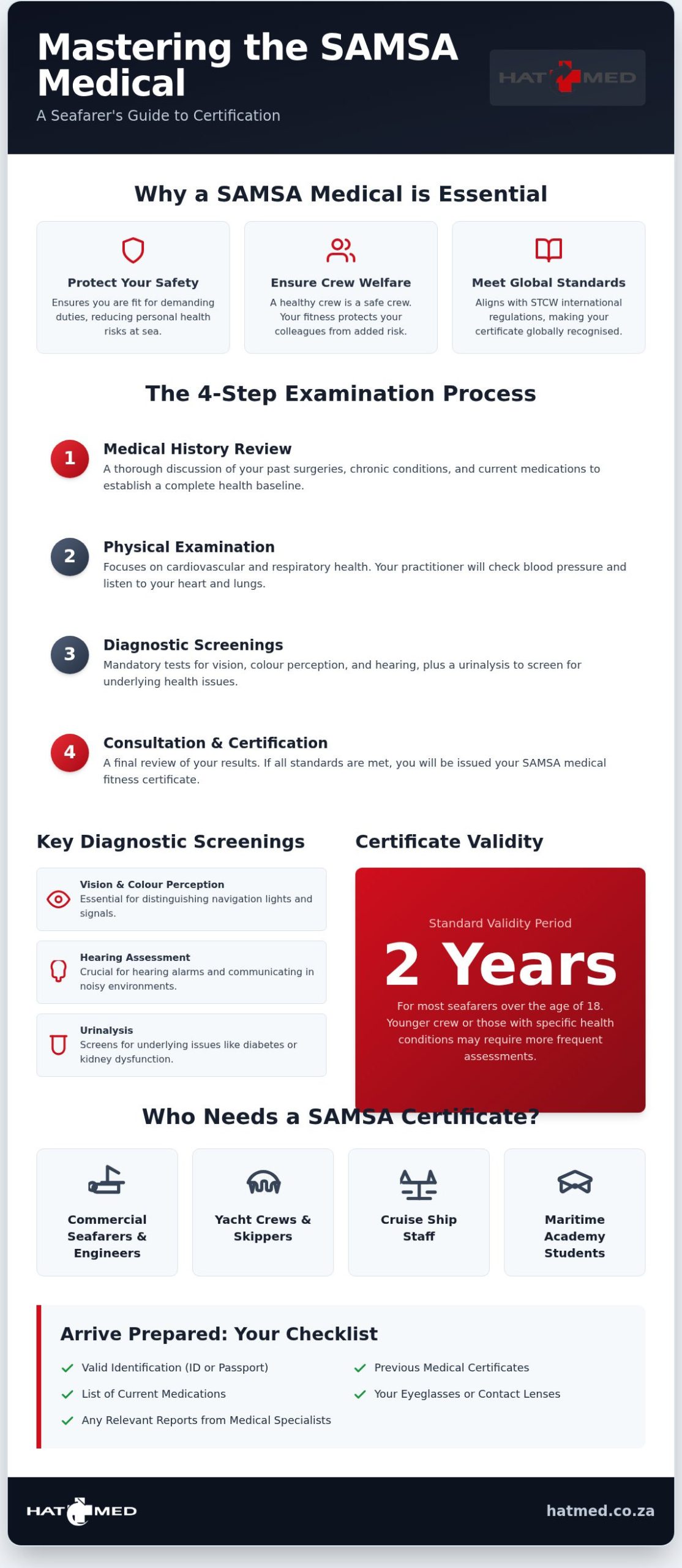
Most people working professionally on the water require a valid certificate. This isn’t limited to deck officers; it applies to anyone whose presence is essential to the ship’s operation. Requirements typically cover:
- Commercial seafarers and maritime engineers
- Yacht crews, skippers, and deckhands
- Cruise ship hospitality, entertainment, and medical staff
- Students enrolling in maritime academies for the first time
Renewal frequencies depend on your age and the specific nature of your role. For most seafarers over the age of 18, a certificate remains valid for two years. However, younger crew members or those with specific health monitoring needs might require more frequent assessments. Staying ahead of these renewal dates is essential to avoid being grounded whilst your vessel is ready to depart.
The Step-by-Step Process of a Seafarer Fitness Examination
Your appointment begins with a detailed review of your medical history. We’ll discuss any previous surgeries, chronic illnesses, or medications you’re currently taking to build a complete picture of your health. This initial screening is a collaborative effort; it’s our way of ensuring that any manageable conditions won’t interfere with your safety whilst at sea. Following this, the physical examination focuses on your cardiovascular and respiratory health. The practitioner will monitor your blood pressure and listen to your heart and lungs to ensure you’re prepared for the physical rigours of maritime duty.
Once the physical checks are complete, we move into specific diagnostic tests required by regulation. These assessments are designed to verify that you can perform your role effectively even in challenging environments. The entire SAMSA medical examination is structured to be efficient and supportive, respecting the fact that your time is valuable. After all tests are finished, you’ll have a final consultation to review the findings and, if all standards are met, receive your fitness certificate.
Vital Diagnostic Screenings
Vision and hearing are perhaps the most critical senses for any seafarer. We conduct visual acuity tests and Ishihara colour perception screenings to ensure you can distinguish navigation lights and signals. Hearing assessments are equally vital; you must be able to hear safety alarms and communicate clearly amongst the high decibel levels of an engine room. We also perform a urinalysis to screen for underlying issues like diabetes or kidney dysfunction. These specific requirements are detailed in SAMSA’s policy on medical tests, which provides the framework for our clinical assessments.
Physical Fitness and Mobility Assessments
Maritime work is physically demanding. We evaluate your ability to perform emergency duties, which may include climbing vertical ladders or moving through narrow hatches. Your Body Mass Index (BMI) and overall body composition are also reviewed. This isn’t about aesthetics; it’s about ensuring you can move freely in confined spaces and maintain the stamina required for long shifts. Finally, we conduct neurological checks and balance assessments. These are essential for anyone working on a moving deck where stability and quick reflexes are mandatory for preventing accidents. If you need to renew your credentials, our team offers streamlined professional seafarer medicals to help you get back to sea without delay.
Preparation Checklist: What to Bring to Your Appointment
A successful SAMSA medical examination depends largely on your preparation before you even step into the consultation room. Arriving with the correct documentation and having your health information organised ensures a smooth, professional experience that respects your time. We view this process as a collaborative effort to keep your career on track. When you’re well-prepared, it allows the practitioner to focus on your health and safety rather than administrative hurdles.
The most critical items to bring are your valid, original forms of identification. You must present either your National ID or your Passport. Please be aware that arriving without an original ID will result in the appointment being rescheduled. In addition to your identification, please bring any previous SAMSA medical certificates you hold. These historical records provide valuable context for your current assessment and help us track your long-term health trends.
If you manage any chronic conditions, such as hypertension or diabetes, it’s essential to bring your current prescriptions and recent medical reports from your treating specialist. Our expertise in chronic disease management means we’re here to support you in maintaining your fitness for duty, but we need accurate data to do so. Finally, if you use corrective lenses or hearing aids for your daily duties, ensure you have them with you. We’ll need to test your vision and hearing both with and without these aids to meet regulatory standards.
Documentation and Forms
Many international shipping lines require specific company forms to be completed alongside the standard SAMSA paperwork. Please ensure you have these printed and ready for the practitioner to sign. It’s also vital to bring your discharge book or seaman’s book. Having this available allows for immediate endorsement once your fitness is confirmed, saving you from a return trip. Organising these documents in a single folder can significantly speed up the check-in process at the medical centre.
Personal Health Preparation
How you prepare your body for the appointment can influence your results. Whilst most standard exams don’t require fasting, we’ll notify you if specific blood tests are requested that require you to abstain from food. We also recommend being well-rested. Lack of sleep or excessive caffeine intake can lead to elevated blood pressure readings that don’t accurately reflect your baseline health. By taking a few moments to organise your medical history and getting a good night’s rest, you help ensure that your SAMSA medical examination is a clear and accurate reflection of your physical readiness for life at sea.
Understanding Results: Fitness Categories and Validity
Completing your SAMSA medical examination leads to one of three primary outcomes. Our goal is always to help you achieve a “Fit” status, meaning you meet all regulatory health standards for your role. However, if a health issue is identified, it doesn’t necessarily mean your career is over. We work with you to understand the findings and provide a clear path forward, maintaining a sense of partnership throughout your health journey.
The three main categories of fitness are:
- Fit: You meet all medical requirements for duty at sea without any restrictions.
- Fit with Limitations: You can perform maritime duties, but with specific conditions. This might include a requirement to wear corrective lenses, a restriction to certain geographical areas, or a mandate that you aren’t permitted to work alone.
- Temporarily Unfit: You have a medical condition that requires treatment or further investigation before a certificate can be issued. Once the condition is stabilised, you can return for a reassessment.
If you are found “Unfit” for duty, you have the right to appeal the decision through the SAMSA medical appeal board. This process ensures that every seafarer is treated fairly and that clinical decisions are reviewed by an independent panel of experts when necessary.
Managing Chronic Conditions at Sea
Working at sea with conditions like hypertension or diabetes is entirely possible if they are well-managed. Under SAMSA rules, the primary concern is stability. A stable condition that is monitored through consistent chronic disease management often results in a “Fit with Limitations” endorsement. This ensures you can continue your career whilst receiving the necessary medical oversight. We focus on helping you maintain this stability so that your health remains an asset rather than a barrier to your employment.
Certificate Validity and Renewals
For most adults over the age of 18, a SAMSA medical certificate is valid for two years. For those under 18, the standard validity is typically one year. However, if you have a medical condition that requires more frequent monitoring, the practitioner may issue a certificate with a shorter term, such as six months. It’s wise to take proactive steps by booking your next appointment at least one month before your current certificate expires. If you’re nearing your renewal date, you can schedule your seafarer fitness assessment with our team to ensure your documentation remains current and compliant.
Why Choose Hatmed Medical Centre for Your SAMSA Exam?
Selecting where to undergo your SAMSA medical examination is a choice that affects both your career and your peace of mind. At Hatmed Medical Centre, we combine deep clinical expertise with a supportive approach that puts the seafarer first. Our practitioners understand the specific regulatory hurdles you face and the physical demands of your life at sea. We’ve built an environment that is both professional and welcoming, ensuring you feel like a partner in your health journey rather than just another appointment in a busy schedule.
Whilst we operate as a dedicated private practice, we serve seafarers nationally across South Africa. Whether you’re preparing for a local contract or heading to international waters, we provide the reliable certification you need. Our services are comprehensive, ranging from routine fitness checks to specialised assessments for various maritime roles. We respect your time, knowing that every day spent waiting for a certificate is a day away from your work. Our goal is to provide a steady, dependable service that helps you maintain your livelihood with confidence.
A Patient-Centred Approach to Regulatory Medicals
We believe that a medical assessment should be more than a box-ticking exercise. Our team blends clinical authority with a warm, community-oriented feel to lower the stress often associated with regulatory compliance. We’ve streamlined our booking and documentation processes to ensure you move through your assessment efficiently. This allows you to focus on what matters most: getting back to your vessel with a valid certificate. We also offer expert guidance on maintaining your health in demanding environments, helping you stay fit for duty over the long term.
Beyond the Certificate: Holistic Health for Seafarers
Our commitment to your well-being extends far beyond the issuance of a fitness certificate. We understand that the maritime lifestyle presents unique challenges, from irregular sleep patterns to limited dietary options. By choosing Hatmed, you gain access to GP consultations for ongoing wellness and chronic disease management. We also specialise in linking your maritime medical with visa medical requirements for international travel. This integrated approach saves you time and ensures that all your regulatory health needs are managed by a team that truly understands your professional life.
Securing Your Future on the Open Seas
Mastering the requirements for your seafarer fitness certificate ensures that you can focus on your duties without the stress of regulatory uncertainty. By arriving prepared with your original identification and a clear medical history, you transform the SAMSA medical examination into a straightforward step toward your next voyage. Your health is your greatest asset whilst working in demanding maritime environments, and staying ahead of your two-year renewal cycle is the best way to protect your livelihood and career stability.
We’re here to act as your trusted partner in this process. Our team provides SAMSA-approved medical assessments with a focus on a professional and efficient certification process. As specialists in seafarer and maritime health, we understand the unique pressures of your lifestyle and offer the steady guidance you need to maintain your fitness for duty. We don’t just issue certificates; we help you manage your long-term wellness.
Take the next step in your maritime journey with a team that values your time and your well-being. Book your SAMSA medical examination with Hatmed Medical Centre today and head back to sea with the confidence that you’re fully prepared for the challenges ahead. Safe travels on your next tour of duty.
Frequently Asked Questions
How long does a SAMSA medical examination take?
A standard SAMSA medical examination typically takes between 45 and 60 minutes to complete. This timeframe allows our practitioners to conduct a thorough review of your medical history, perform the necessary physical checks, and complete diagnostic screenings like vision and hearing tests. If your specific role requires additional assessments, such as a chest X-ray or complex stress tests, the duration may increase. We value your time and strive to keep the process efficient and professional.
Can I fail a SAMSA medical if I wear glasses?
Wearing glasses does not mean you will fail your assessment. You simply need to meet the visual acuity standards set by maritime regulations whilst wearing your corrective lenses. If you pass the vision test with your glasses or contacts, your certificate will be issued with a “Fit with Limitations” endorsement. This is a standard procedure that ensures you can perform your duties safely as long as your vision is corrected during work hours.
What happens if the doctor finds a new health issue during the exam?
If a new health concern is identified, our practitioners will discuss the findings with you in a supportive and transparent manner. Depending on the severity, you may be classified as “Temporarily Unfit” whilst you seek further treatment or a specialist’s report. We view this as a partnership in your health journey. Our goal is to help you manage the condition effectively so that you can return for a reassessment and secure your fitness certificate.
Is a SAMSA medical the same as an ENG1 medical?
Whilst both are maritime fitness assessments, the South African version is issued by the South African Maritime Safety Authority, whereas an ENG1 is the UK equivalent. Both certificates adhere to international STCW standards, meaning a South African certificate is widely recognised by global shipping lines and international flag states. If you are working on a South African flagged vessel, this certificate is a mandatory legal requirement that ensures your health meets local and international safety benchmarks.
How much does a SAMSA medical examination cost in South Africa?
The cost of a SAMSA medical examination can vary depending on the specific tests required for your maritime role and the depth of the clinical assessment. Whilst industry averages exist, we recommend contacting our medical centre directly for current information regarding our professional fees. This ensures you receive an accurate quote that includes all necessary diagnostic screenings and the issuance of your official certificate without any unexpected administrative surprises during your appointment.
Do I need to fast before my maritime medical appointment?
Fasting is generally not a requirement for a standard maritime medical appointment. Most seafarers can eat and drink normally before their physical assessment. However, if your medical history or a specific company requirement necessitates blood sugar or cholesterol testing, we may ask you to fast for several hours. We will always provide clear instructions when you book your appointment so you can arrive prepared and ensure your results are as accurate as possible.
Can any GP perform a SAMSA medical examination?
No, only medical practitioners who have been specifically accredited by the South African Maritime Safety Authority are authorised to perform these assessments. A general GP consultation is not a substitute for this regulated process. Hatmed Medical Centre provides these specialised, approved examinations to ensure full compliance with the Merchant Shipping Regulations. Choosing an accredited centre guarantees that your certificate is legally valid and will be accepted by maritime authorities and employers worldwide.
What should I do if my seafarer medical certificate has expired whilst at sea?
If your certificate expires whilst you are on a voyage, you should notify the Master of the vessel immediately. International and South African regulations typically allow an expired certificate to remain valid until the next port of call where an accredited doctor is available, usually for a maximum of three months. It is essential to book your fitness assessment as soon as you return to shore to avoid any disruptions to your future deployments or legal standing.