

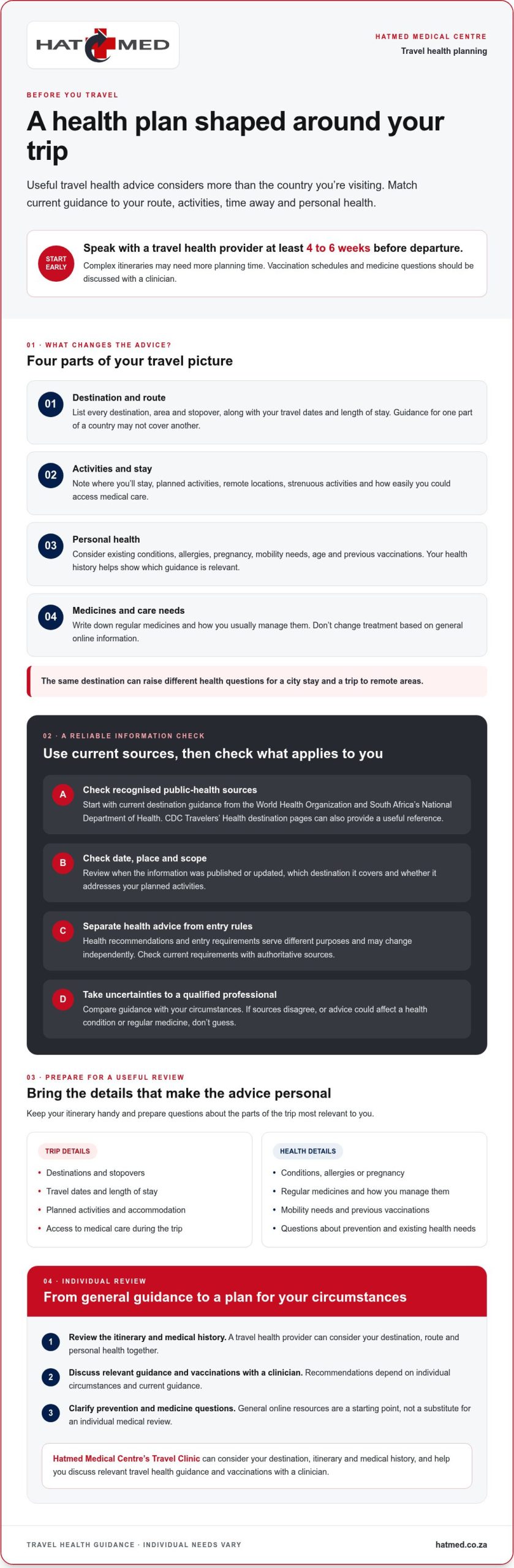
Useful travel health advice depends on more than the country you’re visiting. Your route, activities, length of stay and medical history all help determine which questions to ask before you go. General guidance can be a useful starting point, but it may not cover the details of your particular trip.
If you’re unsure which information to trust or when to plan vaccinations and medicines, start by checking current, destination-specific guidance from reliable sources such as the World Health Organization. Then confirm how it applies to your own circumstances. It’s generally recommended to speak with a travel health provider at least 4 to 6 weeks before departure. Complex itineraries may need more planning time.
This guide explains how to organise a pre-departure health plan, from checking destination information and entry requirements to preparing for existing health needs. Hatmed Medical Centre’s Travel Clinic can consider your destination, itinerary and medical history, and help you discuss relevant travel health guidance and vaccinations with a clinician.
Key Takeaways
- Useful travel health advice considers your destination, itinerary, activities and personal health, not just the country you’re visiting.
- Check current guidance from the World Health Organization and South Africa’s National Department of Health, then ask how it applies to your plans.
- Discuss vaccination schedules and medicine questions with a clinician. Recommendations depend on individual circumstances and current guidance.
- Consider remote locations, strenuous activities and access to healthcare when preparing questions for your trip.
- A travel health clinic can help you review your itinerary and medical history, and discuss relevant prevention and vaccinations.
Travel health advice starts with your destination, itinerary and health
Travel health advice is preparation tailored to where you’re going, what you plan to do, how long you’ll be away and your personal health. It can help you identify questions about prevention, vaccinations and managing an existing condition before departure. The same destination may raise different considerations for someone staying in a city and someone travelling to remote areas.
Destination-specific travel health planning means matching current guidance to your route, activities and individual medical needs. Online resources, including this overview of Travel medicine, can help you understand the subject and prepare questions. Use them as a starting point, not as a substitute for an individual medical review.
Which trip details can change the health advice you need?
Before seeking guidance, write down each destination, planned stopover, travel date and length of stay. Add your planned activities, where you’ll be staying and how easily you could access medical care. A short urban visit and a longer trip involving outdoor activities may raise different questions, even if both include the same country.
Guidance and entry requirements can change. Check current information from authoritative sources, such as the World Health Organization and South Africa’s National Department of Health. Confirm anything unclear with a qualified healthcare professional, and keep your itinerary handy so you can ask about the parts of the trip most relevant to you.
How can your personal health affect travel preparation?
Your health history helps determine which advice is relevant. Consider existing conditions, allergies, pregnancy, regular medicines, mobility needs and previous vaccinations. Your age and vaccine history may also be useful context. If you take regular medicine, note its name and how you usually manage it. Don’t change your treatment based on general online information.
Share concerns with a qualified healthcare professional, including questions about how travel might affect an existing condition. A clinician can consider your health alongside your destination and itinerary, then discuss appropriate preparation. Hatmed Medical Centre’s Travel Clinic offers individualised travel health guidance and vaccinations. Recommendations depend on your circumstances and current guidance.
How to check destination-specific travel health advice reliably
Online guidance is useful when it’s current and relevant to your route. A notice for one part of a country may not cover a stopover or another area on your itinerary. Current official destination guidance is a dependable starting point, but it still needs to be considered alongside your personal health.
- List every destination and stopover. Include the areas you plan to visit and your travel dates, so you can check guidance against your full itinerary.
- Consult recognised public-health sources. Check the World Health Organization and South Africa’s National Department of Health. The CDC Travelers’ Health destination pages can also provide a useful reference. Check that the information applies to your trip.
- Review the update date and scope. Check when the information was published or updated, which destination it covers and whether it addresses your planned activities. General guidance may not account for your medical history.
- Compare it with your circumstances. Note questions about your health, medicines or previous vaccinations, then ask a qualified healthcare professional about anything uncertain.
What should you check in an official destination health update?
Look for health notices, recommended prevention and any stated entry requirements. Keep health recommendations separate from entry rules: they serve different purposes and may change independently. Don’t assume an old post, checklist or another traveller’s experience reflects the current position. Check requirements with authoritative sources before departure, particularly if your route includes several destinations or stopovers.
How can you assess conflicting travel health information?
Start with current government and recognised public-health sources rather than unsourced social posts. Compare publication dates, destination coverage and whether the advice is general or intended for a particular group. If sources disagree, or a recommendation could affect a health condition or regular medicine, don’t guess. Take the conflicting information to a healthcare professional for individual guidance.
For a personalised discussion about how destination guidance relates to your itinerary and health history, Hatmed Medical Centre’s Travel Clinic may be a practical next step. Learn more about travel clinic guidance and vaccinations. Advice depends on your circumstances and current recommendations.
When should you arrange vaccinations, medicines and a travel health review?
Start planning once your destination and travel dates are taking shape. This gives you time to check current destination guidance, discuss your health needs and find out whether any steps need to happen before departure. There isn’t one schedule that suits every traveller. Vaccine timing depends on the vaccine, your history and your circumstances. Ask a qualified healthcare professional what applies to you rather than relying on a general timetable.
Medicine choices also need individual consideration. A medicine discussed for one destination or traveller might not be suitable for another. A clinician can help you consider relevant prevention and how your regular treatment fits into your plans. For background research, the CDC travel health advice pages offer destination-based information, but they don’t replace an individual assessment.
Keep clinical recommendations separate from entry documentation. Health advice concerns prevention and wellbeing. Entry requirements are rules set by the relevant authorities and may change. Check current requirements for your destination and route with authoritative sources, then confirm them again before departure. Don’t assume a recommendation is an entry requirement, or that a document accepted on a previous trip will still be sufficient.
What should you bring to a travel health consultation?
Prepare your itinerary, travel dates and relevant medical history. Take your vaccination records if available. Write down your regular medicines, allergies and questions in advance to help avoid missing important details.
You might ask which prevention measures are relevant to your plans, whether your health history affects the advice, and what steps to take if you become unwell while away. Share any uncertainty, including gaps in your vaccination history. The clinician can then discuss your situation in the context of your destination and itinerary.
How can you prepare medicines and health documents?
Discuss regular medicines, storage and travel arrangements with a healthcare professional before you go. Don’t stop, change or add medicines based only on online information. Rules for carrying medicines can vary by destination, so check official guidance for every country on your route, particularly if a medicine has restrictions.
Keep essential health information accessible during your trip, such as a record of your medicines, allergies and relevant conditions. Consider how you’ll access it if your luggage isn’t with you. This preparation can make a travel health consultation more useful and give your clinician a clearer picture of the support you may need.
Adapting travel health advice to your activities and needs
Your itinerary can change which questions are worth raising with a clinician. A quiet stay with ready access to healthcare may call for different preparation from time in remote areas or a trip with demanding activities. Use the examples below to guide a conversation, not to diagnose a risk or decide on a vaccine plan. No single checklist suits every traveller.
| Travel scenario | Questions to discuss with a clinician |
|---|---|
| Time in remote areas | How might distance from medical care affect my preparations? What should I consider if I become unwell away from a healthcare facility? |
| Strenuous or unfamiliar activities | Could my planned activities affect how I manage my health or regular medicines during the trip? |
| Different levels of access to healthcare | What should I plan for if healthcare access varies between stops or during parts of my journey? |
| Chronic condition or regular medicines | Should we review my condition management, medicines and a plan for unexpected changes to my travel or health? |
What if you have a chronic condition or take regular medicines?
A pre-trip review can help you consider how your condition is managed alongside your route, activities and time away. Discuss your regular medicines, practical concerns about taking them while travelling, and how you would seek support if your health changed. A healthcare professional familiar with your history can help you think through a contingency plan that fits your circumstances. For more on ongoing care, see this chronic disease management guide.
What if your trip includes remote areas or demanding activities?
Be specific about what you’ll be doing, how strenuous it may be, how long you’ll be away from medical support and whether access to care varies along your route. Check current guidance for each destination, then raise personal concerns with a clinician. These details make travel health advice more relevant, but they don’t determine a diagnosis or mean that a particular vaccine or precaution is automatically needed.
If you’d value a personalised discussion about your itinerary, health history and vaccination questions, consider a Hatmed travel health consultation. A clinician can discuss relevant guidance with you, based on your circumstances and current information.
When a travel health clinic can help you finalise your plan
Official destination information is a useful starting point, but it can’t weigh every recommendation against your health history and travel plans. A travel health clinician can discuss your destination, route, activities and medical history together, helping you understand which considerations may apply. Advice and vaccinations depend on your circumstances and current guidance, so an online checklist isn’t a personal assessment.
What can you discuss during a travel health consultation?
Bring your itinerary and travel dates, along with any vaccination records you have. Note your regular medicines, allergies, existing health concerns and questions. These details give the clinician useful context for discussing destination-specific concerns and relevant prevention.
Ask about anything you’re unsure of, such as how your health history relates to the trip or whether a recommendation applies to your plans. A clinician can help you consider suitable next steps, including whether vaccinations may be appropriate. For more background, read this South African travel clinic guide.
How to take your next step with Hatmed Medical Centre
Hatmed Medical Centre offers Travel Clinic services and vaccinations. A consultation gives you an opportunity to discuss your destination, itinerary and medical history together. If your health needs are complex, seeking individual guidance early gives you more time to raise questions and check recommendations against current information. There’s no single plan that suits every traveller.
Use reliable destination guidance to prepare your questions, then discuss personal concerns with a healthcare professional. To get individual travel health advice, contact Hatmed Medical Centre and enquire about its Travel Clinic and vaccination services.
Make your next trip a healthier one
Good travel health advice starts with current information for your destination, then takes your route, activities and personal health into account. Check reliable sources, keep your itinerary and health details ready, and discuss vaccine schedules or medicine questions with a qualified healthcare professional instead of relying on a one-size-fits-all checklist.
If you manage an ongoing condition or have specific health concerns, a personalised review can help you identify questions to address before departure. Hatmed Medical Centre offers Travel Clinic services, vaccinations and general practitioner consultations for travellers seeking individual guidance.
Take the next step by discussing your travel health needs with Hatmed Medical Centre. For guidance suited to your circumstances, enquire about its Travel Clinic and vaccination services.
Frequently Asked Questions
How early should I seek travel health advice?
Start as soon as you know your destination and travel dates, especially if you have health concerns or may need vaccinations. The preparation time that’s right for you depends on your itinerary, medical history and current recommendations, so don’t rely on a universal deadline. Check official destination guidance and ask a healthcare professional how much preparation your trip may require.
Do I need a travel health consultation for every trip?
Not every traveller needs the same level of clinical support. Your destination, activities, length of stay, existing conditions and regular medicines can all affect what’s appropriate. If you’re unsure, have complex health needs or find conflicting advice, a travel health consultation can help you discuss your circumstances and consider suitable next steps. A clinician can take your health and itinerary into account.
Which vaccinations do I need before travelling?
There isn’t one vaccine list that applies to every destination or traveller. Recommendations may depend on your route, travel dates, vaccination history and personal health. Check current official guidance, then discuss your itinerary with a qualified healthcare professional. Verify entry requirements separately with authoritative sources: they aren’t the same as clinical recommendations and may change. A clinician can advise which vaccination considerations are relevant to you.
Can I use online travel health advice instead of seeing a clinician?
Reliable public-health websites are useful for checking general destination guidance, but they can’t assess your full medical history or answer every personal question. Use current official sources to prepare, then speak with a clinician if you have a chronic condition, take regular medicines, need clarification or aren’t sure how advice applies to your itinerary. This helps distinguish general information from guidance suited to your circumstances.
What should I tell a travel health professional about my trip?
Share your full itinerary, including destinations, stopovers, travel dates, length of stay and planned activities. Mention existing conditions, allergies, pregnancy if relevant, regular medicines and any vaccination records you have. These details help the professional consider current recommendations in the context of your trip. Bring questions about prevention, medicines and what to do if you become unwell, so you can discuss the concerns that matter to you.
What happens if I have a chronic condition and plan to travel?
A chronic condition doesn’t automatically mean you can’t travel, but your preparation may need to be personalised. Arrange a review with a healthcare professional to discuss your condition, medicines and itinerary. Ask about planning for disruptions and access to care, and don’t change your treatment or medicine use based only on general online travel health advice. Hatmed Medical Centre offers Travel Clinic services and general practitioner consultations to discuss individual health needs.