

What if the most effective first step for easing emotional exhaustion isn’t waiting months for a specialist, but speaking with a family doctor who already understands your medical history? When you’re waking up drained, battling insomnia, or feeling quietly overwhelmed, deciding whether to contact a therapist, a psychiatrist, or a clinic feels paralysing. You might even worry that your concerns will be brushed aside, or fear being rushed into prescriptions you aren’t comfortable taking. It is completely natural to feel hesitant when mental distress begins to deplete your physical energy. Choosing a trusted GP for mental wellness provides a safe, grounded starting point where your physical symptoms and emotional health are evaluated together as a whole.
In this guide, you will discover how a general practitioner assesses, manages, and supports your wellbeing through compassionate, holistic primary healthcare. We explore what to expect during an initial consultation, how routine clinical checks rule out physical contributors like thyroid imbalances or vitamin deficiencies, and how collaborative care plans create practical pathways for sustained vitality.
Key Takeaways
- Consulting a GP for mental wellness provides a safe, confidential first step to address mild-to-moderate anxiety, depression, and situational stress without judgement.
- Physical symptoms such as persistent fatigue, tension headaches, and disrupted sleep often stem from underlying emotional distress that primary care can clinically assess.
- Your initial appointment offers structured reassurance, combining empathetic conversation with routine diagnostic checks to rule out physiological causes like vitamin deficiencies.
- Modern primary mental healthcare emphasises collaborative treatment plans, balancing supportive lifestyle strategies with conservative medication management when appropriate.
- Establishing ongoing continuity with a dedicated family practitioner ensures early intervention, protecting your long-term vitality before chronic strain escalates into severe burnout.
What Does a GP for Mental Wellness Actually Do?
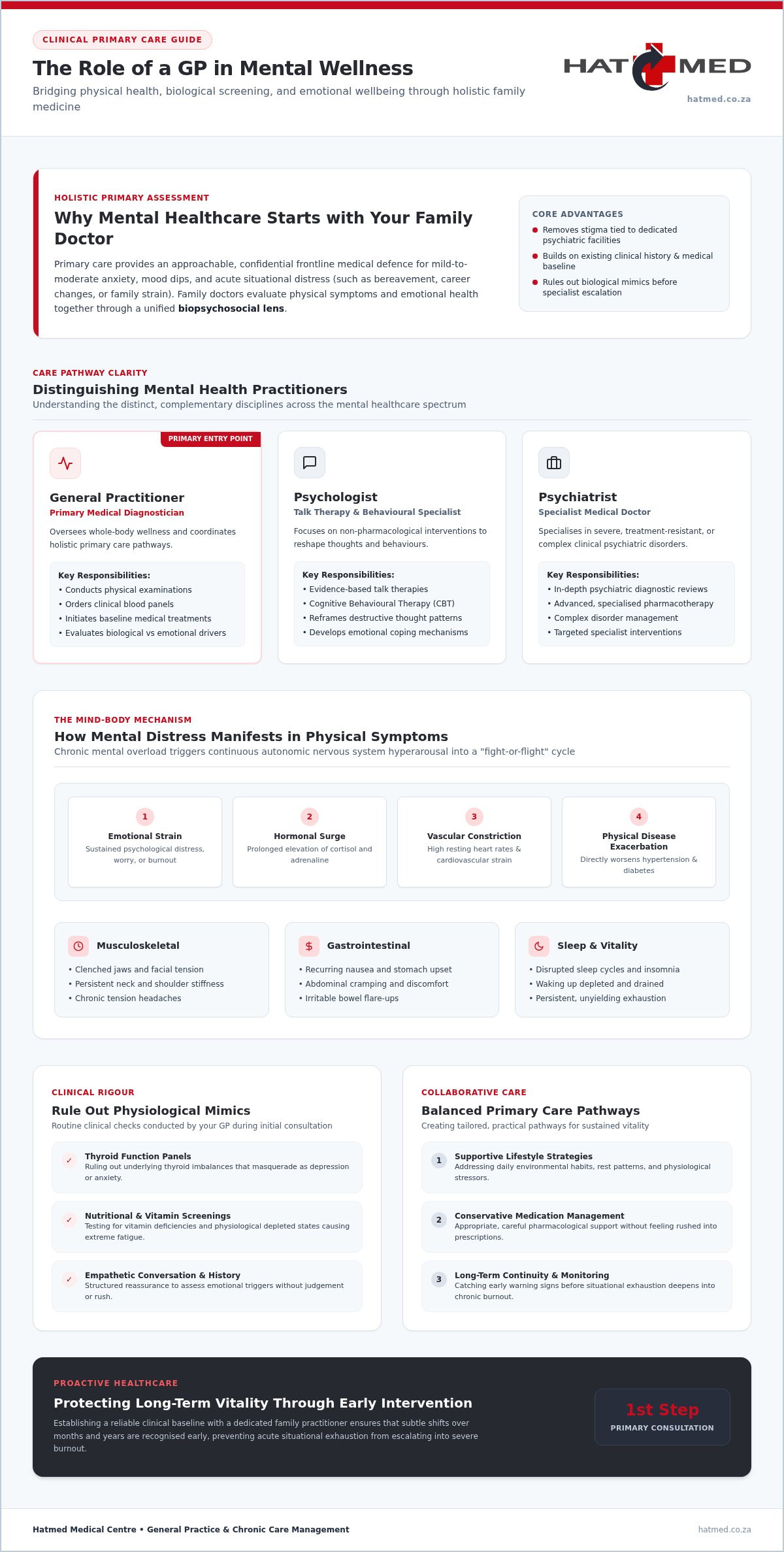
Many people assume family doctors only treat physical injuries or seasonal infections, yet primary care serves as the frontline medical defence for emotional wellbeing. As established in the clinical scope of the role of a GP, mental healthcare is an essential element of general medical practice. Consulting a dedicated GP for mental wellness provides approachable, professional support for mild to moderate anxiety, mood dips, and acute situational distress triggered by bereavement, family strain, or career changes.
Primary doctors assess mental health through a biopsychosocial lens. They understand that emotional strain rarely exists in a vacuum; it connects directly with hormonal shifts, nutritional status, physical disease, and environmental habits. Walking into a familiar medical clinic removes the apprehension often tied to dedicated psychiatric facilities, offering an accessible, confidential environment where you can discuss your emotional challenges openly.
The Crucial Role of Primary Care in Emotional Health
Daily stressors like chronic workplace burnout, erratic mood fluctuations, and recurring anxiety can quietly erode quality of life. By partnering with a regular general practitioner near me, you establish a reliable clinical baseline with a doctor who understands your medical history. This continuity allows your doctor to monitor subtle health changes over months and years, catching early warning signs before situational exhaustion deepens into chronic illness.
Distinguishing Between a GP, Psychologist, and Psychiatrist
Deciding which practitioner to consult can feel confusing, but each discipline plays a distinct, complementary part in your care:
- General Practitioner (GP): Serves as your primary medical diagnostician and holistic care coordinator. Your GP conducts physical exams, orders blood panels, initiates baseline treatments when appropriate, and oversees whole-body wellness.
- Psychologist: Focuses on non-pharmacological psychological interventions, utilising evidence-based talk therapies such as Cognitive Behavioural Therapy (CBT) to reframe thought patterns and develop emotional coping mechanisms.
- Psychiatrist: A medical doctor specialising in complex, severe, or treatment-resistant mental disorders, responsible for in-depth psychiatric evaluations and specialised pharmacotherapy.
Starting with your GP simplifies this journey. Your doctor assesses the complete clinical picture and helps determine whether self-care strategies, medical management, or targeted specialist referrals represent the safest step forward.
Recognising When Physical Symptoms Signal Mental Distress
Emotional distress rarely stays confined to the mind. The human body acts as a sensitive sounding board for mental strain, translating chronic worry into tangible physical discomfort. Prolonged elevation of cortisol and adrenaline forces the vascular system into sustained constriction, meaning that chronic cortisol elevates cardiovascular strain whilst keeping resting heart rates uncomfortably high. Consequently, people frequently visit a clinic complaining of tension headaches, heart palpitations, or unyielding exhaustion without realising these bodily alarms stem from psychological overload. This physiological overlap plays a substantial role in chronic disease management, where unmanaged stress directly exacerbates conditions like hypertension and diabetes.
Consulting an experienced GP for mental wellness bridges this diagnostic gap. Rather than dismissing somatic symptoms as purely psychological, your family doctor investigates both biological and emotional drivers simultaneously.
Common Physical Manifestations of Stress and Anxiety
Persistent mental overload triggers continuous autonomic nervous system hyperarousal, locking the body into an exhausting “fight-or-flight” cycle. Over time, this nervous activation produces distinct physical warning signs:
- Musculoskeletal Tension: Clenched jaws, neck stiffness, and chronic tension headaches caused by sustained muscular contraction.
- Gastrointestinal Disruption: Nausea, cramping, and irritable bowel flare-ups resulting from stress-induced changes along the gut-brain axis.
- Disturbed Sleep Architecture: Chronic insomnia, difficulty falling asleep, and frequent 3:00 am awakenings driven by erratic nocturnal adrenaline spikes.
- Sensory Instability: Transient lightheadedness and unexplained dizziness linked to shallow breathing and hyperventilation patterns.
Diagnostic Blood Tests to Rule Out Organic Conditions
Before attributing exhaustion or low mood solely to psychological factors, a responsible doctor checks for hidden physiological culprits. Several systemic conditions closely mimic psychiatric disorders:
- Thyroid Function: Screening thyroid-stimulating hormone (TSH) ensures that an underactive thyroid (hypothyroidism) isn’t causing profound lethargy, weight changes, and low mood.
- Full Blood Count and Ferritin: Checking red cell indices and iron stores confirms whether cellular oxygenation deficits or anaemia explain chronic fatigue.
- Vitamin D and B12 Profiles: Assessing these essential micronutrients uncovers deficiencies frequently linked to brain fog and depressive feelings.
- Fasting Blood Glucose and HbA1c: Evaluating metabolic stability rules out glycemic fluctuations that provoke anxiety-like tremulousness and sudden energy crashes.
If you have been feeling physically depleted without a clear medical cause, arranging a comprehensive assessment at Hatmed Medical Centre can help you uncover whether your body is signalling underlying emotional distress.
What to Expect During Your Primary Care Consultation
Stepping into a doctor’s surgery to speak about emotional strain can feel daunting, but the consultation room remains an entirely confidential, supportive sanctuary. General practitioners evaluate emotional wellbeing on a daily basis. There is nothing you can share that will shock, embarrass, or alienate them. Booking an appointment with a trusted GP for mental wellness provides an unhurried, methodical environment designed to bring practical relief and clinical clarity rather than judgement.
To help guide the conversation, consider bringing brief written notes with you. Jotting down your primary symptoms, sleep patterns, daily stressors, and how long you’ve felt overwhelmed gives your doctor essential context, especially if you find it difficult to speak under pressure.
The Step-by-Step Clinical Assessment Process
A primary mental health consultation follows a structured, predictable rhythm to ensure every dimension of your health receives thorough attention:
- Open Dialogue and Validated Screening: The appointment begins with an open conversation about what has been troubling you. Your doctor will often introduce brief, validated questionnaires like the PHQ-9 (assessing mood and depression) and the GAD-7 (measuring anxiety levels) to establish an objective baseline of your symptoms.
- Physical Examination: Your physician performs standard physical checks, including blood pressure, heart rate, and cardiovascular auscultation, identifying whether autonomic strain is placing excess pressure on your body.
- Collaborative Action Planning: Rather than issuing rigid instructions, your doctor works with you to agree on immediate, realistic steps for relief, ensuring you feel comfortable with every recommendation.
Overcoming Apprehension and Communicating Openly
Articulating deep feelings of apathy, irritability, or social withdrawal is rarely easy. You don’t need to describe your experiences in medical terms; simple statements such as “I struggle to get out of bed” or “I constantly feel on edge” provide valuable clinical clues.
Doctors view psychological distress with the same objectivity and empathy as asthma or hypertension. If you feel apprehensive about pharmaceutical side effects, prefer non-pharmacological interventions, or have had discouraging medical visits elsewhere, share those concerns openly. For instance, individuals interested in non-invasive ways to optimise brain function can discover Neurobics to see how neurofeedback therapy supports mental clarity and resilience. A dedicated GP for mental wellness operates as your collaborative ally, respecting your personal preferences while constructing a steady, manageable recovery plan.
Primary Care Treatment Pathways and Collaborative Support
Modern mental healthcare moves away from one-size-fits-all prescriptions toward an evidence-based blend of clinical interventions and practical daily adjustments. Working with a dedicated GP for mental wellness ensures your treatment is measured, responsive, and tailored to your lifestyle. Doctors approach medication conservatively, as detailed in this depression treatment GP overview, prioritising patient comfort and shared decision-making throughout the process.
Understanding Responsible Pharmacotherapy Options
When pharmacological support is appropriate, first-line medications such as Selective Serotonin Reuptake Inhibitors (SSRIs) help rebalance essential neurochemical pathways. Contrary to persistent myths, modern antidepressants are non-addictive and do not alter your core personality. Instead, they help lift severe emotional fog, providing the psychological breathing room needed to engage with therapy and daily routines. Your GP schedules structured reviews every two to four weeks, monitoring mild early side effects and adjusting dosages gradually to ensure optimal tolerance.
Lifestyle Medicine and Preventative Self-Care
Sustained mental vitality relies on the foundational habits that govern physical resilience. A primary doctor works with you to optimise specific lifestyle pillars:
- Circadian Rhythm Regulation: Establishing consistent sleep-wake cycles and reducing evening screen exposure to rebuild restorative sleep architecture.
- Structured Physical Activity: Introducing moderate aerobic movement, like daily brisk walking, to stimulate endogenous endorphins and regulate stress hormones.
- Nervous System Recovery: Developing realistic workday boundaries, active relaxation practices, and balanced nutritional habits to avoid blood sugar dips that exacerbate panic.
Coordinating Allied Referrals and Specialised Care
Primary care doctors serve as the central coordinator of your broader care team. If psychological talk therapy is indicated, your physician arranges targeted referrals to clinical psychologists experienced in Cognitive Behavioural Therapy (CBT). If your condition is particularly complex or resistant to initial therapies, your doctor coordinates directly with private psychiatrists, sharing diagnostic profiles to ensure smooth clinical continuity. Through every referral, your GP for mental wellness remains your consistent point of contact.
Ready to build a balanced recovery plan? Book a mental health consultation to explore supportive, collaborative care pathways tailored to your personal goals.
Building a Long-Term Partnership for Lasting Wellbeing
Sustainable emotional balance is rarely achieved through quick fixes or solitary effort. Just like managing blood pressure or building cardiovascular fitness, emotional stability requires continuous care, realistic pacing, and dependable clinical guidance. Cultivating an ongoing partnership with a dedicated GP for mental wellness transforms mental healthcare from an emergency reaction into proactive, preventative maintenance. When daily pressures mount, having an attentive doctor who already knows your history ensures you never have to manage overwhelming fatigue in isolation.
The Value of Regular Mental Health Reviews
Scheduled follow-up appointments prevent emerging stress from quietly escalating into debilitating burnout. These structured consultations offer several vital clinical advantages:
- Early Intervention: Your doctor identifies creeping sleep deficits, elevated resting vitals, or subtle mood shifts before they manifest as severe illness.
- Treatment Calibration: Regular check-ins ensure that lifestyle adjustments or medications remain effective, allowing your doctor to fine-tune dosages or gradually taper support as your resilience returns.
- Life-Stage Adaptations: Routine reviews provide targeted support during major disruptions, such as career changes, family bereavement, or hormonal shifts.
Pairing these mental health reviews with annual preventative health checks ensures your emotional and physical wellbeing develop in tandem.
Empowering Your Personal Wellness Journey
Viewing mental healthcare as routine maintenance, much like visiting a dentist for a regular check-up, removes lingering stigma and restores personal agency. You don’t need to reach breaking point before asking for help. A collaborative primary care relationship empowers you to take charge of your health, granting you full autonomy to select interventions that align with your values and daily commitments. Whether you need diagnostic screening, lifestyle advice, or coordinated referrals, a trusted GP for mental wellness serves as an enduring guide in your corner.
Taking the first step towards renewed energy begins with an unhurried, compassionate conversation. Partner with Hatmed Medical Centre to establish a steady, supportive foundation for your long-term health.
Take the First Step Toward Sustained Mental and Physical Vitality
Navigating emotional exhaustion or persistent stress doesn’t have to be a journey you face alone. Consulting a dedicated GP for mental wellness provides a grounded clinical advocate who bridges the vital connection between your mind and body. Primary care unites thorough physiological screening with empathetic dialogue, ensuring that physical symptoms like fatigue, sleep disruption, or muscle tension are investigated alongside emotional strain.
Whether your path forward involves practical lifestyle adjustments, conservative medical management, or seamless coordination with trusted allied therapists and psychological specialists, continuous primary care offers the steady reassurance you deserve. You don’t need to wait for a crisis to regain your balance. Book a supportive consultation with Hatmed Medical Centre today to begin an unhurried, patient-centred partnership focused on your long-term vitality.
Frequently Asked Questions
Can a general practitioner prescribe medication for anxiety and depression?
Yes, general practitioners are fully qualified medical doctors who can prescribe medications for depression and anxiety. Your doctor can assess your medical profile and initiate first-line treatments, such as Selective Serotonin Reuptake Inhibitors (SSRIs), if clinically indicated. They will explain how the medication works, outline potential initial side effects, and monitor your physical response closely. They also ensure any new prescription won’t adversely interact with your existing medications.
How do I know whether to see a doctor or a psychologist first?
Starting with a dedicated GP for mental wellness is often the most practical first step. A doctor conducts thorough physiological screening to ensure organic issues, like thyroid imbalances or nutritional deficiencies, aren’t driving your distress. Once physical factors are evaluated, your doctor can manage conservative medical care directly or refer you to an appropriate clinical psychologist for targeted talk therapy, creating a clear, coordinated pathway from day one.
What physical tests might a GP perform to investigate mental fatigue?
Your doctor will typically request a targeted blood panel alongside a physical check-up. Common investigations include a full blood count to assess for anaemia, a thyroid panel to check for sluggish metabolism, and ferritin checks for iron storage. They also screen vitamin D, active B12 levels, and fasting blood glucose. These baseline tests confirm whether physiological deficits are contributing to brain fog, low mood, or exhaustion.
Is my mental health discussion kept completely confidential by my doctor?
Yes, your consultations are protected by strict clinical confidentiality and ethical medical standards. Nothing you discuss regarding emotional distress, burnout, or personal relationships leaves the consultation room without your explicit consent. The only rare exception occurs if a patient presents an immediate, severe danger to their own life or to someone else. You can speak candidly, knowing your medical history and personal experiences remain completely private and secure.
What happens if lifestyle changes and basic primary care are not enough?
How frequently should I schedule follow-up appointments for mental wellbeing?
Frequency depends on your symptoms and whether you are beginning new treatment. When starting medication or implementing structured lifestyle changes, consultations are typically scheduled every two to four weeks to assess progress and tolerability. Once your mood and energy stabilise, appointments often shift to quarterly reviews or routine annual wellness visits, ensuring you maintain a strong, proactive baseline of health over the long term.