

Could the right time to consider a flu vaccine depend as much on your health as on the season? It’s understandable to have questions about who benefits most, possible side effects and whether vaccination can make you feel unwell. Knowing what the vaccine can and can’t do, and how your health may affect the advice, makes it easier to weigh your options.
In South Africa, the 2026 influenza season began in the week of 9 March, earlier than the historical average. Vaccination is generally best considered before flu activity peaks, but it can still be recommended during the season. It takes about two weeks for the body to develop immunity. The vaccine helps reduce the risk of flu, although it can’t prevent every infection, and mild side effects may occur.
This practical guide explains how seasonal vaccination works, who may benefit most and what to consider about timing, health conditions and side effects. You’ll also learn what to discuss with a GP so you can make an informed choice as part of your preventative healthcare.
Key Takeaways
- The flu vaccine is designed to help protect against influenza, not every respiratory infection, including common colds.
- Vaccination prepares your immune system to respond to selected influenza viruses, but protection takes time to develop.
- Your age, health and exposure can shape whether vaccination may be beneficial for you.
- Use current South African seasonal guidance and your personal risk to plan when to consider vaccination.
- A GP consultation can help you discuss your health history, concerns and whether the flu vaccine fits your preventative-care needs.
What does the flu vaccine protect you against?
Seasonal flu vaccination helps your immune system recognise influenza viruses and reduces your chance of becoming ill with flu. It is not a general shield against every cough, cold or respiratory infection. Keeping that distinction in mind helps set realistic expectations and focus your questions on what the vaccine is intended to do.
A flu vaccine prepares the immune system to recognise selected influenza viruses. It can reduce the risk of flu and potentially serious illness, but it cannot guarantee complete protection.
Influenza can range from a mild illness to a more serious one, particularly for people at higher risk of complications. Vaccination aims to lower the likelihood of illness and its possible consequences. It does not treat an infection that is already under way, nor does it prevent illnesses caused by viruses that aren’t included in the vaccine.
How is influenza different from a common cold?
Influenza is a contagious respiratory infection caused by influenza viruses. A common cold is also a respiratory illness, but it can be caused by other viruses. Flu often begins suddenly and may involve fever, chills, cough, sore throat, muscle aches, headache and marked tiredness. Colds more commonly involve a blocked or runny nose and sneezing, and symptoms may be milder. These are general patterns, not a reliable way to diagnose yourself.
Symptoms overlap, and other respiratory infections can cause similar signs. A fever or cough alone can’t identify the virus. If you’re very unwell, have worrying symptoms or are at increased risk of complications, seek clinical advice rather than relying on symptom comparisons. Seasonal vaccination targets influenza, not the viruses behind ordinary colds or every other respiratory infection.
Why does flu vaccination matter each season?
Influenza viruses change over time, so the strains in circulation can differ from one season to the next. Vaccine composition is reviewed and may be updated to better match the viruses expected to circulate. For the 2026 southern hemisphere season, the World Health Organization recommended a trivalent formulation designed to cover three influenza strains. This seasonal approach is one reason a previous vaccination doesn’t automatically mean you’re covered for the current season.
The Influenza vaccine overview explains the general purpose and development of these vaccines. For a decision about vaccination, take account of South African guidance and your circumstances. A vaccine can reduce risk without preventing every case. Protection can vary, and some vaccinated people may still catch flu, although vaccination is intended to reduce the chance of illness and potentially severe outcomes. It also won’t prevent a cold or another respiratory infection.
Think of vaccination as one part of prevention, not a promise of perfect protection. A GP can help you consider your health history and discuss what the seasonal vaccine is intended to protect against, as well as any questions or concerns you have.
How does the flu vaccine work, and why is it repeated?
Vaccination gives your immune system a chance to recognise influenza before you encounter the virus. It doesn’t work instantly, and it isn’t a treatment for flu if you’re already ill. Understanding what happens after vaccination helps you plan and explains why seasonal guidance matters.
How does vaccination prepare the immune system?
The vaccine presents the immune system with material it can use to recognise selected influenza viruses. In response, the body develops defences, including antibodies, that may help it respond if it later encounters a similar virus. This preparation takes time: allow about two weeks for immunity to develop after vaccination. During that interval, you can still catch influenza, so vaccination shouldn’t be viewed as immediate protection.
Vaccination can lower the risk of flu, but it can’t promise that you’ll avoid infection or every serious outcome. You may still get flu if exposed before protection has developed or if the circulating virus differs from those targeted. Protection may nevertheless reduce the chance of illness or help limit its severity. The vaccine won’t clear an infection that has already begun, so seek appropriate clinical advice if you’re unwell.
Why may a flu vaccine be recommended every year?
Influenza viruses change as they circulate. The strains most likely to spread in one season may differ from those in the next, so experts review vaccine composition and update it when needed. Each seasonal formulation is intended to match selected strains expected to circulate. That is why a previous dose doesn’t necessarily provide the best protection for a later season.
Protection can also lessen over time, although its duration varies and shouldn’t be assumed to be identical for everyone. South African seasonal guidance takes account of local influenza activity rather than automatically following recommendations made for another country. The NICD’s 2025 flu-season notice illustrates why local updates matter: it reported an early start to that season. It isn’t a substitute for current-season advice.
In practical terms, vaccination is preparation, not a guarantee. If you’re unsure how timing or seasonal recommendations apply to your health, a GP can discuss your medical history and questions as part of preventative care. A GP vaccination consultation gives you the opportunity to consider your circumstances and make an informed decision.
Who should consider a flu vaccine, and what are its limits?
Whether seasonal vaccination is worthwhile can depend on your age, health, pregnancy status and likelihood of exposure. It may be especially relevant if influenza could pose a greater risk to you or someone you care for. South African guidance highlights several groups for whom vaccination is strongly encouraged. A GP can help you apply that advice to your circumstances.
Which health circumstances should prompt a discussion with a clinician?
Consider discussing vaccination with a clinician if you’re aged 65 or over, pregnant, living with HIV or managing a chronic condition such as asthma, heart disease or diabetes. Young children are also among the groups identified in South African guidance. These factors don’t replace individual advice: your overall health, previous vaccination history and current seasonal recommendations all inform the conversation.
Exposure matters too. You may want to discuss vaccination if your daily life brings you into regular contact with people who are more vulnerable to complications, or if you live or work in a setting where respiratory infections can spread readily. Tell your GP about relevant health conditions and any medicines or treatments that may affect your immune system.
If you’ve had a severe reaction after a previous vaccination, tell your clinician before receiving another dose. Describe what happened and when, if you can. This helps the clinician assess your history and give individual guidance rather than relying on general advice.
Can you still get flu after vaccination?
Yes. Vaccination doesn’t prevent every influenza infection. Protection takes time to develop, and circulating viruses may not perfectly match those targeted by the seasonal formulation. You might also catch another respiratory infection that the flu vaccine doesn’t cover. A breakthrough infection doesn’t automatically mean vaccination was ineffective: its purpose is to reduce risk, not to offer complete immunity.
Vaccination may reduce the chance of severe outcomes, but it can’t guarantee how an individual illness will unfold. You can still become ill, so take symptoms seriously, particularly if you’re at increased risk or feel significantly unwell. A clinician can advise on appropriate next steps based on your symptoms and medical history.
Some people experience temporary effects after vaccination, such as tenderness where the injection was given or mild aches. Feeling unwell afterwards doesn’t necessarily mean the vaccine caused influenza. You may have acquired an infection around the same time, or protection may not yet have developed. If you’re concerned about a reaction, or have a history of serious allergies or vaccine reactions, raise this during a GP consultation.
Use the discussion to weigh your personal risk, likely exposure and concerns alongside current South African guidance. Hatmed Medical Centre provides GP consultations and routine vaccinations, with a patient-centred approach to preventative care. You can discuss whether a flu vaccination is suitable for you.
When should you get a flu vaccine in South Africa?
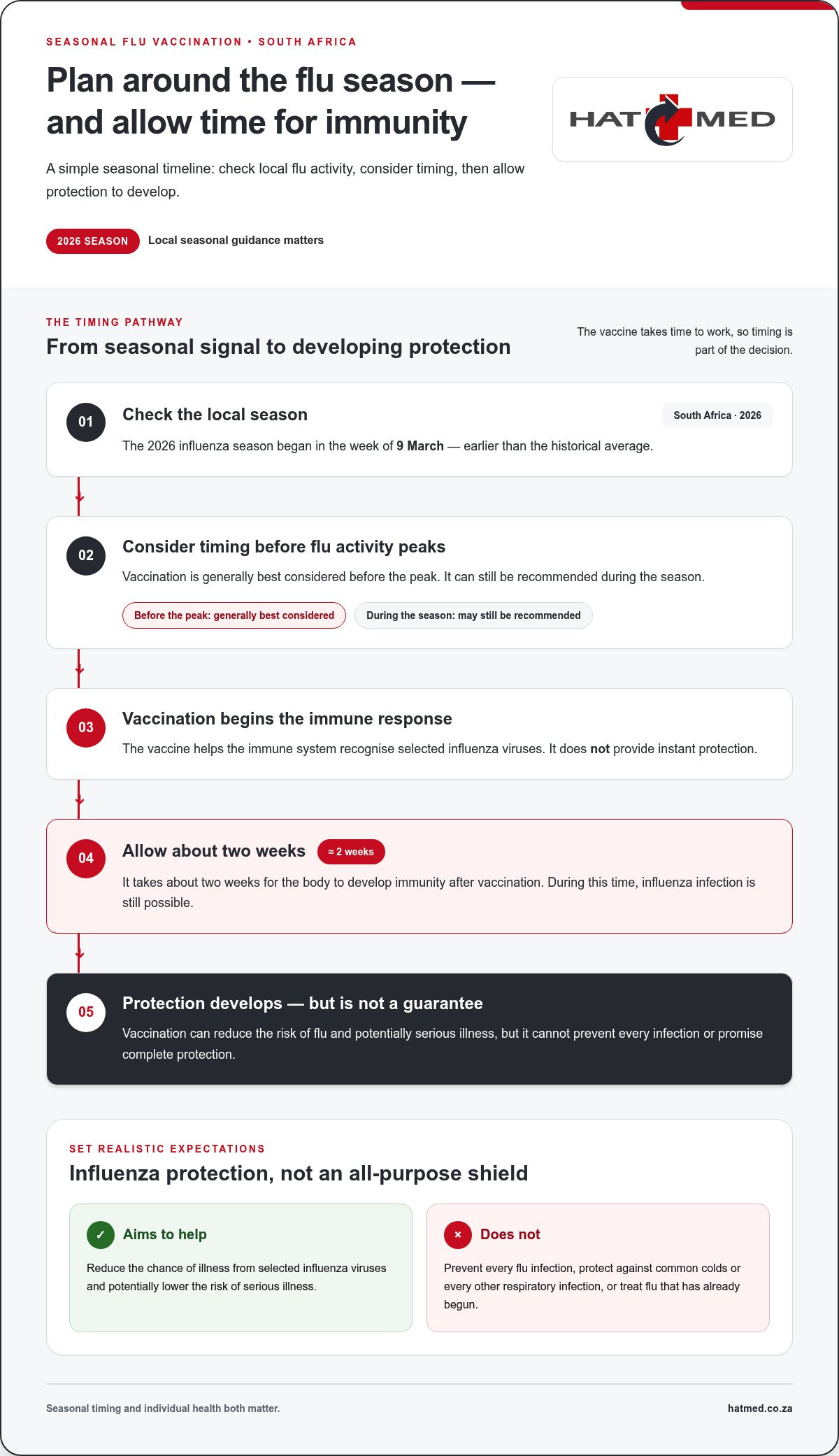
South Africa’s influenza season is seasonal, but its start and intensity can vary from year to year. The National Institute for Communicable Diseases (NICD) reported that the 2026 season began in the week of 9 March, earlier than the historical average. For 2026, the seasonal vaccine became available from the first week of April. The usual aim is to vaccinate before flu activity peaks, but vaccination can still be considered during the season. Allow about two weeks for immunity to develop.
If you’re at higher risk of complications, planning ahead may help you avoid waiting until flu is already circulating widely. Use this simple sequence:
- Check current South African seasonal advice, including updates from the NICD, as timing can shift between years.
- Consider your age, health conditions, pregnancy status and likely exposure when weighing the value of vaccination.
- Arrange a vaccination consultation and discuss personal questions with a clinician.
If you’re planning travel, Hatmed’s travel health and vaccination advice can help you consider vaccination as part of broader preparation. Travel plans and seasonal flu guidance are separate considerations, so discuss both if they’re relevant to you.
How can you prepare for a vaccination appointment?
A little preparation can make the conversation more useful. Bring relevant health information and a list of medicines you currently take. Tell the clinician about allergies, previous vaccine reactions, pregnancy or chronic conditions such as asthma, heart disease or diabetes. Mention these details even if they seem unrelated to vaccination.
Your clinician can review your circumstances, discuss suitability and answer questions before vaccination. If you’re unsure what to mention, note your concerns beforehand. Your decision need not depend on timing alone: your health history and current South African guidance also matter.
What should you expect after vaccination?
Individual responses can differ. The specific advice after vaccination depends on the vaccine used, so follow the information provided by the clinician and ask what reactions to expect. If a symptom is severe, unexpected or worrying, seek medical advice promptly. Don’t assume every symptom that occurs afterwards was caused by the vaccine; an unrelated illness may happen around the same time.
Hatmed Medical Centre provides GP consultations and routine vaccinations as part of preventative care. If you’d like to discuss the timing or suitability of a flu vaccine in light of your health history, arrange a GP vaccination consultation to talk through your questions with a clinician.
How can a GP support your flu vaccination decision?
General information can help you understand seasonal vaccination, but it can’t account for every detail of your health. A GP can review your medical history, current concerns and preventative-care needs, then help you consider whether vaccination is suitable. The conversation lets you weigh practical timing and personal circumstances without assuming the same answer applies to everyone.
If you’re new to primary care or want context on the role of a family doctor, Hatmed’s guide to finding a general practitioner explains what to consider when accessing GP care in South Africa.
What can you discuss during a vaccination consultation?
Bring up any questions that would help you feel prepared. You might ask how your age or health conditions affect your personal risk, whether a previous reaction is relevant, or how seasonal timing fits your circumstances. Mention pregnancy, chronic conditions, allergies, medicines and any significant changes in your health. These details help the clinician tailor the discussion rather than rely on a general recommendation alone.
You can also ask what the seasonal vaccination is intended to protect against, what it cannot prevent and what to expect afterwards. If you’ve been ill recently or have another health concern, explain that too. The clinician can review relevant information, discuss suitability and answer questions before you decide how to proceed.
- Share your health conditions and current medicines.
- Describe any previous vaccine reaction, including what happened.
- Ask how your personal risk and the current season affect timing.
- Raise concerns about side effects or what protection to expect.
How do you take the next step?
To make the consultation more useful, jot down your questions beforehand and bring any relevant medical information. You don’t need to arrive with a decision already made. The aim is to understand the options and how they relate to your health, so you can make an informed choice with a clinician’s support.
Hatmed Medical Centre provides GP consultations and routine vaccinations as part of patient-centred preventative healthcare. A GP consultation gives you space to discuss the flu vaccine, your health history and any concerns before deciding on a next step. Vaccination is one element of prevention, considered alongside your wider health needs.
If you’d like to talk through your circumstances, contact Hatmed Medical Centre through its website to arrange a GP consultation. The conversation can help you approach seasonal vaccination with greater clarity and confidence.
Make your next step a considered one
Your health needs can change, so a decision made in a previous season may not answer the questions you have now. Use your concerns as a starting point for a practical conversation about whether the flu vaccine fits your circumstances. Bring up personal risk, timing or past reactions and work through them with a GP. You don’t need to have all the answers beforehand.
Hatmed Medical Centre’s patient-centred approach to primary healthcare and preventative medicine makes room for informed discussions about routine vaccinations. A GP consultation can help you consider your questions in the context of your wider health needs.
Arrange a GP consultation with Hatmed to discuss flu vaccination and take a thoughtful next step towards your preventative care.
Frequently Asked Questions
Is a flu vaccine needed every year?
A seasonal dose is commonly recommended each year, but check South African guidance for the current season rather than assuming last year’s advice still applies. If you have a chronic condition, are pregnant or had a reaction to a previous vaccine, discuss your situation with a clinician. They can help you consider current recommendations alongside your health history and questions about the vaccine.
When is the best time to get a flu vaccine in South Africa?
Plan around current South African public-health advice, as flu activity doesn’t follow the same dates every year. If you’re at increased risk, consider discussing timing before the season is under way, so you have time to make an informed plan. If the season has already started, don’t assume it’s too late: ask a healthcare professional whether vaccination remains appropriate for you this season.
Can a flu vaccine give you flu?
A flu vaccine shouldn’t be confused with influenza itself. Some people have short-lived effects, such as a sore arm or feeling mildly unwell, but these aren’t the same as having flu. Symptoms that begin after vaccination may also be due to an infection acquired around the same time. Tell a clinician about any previous severe reaction or specific concern before vaccination, and follow the product information provided.
Can you still get flu after having the vaccine?
Yes, infection can still happen after vaccination, so a dose isn’t a guarantee against flu. If you develop symptoms, consider when they began and how severe they are, and seek medical advice if you’re very unwell or at higher risk of complications. A clinician can assess your symptoms and circumstances. Don’t assume that a flu-like illness is influenza based on symptoms alone.
Is the flu vaccine recommended during pregnancy or for people with chronic conditions?
Pregnancy and chronic conditions are important reasons to discuss flu vaccination with a clinician, as influenza may carry greater risks for some people. South African guidance identifies pregnant women and people with conditions such as asthma, heart disease or diabetes among groups strongly encouraged to consider vaccination. Your clinician can discuss how current advice applies to your health, pregnancy and any previous vaccine reactions.
How long does it take for a flu vaccine to provide protection?
Allow about two weeks for the body to develop immunity after vaccination. During that time, you may still become ill if exposed to influenza, so don’t treat the appointment as immediate protection. If you’re arranging vaccination close to travel, a planned event or a period of higher exposure, discuss timing with a healthcare professional and consider your personal health circumstances.
Will medical aid pay for a flu vaccine in South Africa?
It depends on your scheme, plan and the benefits available for the current year. Some schemes may cover a seasonal flu vaccination through a preventative-care benefit, but this shouldn’t be assumed for every member or plan. Review your benefit information or ask your scheme about its rules before relying on cover. You can discuss whether vaccination is suitable with a GP separately from payment arrangements.