

What if your family doctor was more than just a person you visited for a flu script, but a strategic partner who understood the complex intersection of your career requirements and long-term wellness? For many South Africans, the reality of healthcare often involves long waiting times in the public sector or the impersonal, rushed atmosphere of high-volume clinics. It’s frustrating to feel like just another number, especially when you require a consistent GP consultation for chronic medication or have to navigate the strict requirements of a SAMSA maritime physical or a visa medical exam.
We understand that you deserve a healthcare relationship built on trust and continuity rather than administrative hurdles. With medical aid premiums for major schemes like Discovery and Momentum seeing increases of up to 9.9% in 2026, finding real value in your primary care is more critical than ever. Discover how to select the right private GP for your family and professional requirements with our comprehensive 2026 healthcare checklist. This guide will walk you through the essential criteria for choosing a practitioner who offers expert chronic disease management and specialised certifications, whilst maintaining a supportive clinical environment that prioritises your peace of mind.
Key Takeaways
- Identify the essential certifications your doctor needs for high-stakes assessments, including SAMSA maritime fitness and South African visa medical examinations.
- Optimise your health journey by establishing a regular GP consultation for chronic medication to ensure the professional, long-term management of conditions like hypertension or diabetes.
- Contrast the advantages of private practice against public facilities, focusing on reduced wait times and the clinical value of a consistent, trusted practitioner.
- Learn how integrated chronic disease management and mental health support can streamline your healthcare and improve your overall quality of life.
- Use our practical preparation checklist to ensure your first appointment is efficient, whether you are seeking routine care or specialised regulatory certifications.
The Essential Checklist for Choosing a Private Doctor in South Africa
Selecting a primary care provider within the South African healthcare system is a decision that impacts your long-term wellness and career compliance. It’s about finding a clinical home where your history is known and your future health is prioritised. When you book a GP consultation for chronic medication, you’re looking for more than a signature on a script; you’re seeking a partner who monitors your vitals, manages dosages, and understands the nuances of your specific condition.
A truly patient-centric practice offers a supportive environment where communication is clear and unhurried. This relationship is built on the assurance that you’ll consult the same doctor for every visit, fostering a level of trust that high-volume clinics often fail to provide. Beyond routine care, your chosen centre should offer a comprehensive range of onsite services, including vaccinations and chronic monitoring, ensuring all your health needs are met under one roof.
Evaluating Clinical Credentials and Specialisations
Your first step is to verify that the practitioner is registered with the Health Professions Council of South Africa (HPCSA). This ensures they adhere to the strict ethical and professional standards required in our country. If your career involves specialised sectors, check for additional authorisations. For example, maritime professionals must ensure their doctor is certified to perform SAMSA medical examinations to maintain their fitness-to-work status. Similarly, if you’re handling visa applications, the practice must be familiar with Department of Home Affairs requirements. A GP with experience in high-stakes regulatory exams brings a level of precision that benefits all patients, especially those managing complex chronic medication needs.
Practice Organisation and Patient Accessibility
A well-organised practice reflects the quality of care you’ll receive. Evaluate how easily you can book an appointment whilst ensuring the practice isn’t so over-subscribed that you feel rushed. Efficient centres use robust systems to maintain detailed medical records, which is vital for tracking your progress over years of treatment. Look for a team that prioritises preventative medicine; they should be proactive in scheduling your GP consultation for chronic medication reviews before your scripts expire. This organised approach reduces stress and ensures you’re never left without essential treatment. A practice that balances acute care with long-term health planning is a reliable ally in your personal wellness journey.
Navigating Specialised Medical Certifications and Professional Requirements
Career progression and global mobility often hinge on more than just professional merit; they require a clean bill of health verified by an authorised medical practitioner. In South Africa, certain roles and residency applications demand rigorous clinical scrutiny that goes beyond a standard check-up. Whether you’re a seafarer requiring SAMSA clearance or an expatriate applying for a visa, your medical assessment must be precise and legally compliant. This is where an integrated approach becomes invaluable. If you’re already managing a long-term condition, combining your GP consultation for chronic medication with these professional assessments ensures that your health status is documented accurately and managed within the context of your career requirements.
The Role of the GP in Regulatory Compliance
Regulatory bodies require specific, high-stakes documentation to ensure safety and legal adherence. For maritime professionals, seafarers must remain fit for duty according to strict international and local standards. An authorised GP ensures that all cardiovascular, visual, and physical benchmarks are met, providing the necessary certification for SAMSA. For those entering or remaining in the country, a private doctor facilitates certified immigration reports required by the Department of Home Affairs, including radiological clearances for tuberculosis. These regulatory exams require significantly more clinical depth than a standard consultation because the practitioner assumes legal responsibility for certifying a patient’s fitness against specific government or industry mandates.
Executive and Corporate Wellness Strategies
For high-pressure professionals, executive health assessments serve as a proactive shield against lifestyle-related conditions. Chronic stress, sedentary habits, and irregular sleep patterns common in corporate roles can lead to hypertension or metabolic disorders if left unchecked. By integrating these screenings with a regular GP consultation for chronic medication, executives can monitor their health trajectory without disrupting their demanding schedules. These assessments often include advanced cardiovascular screening and mental health checks to address the silent impact of corporate burnout. Practitioners support workplace safety through occupational health screening, which protects both the employer and the employee from avoidable risks whilst ensuring compliance with South African labour laws.
This holistic view of wellness is aligned with the official overview of the national health mandate, which emphasises primary healthcare as the foundation of a healthy society. Investing in a GP for routine checkups ensures that your professional certifications and personal health goals remain in perfect balance. If you need to align your career compliance with your wellness journey, consider booking an assessment with a provider who understands these dual requirements.
Integrated Chronic Disease and Mental Health Management
Managing a chronic condition is a journey that requires steady, reliable guidance. It’s not just about managing symptoms; it’s about safeguarding your future quality of life. A diagnosis of hypertension, diabetes, or high cholesterol shouldn’t feel like a burden you carry alone. Instead, it’s an opportunity to create a personalised wellness roadmap. During a GP consultation for chronic medication, your doctor does more than review a list of pills. They look at the whole person, considering how your lifestyle, stress levels, and diet interact with your treatment. This holistic approach is essential for the early detection of chronic illness complications before they become life-altering events.
Long-Term Chronic Medication Management
Effective management relies on a partnership between you and your practitioner. Whilst your doctor provides the clinical expertise, your daily observations are equally vital. We recommend tracking these markers between visits to ensure your treatment remains optimal:
- Blood Pressure: Keep a weekly log if you’re managing hypertension.
- Blood Glucose: Monitor levels as advised for diabetes management.
- Weight and Activity: Note any significant changes or shifts in energy levels.
- Side Effects: Document any new symptoms, such as dizziness or fatigue, after a dosage change.
Your private GP uses this data to monitor medication efficacy and adjust your plan as needed. This level of detail is a cornerstone of primary healthcare. It ensures that your treatment evolves with you, preventing the long-term complications often associated with unmonitored chronic conditions. Regular reviews allow for fine-tuning dosages, which can reduce the risk of adverse reactions and improve your overall vitality.
Supportive Mental Health Care in Private Practice
Mental wellness is inseparable from physical health. Whether you’re dealing with workplace stress, anxiety, or depression, your GP is often the safest first point of contact. We act as a “Trusted Community Guide,” offering a calm, confidential environment where you can discuss your concerns without judgment. In a dedicated primary healthcare clinic, you aren’t rushed through the system. There’s time to explore how mental health impacts your physical conditions, such as stress-induced heart palpitations or anxiety-related digestive issues. By integrating mental health support into your routine GP consultation for chronic medication, we ensure you receive comprehensive care that supports both mind and body.
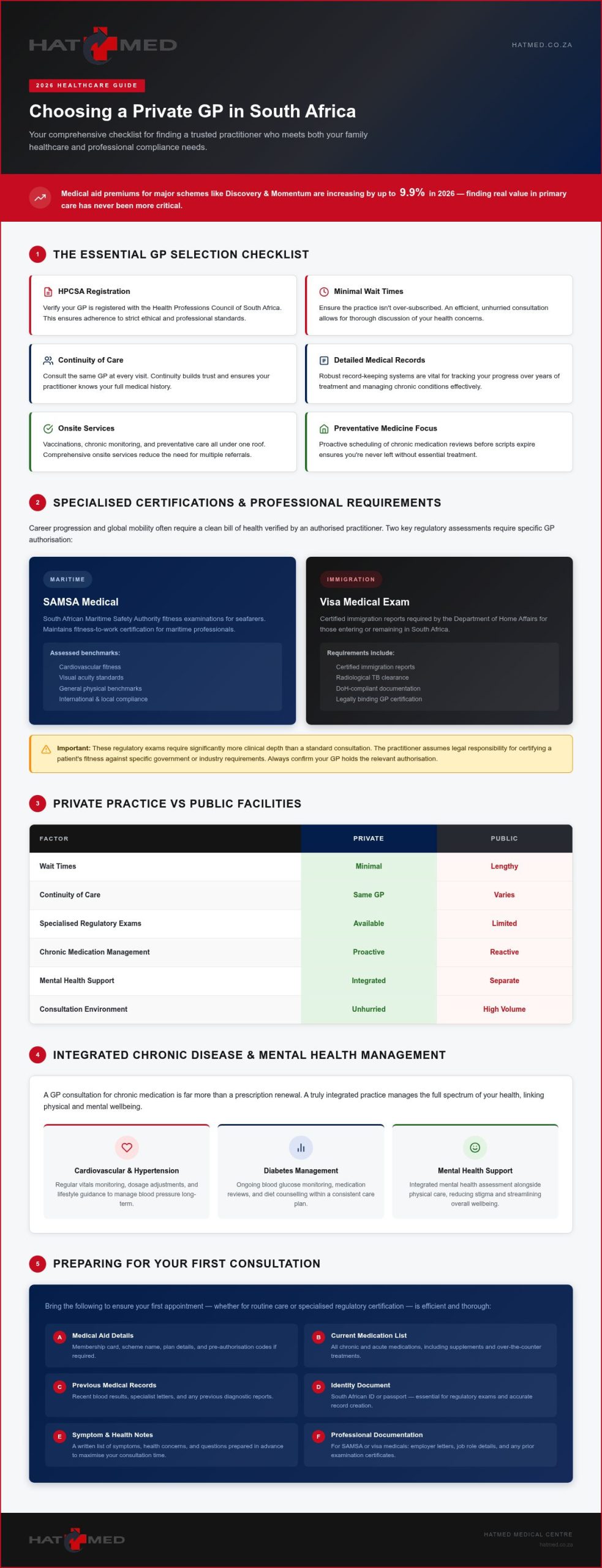
Private Practice vs Public Facilities: A Comparison Guide
The choice between private and public healthcare in South Africa often comes down to a fundamental question of value versus volume. Whilst the public sector provides essential services to a vast population, the experience is frequently defined by long queues and limited face-to-face time with clinicians. In contrast, private practice is built on a model of accessibility and personalised attention. When you schedule a GP consultation for chronic medication in a private setting, you aren’t just securing a prescription; you’re investing in a clinical environment designed to support your long-term wellness without the stress of an overcrowded waiting room.
Time and Attention: The Clinical Difference
The most immediate difference lies in the duration of the visit. A standard GP consultation for chronic medication in a private practice typically lasts 15 to 20 minutes, whereas high-volume public clinics may only afford a few minutes per patient. These unhurried appointments are not a luxury; they lead to significantly better diagnostic outcomes. When a doctor has the time to listen, they can identify subtle shifts in your health that might otherwise be missed. This depth of care allows your practitioner to understand your entire family’s medical history, creating a continuity of care that is impossible to replicate in a system where you see a different doctor every time.
This personal connection ensures that your medical history isn’t just a file on a shelf; it’s a living record known by a trusted professional. Consistency in your healthcare provider means that follow-up care is more effective, as your doctor can track the efficacy of treatments over months and years. This relationship fosters a sense of security, knowing that your health is being managed by someone who truly knows your history.
Facilities and Regulatory Expertise
Modern private medical centres are equipped with diagnostic tools that streamline your healthcare journey. From onsite ECG machines to advanced lung function testing, these facilities allow for immediate screening during your visit. This is a sharp contrast to public facilities where specialised diagnostic equipment may be unavailable or involve months of waiting. Specialised regulatory certificates, such as those for SAMSA maritime fitness or Department of Home Affairs immigration reports, are rarely available in the public sector. Having your vaccinations, routine exams, and specialised certifications managed in one centre saves you time and ensures your medical records remain consistent and organised. If you value a medical partner who prioritises your time and provides expert clinical depth, book your consultation with Hatmed Medical Centre today.
Preparing for Your First Chronic Medication Consultation
Your first GP consultation for chronic medication is more than a clinical appointment; it’s the foundation of a long-term wellness partnership. To ensure you receive the most comprehensive care, arrive prepared with a clear picture of your current health status. This preparation allows your doctor to spend less time on administration and more time on high-level clinical analysis. Whether your goal is a routine script renewal or a specialised regulatory certification, having your records in order ensures nothing is overlooked.
Efficiency in a private practice is a two-way street. Whilst your practitioner provides the expert guidance, your input helps shape the management plan. It’s also vital to understand the legal framework surrounding your treatment. For instance, South African regulations require that Schedule 6 medications, such as those for ADHD, involve a face-to-face assessment every six months. These scripts are only valid for 30 days and cannot be pre-dated, making regular, well-prepared visits a necessity for legal compliance and patient safety.
What to Bring to Your Private GP Visit
To facilitate a smooth consultation, please ensure you have the following items ready for your visit:
- Identification and Administration: Your valid South African ID or passport and your current medical aid card.
- Medical History: A comprehensive list of current medications, including dosages, and any previous specialist reports or recent blood test results.
- Regulatory Documentation: Seafarers or visa applicants must bring the specific forms required by their employer, SAMSA, or the relevant embassy.
- Payment Readiness: Information on your medical aid’s chronic benefit status or the means to settle the consultation fee on the day.
It’s helpful to note down your symptoms whilst they are occurring to provide your doctor with accurate, real-time descriptions. This prevents the “white coat effect” where patients often forget specific details once they enter the clinical environment.
Strategic Questions to Ask Your New Private Doctor
Use this time to gauge if the practitioner is the right long-term fit for your needs. Inquire about the practice’s approach to preventative medicine and how they schedule long-term screenings for your specific condition. If your career requires it, ask how the doctor facilitates corporate or occupational health screenings onsite to save you multiple trips. Finding the right general practitioner near me involves ensuring the doctor’s communication style matches your preference for a collaborative health journey. By asking these targeted questions, you transform a simple check-up into a strategic step toward lasting wellness.
Take Control of Your Long-Term Wellness Journey
Choosing the right private practitioner is a commitment to your future wellness and career stability. You’ve seen that a clinical partner should offer more than just acute care; they must provide specialised expertise in regulatory medicals while maintaining a supportive, patient-centric environment. The true value of private medicine lies in the depth of the relationship and the clinical consistency you receive during every visit, ensuring your medical history is known and respected.
Hatmed Medical Centre operates as an independent, GP-led practice dedicated to this holistic approach. Our certified SAMSA and Immigration medical examiners provide the precision required for professional compliance, whilst our comprehensive chronic disease management and mental health support ensure your daily well-being remains a priority. We invite you to book your GP consultation for chronic medication at Hatmed Medical Centre today. Taking this proactive step ensures you have a reliable expert in your corner, ready to guide you through every stage of your health journey with clarity and compassion.
Frequently Asked Questions
What is the main benefit of seeing a private doctor over a public clinic for chronic medication?
The primary benefit is the continuity of care and the depth of the patient-doctor relationship. In a private setting, you consult the same practitioner who understands your history, whereas public clinics often involve long queues and seeing different staff. This consistency is vital for a GP consultation for chronic medication, as it allows for precise monitoring of your condition and unhurried discussions about your long-term wellness and treatment adjustments.
Can a private GP provide medical certificates for international visa applications?
Yes, certified private practitioners facilitate comprehensive immigration medical examinations required for international visa applications. These assessments include the specific radiological and clinical reports demanded by the Department of Home Affairs or foreign embassies. Choosing a private doctor ensures that these high-stakes documents are completed accurately and efficiently, helping you meet strict regulatory deadlines whilst ensuring your medical history is professionally documented for your transition abroad.
How often should I consult my private doctor for a routine medical check-up?
Most healthy adults should schedule a routine medical check-up at least once a year to monitor vital health markers. However, if you are managing long-term conditions, your doctor may recommend more frequent visits, such as every six months. Regular screenings allow for the early detection of potential issues and provide an opportunity to review your wellness goals, ensuring that your preventative care strategy remains aligned with your age and lifestyle requirements.
Are private doctors authorised to perform SAMSA seafarer medicals in South Africa?
Only specific private practitioners who are certified and registered with the South African Maritime Safety Authority (SAMSA) are authorised to perform these examinations. These doctors possess the specialised knowledge required to assess a seafarer’s fitness-for-duty according to national and international maritime standards. It is essential to verify that your chosen medical centre employs certified examiners to ensure your maritime medical certificate is legally valid for your career.
What should I expect during a comprehensive executive health assessment?
An executive health assessment is a proactive screening designed for high-pressure professionals to identify lifestyle-related risks early. You can expect a deep clinical review including cardiovascular stress tests, lung function analysis, and detailed blood work. These assessments often go beyond standard check-ups by incorporating mental wellness reviews and nutritional guidance, providing a holistic view of your health to help prevent burnout and manage the physical impact of a demanding corporate career.
Can my private GP help me manage chronic conditions like diabetes or hypertension long-term?
Yes, private general practitioners specialise in the integrated management of chronic conditions such as diabetes and hypertension. Through a regular GP consultation for chronic medication, your doctor monitors your blood pressure, glucose levels, and medication efficacy over time. This ongoing partnership allows for personalised adjustments to your treatment plan, helping to prevent long-term complications whilst supporting your overall quality of life through tailored lifestyle and dietary advice.
Do I need a referral from another doctor to see a private general practitioner?
No, you do not need a referral to book an appointment with a private general practitioner in South Africa. Private practices are primary points of contact, meaning you can schedule a consultation directly for any health concern or regulatory medical requirement. This direct access allows for faster diagnosis and treatment, ensuring you can address acute illnesses or manage chronic health needs without the administrative delay of seeking a prior referral from another clinician.
How does a private doctor support mental health and wellness amongst patients?
A private GP serves as a supportive first point of contact for mental health concerns such as anxiety, stress, or depression. In a calm and confidential clinical environment, your doctor can provide initial screenings, counselling, and medication management where appropriate. By treating mental wellness as an integral part of your physical health, your practitioner ensures a holistic approach that addresses the emotional challenges often associated with demanding careers or chronic illness management.