
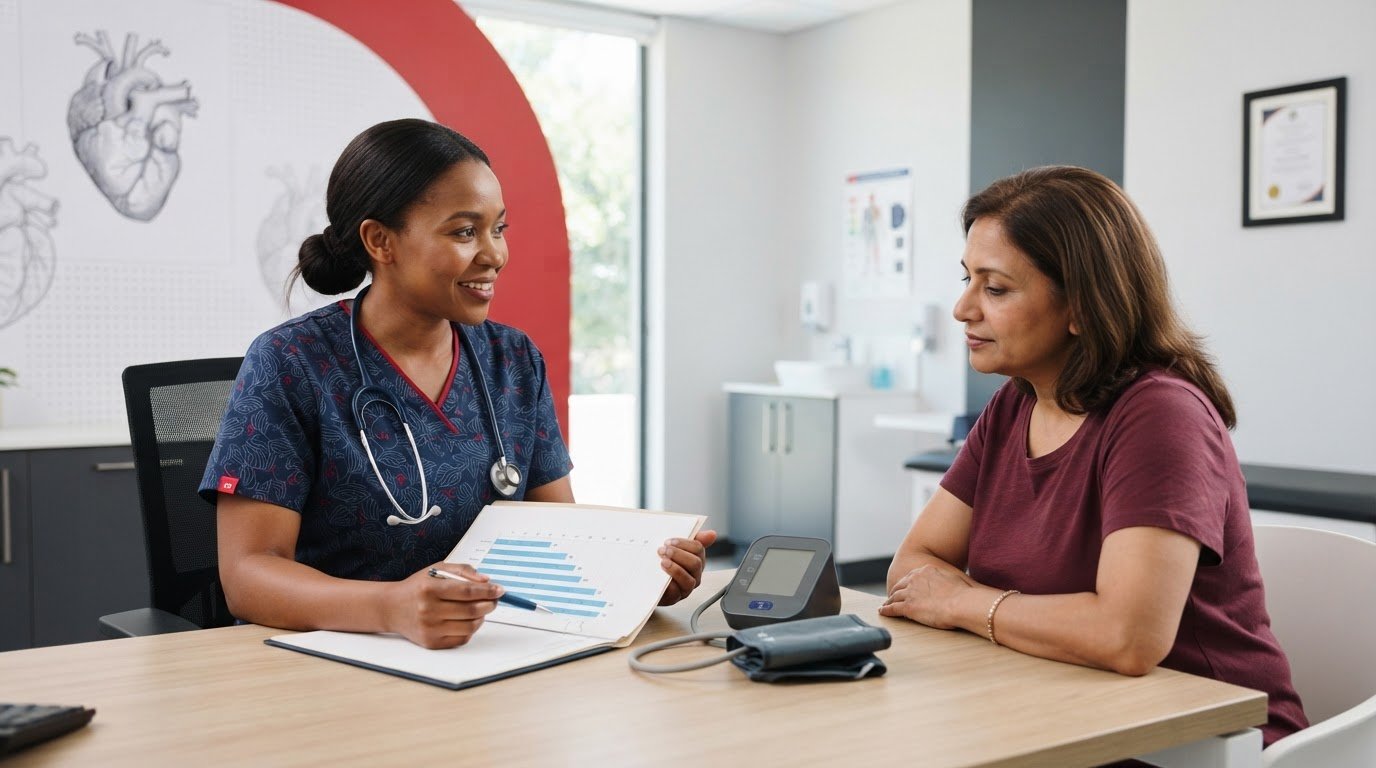
High blood pressure often causes no noticeable symptoms, and one reading may not tell the whole story. If you’re looking for a hypertension management GP, a doctor can help you understand your readings, consider your overall health and work out whether further checks are needed.
It can be difficult to know what to do next, especially if you have questions about medicines, follow-up or which lifestyle changes feel realistic. A GP can assess your blood pressure and discuss a plan that takes your health, preferences and circumstances into account.
This guide explains what to expect at an appointment, what information may be useful to bring and how monitoring can support your care over time. You’ll also find practical ways to prepare for follow-up and raise questions about treatment with a qualified clinician. Hypertension care is an ongoing process, not a decision based on one reading alone.
Key Takeaways
- A single high blood pressure reading may need further assessment before a diagnosis is confirmed.
- Bring your health history, medicine list and any blood pressure records to your GP appointment.
- With hypertension management GP support, you can discuss care options that suit your health needs and daily life.
- A home blood pressure record may help your GP understand patterns over time; follow your device instructions and clinician’s guidance.
- Hatmed Medical Centre’s GP consultations and chronic disease management can support personalised care and ongoing monitoring.
Hypertension management with a GP: why one reading is only the beginning
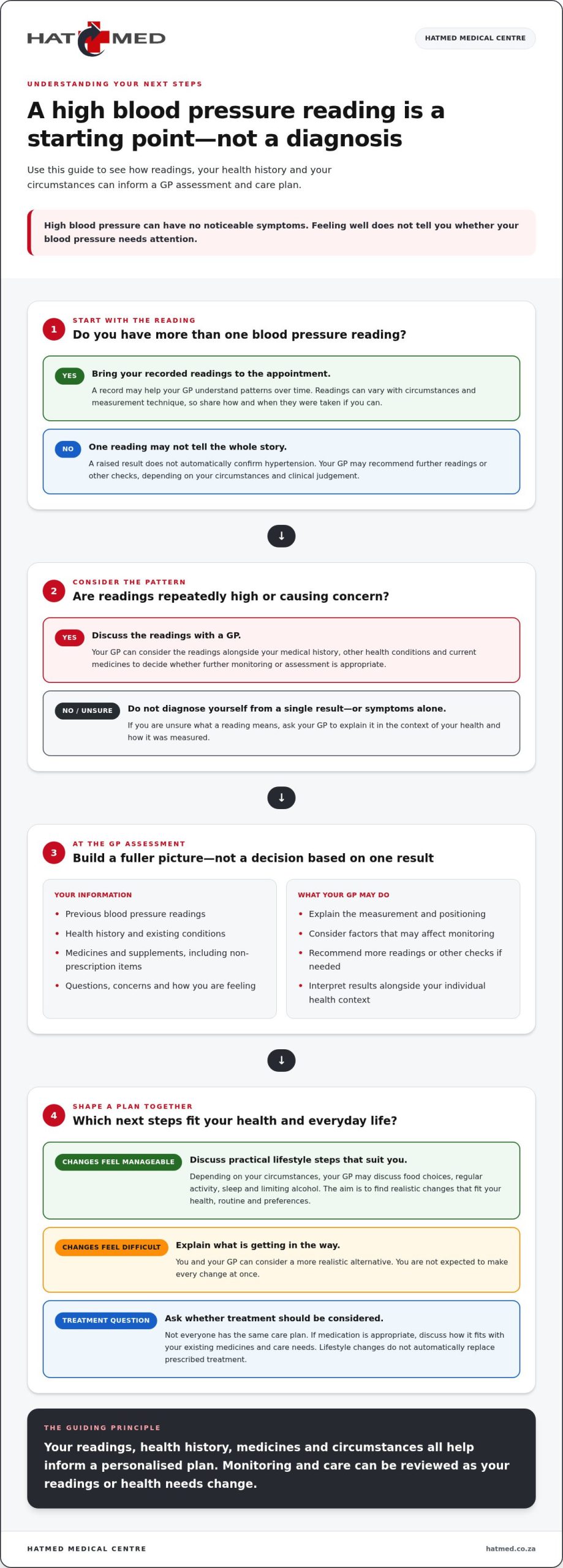
A raised blood pressure result is a reason to follow up, but it doesn’t automatically confirm hypertension. Readings can vary with circumstances and measurement technique. A GP considers them alongside your health and medical history to work out whether more monitoring or assessment is appropriate.
Hypertension is persistently raised pressure in the blood vessels, identified through appropriate measurements and considered in the context of a person’s health. It can go unnoticed because many people have no obvious symptoms. Feeling well doesn’t tell you whether your blood pressure needs attention, so measurement and clinical assessment matter.
What does a high blood pressure reading mean?
A blood pressure reading has two numbers. The systolic number, shown first, records pressure as the heart beats; the diastolic number, shown second, records pressure between beats. Both help describe your blood pressure, but neither should be interpreted in isolation or used on its own to diagnose you.
Readings may vary depending on the circumstances, measurement technique and your individual health context. For example, a result taken when you’re rushed or unsettled may not tell the same story as readings taken at other times. If your readings are repeatedly high or concern you, discuss them with a GP rather than trying to diagnose yourself.
Why involve a GP in hypertension care?
A GP can review your readings alongside your medical history, other health conditions and current medicines. This broader view helps determine whether further monitoring is appropriate and what next steps to discuss. Depending on your circumstances, the conversation may include practical lifestyle advice or whether treatment should be considered. The plan should reflect your needs, not just a number.
This is the value of hypertension management GP care: assessment and follow-up help you understand what your readings may mean and take part in decisions about your health. For a general overview of approaches, see Management of hypertension. Hatmed’s GP consultations and chronic disease management guide explain how ongoing monitoring and tailored care can support long-term health.
How a GP assesses hypertension and builds a care plan
A GP assessment brings together your blood pressure readings, health history and current circumstances. It isn’t an automatic conclusion based on one result. To make the appointment more useful, bring any readings you’ve recorded, a list of medicines and supplements, and the questions or concerns you want to discuss.
What happens during a GP blood pressure assessment?
Your GP may ask about your general health, previous readings, existing conditions and medicines, including anything you take without a prescription. They’ll also ask how you’re feeling and may discuss practical factors that could affect monitoring. Ask what a reading means if you’re unsure, and share any concerns about the assessment.
The clinician will explain how they’re taking your blood pressure and may ask you to sit or position your arm in a particular way. If more information is needed, they may recommend further readings or other checks, guided by your circumstances and clinical judgement. This helps build a fuller picture instead of relying on a single measurement.
How does a GP tailor a hypertension care plan?
After considering the available information, you and your GP can discuss a plan. This may cover how to monitor your blood pressure, which everyday habits feel manageable and whether treatment options should be considered. Advice should take account of your preferences and routine, as well as other health conditions and medicines that may affect decisions.
For background on possible lifestyle approaches, the American Medical Association outlines five lifestyle modifications. Your GP can help you consider which changes may suit you, rather than expecting you to make every change at once. If medication is appropriate, discuss how it fits with your existing medicines and care needs.
In brief, a GP may review your health history and medicines, consider your blood pressure records, take or arrange further measurements, and agree on suitable monitoring or care with you. The plan can be reviewed as your readings or health needs change. This continuing, collaborative approach is central to hypertension management GP support. To discuss your readings and next steps, arrange a GP consultation with Hatmed.
Hypertension treatment concerns: symptoms, lifestyle changes and medication
It’s understandable to wonder whether high blood pressure needs attention if you feel well. But feeling fine doesn’t necessarily mean your blood pressure is under control or that follow-up is unnecessary. A GP can help you understand your readings and discuss care in the context of your overall health, not symptoms alone.
Can lifestyle changes support hypertension management?
Everyday habits can form part of a care plan, but the right changes depend on your circumstances. Your GP may discuss food choices, regular activity, sleep and limiting alcohol where appropriate. The aim is to identify manageable steps that fit your health, routine and preferences, rather than expecting a complete lifestyle overhaul overnight.
For example, you might discuss ways to make meals more balanced or build more movement into your usual week. If a suggested change feels difficult, explain why so you can consider a realistic alternative with your GP. Lifestyle changes can support care, but they don’t automatically replace prescribed treatment.
Does hypertension always mean taking medication?
Not everyone has the same care plan. Before discussing treatment, a GP considers your blood pressure readings, health history, other conditions and current medicines, alongside relevant clinical guidance. Depending on this assessment, the conversation may focus on continued monitoring, lifestyle support, medication or a combination of approaches. Your clinician can explain the reasons for any recommendation and how it relates to your needs.
If you’re already taking medicine, ask what it’s intended to do, how to take it, what side effects to look out for and when the plan may be reviewed. Mention any difficulties with your routine, concerns about side effects or other medicines you use. These details help your GP consider the options with you. If a concern is troubling you, you don’t have to wait until a planned review to raise it.
Don’t start, stop or change prescribed blood pressure medicine without first discussing it with a qualified clinician. If you’re experiencing a possible side effect or are worried about your treatment, seek clinical advice about a safe next step. Ongoing hypertension management GP support gives you space to ask questions and review your plan with your clinician when needed.
Making GP follow-up work: home readings, reviews and everyday routines
Follow-up can show how your blood pressure behaves beyond a single appointment. If your GP recommends home monitoring, a record of readings may help show patterns over time and inform decisions about your care. It’s one part of the picture, not a reason to change treatment on your own.
Use your monitor according to its instructions and follow your clinician’s advice about when and how to take readings. Keep a simple record to bring to your appointment. Note the date and result, and include any symptoms or concerns that may be relevant. Writing down questions about medicines or changes in your routine can also help you cover them during the consultation.
How can I prepare for a hypertension follow-up?
Bring available readings and an up-to-date list of medicines, including supplements. Think about what has been manageable and what has been difficult, whether that’s remembering medicine, fitting activity into your day or following agreed habits. Being open about what is and isn’t working helps your GP understand whether the plan needs adjusting.
Reviews can be guided by your readings, progress and health needs, so there isn’t one schedule that suits everyone. Ask your GP when to review your care and what to do if your circumstances or health change before then. This ongoing conversation helps make hypertension management GP support practical for your everyday life.
When should I seek urgent medical help?
Routine follow-up isn’t the right response to every concern. If you develop sudden, severe or rapidly worsening symptoms, seek urgent medical assessment rather than waiting for a planned review. Online information can’t assess what’s happening to you or determine whether a situation is an emergency. If you’re worried that you may need urgent help, contact emergency services or seek urgent care.
For non-urgent questions about your readings, medicines or review plan, a GP consultation can help you work out the next steps. Discuss your ongoing care with Hatmed.
Managing hypertension with Hatmed: take the next step with your GP
To prepare for a blood pressure appointment, bring any readings you have and talk through your health concerns. You don’t need to arrive with all the answers. Your GP can help make sense of the information and discuss what assessment or follow-up may be useful.
What to bring to a GP consultation about blood pressure
If you can, bring a record of readings and a current list of medicines and supplements. It may also help to note symptoms, relevant family history and questions you want answered, such as what a reading means or how often your care should be reviewed. These details give your GP useful context.
If you don’t have a complete record, share what you know, including when or where readings were taken, and explain what prompted your concern. A GP consultation is an opportunity to discuss the information available and decide together whether further assessment is appropriate.
How ongoing GP support can help
Blood pressure care involves more than responding to a measurement. At follow-up, you and your GP can review available readings, talk about how the agreed plan is working and raise new questions. If your health or circumstances change, you can revisit your care goals and next steps with a clinician.
Hatmed Medical Centre’s GP consultations support assessment and continuity of care. Its chronic disease management service offers ongoing monitoring and tailored treatment plans, which can support care when hypertension is part of wider health needs. You can share what feels manageable, explain what is difficult and take part in decisions about your care. For more on primary care, read this guide to finding a general practitioner.
Good hypertension management GP support means having space to discuss concerns, understand the assessment and agree on suitable follow-up. To talk about your blood pressure with a clinician, arrange a GP consultation with Hatmed.
Take a confident next step with your blood pressure care
Managing high blood pressure starts with understanding what your readings mean. A single result may need further assessment, while your health history, current medicines and other factors help your GP decide what follow-up is appropriate. Feeling well doesn’t always mean your blood pressure needs no attention.
A care plan is personal. It may include ongoing monitoring, realistic lifestyle goals and a discussion about treatment options where appropriate. Keep track of questions or concerns and share them with your clinician. Don’t change prescribed medicine without clinical advice.
With hypertension management GP support, you can work with your GP to make sense of readings and review your plan as your needs change. Hatmed offers GP consultations and chronic disease management, with tailored care plans and ongoing monitoring to support your health over time.
If you’re ready to discuss your blood pressure and ongoing care, arrange a GP consultation with Hatmed.
Frequently Asked Questions
Can a GP diagnose hypertension from one blood pressure reading?
Usually, one reading alone isn’t enough to confirm hypertension. Blood pressure can vary, so a GP may consider repeat measurements, readings taken on different occasions or home records, alongside your health history and circumstances. This helps distinguish a temporary high result from a pattern that needs attention. If you’ve had a high reading, share it with your GP and ask what follow-up is appropriate.
Is hypertension possible if I feel completely well?
Yes. High blood pressure often has no noticeable symptoms, so feeling well doesn’t reliably show whether your blood pressure is in a healthy range. That’s why readings and clinical assessment matter. If you’ve been told a result is high or have concerns about your blood pressure, discuss it with a GP even if you feel fine. They can help you understand whether monitoring or other next steps are needed.
How often should I see a GP for hypertension management?
There isn’t one review schedule that suits everyone. Your GP can recommend follow-up based on your readings, overall health, medicines and whether your care plan has recently changed. Ask when you should next check in and what to do if your readings or health concerns change before then. Ongoing hypertension management GP support gives you a chance to review progress and raise questions as they arise.
Can lifestyle changes manage high blood pressure without medication?
Lifestyle changes can support blood pressure care, but they don’t replace medication for everyone. Your GP may discuss practical habits such as food choices, activity, sleep or limiting alcohol where appropriate, then consider these alongside your readings and health needs. Agree realistic goals with your clinician, and don’t stop or change prescribed medicine without clinical advice, even if you’ve made positive changes to your routine.
What happens if my home blood pressure readings are higher than my clinic readings?
Share the home readings with your GP rather than choosing one set to rely on. Differences can relate to measurement circumstances, technique or other factors, so a clinician can help interpret the pattern. Follow your monitor’s instructions and any guidance you’ve been given, and record the dates of your readings. Don’t change prescribed treatment in response to a result without discussing it with a qualified clinician.
Do I need to take hypertension medication for the rest of my life?
Not everyone’s treatment is the same, and it isn’t possible to predict how long you’ll need medication without considering your individual health and clinical assessment. Some people may need ongoing treatment, while a GP can review your readings, health changes and care plan over time. If you’re concerned about taking medicine long term or experiencing side effects, discuss your options with your GP. Don’t stop it on your own.
When should I seek urgent help for high blood pressure symptoms?
Seek urgent medical help if you experience sudden, severe symptoms such as chest pain, difficulty breathing, confusion, new weakness or problems speaking or seeing. Don’t wait for a routine appointment if you’re worried that something serious is happening. These symptoms can have different causes, and online information can’t assess an individual emergency. Contact emergency services or seek urgent care for immediate assessment.