
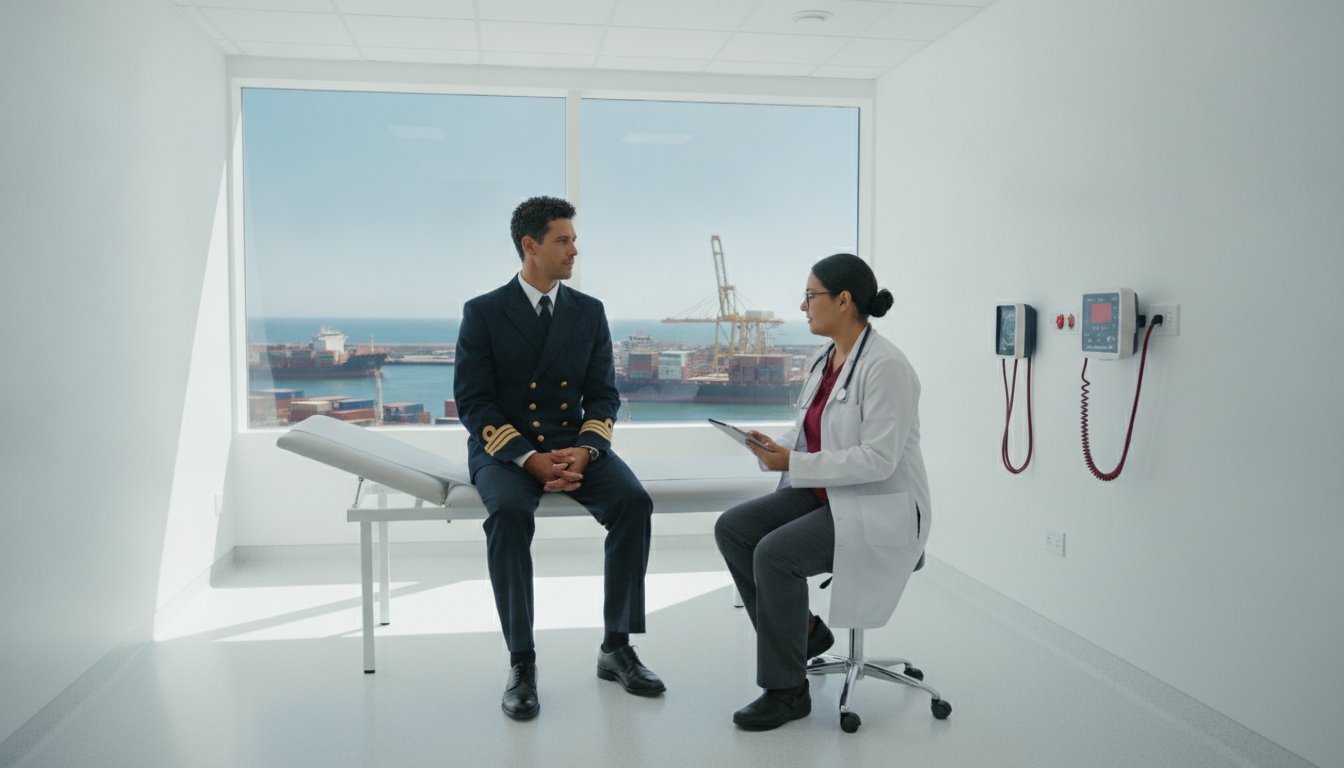
Could a single vision test really stand between you and your career on the open ocean? For many maritime professionals, the seafarer fitness examination feels less like a routine health check and more like a high-stakes hurdle. It’s natural to feel a sense of anxiety when your livelihood depends on meeting specific medical criteria, especially when the differences between SAMSA requirements and international standards seem unclear. You want to feel prepared and confident before you walk into the doctor’s consulting room.
We understand that the process can feel overwhelming, but it doesn’t have to be a source of stress. We view this assessment as a vital partnership in your long-term career health rather than just a regulatory box to tick. This guide provides everything you need to manage the process with ease, ensuring you know exactly what to expect from the physical tests and which documents are essential for a smooth appointment. By the end of this article, you’ll have a clear roadmap to successfully securing your maritime medical certificate and returning to the work you love.
Key Takeaways
- Understand why the South African Maritime Safety Authority (SAMSA) mandates these health checks to ensure your safety and operational readiness at sea.
- Learn exactly what to expect during your seafarer fitness examination, from a thorough medical history review to essential physical assessments of your cardiovascular and musculoskeletal health.
- Discover how your SAMSA medical certificate is recognised globally under the STCW “White List,” providing you with professional flexibility across international maritime borders.
- Organise your documentation effectively by knowing which identification and previous medical records are required to streamline your appointment.
- Gain clarity on the final certification process and the supportive steps available if you are found temporarily unfit for duty.
What is a Seafarer Fitness Examination?
A seafarer fitness examination is a mandatory health assessment designed to confirm that individuals are physically and mentally capable of performing their duties at sea. This isn’t a standard GP visit; it’s a specialised evaluation based on strict criteria set by the South African Maritime Safety Authority (SAMSA). These standards are in place to ensure that every crew member can perform their tasks safely, even in the most demanding conditions, without posing a risk to themselves or others.
The maritime industry operates across borders, which is why the Standards of Training, Certification, and Watchkeeping (STCW) convention is so important. Because South Africa adheres to these international benchmarks, your medical certification holds weight amongst global employers. It allows you to move between different types of vessels and international jurisdictions with confidence. The SAMSA medical is the primary legal requirement for South African seafarers to prove they are medically fit for duty at sea.
Who Requires a Maritime Medical Certificate?
Legal requirements for medical fitness apply to almost everyone working on a vessel, regardless of their specific rank or department. If your job takes you into South African or international waters, you’ll likely need this certification. This includes:
- Deck officers and engineering crew: Professionals responsible for the safe navigation and mechanical operation of commercial ships.
- Superyacht crew: All staff on board, including stewardesses, deckhands, and chefs, must meet these health standards.
- Offshore and coastal workers: Individuals working on rigs, tugs, or within coastal maritime operations.
The Importance of Fitness for Duty at Sea
Working at sea presents unique challenges that you won’t find in a typical office. A seafarer fitness examination is your best tool for ensuring you are ready for the physical toll of long shifts and the mental pressure of isolation. Safety is our shared priority. If a medical issue arises whilst you’re hundreds of miles from the coast, getting advanced care is incredibly difficult. By identifying health concerns before you leave the harbour, we help protect you and your fellow crew members from avoidable emergencies. This assessment ensures the vessel remains operational and that everyone on board is safe, healthy, and capable of responding to any situation that arises.
Core Components of the SAMSA Medical Assessment
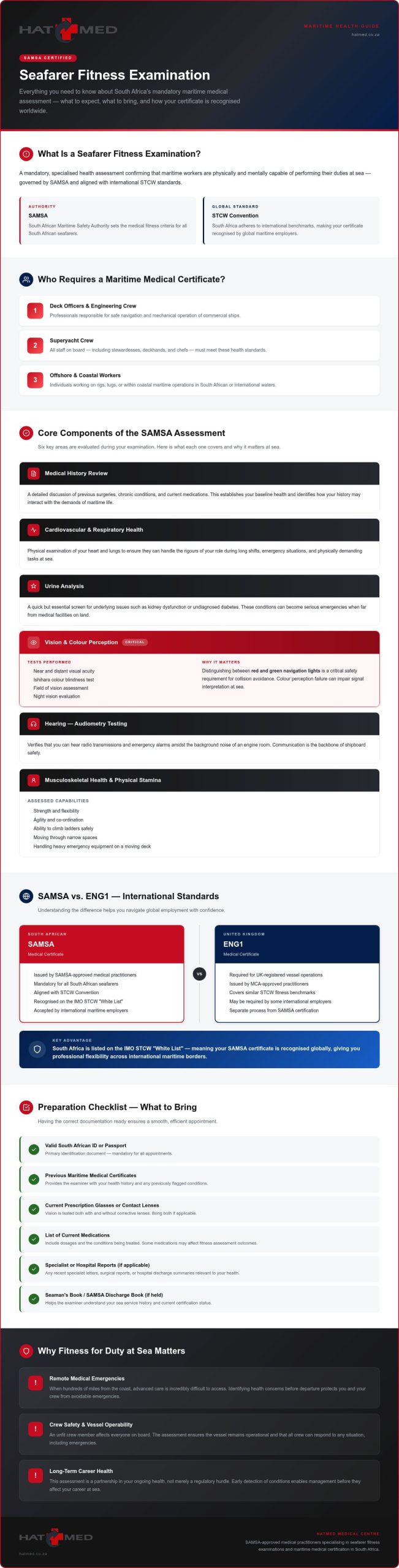
When you arrive for your seafarer fitness examination, the process begins with a detailed conversation about your medical history. We’ll discuss any previous surgeries, chronic conditions, or medications you’re currently taking. This isn’t just about compliance; it’s about understanding how your health might be affected by the unique stressors of maritime life. A physical examination follows, where we assess your cardiovascular and respiratory health to ensure your heart and lungs can handle the rigours of your role. We also evaluate your musculoskeletal health, checking for the strength and flexibility you’ll need when moving around a vessel.
We also perform a urine analysis as part of the assessment. This is a quick but essential screen for underlying issues like kidney dysfunction or diabetes. These conditions, if left unmanaged, can become serious emergencies when you are far from land and advanced medical facilities. By catching these concerns early, we can work together to ensure you remain fit for your duties and can manage your health effectively whilst on board.
Vision and Colour Perception Standards
Clear sight is paramount for safety at sea. We test your visual acuity for both near and distant objects, with and without glasses or contact lenses. A key part of this is the Ishihara test for colour blindness. Many people don’t realise that at sea, being able to distinguish between red and green navigation lights is a critical safety requirement for avoiding collisions. If you struggle with colour perception, it could impact your ability to interpret signals correctly. We also check your field of vision and night vision capabilities to ensure you can navigate safely in all lighting conditions.
Hearing and Physical Stamina
Communication is the backbone of shipboard safety. Through audiometry testing, we verify that you can hear radio transmissions and emergency alarms amidst the background noise of an engine room. Physical stamina is equally important. We look at your agility and co-ordination, checking if you can safely climb ladders, move through narrow spaces, or handle heavy emergency equipment on a moving deck. Working on a platform that is constantly shifting requires excellent balance and core strength. Our evaluation ensures your seafarer fitness examination reflects your true ability to handle these physical demands safely. If you’re preparing for your next voyage, our SAMSA-approved doctors are here to guide you through each step of this assessment.
SAMSA vs. ENG1: Navigating International Maritime Standards
Many seafarers entering the international job market feel confused about whether they need a SAMSA medical or the UK’s ENG1 certificate. Whilst the ENG1 is the specific standard for the UK’s Maritime and Coastguard Agency (MCA), the seafarer fitness examination provided by SAMSA is the legal mandate for South Africans and those working on South African-flagged vessels. You may find it helpful that these two standards share almost identical medical criteria, focusing on the same core physical and sensory requirements. Choosing a SAMSA-approved doctor ensures you’re meeting local legal obligations whilst being prepared for the expectations of international fleet managers.
Global Recognition of South African Certificates
South Africa’s inclusion on the STCW “White List” is a badge of quality that ensures your valid SAMSA medical is widely recognised by maritime authorities across the globe. This international standing is one reason why South African crew members are amongst the most highly sought-after professionals in the global superyacht and commercial shipping industries. Most global employers accept the SAMSA medical because it confirms you meet the same rigorous health standards as your international peers. You’ll generally find that your certificate allows you to work on vessels flagged in various jurisdictions without needing additional assessments. However, if you’re specifically contracted to a UK-registered vessel, your employer might request an ENG1. In almost every other scenario, the SAMSA standard remains your primary gateway to a global career.
Validity and Renewal Intervals
A standard seafarer fitness examination certificate is usually valid for two years for adults over the age of 18. If you’re under 18, the validity is typically limited to one year to account for more rapid physical changes. These intervals ensure that your health is monitored regularly as you progress through your career. There are instances where a doctor might issue a certificate with a shorter duration; this usually happens if you’re managing a chronic health condition that requires more frequent clinical oversight to ensure your safety at sea. It’s vital to organise your renewal at least a few weeks before your current certificate expires. Being “unfit for duty” due to an expired medical can lead to significant delays in your deployment and may even affect your insurance coverage whilst at sea. If you’re unsure about your current status, our team can help you stay on track with your maritime medicals.
Preparation Checklist: What to Bring to Your Appointment
Arriving prepared for your seafarer fitness examination is the best way to ensure a smooth and stress-free experience. When you have the right documentation ready, it allows our medical team to focus entirely on your health assessment without administrative delays. You’ll need to bring an official form of identification, such as your Passport or South African ID document. If you’ve had a medical assessment in the past, please bring your previous seafarer medical certificate. Comparing your current results with your clinical history helps our doctors track your health trends over time, which is incredibly valuable for long-term career planning.
If you use spectacles or contact lenses to meet vision standards, bring them to the appointment along with your latest prescription from an optician. This ensures we can accurately record your corrected vision levels during the test. Additionally, please provide a clear list of any chronic medications you’re currently taking or recent hospital discharge summaries. This transparency helps us build a complete picture of your wellbeing and ensures your certification is based on the most accurate information available.
Practical Tips for the Day of the Exam
Small choices on the morning of your exam can significantly impact your results. We recommend avoiding loud environments for at least 15 hours before your appointment. This quiet period is essential for accurate audiometry results; temporary hearing fatigue from loud music or machinery can lead to misleading test outcomes. Wear comfortable clothing that doesn’t restrict your movement, as you’ll need to demonstrate physical agility during the physical assessment. Whilst staying hydrated is important for providing a urine sample, try to avoid excessive caffeine. Too much coffee or energy drinks can artificially raise your heart rate or blood pressure, potentially complicating your seafarer fitness examination results.
Managing Pre-Existing Conditions
Having a chronic condition doesn’t necessarily prevent you from working at sea. If you have a history of heart issues, epilepsy, or diabetes, gathering recent reports from your specialists is a proactive step. These documents provide the clinical context we need to make an informed decision about your fitness for duty. Discussing your management plan with your doctor ensures that your condition is stable and well-controlled, which is our primary concern for your safety. For those of you who are also preparing for international travel alongside your maritime career, you might find our guide on the Visa Medical Certificate South Africa useful for your broader planning. If you’re ready to move forward, you can schedule your seafarer medical with our supportive team today.
Securing Your Seafarers Medical Certificate in South Africa
Your SAMSA-approved doctor acts as a vital bridge between your health and your career aspirations. This role involves more than just a clinical assessment; it’s about providing the professional guidance needed to ensure you can meet the physical demands of the maritime environment. At Hatmed Medical Centre, we focus on a supportive partnership. We guide you through the transition from the examination room to the moment you hold your official certificate. Our goal is to make the seafarer fitness examination a transparent and efficient process that respects your time and your professional goals.
The Result of Your Examination
Once the assessment is complete, your results will fall into one of three categories. Each outcome is designed to protect your safety and the safety of your crew. We’ll discuss these findings with you clearly so you understand exactly where you stand.
- Fit for Duty: This is the standard outcome, indicating you meet all health requirements and will receive your full certificate.
- Fit with Restrictions: You may be cleared for work but with specific limitations. This could include geographic restrictions or role-based caveats, such as not being permitted to perform solo watches.
- Temporarily Unfit: If a health issue is identified that requires management, you aren’t necessarily barred from the sea. This status provides a clear roadmap of the medical steps needed to reach the required health standard for a follow-up.
Booking Your Seafarer Fitness Examination
Selecting the right medical partner is essential for a methodical and functional experience. You need a centre that understands the regulatory nuances whilst offering the warmth of a community provider. Because we handle both routine health and specialised certifications, we can offer comprehensive support if any health concerns are identified during your assessment. Keeping on top of your well-being is a career-long commitment. For your long-term wellness needs, finding a reliable General Practitioner Near Me in South Africa is a smart way to manage your health between certifications. When you’re ready to secure your maritime future, you can organise your SAMSA medical examination with Hatmed today.
Ready for Your Next Voyage?
Your career at sea is an adventure that requires both professional skill and physical resilience. By understanding the components of the seafarer fitness examination and preparing your documentation in advance, you’ve already taken the most important step toward a successful certification. Remember that this process is designed to keep you safe whilst you’re working in international waters, ensuring that you’re always ready for the unique challenges of maritime life.
As SAMSA-approved medical practitioners, we pride ourselves on offering more than just a certificate. We provide comprehensive primary healthcare support and specialised expertise in professional regulatory examinations to help you manage your health for the long term. Whether you’re a seasoned officer or starting your first role on a superyacht, we’re here to support your journey with professional clinical authority and a warm, community-focused approach.
Book your SAMSA Seafarer Fitness Examination at Hatmed Medical Centre today and gain the peace of mind that comes with expert care. We look forward to seeing you at the centre and helping you stay fit for duty.
Frequently Asked Questions
How long does a seafarer fitness examination take?
A standard seafarer fitness examination typically takes between 45 and 60 minutes to complete. This timeframe allows our doctors to conduct a thorough review of your medical history, perform the necessary physical assessments, and complete sensory screenings like vision and hearing tests. If your medical history is complex or requires additional discussion regarding chronic condition management, the appointment might take slightly longer to ensure every detail is correctly documented.
Can I fail a SAMSA medical if I wear glasses?
You won’t fail your SAMSA medical simply because you wear glasses or contact lenses. The assessment checks whether your vision meets the required safety standards with corrective lenses. It’s essential to bring your spectacles and your latest prescription to the appointment so we can verify your corrected visual acuity. We’ll record these details on your certificate, noting that corrective lenses must be worn whilst you are performing your duties at sea.
How long is a seafarers medical certificate valid for in South Africa?
In South Africa, a seafarer medical certificate is generally valid for two years for individuals over the age of 18. For seafarers under 18, the validity period is typically limited to one year. In certain cases, a doctor might issue a certificate with a shorter duration if a specific health condition requires more frequent monitoring. Always check the expiry date on your document to ensure you remain compliant with maritime regulations.
What happens if the doctor finds a health issue during the exam?
If a health concern is identified, the doctor may list you as “temporarily unfit” while you seek further treatment or stabilising care. This isn’t a permanent disqualification; rather, it’s a supportive measure to ensure you reach the necessary health standard for life at sea. We’ll provide clear guidance on the next steps, which might involve consulting a specialist or adjusting your current management plan before organising a follow-up assessment.
Is a SAMSA medical the same as an ENG1 medical?
Whilst they follow very similar clinical standards, a SAMSA medical and an ENG1 medical are issued by different national authorities. The SAMSA certificate is the South African national requirement, whereas the ENG1 is issued under the UK’s Maritime and Coastguard Agency. Because South Africa is on the STCW “White List,” your seafarer fitness examination certificate is widely recognised by international employers and maritime authorities across the globe.
Can I go for a seafarer medical if I have a chronic condition like asthma?
You can certainly undergo a medical assessment if you have a chronic condition like asthma, provided it’s well-controlled. Our doctors will evaluate how your condition affects your daily function and whether it poses a risk during emergency situations at sea. Bringing a recent report from your treating physician or a list of your current medications helps us make an informed decision and often allows for a successful certification with minimal restrictions.
What should I do if my seafarer medical certificate has expired whilst I am at sea?
If your certificate expires whilst you are at sea, SAMSA regulations generally allow it to remain valid until the next port of call where a SAMSA-approved doctor is available. This extension is typically limited to a maximum of three months. It’s your responsibility to notify your master or company as soon as possible to ensure you can organise a new seafarer fitness examination at the earliest opportunity once you reach land.
Do I need to fast before my seafarer fitness examination?
Fasting isn’t usually required for a standard maritime medical unless you’ve been specifically instructed otherwise by our team. However, it’s a good idea to avoid heavy meals, excessive sugar, or high amounts of caffeine immediately before your appointment. These can sometimes affect your blood pressure or urine analysis results. Staying well-hydrated with water is recommended to ensure you can provide the necessary sample for the screening process.