

A wellness checkup is less about ticking off a standard list of tests and more about having a useful health conversation. If you feel well, you may wonder whether an appointment is worthwhile or whether it will lead to investigations you don’t need. Preventive care gives you and your GP an opportunity to review your health and consider what, if anything, is appropriate for you.
A check-up is personal, not a one-size-fits-all checklist. Your health history, current concerns and priorities guide the discussion. You can raise changes you’ve noticed, even if they seem minor, and share relevant family health history. Any tests or follow-up can then be considered in context.
This guide explains what to expect during a wellness checkup, what information and questions to prepare for your GP, and how to understand the purpose and limits of preventive care. It also covers how to leave with practical next steps, so you know what was discussed and what to do next.
Key Takeaways
- A wellness checkup can help you discuss health priorities and personal risks, even when you feel well.
- Your GP may explore your health history, medicines, family history, lifestyle and wellbeing, guided by what matters to you.
- More tests don’t automatically mean better preventive care; recommendations should be relevant to your circumstances.
- Prepare by gathering useful health information, choosing your priorities, discussing options and agreeing on follow-up.
- A wellness checkup with a GP can help connect your concerns with practical preventive-care steps and ongoing support.
What is a wellness checkup, and why consider one when you feel well?
A wellness checkup is a preventive discussion and assessment with a GP to review your health, relevant risks and questions, and consider appropriate next steps. It can’t guarantee that illness will be prevented or detected, and it doesn’t automatically mean you need a fixed set of tests.
Feeling well is reassuring, but it may not answer questions about changes in your habits, family health history or an existing condition. A conversation can help you decide what deserves attention and whether an assessment or follow-up is relevant. The aim is to make informed, individual decisions, not to search for a problem at all costs.
The content and timing depend on factors such as your health history, age, concerns and the GP’s clinical judgement. There isn’t one schedule that suits every adult. Your needs may change over time, so a GP can help you consider when a review makes sense and what it should cover.
How a wellness checkup differs from an appointment for symptoms
A preventive review looks broadly at health and wellbeing, even when you don’t have a particular complaint. An appointment for symptoms focuses on a specific new or worsening concern, such as persistent discomfort or a change you’ve noticed. If a new issue comes up during a checkup, it can be identified for further discussion, but the visit isn’t a promise to diagnose every possible condition.
Don’t postpone an acute or worrying concern to raise it at a routine review. Contact a GP promptly for advice about new or worsening symptoms. Sudden or severe symptoms may need urgent medical attention. A symptom-focused consultation and preventive care can complement one another, but they have different priorities.
Who may benefit from a preventive health conversation?
Adults may find a review useful when they want to discuss health habits, understand how family history could affect their personal risk, or revisit questions about an existing condition. You don’t need to wait until something feels wrong to ask how your health priorities might be changing. Bring up what matters to you, whether it’s general wellbeing or a specific preventive-care question.
People living with ongoing conditions may also value this conversation, but they may have separate monitoring and management plans. A general review doesn’t replace agreed follow-up for a chronic condition. Your GP can help distinguish routine prevention from care that needs to follow its own schedule.
The scope of a review varies according to the person and reason for attending. For example, a Well-woman examination describes an area of care focused on reproductive health, but it isn’t a universal checklist for every patient. Discuss what is relevant to you with your GP. This keeps the conversation focused and helps you understand the purpose of any proposed next step.
What might a GP discuss during a wellness checkup?
A wellness checkup is shaped by your health and the questions you bring, rather than a mandatory list of tests. Your GP may review your medical history, medicines, family history, daily habits and wellbeing, then discuss whether measurements, an examination or further investigations are relevant. The GP should explain the purpose of any proposed step so you can understand what it may assess and make an informed decision.
You don’t need to prepare a perfect account of your health. A small change in your energy, sleep or mood can be useful context. Share what you’ve noticed and what you most want to discuss, so the consultation can focus on your priorities and clinically relevant factors.
Health history, medicines and everyday wellbeing
Your GP may ask about past or ongoing conditions, previous care, allergies and medicines you currently take. Include non-prescription medicines and supplements, as well as any changes to how you take them. Family history can provide useful context, especially if close relatives have had significant health conditions. If you’re unsure of a detail, say so rather than guessing.
Everyday wellbeing matters too. You might discuss sleep, nutrition, physical activity, smoking, alcohol use, stress or mental health. These topics help build a picture of your overall health; they aren’t an invitation to judge your choices. Mention what is working, what feels difficult and any changes you’ve noticed. A practical conversation can help identify a manageable area to focus on.
Measurements, screening and investigations
Depending on the reason for your visit, a GP may consider checks such as blood pressure or a relevant physical examination. These aren’t automatic parts of every appointment. Screening choices depend on personal factors, your health history and applicable clinical guidance, so recommendations can differ between people.
Further investigations may be considered if they could help answer a particular health question or guide care. A test isn’t automatically useful simply because it’s available. Before deciding, ask what it is intended to assess, what its possible benefits or limitations are, and what might happen for different results. The Harvard Health overview of annual wellness visits also describes preventive care as distinct from a traditional physical examination. Discuss how any recommendations apply to your circumstances with your GP.
To make the discussion easier, bring a current medicine list, relevant health records and a few written questions. If you have several concerns, mention them early so you and your GP can agree what to prioritise and whether another appointment is appropriate. Hatmed’s general practitioner consultations provide a setting to discuss health concerns and consider personalised preventive-care next steps.
Wellness checkup myths: does everyone need the same tests?
A wellness checkup isn’t automatically a full physical examination, a blood test panel or a standard package repeated at the same interval for everyone. Online checklists can offer ideas, but they can’t account for your complete health picture. A test may be useful in one situation and less helpful in another.
Preventive care creates an opportunity to raise concerns and consider relevant risks. But investigations have limits: a result may need interpretation or follow-up, and more testing doesn’t guarantee clearer answers. The aim is to understand what a proposed test is for and whether it makes sense for you, rather than collecting tests for their own sake.
| Assumption | More accurate explanation | Practical implication |
|---|---|---|
| Everyone needs the same tests at every check-up. | Relevant checks depend on personal circumstances and clinical judgement. | Discuss the reason for each proposed investigation with your GP. |
| A full examination or blood tests are always included. | Measurements and investigations are selected according to the consultation and clinical need. | Ask what a test is intended to assess before deciding on next steps. |
| Normal results rule out future health problems. | Results reflect information available at the time and cannot predict every future condition. | Seek advice if new symptoms arise, even after a reassuring review. |
Myth: a wellness checkup is a fixed annual package
Age is only one factor in deciding what may be relevant. Medical history, current symptoms, family history and individual risk factors can all shape the discussion. An online testing schedule shouldn’t be treated as a universal plan. If an investigation is suggested, ask what question it may help answer, what its limitations are and what could happen after the result. Shared decisions help keep care focused on your needs.
Myth: normal results mean no future health concerns
A result offers information about a particular measure at a particular time. It can be reassuring, but it can’t rule out every condition or guarantee that your health won’t change. Screening also has limits, so your GP can explain what a result does and doesn’t tell you. If symptoms develop or worsen, arrange an appropriate assessment rather than relying on an earlier normal result. A check-up supports ongoing care; it doesn’t replace attention to changes in your health.
It’s reasonable to ask questions before agreeing to an investigation. Try: “What are we looking for?”, “How could this result affect my care?” and “What follow-up could be needed?” Clear answers help you weigh the potential value, limitations and next steps with your GP. Not every test is necessary, but deciding not to test doesn’t mean ignoring your health.
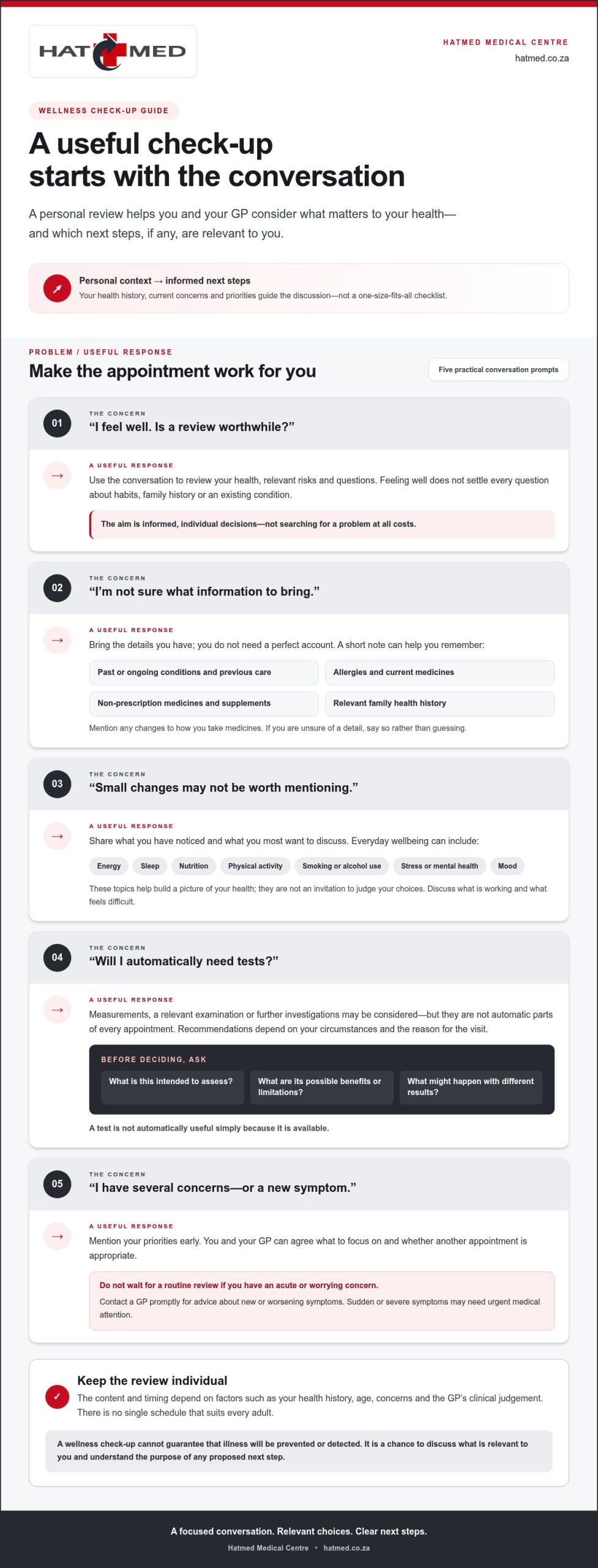
How to prepare for a wellness checkup and make it useful
You don’t need special preparation for a helpful conversation. A little organisation can make the appointment easier to use, especially if you have several questions or health details to cover. Bring the information you have, explain what matters to you and work with your GP on practical next steps.
Before the appointment: organise what you want to discuss
Make a short note of your health information. Include current medicines and supplements, known allergies, past or ongoing diagnoses, and relevant family health history. Bring previous results or records related to your questions if they’re available. Don’t stop or change prescribed medicines before the appointment unless a clinician has advised you to do so.
Next, write down recent changes, questions and health goals. You might want to discuss sleep, activity, a change in mood or how an existing condition affects daily life. If time feels limited, mark the topics you most want to cover first. Note practical barriers too, such as difficulty taking medicine regularly, making time for activity or following a recommended plan. Sharing these details helps your GP understand your circumstances without judgement.
During and after the appointment: agree the next steps
Use the conversation to clarify your options. If a check or investigation is suggested, ask what it’s intended to clarify, what its limitations are and how the result could influence your care. Raise concerns or ask for an explanation before making a decision. This helps you understand the reason for each proposed step, rather than leaving with a list you’re unsure how to use.
Before you leave, summarise the plan with your GP. Confirm whether anything needs to happen next, how and when you’ll receive results, and whether follow-up or ongoing monitoring is recommended. If a step feels difficult to manage, say so. Discussing a realistic approach can make the plan more practical.
- Gather health information: Bring your medicine and supplement details, allergy information, relevant history and available records.
- Identify priorities: Note your questions, health goals and any recent changes you’ve noticed.
- Discuss options: Ask what each proposed check is for and share concerns or barriers that could affect your choices.
- Agree follow-up: Clarify results, monitoring and what to do next, including who to contact if your health changes.
For broader context on building an ongoing relationship with a GP, explore this general practitioner guide. The chronic disease management guide offers further context on long-term care. To discuss your health priorities and appropriate next steps, book a GP consultation with Hatmed.
Continue your wellness checkup with personalised GP care
A preventive conversation is most useful when it connects your questions with your health history and realistic next steps. A GP can help you consider which concerns need attention, explain relevant options and plan follow-up where appropriate. The consultation supports assessment and planning, but it can’t guarantee a diagnosis, prevent every illness or promise a particular outcome.
Your health needs may span different areas of care. General practice provides a setting to discuss preventive health and current concerns, while chronic-condition care and mental health support can address ongoing needs as part of a broader conversation. The focus is on your circumstances, not a standard plan applied to everyone.
When to discuss ongoing health needs with a GP
Arrange a discussion if a symptom persists, something changes or you need help understanding a previous result. A change doesn’t always mean something serious, but it’s useful to explain what you’ve noticed and when it began. If symptoms are severe or rapidly worsening, seek urgent medical attention rather than waiting for a routine review.
Living with a chronic condition may call for individual monitoring and follow-up beyond a general wellness conversation. Your GP can discuss how ongoing care relates to your wider health priorities and what follow-up is appropriate. If emotional wellbeing is something you’d like to address, Hatmed’s GP mental health support guide explains how a GP conversation can be a starting point for discussing support.
Take a practical next step towards preventive care
Before booking a consultation, consider what you most want help with. You might have a question about family history, a habit you’d like to change, an ongoing condition or a health concern you’ve been putting off. You don’t need a complete plan. A clear question, or a brief note about what has changed, can help your GP understand what matters to you.
At Hatmed Medical Centre, GP consultations include routine check-ups and preventive medicine. Use the appointment to talk through your concerns, share relevant history and discuss practical options with your GP. If you have several topics, say which feels most important so you can decide how best to use the consultation and whether further follow-up is needed.
Preventive care is an ongoing conversation, not a one-off promise that nothing will change. If you’re ready to discuss your health priorities, explore Hatmed Medical Centre’s GP care and take a considered next step with a GP.
Make your next health conversation count
Your next step doesn’t have to be a long list of tests or a perfectly planned set of goals. Choose one question you’d like answered or one change you want to discuss, and use that as a starting point. A wellness checkup can open a useful conversation while your GP helps you consider what is relevant and how to approach it. Preventive care supports thoughtful planning, but it can’t guarantee that illness will be prevented or detected.
At Hatmed Medical Centre, general practitioner consultations include routine check-ups and preventive medicine. If your needs extend beyond prevention, chronic disease management and mental health support can also form part of the care conversation. The aim is to understand your priorities and consider appropriate steps together, at a pace that feels manageable.
Ready to discuss your health with a GP? Explore Hatmed Medical Centre’s GP care and arrange a consultation.
Frequently Asked Questions
Is a wellness checkup necessary if I feel healthy?
Not necessarily, but a wellness checkup can be useful if you have questions you haven’t had a chance to raise. You may want to discuss a family health concern or how a change in your routine affects your wellbeing. A GP can help you consider whether an appointment makes sense. It’s also reasonable to think about what you hope to gain from the discussion before arranging a review.
How often should I have a wellness checkup?
There isn’t one interval that applies to everyone. Your GP can consider your age, health history, ongoing conditions and any changes since your last review when discussing timing. If you’re unsure whether you’re due, note when you last spoke with a GP and what has changed since then. A new concern may need attention sooner than a routine review, rather than waiting for a planned check-up.
What happens during a wellness checkup?
A GP will usually guide a conversation around your health and the reason for attending, then discuss relevant next steps. You can explain what you want help with and ask questions about recommendations. If a check or investigation is considered, ask how it relates to your concerns and what you’ll need to do afterwards. The appointment may focus on discussion rather than a full physical examination.
Do I need blood tests during a wellness checkup?
No, blood tests aren’t automatically needed. Their usefulness depends on the health question being considered and your individual circumstances. If one is proposed, ask what it may help clarify and how the result could affect your care. You can also ask whether you need to fast or make any other preparation, as instructions depend on the specific test. Don’t arrange a broad test panel solely because an online checklist recommends it.
Can I discuss mental health during a wellness checkup?
Yes, you can raise concerns about stress, anxiety, low mood or sleep, including how they’re affecting work, relationships or daily activities. You might start by describing what has changed and when you first noticed it. Share only what you feel comfortable discussing; your GP can help explore appropriate support. If you’re in immediate danger or may harm yourself, seek urgent help through local emergency services or a crisis service.
What should I bring to a wellness checkup?
Bring a list or photographs of your medicines and supplements, including names and doses if you know them. Relevant previous results, discharge notes or other health records can provide context, as can a brief note of questions you don’t want to forget. If you’re unsure about a medicine’s name, bring its packaging or a clear photograph. Don’t stop or change prescribed treatment unless a clinician has advised you to.