

Did you know that roughly 50% of adult South Africans are now living with high blood pressure, yet fewer than one in ten have their readings successfully under control? It is a startling figure that highlights why finding the right hypertension management doctor is more critical than ever in 2026. You might feel overwhelmed by conflicting health tips or fear that a diagnosis simply means a lifetime of side effects from a handful of pills. It is completely natural to want a healthcare partner who sees the whole person, rather than just a set of numbers on a clinical chart.
At Hatmed Medical Centre, we believe your cardiovascular health deserves a proactive and collaborative approach. This article explores the latest 2026 clinical guidelines, including the move towards 24-hour ambulatory monitoring and single-pill combinations that simplify your daily routine. You will discover how to select a practitioner who prioritises your long-term wellness and helps you build a clear, personalised plan to reduce the risk of stroke or heart attack. We are here to guide you through these latest medical advancements so you can achieve stable results and genuine peace of mind.
Key Takeaways
- Learn why modern blood pressure thresholds have evolved and how early screening helps manage the “silent killer” amongst South Africans.
- Discover how 24-hour ambulatory monitoring and digital wearables provide a more accurate picture of your cardiovascular health than traditional office readings.
- Understand the shift towards personalised treatment plans that combine innovative medicine with clinical lifestyle interventions like stress management and nutrition.
- Gain practical advice on choosing a hypertension management doctor who prioritises a data-driven, patient-centric partnership for your long-term wellness.
- Explore why a dedicated general practitioner is often the ideal partner for coordinating your chronic care and reducing the risk of heart attack or stroke.
The Evolution of Hypertension Management in South Africa
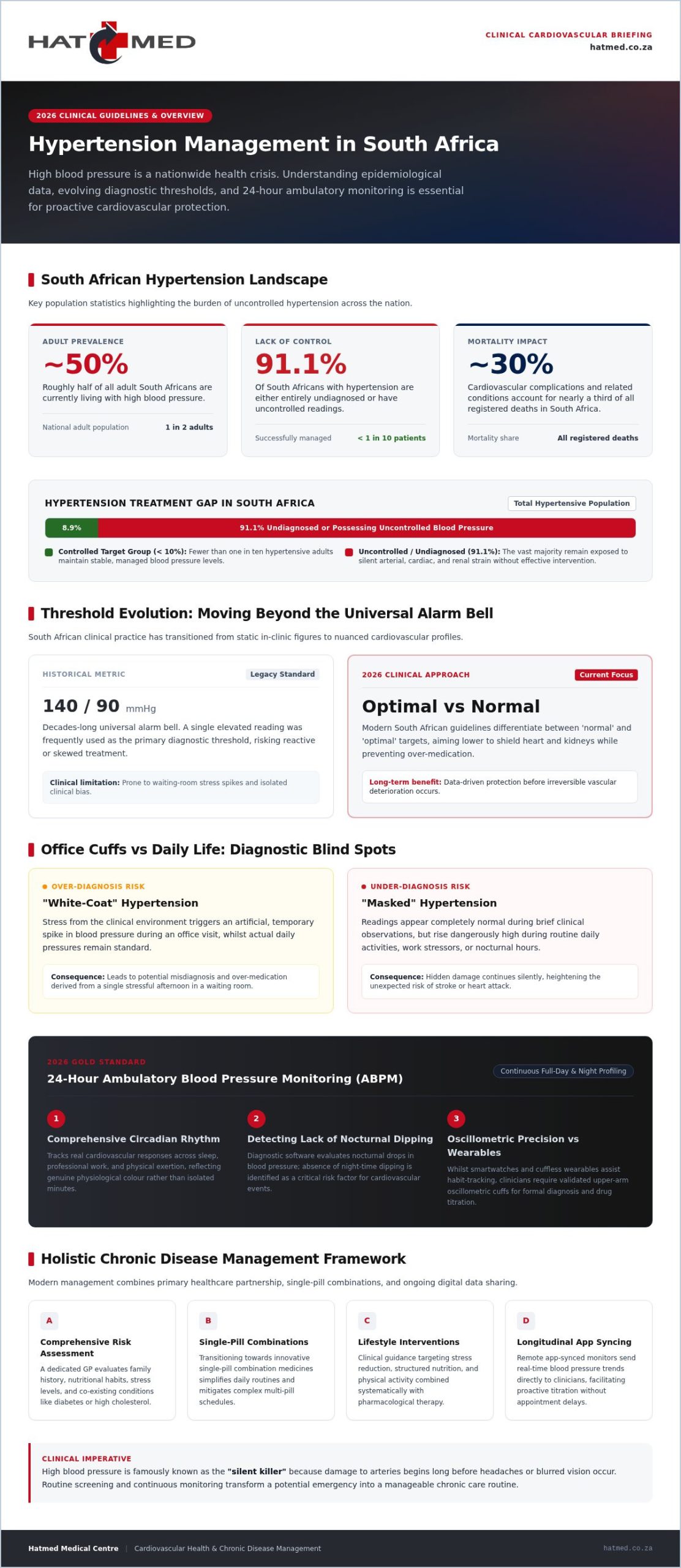
High blood pressure is no longer just a statistic; it’s a national health crisis. In South Africa, cardiovascular complications and related conditions now account for roughly 30% of all registered mortality. The 2026 ISH guidelines for Africa highlight that we can’t simply wait for symptoms to appear before taking action. Hypertension management is a collaborative, long-term strategy between a patient and their primary care doctor. Moving from reactive treatment to proactive cardiovascular risk management is the only way to safeguard your future health.
Understanding the Modern Pressure Thresholds
For decades, the 140/90 mmHg reading was the universal alarm bell. However, clinical practice in South Africa has evolved to look at a much broader picture. We now distinguish between ‘normal’ and ‘optimal’ blood pressure readings, often aiming for lower targets to protect the heart and kidneys from long-term strain. It’s important to remember that a single high reading at the clinic doesn’t always confirm a diagnosis. Factors like “white-coat hypertension” can skew results, making someone appear at risk when they aren’t. Modern management of hypertension relies on 24-hour ambulatory monitoring to see how your body handles stress, sleep, and daily activity. This data-driven approach ensures you aren’t over-medicated based on one stressful afternoon in a waiting room.
The Role of Primary Healthcare in Early Intervention
Your GP is your most important ally in this journey. Because high blood pressure is famously known as the “silent killer,” early detection is vital for the millions of South Africans currently affected. Statistics suggest that approximately 91.1% of South Africans with hypertension are either undiagnosed or possess uncontrolled blood pressure. Waiting for a headache or blurred vision usually means damage to your arteries has already begun. By prioritising regular chronic disease management, you can catch subtle changes before they lead to permanent organ damage.
A dedicated hypertension management doctor doesn’t just look at a cuff reading. They assess your lifestyle, family history, and co-existing conditions like diabetes or high cholesterol. This holistic oversight keeps you out of the hospital and ensures your wellness plan is tailored to your specific needs. Routine screenings are the first line of defence, turning a potential emergency into a manageable part of your daily health routine.
Modern Diagnostic Trends: Beyond the Manual Cuff
The traditional manual cuff is no longer the only tool in a modern clinic. Many patients experience “White Coat Hypertension,” where stress from the medical environment causes a temporary spike in readings. This can lead to misdiagnosis if a doctor relies solely on a few minutes of clinical observation. Utilising 24-hour monitoring provides a more accurate ‘colour’ of a patient’s true health throughout their daily life than a single, isolated office visit. By looking at how your heart responds to sleep, work, and exercise, a hypertension management doctor can create a far more precise treatment plan.
Ambulatory and Home Monitoring Advancements
Ambulatory Blood Pressure Monitoring (ABPM) has become the gold standard for clinical diagnosis in 2026. This involves wearing a small device that takes regular readings over a full day and night. It helps identify “masked hypertension,” where readings appear normal in the clinic but are dangerously high during daily activities. Whilst smartwatches and cuffless wearables are popular for habit-tracking, clinicians still require validated upper-arm oscillometric cuffs for drug titration and formal diagnosis. Modern devices now use software to identify specific patterns, such as a lack of “nocturnal dipping,” which is a major risk factor for cardiovascular events. Following the standards mentioned in the World Health Organization fact sheet on hypertension, these tools ensure that every intervention is based on consistent, reliable data.
Telehealth and Remote Patient Management
The integration of digital health means you don’t have to wait for your next appointment to share your progress. Many patients now use app-synced monitors that send longitudinal data directly to their GP. This real-time sharing allows for proactive adjustments to medication or lifestyle advice, rather than waiting for a quarterly review. Virtual check-ins offer a convenient way to discuss these trends, though they work best when paired with occasional in-person physical examinations to monitor overall cardiovascular health. Privacy remains a top priority in this digital shift. Modern medical centres use secure, encrypted platforms to ensure your personal health data stays protected amongst the clinical team. If you are unsure which digital tools are right for your specific health profile, you can consult with our team to find a monitoring solution that fits your daily routine.
The Shift Towards Holistic and Personalised Treatment Plans
Effective care in 2026 has moved far beyond the “pill for every ill” mindset. While medication remains a vital tool, your hypertension management doctor now views it as one component of a much larger wellness strategy. This shift towards holistic care acknowledges that your blood pressure is influenced by everything from your sleep quality to your daily stress levels. By tailoring treatment to your specific genetic and lifestyle profile, we can move away from generic advice and towards a plan that actually works for your life.
Mental health plays a significant role in cardiovascular wellness. Chronic stress triggers hormonal responses that keep blood pressure elevated, making it harder to reach your targets even with consistent medication. Addressing these underlying factors isn’t just about feeling better; it’s a clinical necessity for long-term heart health. A personalised approach ensures that your mental well-being is treated with the same priority as your physical readings.
Nutritional and Lifestyle Interventions
Dietary changes often provide the foundation for successful management. The DASH (Dietary Approaches to Stop Hypertension) diet is highly effective, but it needs to be adapted for the South African palate. This means finding healthy alternatives for high-salt staples and traditional flavourings that are common in our local cuisine. Reducing sodium is particularly important in a country where processed foods and certain traditional seasonings can lead to hidden salt spikes.
Exercise is another critical intervention, but it must be sustainable to be effective. Your doctor can help you organise a routine that focuses on aerobic activity and strength training, both of which are proven to lower readings. To ensure your efforts are working, home blood pressure monitoring allows you to see the real-time impact of these lifestyle shifts. Moderating alcohol and quitting smoking remain non-negotiable steps for anyone serious about reducing their risk of stroke.
Modern Pharmacotherapy: Fewer Side Effects, Better Results
When lifestyle changes alone aren’t enough, modern pharmacotherapy offers more options than ever before. In 2026, the trend has moved decisively toward single-pill fixed-dose combinations (FDCs). These “polypills” combine different classes of medicine into one daily tablet, which significantly improves patient compliance. Research indicates that initial therapy using these combinations can improve blood pressure control rates by over 20% compared to multi-pill regimens.
Newer classes of antihypertensives are also designed with better tolerability in mind. If you’ve feared long-term medication due to side effects, it’s worth having an open conversation with your GP. A skilled hypertension management doctor can adjust your dosage or switch your medication class to ensure you feel your best while keeping your readings stable. Open communication is the key to ensuring that your treatment plan supports your quality of life rather than hindering it.
Selecting the Right Hypertension Management Doctor for Your Needs
Choosing the right healthcare partner is a decision that impacts your quality of life for years to come. While a cardiologist is essential for managing complex heart disease or structural issues; a dedicated general practitioner handles the vast majority of successful outcomes. A hypertension management doctor in a primary care setting acts as your central health coordinator. They understand how your blood pressure interacts with your stress levels, sleep patterns, and other chronic conditions. Searching for a general practitioner near me is often the first step toward building a sustainable, long-term wellness plan that doesn’t rely solely on specialists.
Criteria for a High-Quality Management Partner
Your doctor should be more than a prescriber; they should be a partner in your health journey. Look for a clinician who prioritises shared decision-making and takes the time to explain why a specific treatment is recommended. An ideal clinic provides integrated services such as on-site ECGs and pathology blood tests. This convenience ensures that diagnostic data is available quickly, allowing for immediate adjustments to your care plan. Ask prospective doctors how they stay updated on the latest cardiovascular research, such as the 2026 ISH guidelines. A hypertension management doctor who is committed to continuous learning will offer you the most modern and effective interventions available today.
The Continuity of Care Advantage
There is immense value in seeing the same doctor over several years. This continuity allows your GP to spot subtle trends in your health that a stranger might miss. When your doctor knows your history, they can distinguish between a temporary spike caused by life stress and a genuine need for a medication change. This relationship of trust is a powerful tool for treatment adherence. If complications do arise, your GP serves as the hub, coordinating care amongst specialists whilst ensuring that your overall wellness remains the priority. This bird’s-eye view of your health prevents the “fragmented care” that often happens when patients move between different hospital-based systems without a central guide.
If you are ready to move beyond just managing numbers and want a partner who prioritises your long-term cardiovascular health, book a consultation with our experienced team today.
Partnering with Hatmed for Long-Term Cardiovascular Wellness
At Hatmed Medical Centre, we view chronic disease management as a shared journey. We understand that a diagnosis of high blood pressure often comes with a mix of confusion and concern. Our goal is to replace that uncertainty with a sense of security and professional reliability. When you choose a hypertension management doctor at our centre, you aren’t just another patient on a clinical list. You are a member of our community, and we treat your long-term wellness with the same dedication we would for a neighbour or friend.
During your initial consultation, we go beyond the standard office visit. We take the time to understand your personal health history, family background, and the specific environmental stressors you face in your daily life. We integrate the modern diagnostic tools we’ve discussed, such as ambulatory monitoring, with a supportive clinical approach that values your peace of mind. This deep dive allows us to build a relationship of mutual trust from day one, ensuring you feel empowered rather than intimidated by your treatment plan.
A Tailored Approach to Your Health Journey
We believe that effective care must be as unique as the person receiving it. Our team creates bespoke management plans that fit into your actual lifestyle, whether you’re navigating a high-pressure corporate career or managing a busy household. We strictly follow the latest evidence-based protocols, including the 2026 ISH African Regional Advisory Group standards, to ensure your care is world-class. We also recognise that cardiovascular health is deeply connected to your mental well-being. By integrating stress management and mental health support into our heart care strategies, we address the “whole picture” of your health and help you find sustainable ways to lower your readings.
Accessible and Reliable Primary Care
Consistency is the foundation of successful chronic care. We provide the convenience of a centrally managed health record, which allows us to monitor your progress over years rather than just months. For busy professionals, our executive medical examinations offer a streamlined way to stay on top of your cardiovascular health without the need for multiple, fragmented appointments at different facilities. We are here to help you achieve stable blood pressure readings and a significantly reduced risk of stroke or heart attack. Taking that first step doesn’t have to be stressful; it’s simply about finding a steady and dependable ally in your health journey.
Book your cardiovascular wellness check with a Hatmed doctor today and partner with a team that prioritises your long-term vitality.
Taking Control of Your Cardiovascular Future
Managing high blood pressure in 2026 is no longer about reacting to a single high reading. It is about a proactive partnership that combines modern diagnostic tools with a deep understanding of your unique lifestyle. By embracing ambulatory monitoring and personalised wellness plans, you can move beyond the fear of the “silent killer” and focus on long-term health. Finding a dedicated hypertension management doctor who looks at the whole picture is the most effective way to protect your heart and kidneys from avoidable strain.
At Hatmed Medical Centre, we provide expert chronic disease monitoring within an established primary healthcare centre. Our team is committed to delivering holistic, patient-centred care that prioritises your peace of mind and long-term vitality. Whether you need a routine check or a comprehensive management plan, we are here to serve as your steady and dependable health ally. We invite you to take the next step toward a clearer, healthier future for your heart.
Schedule a consultation with a hypertension management doctor at Hatmed and start your journey toward stable, reliable health today. We look forward to supporting you every step of the way.
Frequently Asked Questions
What is the difference between a GP and a cardiologist for hypertension?
A general practitioner acts as your primary health coordinator, managing your daily wellness and coordinating chronic care. A cardiologist is a specialist you consult for complex heart conditions, structural damage, or when blood pressure is resistant to standard treatments. For most South Africans, a GP provides the consistent, long-term monitoring required to keep readings stable without the need for frequent hospital-based specialist visits.
Can hypertension be cured completely or just managed?
Hypertension is considered a chronic condition that requires lifelong management rather than a one-time cure. Whilst significant lifestyle changes can sometimes lead to “remission” where readings return to normal without medication, the underlying tendency remains. Regular monitoring ensures that if your pressure begins to rise again due to age or stress, your medical team can intervene early to prevent cardiovascular complications.
How often should I see my hypertension management doctor?
Most patients should see their hypertension management doctor every three to six months once their readings are stable. If you’ve recently started a new medication or your blood pressure is currently uncontrolled, your doctor might request monthly check-ins. These visits allow for routine blood tests, medication adjustments, and the opportunity to discuss any side effects you might be experiencing during your treatment.
What are the latest non-medication trends for lowering blood pressure?
Modern non-medication trends focus on high-impact lifestyle shifts like the DASH diet and targeted sodium reduction. Incorporating 150 minutes of moderate aerobic activity per week and prioritising sleep hygiene are also essential clinical interventions. Many practitioners now include mindfulness and stress management as formal parts of a treatment plan. These steps are particularly effective when started early, potentially reducing the need for high-dose pharmacotherapy.
Is it safe to rely on a smartwatch for blood pressure monitoring?
Smartwatches are excellent for tracking general health trends, but they aren’t currently accurate enough to replace clinical monitors. Validated upper-arm oscillometric cuffs remain the mandatory standard for diagnosing hypertension or adjusting your medication. You can use your smartwatch to spot patterns or spikes, but you should always confirm these readings with a medical-grade device before making any changes to your management plan.
What happens if my blood pressure remains high despite medication?
If your readings remain high despite treatment, your doctor will investigate “resistant hypertension.” This process often involves checking for hidden salt intake, reviewing medication adherence, or screening for secondary causes like sleep apnoea or kidney issues. Your hypertension management doctor may also transition you to a single-pill fixed-dose combination. These “polypills” often achieve better control by combining multiple classes of medicine into one daily tablet.
Can stress alone cause chronic hypertension?
Chronic stress is a significant risk factor, but it rarely acts in isolation to cause permanent hypertension. It’s more common for stress to trigger hormonal responses that exacerbate existing genetic or lifestyle factors. When your body is in a constant “fight or flight” state, your heart rate and vascular resistance increase. Addressing mental health is therefore a vital component of any comprehensive cardiovascular wellness strategy in South Africa.
How does age affect my target blood pressure readings in 2026?
Modern 2026 guidelines generally favour tighter control across all age groups to maximise protection against stroke. While targets were once more relaxed for older adults, we now often aim for readings below 130/80 mmHg if the patient tolerates the treatment well. Your doctor will assess your biological age and overall frailty to ensure your target is safe, effective, and tailored specifically to your physical capabilities.