

What if the right vaccination plan isn’t a checklist, but a review of your health and vaccination history? It can be difficult to know which routine vaccinations apply at each stage of life, especially if a record is incomplete or a dose may have been missed. Questions about side effects or whether a vaccine needs repeating are understandable, too.
In South Africa, childhood vaccinations follow a national programme, while adult recommendations depend on factors such as age, health and vaccination history. This guide explains how routine vaccination fits into preventive care, what to do if a dose may have been missed and how to discuss your questions or circumstances with a GP.
To prepare for a vaccination review, gather any clinic cards or records you can find, note what you remember and write down your questions. A GP consultation at Hatmed Medical Centre gives you an opportunity to review this information and discuss your vaccination needs in context.
Key Takeaways
- Routine vaccinations are part of preventive care, but recommendations depend on factors such as age, health and vaccination history.
- A GP can help review childhood and adolescent vaccination records against current South African guidance.
- If you’re unsure whether a dose was missed or repeated, bring the records you have and discuss the details with a GP.
- Prepare for a vaccination review by noting your questions, relevant health information and any past reactions.
- Hatmed Medical Centre provides GP consultations and routine vaccinations, with time to discuss your needs and personal circumstances.
What are routine vaccinations, and why do they matter throughout life?
Routine vaccinations are immunisations offered as part of ongoing preventive healthcare to help protect people from specific infectious diseases at appropriate points in life. They are not one checklist that applies to everyone. Recommendations can depend on age, previous vaccinations and health circumstances. In South Africa, childhood immunisations are guided by a national programme, while an adult’s needs may call for an individual review.
Routine vaccination is different from travel vaccination. Travel advice considers the destination and potential exposures associated with a trip. A routine review looks at your vaccination history and ongoing preventive care. If you have travel plans, mention them during the review, but remember that destination-specific advice is a separate consideration.
How routine vaccinations support preventive healthcare
Vaccines prepare the immune system to recognise particular infections. Depending on the vaccine and disease, vaccination can reduce the chance of becoming ill or help reduce the risk of serious illness. It cannot guarantee that infection will not happen, so it’s useful to understand what a vaccine is intended to prevent and what it cannot guarantee.
Vaccination can also contribute to community protection. When more people are protected against a particular infection, its spread may be reduced, which can help lower exposure for others. The extent of this effect varies, and it does not remove every risk. Vaccination works alongside other preventive care, such as routine health checks, appropriate hygiene and seeking medical advice when symptoms are concerning. It is one part of looking after your health, not a replacement for other care.
Why vaccination needs can change over time
Vaccination needs can be reviewed at different life stages. Childhood and adolescence are important times to check immunisation records against current national guidance. In adulthood, an older record may be incomplete or difficult to interpret, and there is no universal checklist that applies to everyone. A GP can review what is documented and what remains uncertain instead of assuming that every person needs the same vaccines.
Health history and personal circumstances also matter. Previous vaccinations, past reactions, current health conditions and other relevant details can help inform a discussion about next steps. Share what you know, but don’t worry if you can’t remember everything. An old clinic card or other record may help clarify what was given. If information is missing, say so rather than guessing.
A vaccination schedule is generally organised around ages or life stages because recommendations may change as a person grows. It can be useful background, but an online overview cannot determine what an individual should receive. For a personal review, current South African guidance and your own history are more relevant than treating a general schedule as a complete prescription.
How a GP reviews routine vaccination needs at different life stages
A vaccination review is a conversation about the individual, not just their age. A GP considers your age, available vaccination records and relevant health history alongside current South African guidance. This helps distinguish what is documented from what is uncertain, and gives you a chance to ask questions before discussing possible next steps.
Vaccination recommendations are individualised because age, previous doses and personal health circumstances can all affect what a GP may advise. Work and other circumstances may also be relevant. The aim is to make sense of the information available, rather than assume one plan suits everyone.
What to consider for children and adolescents
For children and adolescents, parents and caregivers can bring a clinic card, immunisation record or other documents showing previous vaccinations. These records help the GP compare what the child has received with current national recommendations, without relying on memory alone.
South African guidance can change, so check age-specific advice against current recommendations. The National Institute for Communicable Diseases (NICD) provides South African vaccination information that can help you prepare questions. If a record is incomplete, tell the GP what you know and which details are unclear. Avoid filling gaps by guessing; the available record and clinical discussion can help clarify what to consider.
Why adults may need a vaccination review
Childhood vaccinations are important, but an old record does not automatically answer every question about an adult’s current needs. A GP can review vaccinations you remember receiving, look at available documentation and discuss whether a booster or another step may be relevant. If records are missing, explain that openly. Approximate dates or where you received care may still be useful, as long as you make clear when you’re unsure.
Health status and personal circumstances can shape the discussion. A change in health or particular work responsibilities, for example, may prompt you to ask whether your vaccination history needs reviewing. These details do not determine an answer on their own, but they give the GP context for individual advice. You can also raise concerns about previous reactions or uncertainty about whether a dose was already given.
There is no adult checklist that can settle every case. A focused review looks at the available record and your circumstances, then identifies what needs clarification. A GP can discuss adult recommendations in more detail, including how your history affects the conversation.
If you’d like to discuss your records and circumstances with a GP, a GP vaccination consultation at Hatmed Medical Centre can support an individual review.
Routine vaccinations: how to address safety concerns and missed doses
It’s reasonable to have questions about side effects, especially if you or your child has reacted to a vaccine before. A missed dose can also leave you unsure whether to book a vaccination or restart a series. Both concerns are best handled by reviewing the person’s history and current guidance, rather than relying on assumptions or a general rule.
This section offers general information to help you prepare for a conversation; it cannot determine what is appropriate for an individual patient. A GP can consider the available record, relevant health circumstances and the particular vaccine being discussed.
What to ask about possible side effects
Before vaccination, tell the GP about previous reactions, known allergies and current health concerns. Describe what happened, when it began and how long it lasted, as accurately as you can. If you’re unsure whether a reaction was connected to a vaccine, say so. These details help the GP understand your concern and discuss what to expect.
Possible effects vary by vaccine and person, so advice about one vaccine may not apply to another. You might ask:
- Which reactions are expected with the vaccine being discussed?
- How long might they last, and what can help you manage them?
- Which symptoms should prompt medical advice, and how urgently?
Don’t dismiss symptoms that feel severe or worrying. Seek prompt medical assessment if they occur after vaccination, and explain what was given and when if you know. A GP can help you understand expected effects and when further care is appropriate, but cannot guarantee whether a particular reaction will occur.
What to do if a vaccination was missed
If you think a dose was missed, gather any records you can find, such as an immunisation card or other written vaccination history. Include approximate dates only when you’re confident, and mark anything you’re unsure about. Guessing which doses were received can make the record harder to assess.
A GP can review the documented history alongside current guidance and discuss possible next steps. The right approach depends on factors such as the vaccine, the doses recorded and how much information is available. Don’t assume that every series must restart, or that it always continues unchanged after a gap. Catch-up advice can differ, so follow guidance tailored to the person’s circumstances rather than relying on an interval found in a general online discussion.
If the record is incomplete, say so. A review can help separate what is known from what still needs clarification and give you space to raise concerns before making a decision about vaccination.
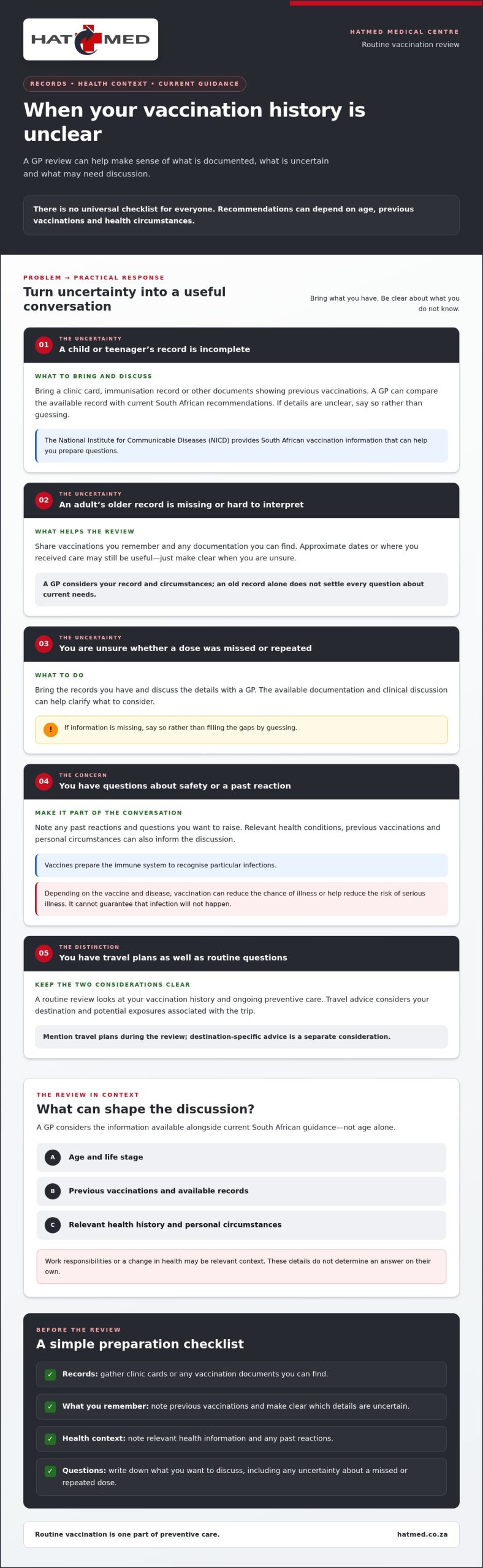
How to prepare for a routine vaccination review
A little preparation can make a vaccination review more focused and help you leave with a clearer understanding of any next steps. You don’t need a complete record to start the conversation. Bring what you have, be open about what you can’t remember and let the GP consider it alongside your health history and current guidance.
Before your appointment, work through this sequence:
- Gather records. Bring vaccination cards, medical records or other reliable documents that may show previous doses.
- Note your questions. Write down what you’re unsure about, including missed doses, possible side effects or whether a vaccination is relevant to you.
- Share relevant health information. List current medicines, known allergies and health conditions. Mention pregnancy, immune conditions or other circumstances that may affect clinical advice.
- Discuss options with the GP. Review what the records show, what remains unclear and whether any follow-up is appropriate.
What information to bring to a vaccination appointment
Bring original documents if available, or clear copies of vaccination cards and medical records. If you’re preparing on behalf of a child, take the child’s records and note any vaccinations you know were received elsewhere. An incomplete adult history is still useful to discuss. Avoid filling gaps by guessing: explain which details you know and which you can’t verify.
Make a short list of medicines, relevant health conditions and known allergies. If you’ve had a reaction after a previous vaccination, note what happened, roughly when it began and how long it lasted. Be factual, even if you’re unsure whether the reaction was connected. This gives the GP a clearer starting point for discussing your concerns and any relevant precautions.
If you’re looking for ongoing primary care support, this guide to finding a general practitioner in South Africa explains what to consider when choosing a GP relationship that suits your needs.
How to make a shared vaccination plan
Use the appointment to agree on what the records show and what still needs clarification. Ask the GP to explain the options in plain language, including any follow-up they advise and when it should happen. Recommendations can depend on your history and circumstances, so don’t treat a general online schedule as a personal plan.
After the discussion, keep your vaccination record with other important health documents. Ask for the details of any vaccination received to be recorded, and write down follow-up steps or questions you want to revisit. This gives you a practical reference for future care and can make later reviews easier.
Hatmed Medical Centre provides GP consultations and routine vaccinations as part of primary healthcare. Arrange a GP vaccination review with Hatmed to discuss your records, questions and personal circumstances.
Routine vaccinations at Hatmed: discuss your needs with a GP
Hatmed Medical Centre provides routine vaccinations as part of its general practice and primary healthcare services. If you’re unsure what your records mean, have questions about a previous dose or want to understand whether your circumstances affect vaccination advice, a GP consultation gives you time to discuss these points in context.
You don’t need to have every answer before your appointment. Bring any vaccination records you have, explain what you remember and be open about details you can’t confirm. The GP can consider your history and relevant health information, listen to your concerns and discuss possible next steps in light of current guidance. Ask for explanations in plain language and take time to consider the information.
What a patient-centred vaccination discussion can cover
A review may cover which vaccinations are documented, what remains unclear and whether your health history or current circumstances are relevant. Share concerns about previous reactions, allergies, medicines or health conditions, and mention the questions you’d like answered. Your GP can explain options and appropriate next steps based on current guidance. There’s no need to feel embarrassed about asking for clarification or saying that a record is incomplete.
The discussion is individual; it is not a promise that a particular vaccine is suitable or will lead to a specific outcome. If you’re attending with a child, bring their available records and raise any concerns you have as a parent or caregiver. For your own appointment, note down questions beforehand if that makes them easier to remember. The aim is to help you understand your situation and make informed decisions with clinical support.
When travel vaccinations need a separate conversation
Routine vaccination reviews consider ongoing preventive care, while travel vaccination advice depends on destination-specific factors. If you have an upcoming trip, mention where you’re travelling and when so this can be considered separately from reviewing your routine history. For more context, read this guide to finding a travel clinic in South Africa.
Keeping the two discussions distinct can make your questions easier to organise. One is about your vaccination history and ongoing care; the other relates to health considerations for a planned journey. Both are useful topics to raise with a healthcare professional, but destination-specific advice should not be inferred from a routine vaccination record alone.
Hatmed Medical Centre’s GP consultations provide a supportive setting to review records, questions and relevant health circumstances as part of preventive care. You can arrange a GP consultation with Hatmed Medical Centre to discuss your vaccination needs. Bring what you have, ask what you need to know and work with your GP on a clear, practical way forward.
Make your vaccination record part of your ongoing care
Your vaccination record can be useful beyond a single appointment. Keep it with other important health documents, update it when you receive a vaccination and bring it along when your health circumstances change or you have questions. This can make future discussions clearer, even if some older details remain uncertain.
Routine vaccinations are best approached as an ongoing conversation, not a test you need to pass with a perfect record. Start with what you know, explain what you’re unsure about and work through your questions with a GP. Preventive care is personal, and understanding your own history is a practical place to begin.
Hatmed Medical Centre offers GP consultations as part of comprehensive primary and preventive healthcare, including routine vaccinations. Arrange a GP consultation to discuss routine vaccinations and take a considered next step for your health.
Frequently Asked Questions
Which routine vaccinations do adults need in South Africa?
There isn’t one adult vaccination list that suits everyone in South Africa. A GP can consider your age, health circumstances and previous vaccinations alongside current South African guidance. If you’ve moved or changed medical practices, for example, you may have records from more than one place. Bring what you have and explain any gaps, so the discussion can focus on your history rather than a generic online checklist.
Can I have a vaccination if I do not know my vaccination history?
Not knowing your full history doesn’t automatically rule out vaccination or mean every dose must be repeated. Tell the GP what you remember, even if you only know an approximate date or where you received care. A clear photograph of an old card may help if you can’t bring the original. The GP can explain whether the information available is enough to discuss next steps or whether further details would be useful.
What happens if I have missed a routine vaccination?
A missed vaccination calls for an individual review, not an automatic decision to restart. If you have a card, look for the vaccine name and any recorded dates, but don’t try to calculate a catch-up plan yourself. Recommendations can depend on the vaccine and doses already received. A GP can interpret the record using current guidance and explain what to do next, rather than relying on an online interval that may not fit your circumstances.
Are routine vaccinations safe?
Vaccines used in healthcare are assessed for safety, but side effects are possible and reactions vary between people and vaccines. Before vaccination, mention any known allergies, medicines or previous symptoms you think may have followed a dose. Ask which effects are expected and what should prompt medical attention. If you develop severe or worrying symptoms after vaccination, seek prompt medical assessment and share when the vaccination was given.
Can I have a vaccination when I am unwell?
It depends on your symptoms, how unwell you feel and the vaccination being considered. Before the appointment, note your symptoms and when they began, and tell the healthcare professional if your condition has changed. They can advise whether to proceed or discuss another time. There isn’t a general online rule that can settle every case, so describe your situation rather than deciding based on a broad guideline.
Do routine vaccinations need to be repeated in adulthood?
Some vaccinations may involve later doses or boosters, while others may not need repeating for every person. The answer depends on the vaccine, your previous doses, health circumstances and current guidance. If a record shows an earlier dose but doesn’t clarify whether follow-up was given, point that out during your review. A GP can help establish what is known and whether further action is appropriate.
Should I get routine vaccinations before travelling?
Travel advice depends on your destination, itinerary, health history and how soon you leave. Reviewing your routine record may be useful, but it doesn’t replace destination-specific advice. Share your planned departure date, locations and any previous vaccine reactions during a travel-health consultation, as timing can matter to the discussion. Keep travel recommendations distinct from your ongoing vaccination record so you can see which advice relates to your trip and which relates to routine care.