

What if the right answer to “Which vaccinations should I consider as an adult?” isn’t a standard checklist, but a plan based on your health and circumstances? If you’re researching adult vaccinations South Africa, your childhood records, possible boosters, medical history and travel plans can all influence what may be worth discussing.
It’s understandable to feel unsure. You may not know whether childhood vaccinations still protect you, or find conflicting advice about who should have which vaccine. General information about adult vaccinations South Africa can help you prepare, but it can’t replace advice tailored to your health and vaccination history.
This 2026 guide explains the factors that may shape your needs and how to prepare for a conversation with a healthcare professional. You’ll learn which records to bring, what questions to ask and why health conditions or travel plans may change the discussion. A GP can review your history and circumstances, while travel-related questions may be discussed through a Travel Clinic service. The aim is to help you find reliable, personalised guidance for adult vaccinations South Africa, not another one-size-fits-all schedule.
Key Takeaways
- Adult vaccinations in South Africa are not a one-size-fits-all checklist. Age, health and vaccination history can all shape what to discuss.
- Ask a healthcare professional whether vaccines such as influenza, tetanus-containing or measles-containing vaccines may be relevant to you.
- Feeling healthy doesn’t settle every vaccination question. A clinician can weigh potential benefits, personal risks and relevant precautions.
- Prepare for your appointment by gathering vaccination records, medicine details and information about your medical history.
- A GP can review routine vaccination questions, while a Travel Clinic service can help you discuss vaccination needs linked to travel plans.
What do adult vaccinations in South Africa prevent?
Adult vaccination uses vaccines to help protect a person from specific infections, based on their vaccination history, age, health and likely exposure. It doesn’t mean every adult needs every vaccine. The aim is to identify which protection may be relevant and discuss it with a healthcare professional.
Vaccines can help prevent illnesses such as influenza, measles, tetanus and some infections associated with travel. They prepare the immune system to recognise a particular infection, reducing the chance of illness or, for some diseases, serious complications. The protection offered can differ by vaccine and person, so a past dose doesn’t automatically answer whether another is needed.
Why might vaccination still matter in adulthood?
Protection can change over time, depending on the vaccine and the individual. Some people may need to review whether previous doses remain relevant, while others may have missed or be unable to confirm childhood vaccinations. Age, certain health conditions, work-related exposure and other personal circumstances can also influence a clinician’s advice.
Vaccination is one part of looking after your health, alongside appropriate medical care and other preventive steps. A healthcare professional may consider your overall health and exposure risks rather than treating a vaccine as a substitute for other care. Routine prevention is different from advice prompted by a specific risk or planned travel, which may call for a separate discussion.
What makes South African adult vaccination advice individual?
Your childhood vaccination record, any doses received as an adult and relevant medical history help a clinician assess what to discuss. If records are incomplete, say so rather than guessing. Advice may also depend on your age, health circumstances and whether you face a particular exposure risk. There isn’t one universal booster interval or checklist that can settle every adult’s needs.
Recommendations and vaccine availability can change, so check current guidance with a healthcare professional or reliable local health sources. South Africa has public and private healthcare services; this overview of South Africa’s healthcare system provides general context, but it isn’t a vaccination recommendation. Where you seek care may affect which options you can access, so confirm availability directly.
For adult vaccinations in South Africa, a useful starting point is a conversation that takes your own history into account. A GP can review your records and circumstances, while travel-related questions can be discussed through a Travel Clinic service. The next step is to understand which vaccine groups might be relevant, not to assume that each one is necessary.
Which vaccines might adults discuss with a healthcare professional?
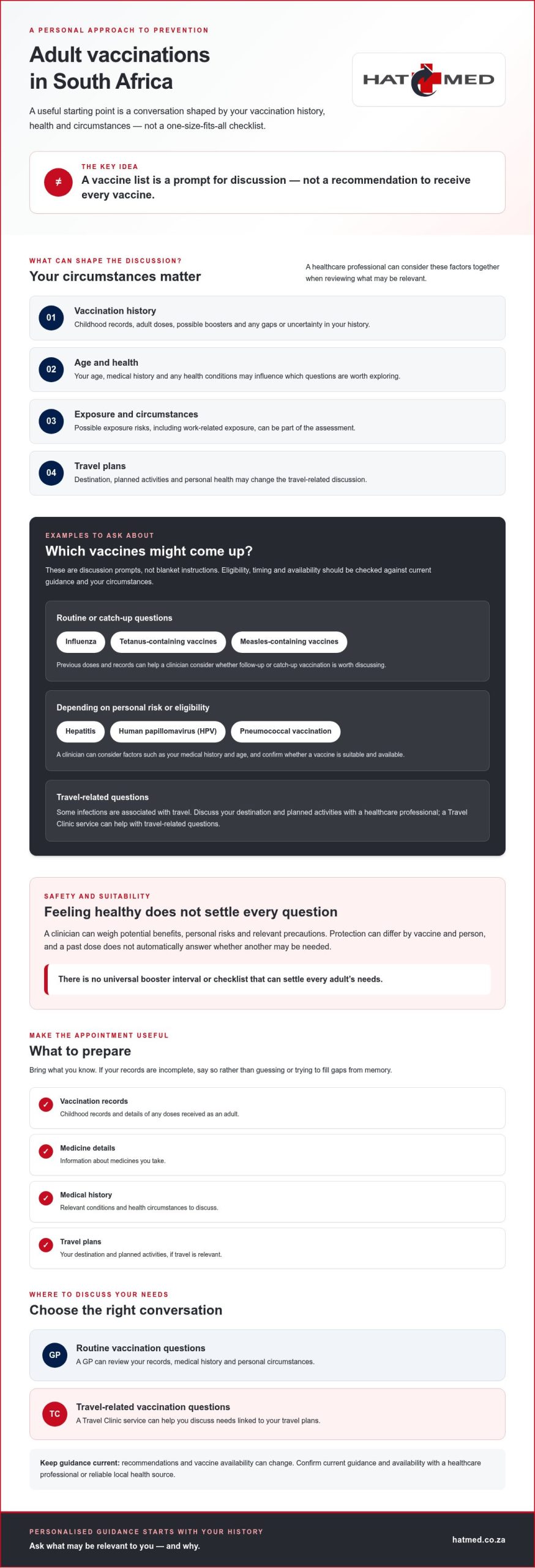
There isn’t a single vaccine list that applies to every adult. A vaccine list is a starting point for a personal discussion, not a recommendation that you should receive every vaccine on it. For adult vaccinations South Africa, the right questions can depend on your previous doses, age, health, possible exposure and travel plans. Check eligibility, timing and availability against current guidance and your individual circumstances.
Routine and catch-up vaccination questions for adults
Start with any childhood vaccination records and details of doses received later. If your history is incomplete, mention that rather than trying to fill in the gaps from memory. A healthcare professional can help identify whether follow-up or catch-up vaccination is worth discussing.
Influenza and tetanus-containing vaccines are examples to ask about, not blanket instructions for all adults. A measles-containing vaccine may also come up if your records or history leave uncertainty about previous protection. The clinician can check relevant South African guidance before advising on eligibility or timing. Don’t assume that a booster is due simply because a certain number of years has passed.
Vaccines linked to health risks, age or travel
Some vaccine discussions are shaped by personal risk or eligibility. Depending on the person, hepatitis, human papillomavirus (HPV) or pneumococcal vaccination may be relevant to explore. A clinician can consider factors such as medical history and age, and confirm whether a vaccine is suitable and available. These examples are prompts for discussion, not a claim that each vaccine is routinely indicated for every adult.
Travel can change the conversation. Destination, planned activities and personal health may affect which precautions to consider, including whether vaccines such as hepatitis A or typhoid are relevant. For general background, the CDC vaccine recommendations for South Africa include routine and travel-health information, but international guidance should be considered alongside current South African advice. If your plans involve yellow fever requirements or precautions, consult the dedicated Yellow Fever article and seek advice based on your itinerary.
Bring your records and explain where and when you’ll be travelling, if applicable. A GP can review routine vaccination questions and personal health circumstances; travel-related concerns may be discussed through a Travel Clinic service. If you’d like to talk through your options, learn more about GP consultations and vaccinations at Hatmed Medical Centre. Check directly which vaccines are available and whether they may be suitable for you.
Vaccine safety and necessity for healthy adults
Feeling well is reassuring, but it doesn’t answer every vaccination question. Some infections can affect people who otherwise feel healthy, while a vaccine’s potential benefit depends on the person, the vaccine and the chance of exposure. For adult vaccinations South Africa, the aim isn’t to vaccinate everyone against everything. It’s to consider likely benefits alongside individual risks and relevant precautions.
How should adults think about vaccine benefits and risks?
Vaccines can cause side effects, and the type and duration can vary. After vaccination, some people experience a sore arm or mild symptoms such as tiredness or a fever. These effects are often short-lived, but no one can guarantee how an individual will respond. Ask the healthcare professional what reactions are expected for the specific vaccine being considered and what symptoms should prompt medical advice.
Share any previous reaction to a vaccine, including what happened and when. Mention allergies, ongoing health conditions and medicines you take, too. These details help a clinician consider whether a vaccine may be suitable, whether further advice is needed or whether another step is appropriate. The NICD adult vaccination information is a South African reference on vaccines for particular groups and situations; a GP can help interpret relevant guidance in light of your circumstances.
When should someone ask for individual medical advice first?
Speak with a healthcare professional before making a decision if you have a history of a serious allergic reaction, an immune condition, are pregnant or have a complex medical history. These are discussion prompts, not automatic reasons to avoid vaccination. The right advice can depend on the specific vaccine and your health, so don’t decide to proceed or delay based only on general information.
Be open about concerns, even if you’re unsure whether a past symptom was related to vaccination. A GP can review your medical history, explain potential benefits and precautions, and discuss suitable next steps. If you develop symptoms that feel severe or concerning after vaccination, seek medical advice promptly. Breathing difficulty or sudden swelling, for example, needs urgent attention.
There’s no need to settle the question alone. A general practitioner consultation can help you weigh your options and understand what applies to you, without treating a generic schedule as personal medical advice.
How can you prepare for an adult vaccination appointment?
A little preparation can make your vaccination discussion more focused. For adult vaccinations in South Africa, the aim is to give the healthcare professional enough context to review your history, understand your questions and explain possible next steps. Use this checklist to get ready.
- Gather vaccination records. Bring your vaccination card, clinic records or any other documents you have. Note vaccine names and dates where available. If you can’t find your records, explain what you know and what is uncertain rather than trying to fill in missing details from memory.
- Write down your health information. List ongoing health conditions, allergies and medicines, including regular prescriptions and supplements. Note any previous reactions to a vaccine, what happened and when. This helps the clinician consider relevant precautions and decide whether more information is needed.
- Describe possible exposure risks. Mention work or household circumstances that you think may be relevant, as well as any health changes since your last vaccination. You don’t need to decide for yourself which details matter; sharing them gives the clinician a fuller picture.
- Bring travel plans into the conversation. If you’re travelling, write down your destinations, departure dates and planned activities. Timing can be important to discuss, so raise your plans early. Hatmed’s South African travel health advice offers further preparation guidance.
- Prepare questions and agree on follow-up. Ask which vaccines may be relevant to your history and why. You can also ask about suitable timing, possible reactions, whether further doses or follow-up may be needed, and what vaccine availability to confirm. Before leaving, make sure you understand any next steps and where to seek advice if you have concerns.
You don’t need to arrive with every answer. Your records and notes are there to support a conversation, not replace professional advice. A GP can review your vaccination history and personal circumstances, then explain what may be appropriate for you. If travel is part of the discussion, a Travel Clinic service can help address travel-related vaccination questions.
To discuss your vaccination questions with a GP, explore Hatmed’s GP consultation and vaccination services. Check directly which options are available and whether they suit your circumstances.
Where can South African adults get personalised vaccination guidance?
Reliable guidance starts with your own health history, not a generic schedule. A general practitioner can review vaccination records, discuss medical and lifestyle factors, and help you understand which questions to explore. This can be useful if you’re unsure what childhood doses you received, have a health condition or want to check whether a vaccine may be suitable.
When can a GP help with vaccination planning?
During a GP consultation, take any records you have and explain what you’re hoping to clarify. Ask which options may be relevant to your history, why they might be considered, and whether timing or follow-up needs discussion. You can also ask the practice to confirm current vaccine availability. Recommendations and availability may change, and not every vaccine is suitable or available for every person.
Hatmed Medical Centre provides GP consultations and routine vaccinations. These services offer an opportunity to discuss your individual questions, but they don’t mean every vaccine is offered or appropriate for every patient. Your clinician can consider your circumstances and explain possible next steps. If you have a health condition or a previous vaccine reaction, mention it so it can be taken into account.
When is travel-health advice a separate consideration?
Travel plans may raise different questions from routine vaccination planning. Your destination, itinerary and departure date can affect what advice is relevant and when to seek it. Hatmed offers dedicated Travel Clinic services for travel-related discussions. If you’re looking for information about Yellow Fever, read the South African traveller’s Yellow Fever guide. For help understanding what to look for in a provider, see finding a travel clinic in South Africa.
Whether you’re asking about routine adult vaccinations in South Africa or preparing for a trip, bring your questions and any available records. A GP can help review your personal circumstances, while a Travel Clinic service can address travel-related concerns. Contact Hatmed Medical Centre to ask about arranging a GP consultation or vaccination appointment, and confirm which services and vaccines are available for your needs.
Make your next vaccination conversation personal
Adult vaccination isn’t a universal checklist. Your vaccination history, age, health and possible exposure all help shape which options may be worth discussing. A vaccine list can guide your questions, but a healthcare professional can help you understand what applies to you.
Before an appointment, gather any records you have and note your medicines, relevant health conditions, previous reactions and travel plans. Ask about potential benefits, precautions, timing and current availability. These steps can make it easier to have a clear, informed conversation about adult vaccinations South Africa.
Hatmed Medical Centre offers general practitioner consultations and routine vaccinations, as well as dedicated Travel Clinic services for travel-related questions. The right option depends on your circumstances, and vaccine availability should be confirmed with the practice. Discuss your vaccination questions with Hatmed and take a considered next step towards personalised guidance.
Frequently Asked Questions
Is there a standard adult vaccination schedule in South Africa?
There isn’t one personal schedule that applies to every adult in South Africa. Advice can depend on your age, previous doses, health conditions, occupation and travel plans, and recommendations or vaccine availability may change. Ask a GP to review your records against current South African guidance. If you can’t find your records, explain what you know and ask what can be checked or safely planned. A general list is a starting point, not a personal schedule for adult vaccinations South Africa.
Do adults need booster vaccinations if they were vaccinated as children?
Some vaccines may involve later doses or boosters, while others depend on your vaccination history and personal circumstances. Your age alone can’t determine whether you need one. Bring any childhood vaccination records you can find and discuss them with a healthcare professional. They can consider previous doses, your health and possible exposure risks, then check current guidance before explaining whether any follow-up may be suitable.
How often should adults get vaccinated?
There’s no single interval that applies to every vaccine or adult. Timing can depend on the vaccine, previous doses, current guidance, your age and health, and your risk of exposure. Don’t repeat doses simply because a general online checklist suggests it. Ask a GP to review your records and explain whether a vaccine or follow-up is relevant to you, and when it may be appropriate.
Are adult vaccines safe if I have a medical condition?
A medical condition doesn’t by itself settle whether a vaccine is suitable for you. Advice depends on the condition, medicines and vaccine being considered. Tell your healthcare professional about allergies, immune conditions, pregnancy, ongoing treatment and any previous vaccine reactions. They can check current guidance, explain relevant precautions and discuss possible next steps. Don’t stop prescribed medicine or make a vaccination decision without medical advice.
Can I get travel vaccinations and routine vaccinations at the same appointment?
It may be possible, but it depends on the vaccines, your health history, timing and current availability. Share your destination and travel dates early, as travel-related advice may need advance planning. A GP or Travel Clinic can review both routine and travel questions and explain whether appointments or doses should be arranged separately. Confirm directly which vaccines are available and suitable for your circumstances.
What should I do if I cannot find my vaccination records?
Bring any information you can locate, such as an old vaccination card, clinic record or details from a previous healthcare provider. Tell the clinician which vaccines you think you received and when, while making clear what you’re unsure about. They can assess what information may be useful, check whether records can be retrieved and discuss appropriate options. Missing paperwork doesn’t automatically mean you need every vaccine again.