

If you’re searching for expert GP diabetes management, you may want to know what a doctor can help you monitor and what to bring up at a review. At Hatmed Medical Centre, these are sensible questions to start with, whether you’re newly diagnosed or have been managing diabetes for some time.
Ongoing care is not about figuring everything out alone or following a list of rules that may not fit your circumstances. A GP can help you review changes in your health and routine, discuss what is working and identify what may need attention. The next steps depend on your individual needs, and you can ask for advice to be explained in a way that feels manageable.
This guide covers the GP’s role in ongoing diabetes care, how to prepare for an appointment and how to raise changes or concerns. It also outlines practical ways to discuss monitoring, follow-up and daily routines with your clinician.
Key Takeaways
- GP-led diabetes care can involve ongoing, individualised primary care shaped around your health and circumstances.
- Use monitoring results as information to discuss with your GP, alongside changes in how you feel and any concerns.
- HbA1c measures average blood glucose over time and can contribute to a broader conversation about your care.
- Prepare for reviews by noting your questions, gathering relevant records and describing any difficulties with your current plan.
- Discuss practical next steps with your GP, including whether input from another health professional could be useful.
What does GP diabetes management involve over time?
Diabetes care is not a single appointment or a fixed checklist. It is ongoing primary care that brings together your health history, current concerns, clinical assessments and follow-up. A GP can review how things are going and discuss what may need attention, with care shaped around your individual needs. A continuing relationship also gives you a place to raise questions and consider your care in the context of everyday life.
In brief: Diabetes follow-up connects changes in your health with clinical reviews, helping you and your GP consider appropriate next steps over time.
Diabetes types differ. Type 1 diabetes involves the body producing little or no insulin, so treatment needs are distinct from those for Type 2, which involves problems with how the body makes or uses insulin. Gestational diabetes is identified during pregnancy and needs care that takes pregnancy into account. These types do not follow one identical care pathway. A general Diabetes Management Overview can introduce common considerations, but it cannot determine what is suitable for you.
What can a GP contribute to diabetes care?
A GP consultation gives you space to explain what has changed, raise questions and talk through how your care fits into daily life. Your GP can assess your health, review relevant information and arrange follow-up based on the clinical picture. This may include considering diabetes alongside other health needs and medicines, since these can affect what is appropriate to discuss or adjust. Tests and treatment decisions depend on your circumstances and clinical assessment, rather than a standard package for everyone.
For example, tell your GP if a medicine is difficult to take as prescribed, your routine has changed or another health concern is affecting your wellbeing. Clear details make it easier to focus the appointment. Ask what a result means and what follow-up is planned so you understand the next step.
Why does diabetes care need to be individualised?
Your diabetes type is only one part of the picture. Health history, other conditions, medicines, everyday routines and personal preferences can all shape a suitable plan. Advice about targets, treatment or lifestyle changes should be discussed in context, not treated as a universal instruction. If a recommendation feels difficult to follow, explain why so you and your GP can discuss practical adjustments.
Bring up details that affect your own life, such as shift work changing meal times, difficulty keeping track of medicines or uncertainty about an earlier instruction. These examples help the conversation focus on realistic options rather than adding more rules. Hatmed Medical Centre’s chronic disease management guide offers broader context on supporting health needs over time. Your clinician can help relate general information to your situation.
How monitoring and GP reviews link in diabetes care
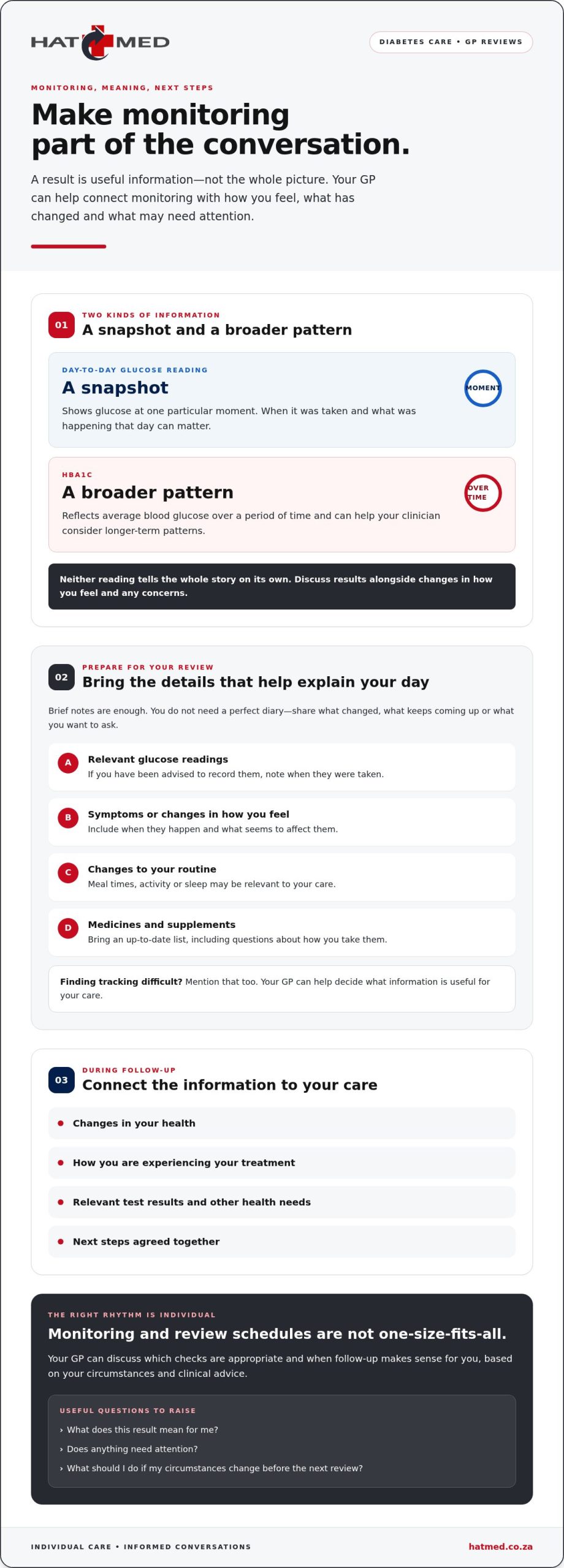
Monitoring can give you and your GP useful information, but a number on its own rarely explains the whole picture. A reading may be affected by when it was taken, what was happening that day and your wider health. Reviews create space to put those details in context, discuss concerns and consider whether your care needs attention. Your monitoring approach and review schedule should reflect your circumstances and clinical advice.
One measure you may hear about is HbA1c. It reflects your average blood glucose over a period of time and can help your clinician assess longer-term patterns. A single glucose reading is different: it shows a snapshot at one particular moment.
A day-to-day glucose reading is a snapshot; HbA1c helps show the broader pattern of blood glucose over time.
What information may be useful to bring to a review?
For a focused appointment, keep brief notes of information your clinician has asked you to monitor. You do not need a perfect diary. A few entries showing a change, recurring concern or question can be more useful than trying to record everything.
- Relevant glucose readings, if you have been advised to record them, with a short note about when they were taken.
- Symptoms or changes in how you feel, including when they occur and what seems to affect them.
- Changes to your routine, such as altered meal times, activity or sleep, if they may be relevant to your care.
- An up-to-date list of prescribed medicines and supplements, including questions about how you take them.
These notes can help you describe what is happening in everyday life instead of relying on memory during the appointment. If something is difficult to track or record, mention that too. Your GP can help you decide what information is useful for your care.
What may a GP review during follow-up?
A review may cover changes in your health, how you are experiencing your treatment, relevant test results and the next steps you have agreed together. It can also consider diabetes alongside other health needs. Cardiovascular and general health may form part of an individual assessment, depending on your history and clinical picture.
There is no single monitoring schedule that suits everyone. Your GP can discuss which checks are appropriate and when follow-up makes sense for you. Ask what a result means, whether anything needs attention and what to do if your circumstances change before the next review. Tests and timing should be guided by your clinician and current clinical guidance.
If you’re looking for GP diabetes management Pretoria, a continuing primary-care relationship can help connect monitoring information with your questions and everyday experience. Hatmed Medical Centre provides GP consultations for discussing ongoing health needs as part of primary care.
When might diabetes care need coordinated or additional clinical input?
Diabetes care does not follow one route for everyone. Your diabetes type, health history, treatment experience and other health needs all shape what support may be appropriate. Some people have most of their ongoing discussions with a GP, while others may benefit from input from another health professional or service at particular points. Additional input is not automatically needed simply because you have diabetes.
Your GP can discuss whether another perspective may help, based on your circumstances and clinical assessment. Persistent concerns, changes in your health, difficulty managing aspects of the agreed plan or several health issues that need to be considered together may prompt a conversation about further input. These are reasons to talk, not signs of a particular diagnosis or a guaranteed referral.
How can a GP and other health professionals work together?
Coordinated care keeps the focus on your needs and makes clear how each part of the plan fits together. If another health professional becomes involved, find out what they are addressing, what your GP is following up and how their advice relates to your overall care. You can ask who is responsible for each next step and what information should be shared, so instructions are easier to follow.
You also have an important role in connecting the conversations. Bring relevant information to appointments, mention advice you have received and speak up if recommendations seem difficult to combine. If you are unsure about a change to your care, discuss it with a clinician rather than trying to resolve conflicting instructions on your own. Not everyone needs a specialist, a particular device or the same pattern of monitoring; these decisions depend on individual clinical needs.
Which changes should prompt a conversation with a clinician?
Raise new, persistent or concerning changes with your GP, including a noticeable shift in how you feel, difficulty following your current plan or concerns about treatment. It may help to note when the change began, whether it comes and goes and what else was happening at the time. This gives the clinician useful context without asking you to decide what the change means.
Don’t change or stop prescribed treatment on your own because of a reading, symptom or piece of advice you’ve encountered. If something about your treatment worries you, contact a clinician for guidance. If symptoms are severe, sudden or feel urgent, seek appropriate urgent medical care rather than waiting for a routine appointment. This general guidance cannot determine the cause of a symptom or replace an individual assessment.
If you’re considering GP diabetes management Pretoria, a general practitioner consultation can provide a place to discuss ongoing health concerns and whether your care needs additional coordination. Hatmed Medical Centre provides GP consultations and chronic disease management, with care tailored to individual long-term health needs.
How can you prepare for a more useful diabetes GP appointment?
A little preparation can help you use appointment time well, especially if you have several questions or changes to discuss. Start by noting what matters most, then gather relevant information you already have. You do not need a perfect record or to work out what a result means by yourself. Your GP can help prioritise concerns and explain what needs attention.
Appointment checklist: note your main concerns, bring relevant records and medicine details, ask what your results mean, and leave with clear next steps.
- Write down new concerns, changes in how you feel and questions you do not want to forget.
- Bring relevant readings or test results, if available or requested, and notes about changes in your routine.
- Take an up-to-date list of prescribed medicines and supplements, including anything you have stopped or found difficult to take.
- Choose the concern you most want to address, while keeping other questions on your list in case there is time.
What should you bring and ask about?
Useful details might include how you have been managing your medicines, concerns about possible side effects and changes that make your current plan harder to follow. If you have results, ask your GP to explain what they mean in your situation. You could also ask, “What are we aiming for?”, “What should I do if this becomes difficult?” and “When should I follow up?”
If several things are on your mind, say so at the start. Your GP can help decide which concerns to focus on during the appointment and whether anything needs a separate conversation. It is reasonable to ask for an explanation in everyday language or to have the agreed plan summarised before you leave.
How can you make agreed changes manageable?
A plan is more useful when it fits your life. If a proposed change feels difficult alongside work, caring responsibilities, meal routines or other medicines, explain the practical barrier. You and your clinician can discuss realistic next steps rather than trying to change everything at once. Agree what you will do, what the clinician will follow up and when you should check in again.
Before the appointment ends, note any agreed follow-up arrangements and who to contact if you have a question about the plan. A continuing relationship with a GP can support clear conversations over time; Hatmed’s guide to finding a general practitioner discusses what to consider in that relationship. To discuss diabetes care, prepare your questions and bring them to a Hatmed GP consultation.
How can a GP support your next steps in diabetes management?
Ongoing diabetes care is built through individualised conversations that connect your questions and health concerns with clinical follow-up. A GP can help you understand the purpose of agreed reviews, discuss changes in your health and consider next steps in the context of your wider needs. Your care plan should be shaped with you, rather than treated as a fixed set of instructions that never changes.
At a review, you might clarify what a result means, what the current plan is intended to address or when you should follow up. If your symptoms, treatment experience or personal circumstances have changed, bring that into the conversation. A shift in routine, new difficulty taking medicine or uncertainty about advice can all be useful to discuss. Your clinician will assess what is appropriate for your individual situation.
What should a continuing GP relationship help you clarify?
A continuing relationship gives you a familiar place to raise questions as your needs evolve. You should be able to discuss what each agreed step is for, who is following up and what to do if circumstances change. If you are unsure about a recommendation, ask for a clear explanation and how it fits with the rest of your care. Understanding the plan can make it easier to take part in decisions and recognise when you need further guidance.
It may help to keep a short note after each appointment. Record the next steps you agreed, follow-up arrangements and questions that came up afterwards. At your next review, explain what felt manageable and where you encountered difficulties. That feedback helps your GP understand how the plan is working in everyday life and whether anything needs to be revisited.
How can Hatmed support ongoing primary care?
Hatmed Medical Centre provides GP consultations and chronic disease management as part of patient-centred primary care. For someone living with a long-term condition, ongoing conversations can bring health concerns, clinical review and practical follow-up together. A clinician can discuss your health needs and tailored next steps, without assuming everyone needs the same approach.
When looking for support with diabetes management, consider what you want to understand at your next appointment. You might begin with a question about your care plan, a change you have noticed or the follow-up that has been agreed. Bringing those points forward can help focus the conversation. Ask for anything unclear to be explained in plain language.
For ongoing health needs, arrange a GP consultation with Hatmed. Bring your questions, even if you are not sure which one to ask first. A clinician can help you work through them and discuss practical next steps based on your circumstances.
Take the next step with confidence
Your next conversation does not need to solve everything at once. Start with the question that matters most today, whether it is about a change in your health, your current care or what to discuss at a review. Your circumstances and priorities should shape the conversation.
Hatmed Medical Centre provides general practitioner consultations and chronic disease management as part of its primary-care services. If you’re ready to discuss your ongoing health needs, arrange a GP consultation with Hatmed. Bring your questions, even if they feel small or difficult to put into words. A clear conversation can help you identify a considered next step at a manageable pace.
Frequently Asked Questions
Can a GP diagnose diabetes?
Yes, a GP can assess whether diabetes may be present and arrange or interpret appropriate tests as part of a clinical assessment. Diagnosis is not based on symptoms or a single home reading alone. If a result is unexpected, the clinician may consider your health context and whether further testing is needed. Share any symptoms, relevant medicines and family history, and ask what the results mean for you.
Is Type 2 diabetes always caused by lifestyle?
No. Type 2 diabetes is not simply caused by personal choices. Family history, age and other health factors can affect a person’s risk, while food, activity and other lifestyle factors may also play a part. Risk develops differently for each person, so blame rarely helps. If you have concerns about your own risk or diagnosis, a GP can discuss the factors that may be relevant to your health.
Can diabetes be managed without medication?
It depends on the type of diabetes and the person’s clinical needs. Some people with Type 2 diabetes may manage their condition without medicine for a time under clinical guidance, while others need medication as part of care. Type 1 diabetes requires insulin treatment. Don’t stop, reduce or replace prescribed medicine without discussing it with your clinician, even if readings seem reassuring or you feel well.
How often should someone with diabetes see a GP?
There is no appointment schedule that suits everyone. Your GP can advise how often to review your health based on your diabetes type, treatment, results, other health needs and any changes you notice. A change in treatment or a new concern may affect when you should be seen again. Ask the clinician what follow-up timing is appropriate for your situation.
Does a normal blood glucose reading mean diabetes is under control?
Not necessarily. A reading within your agreed range is useful information about that particular moment, but it does not show every reading across the day or explain the wider pattern by itself. Timing, meals, activity and treatment can all provide context. Keep following the monitoring advice you have been given, and discuss readings that concern you with your clinician rather than changing treatment based on one result.
What is the difference between blood glucose and HbA1c?
Blood glucose is the amount of glucose in your blood at the time it is measured, so the result is a snapshot. HbA1c is a blood test that reflects average blood glucose over roughly the previous two to three months. The measures answer different questions, and neither should be interpreted in isolation. Your clinician can explain how each result relates to your health and care plan.
Can stress affect diabetes management?
Yes, stress can make diabetes management more challenging, although its effects vary. Stress responses may influence glucose levels, and a demanding period can also disrupt sleep, meals, activity or medicine routines. If stress is making your usual care harder, tell your GP; you do not need to wait until you have everything under control. Together, you can discuss what has changed and what support or practical adjustment may be appropriate.